
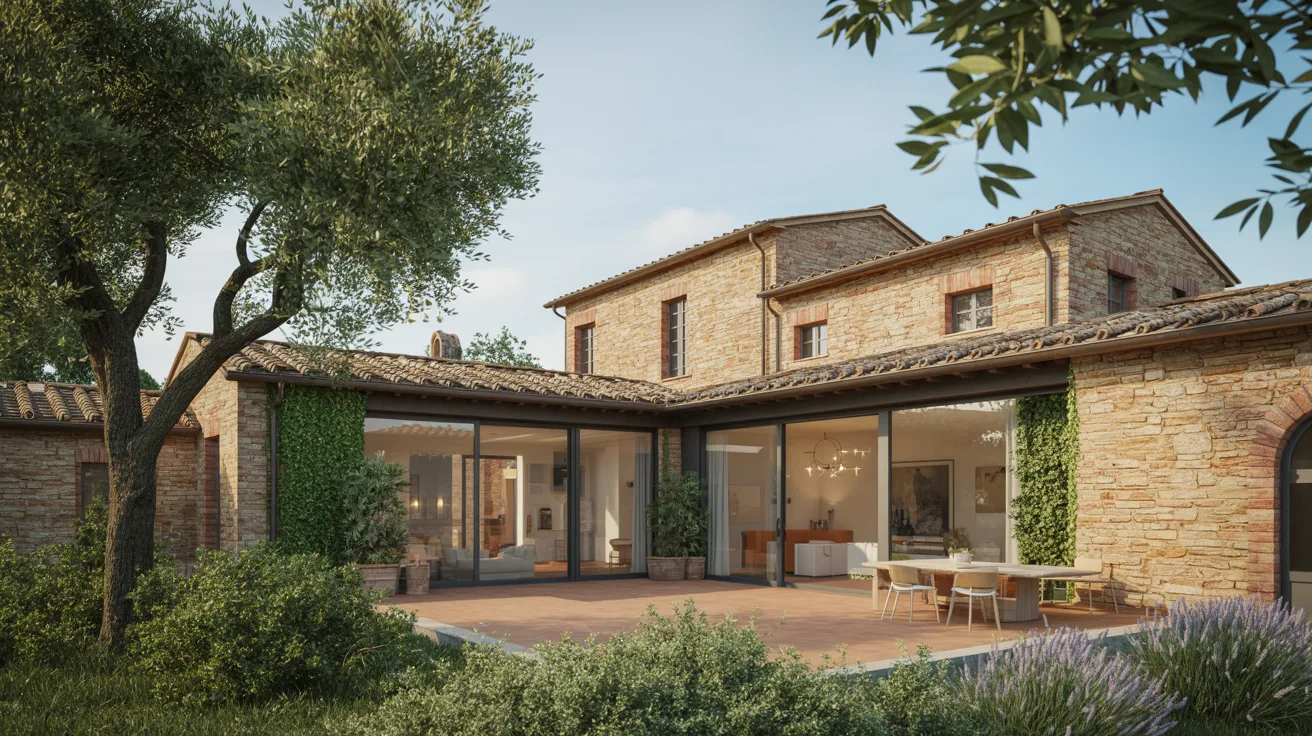
The first time I saw a Tuscan villa in a magazine, I tore the page out and stuck it on my wall.
Something about the warm stone, the terracotta floors, and the shaded courtyards just hit differently.
Years later, I still come back to Italian design when I need inspiration.
In this blog, I cover 23 traditional and modern Italian home designs, along with tips to help you pick the right one.
By the end, you will know exactly what suits your space and your style.
Understanding Italian Architecture: Tradition Meets Modernity
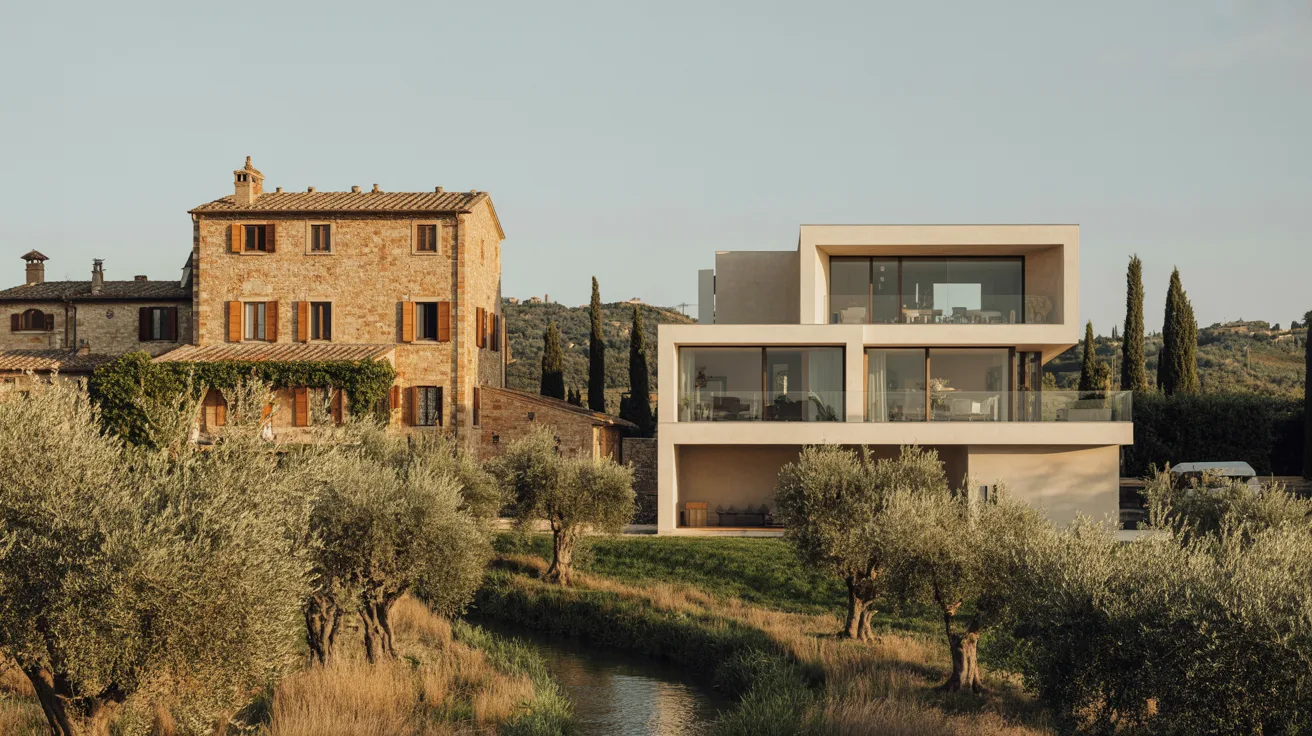
Italian architecture is one of the most recognized styles in the world. It pulls from centuries of history, regional culture, and natural materials.
From the rolling hills of Tuscany to the canals of Venice, every region has its own signature look.
Traditional homes often feature stone walls, terracotta roofs, and hand-painted details. Modern Italian homes blend those roots with clean lines and open spaces.
The result is a style that feels both grounded and fresh. This balance between old and new is what makes Italian architecture stand out across the globe.
List of 20+ Traditional and Modern Italian Home Designs
Italian homes come in many shapes and styles. Here is a look at 23 designs, split between traditional and modern
1. Tuscan Villas with Terracotta Floors
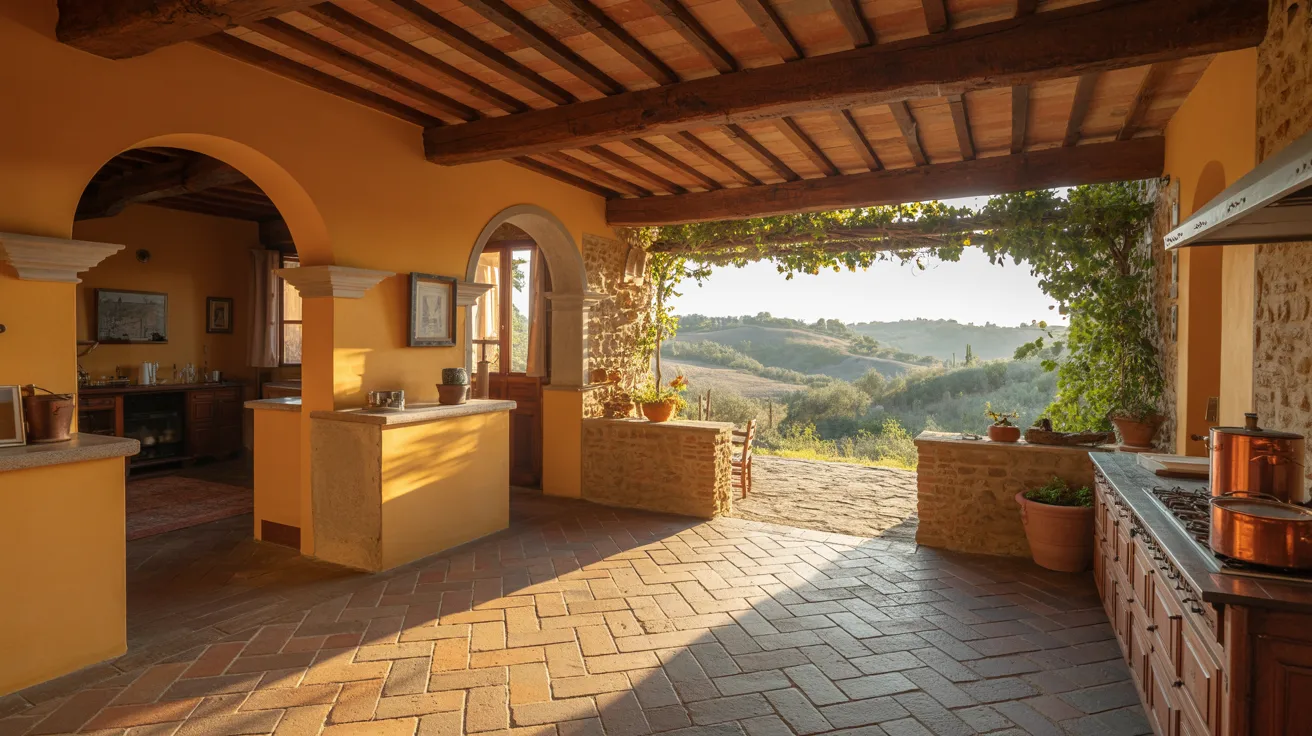
Tuscan villas are warm and grounded. They feature thick stone walls, terracotta tile floors, and exposed beams.
The color palette stays earthy, with ochre, rust, and cream tones. These homes sit well in rural settings and feel connected to the land.
The layout is simple but generous, with large kitchens and shaded courtyards.
2. Exposed Wooden Beam Interiors
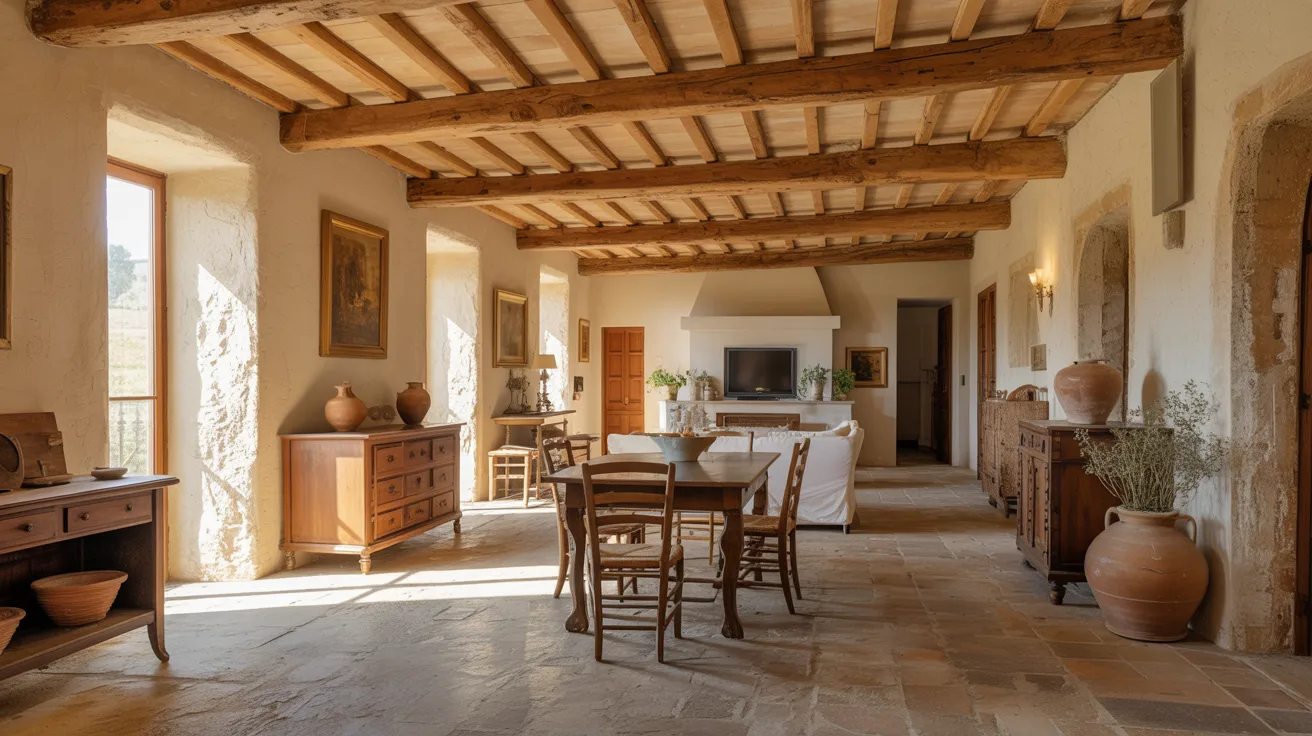
Wooden beams are a staple of Italian farmhouses and country homes. They run across ceilings and add warmth to any room.
Often left in their natural state, they show the age and texture of the wood.
This detail works well in living rooms and dining spaces. It pairs beautifully with stone floors and plastered walls.
3. Frescoed Walls and Ceilings
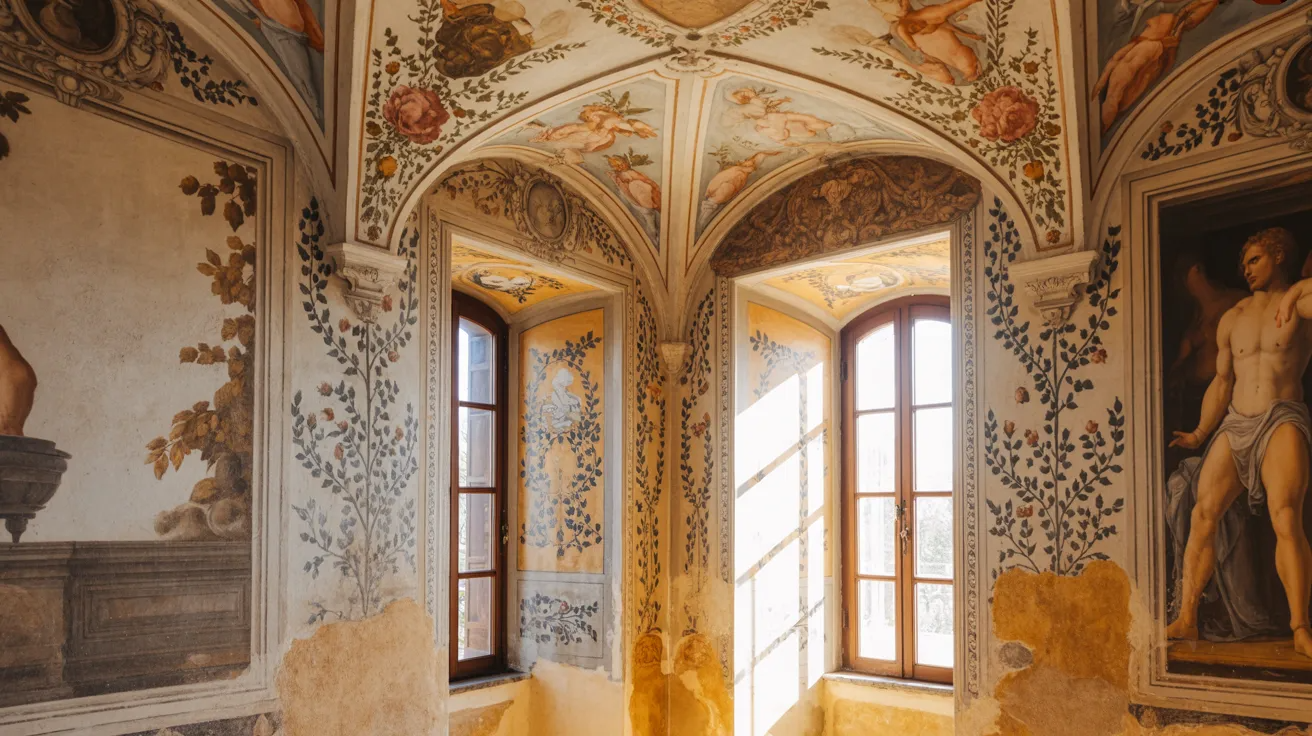
Frescoes are painted directly onto wet plaster, creating a surface that lasts for centuries. You will find them in historic Italian homes, palazzos, and villas.
Scenes often include landscapes, myths, or floral patterns. Today, homeowners commission artists to recreate this look in modern spaces.
It adds a painterly, handcrafted feel that no wallpaper can match.
4. Vaulted Ceilings
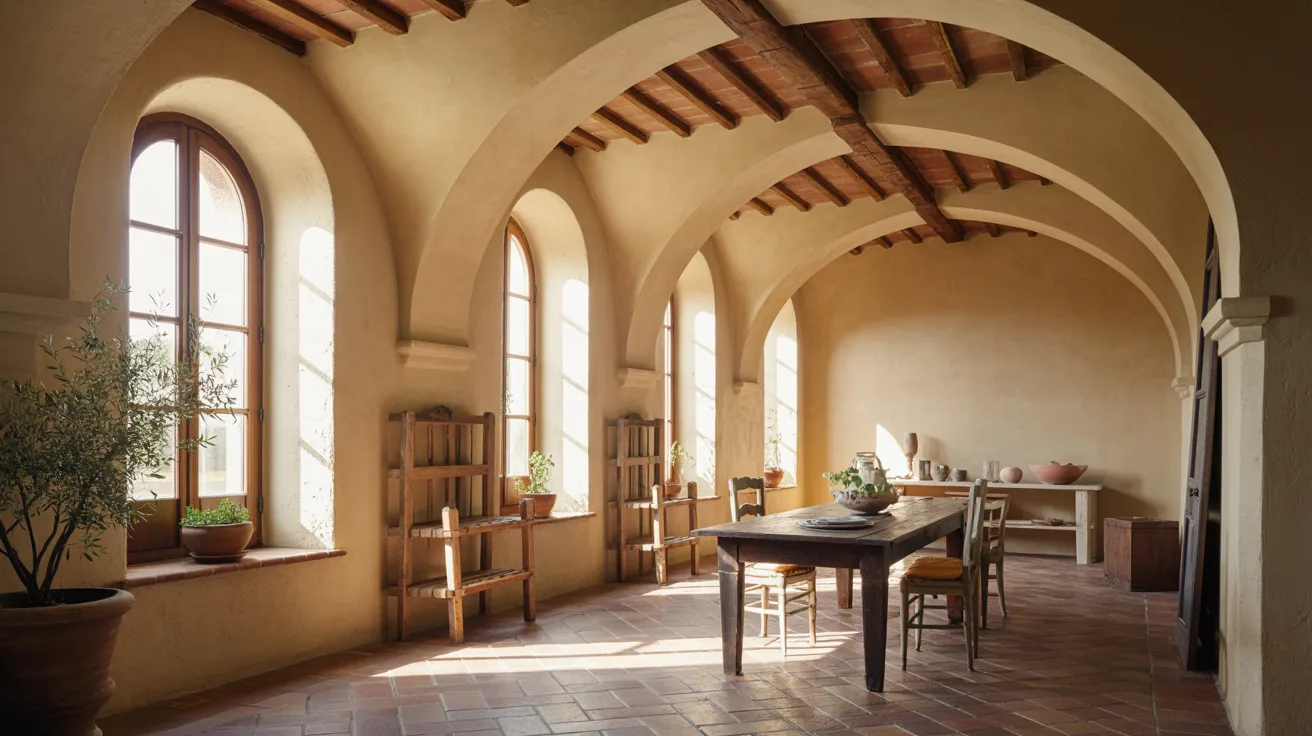
Vaulted ceilings are common in older Italian homes, especially in southern regions. They create height and airflow, which was practical before air conditioning.
The arched shape adds drama to any room. Stone or plaster finishes are typical.
Many restored farmhouses keep these ceilings intact as a key design feature.
5. Original Italian Doors with Ironwork
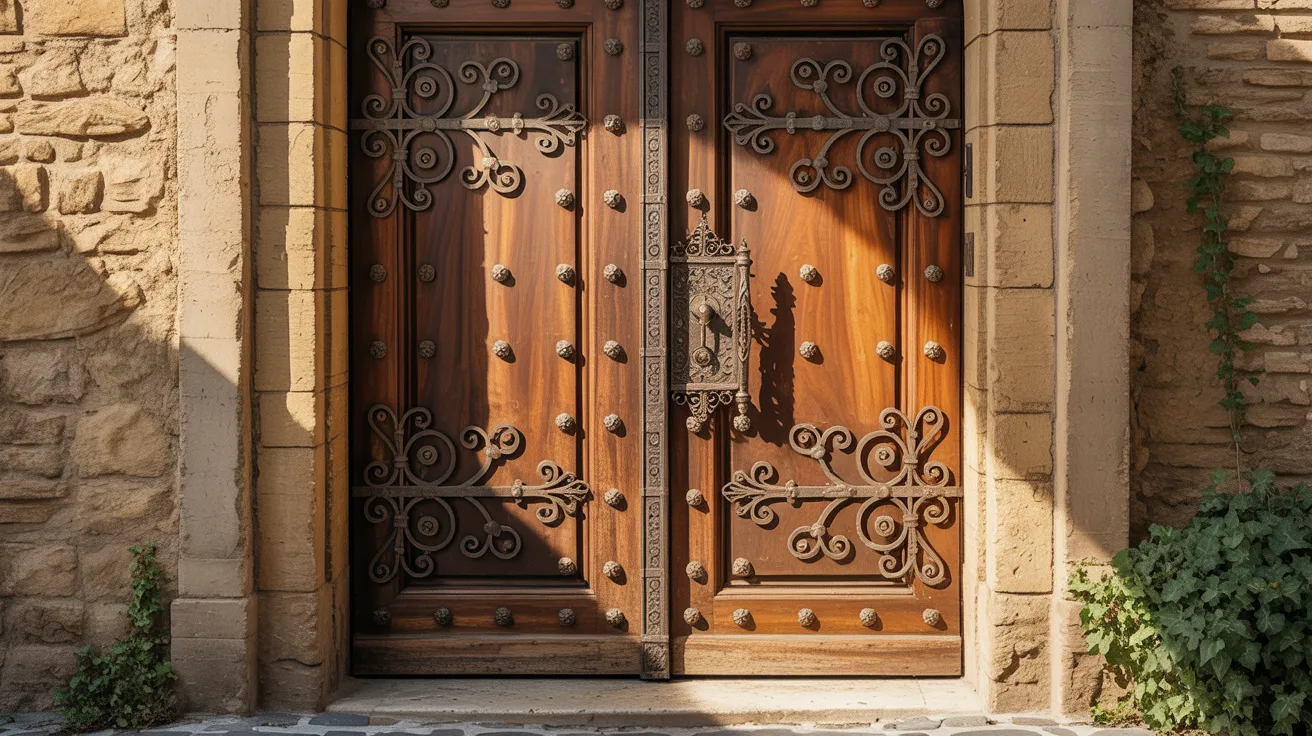
Italian doors are built to impress. Heavy wood panels are often paired with decorative ironwork, including hinges, handles, and grilles.
These doors mark the entry to a home with authority. Many historic homes still have their original doors intact.
The ironwork is hand-forged and tells a story of local craft and tradition.
6. Traditional Exterior Window Shutters
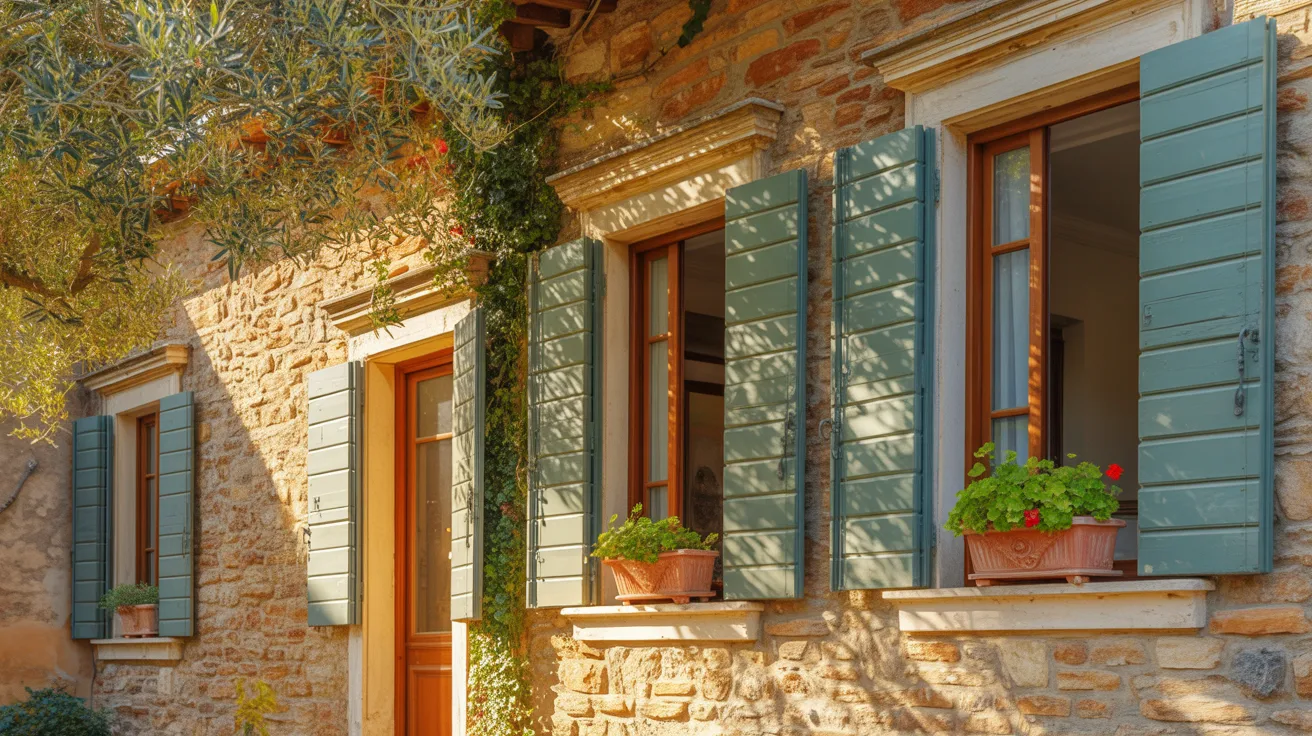
Shutters are practical and stylish in Italian homes. They block the summer sun and add color to stone facades.
Green, blue, and brown are the most common shades. Wooden shutters are the traditional choice, though some homes use painted metal.
They fold neatly against the wall when open and frame each window with character.
7. Italianate Townhouses with Bracketed Eaves
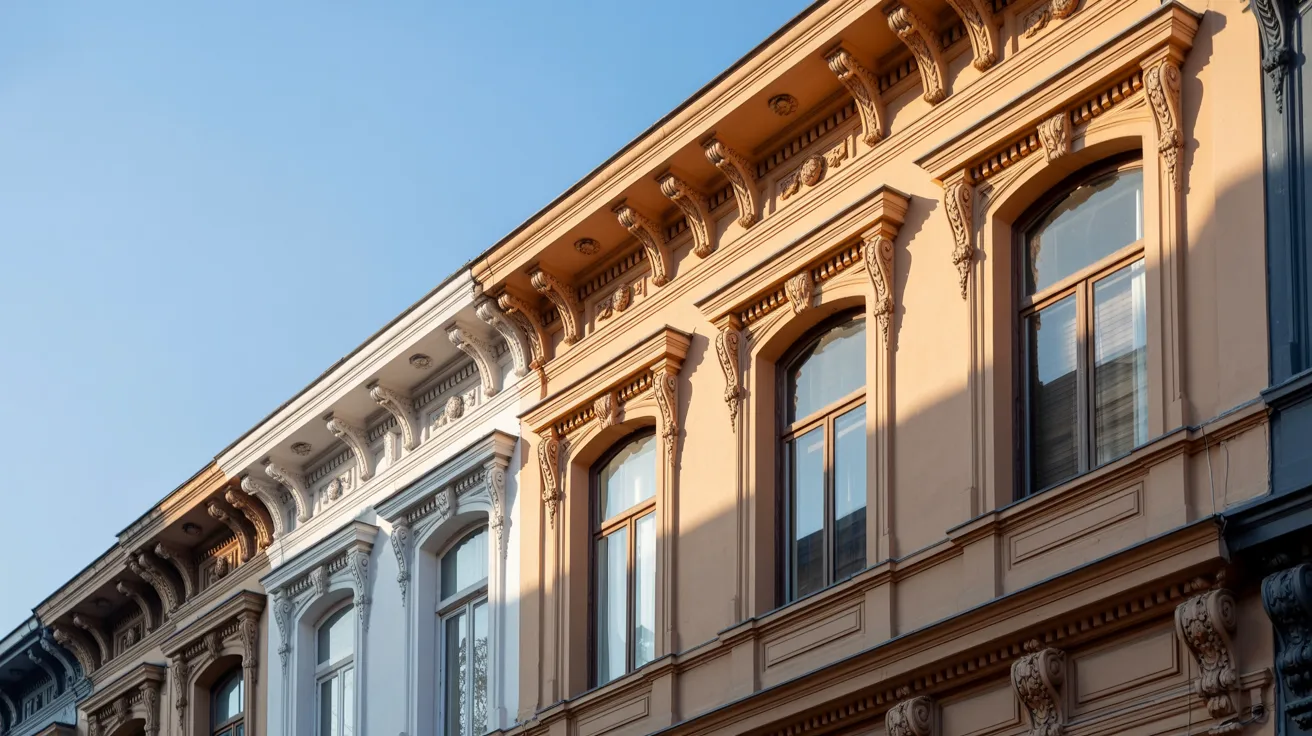
This style became popular in the 19th century and spread far beyond Italy. Wide overhanging eaves with decorative brackets define the roofline.
The homes are tall and narrow, with arched windows and ornate cornices.
Stone or stucco finishes complete the look. These townhouses blend grandeur with livable proportions.
8. Italian Villa Style Homes with Towers
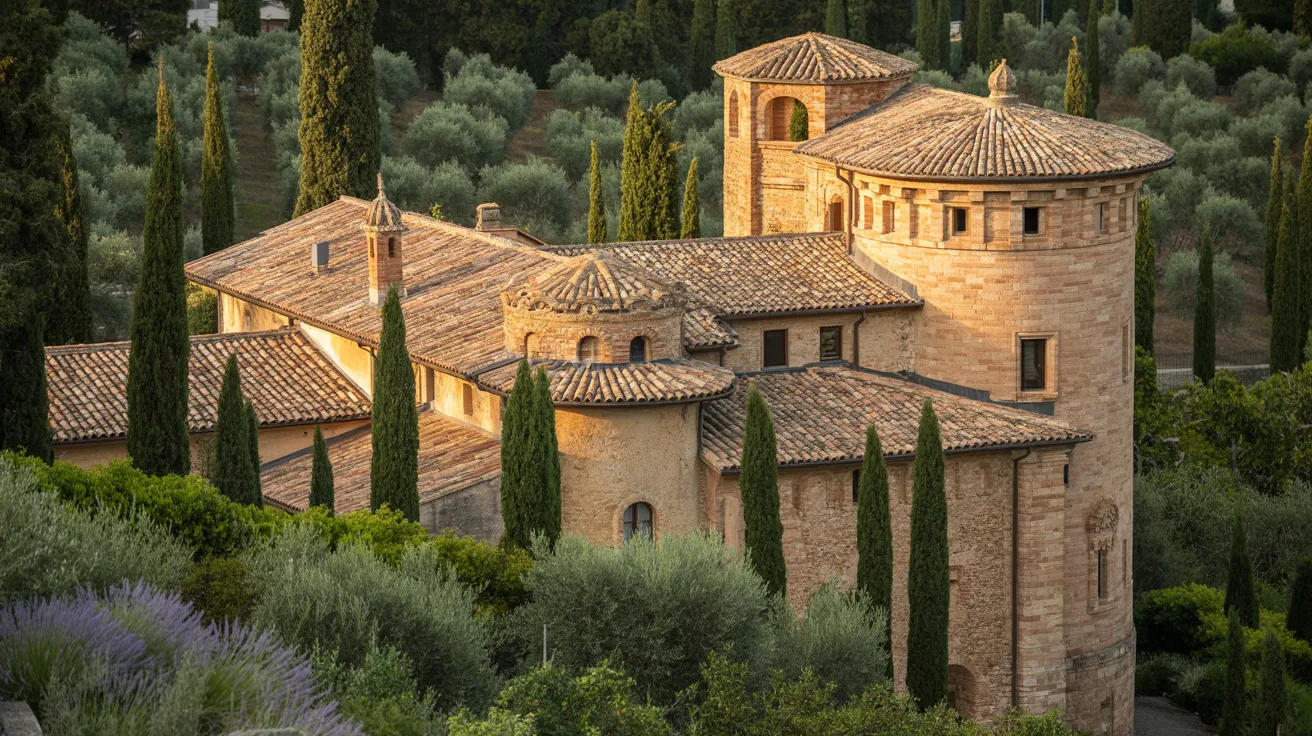
Towers were once a symbol of wealth and power in medieval Italy. Today, homes that incorporate tower elements carry that same sense of presence.
Round or square towers rise above the main structure. They add vertical interest and often serve as a study or reading room.
The look is commanding without feeling cold.
9. Suburban Villas Inspired by Renaissance Palazzi
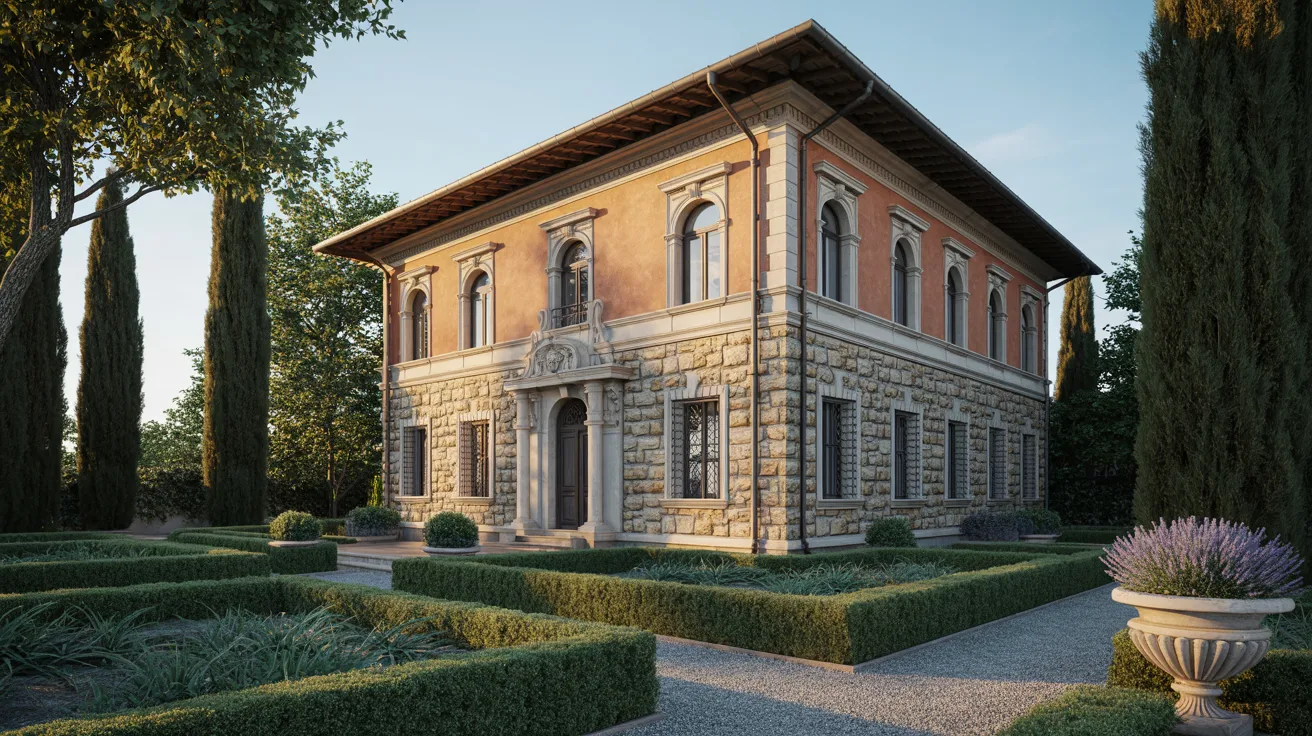
Renaissance palazzi were built for nobility, with symmetrical facades and grand proportions. Suburban villas drew from this model on a smaller scale.
You will see rusticated stone bases, arched doorways, and formal gardens. These homes sit well in landscaped settings.
They feel ordered and composed, with every detail in the right place.
10. Umbria Earth-Toned Interiors
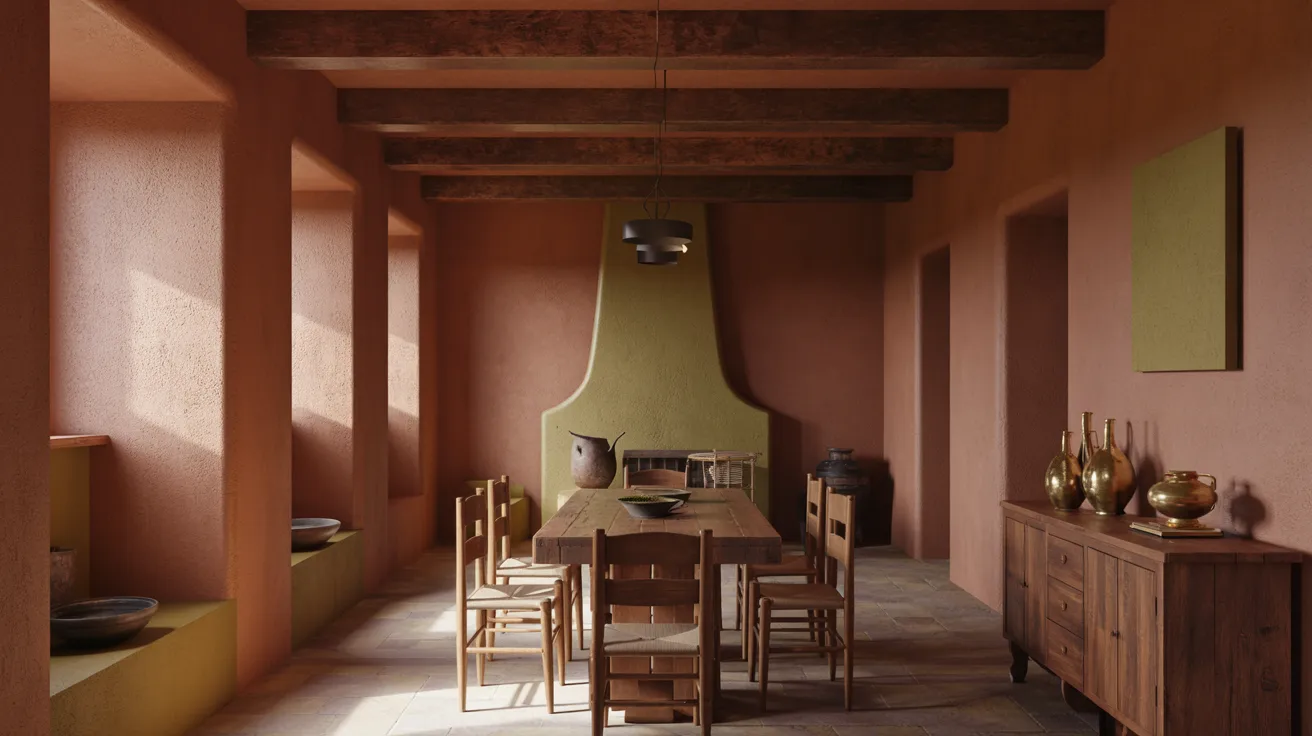
Umbria is landlocked and quiet, and its homes reflect that calm. Interiors use deep earthy tones: terracotta, sand, olive green, and warm brown.
Walls are often rough-plastered or painted with natural pigments. The furniture is solid and handmade.
These spaces feel private and steady, like a home built to last for generations.
11. Medieval Castle Conversions
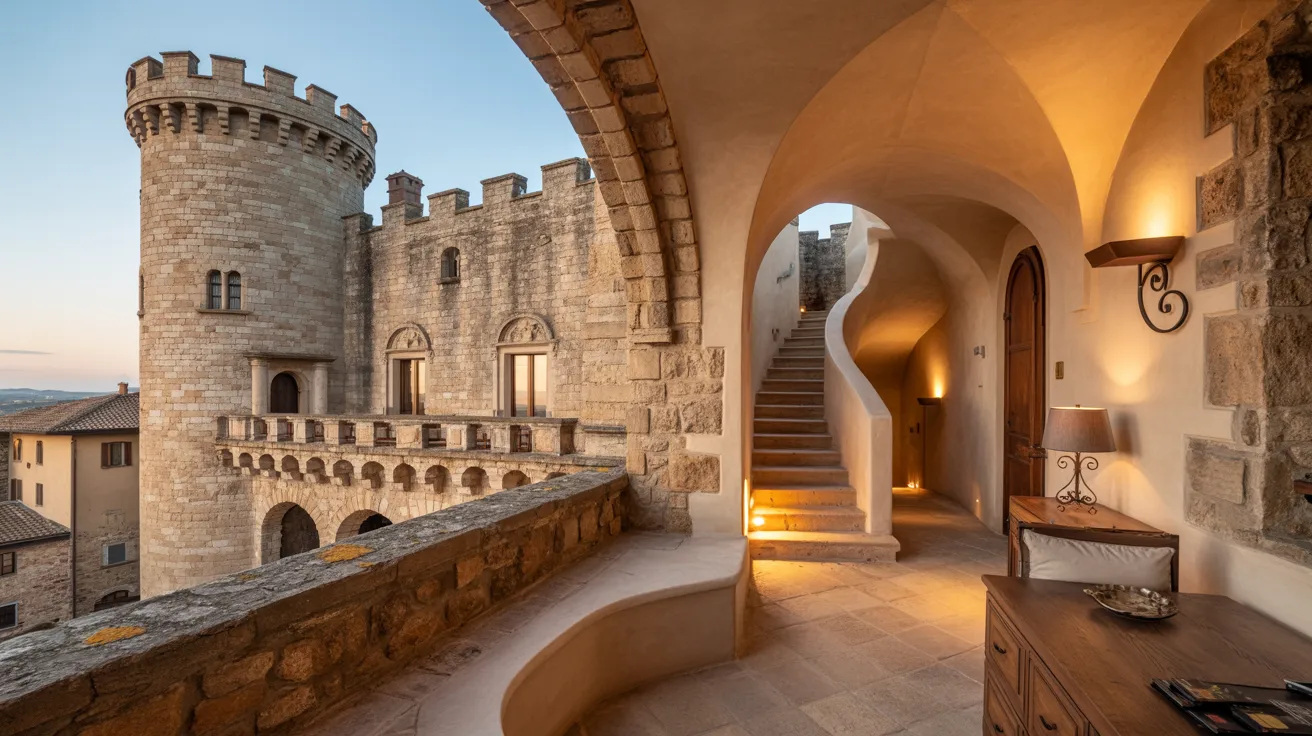
Some of Italy's most interesting homes are former castles. Stone towers, thick walls, and narrow staircases have been turned into livable spaces.
Owners preserve original features like arrow slits and barrel-vaulted rooms. Modern comforts are added carefully to avoid clashing with the history.
The result is a home unlike anything else you can own.
Modern Italian Home Designs
Modern Italian homes take the country's rich design legacy and push it into the present with bold ideas and refined details.
12. Modernized Tuscan Farmhouses
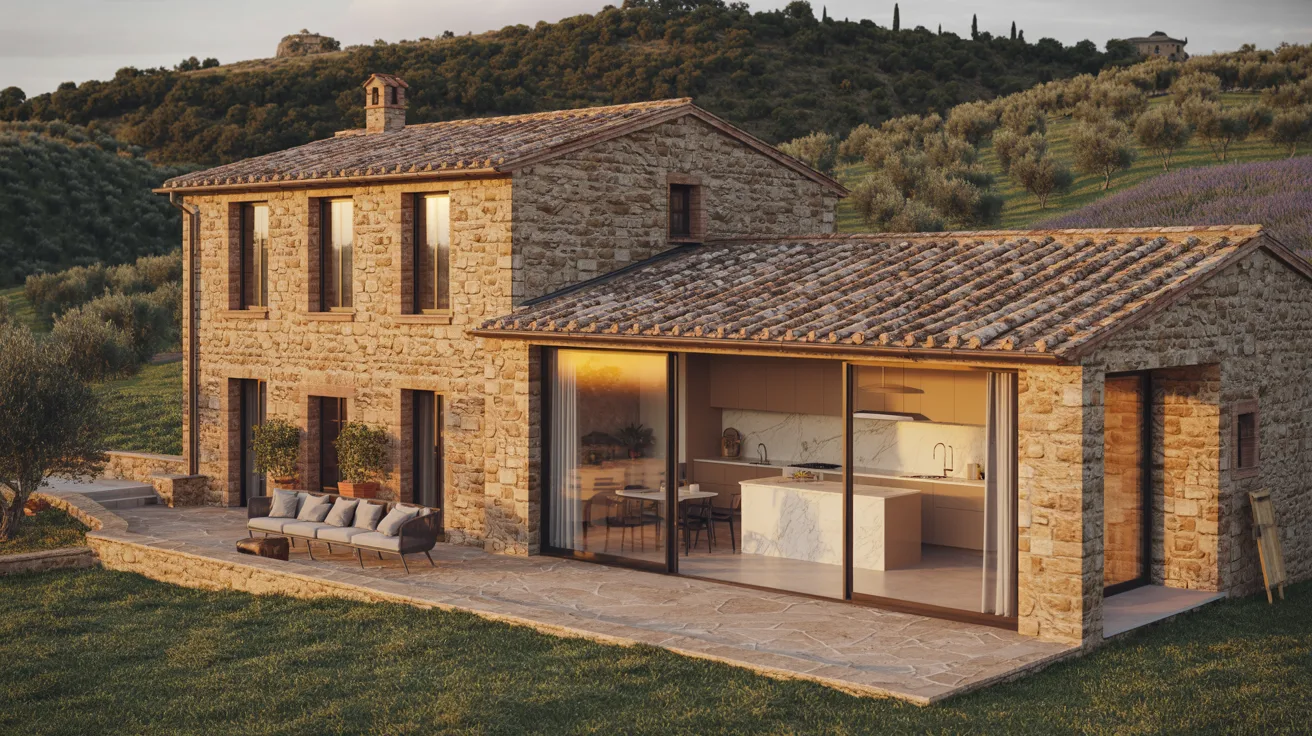
Old Tuscan farmhouses are being updated without losing their soul. Owners keep the stone walls and terracotta roofs but add large windows and open floor plans.
Kitchens are rebuilt with clean lines and modern appliances. Outdoor terraces connect the interior to the landscape.
The blend of old bones and new function makes these homes especially appealing.
13. Patterned Mosaic Apartments in Naples
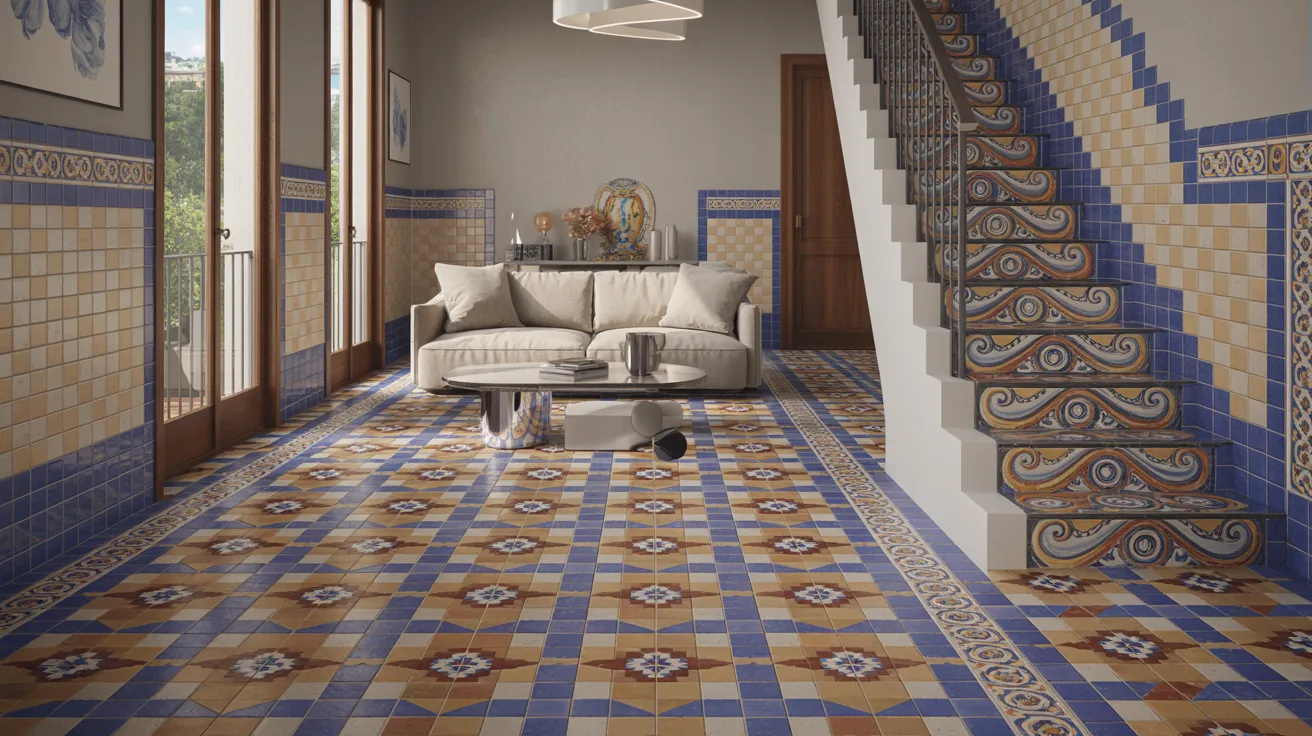
Naples has a long tradition of decorative tilework. Modern apartments in the city use mosaic patterns on floors, walls, and staircases.
The colors are bold, often featuring cobalt blue, mustard yellow, and deep red. This style brings energy and personality to urban living.
It shows how a traditional craft can feel completely current.
14. Milanese Contemporary Apartments
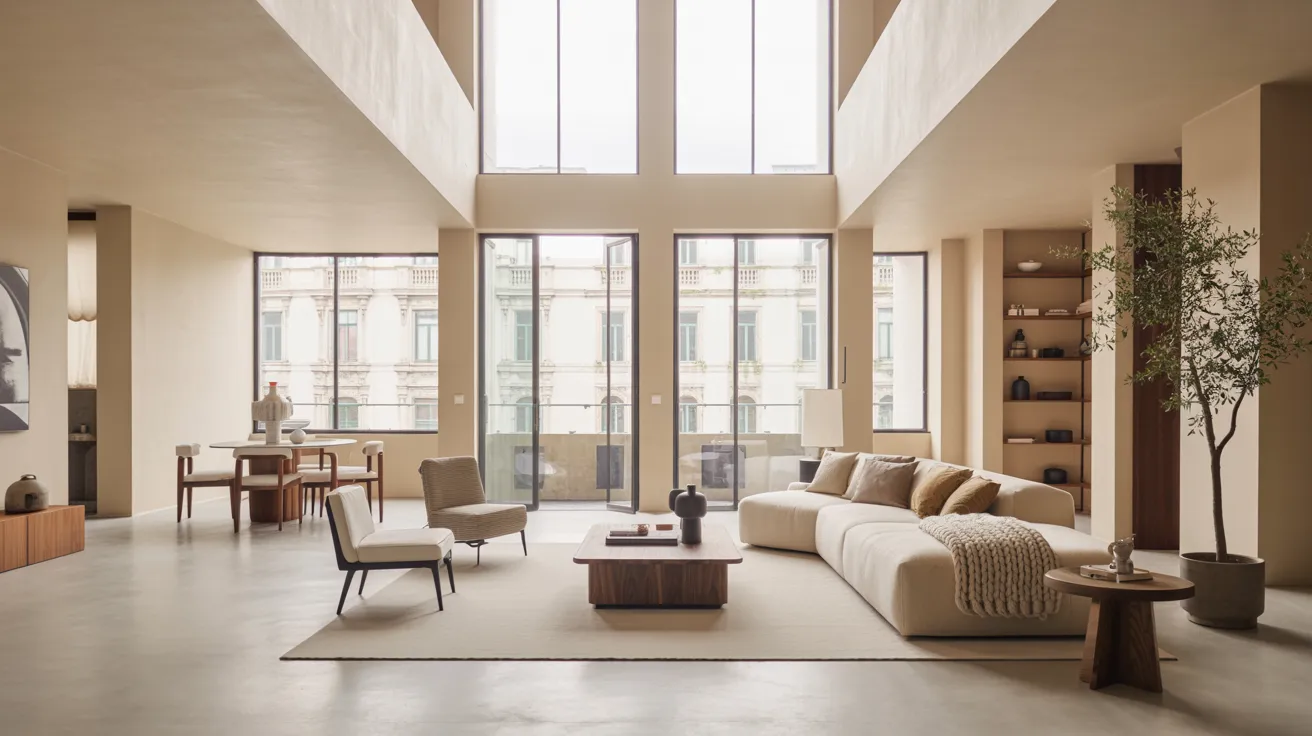
Milan is Italy's design capital, and its apartments reflect that. These homes favor open plans, neutral palettes, and carefully chosen furniture.
Every detail is considered, from the hardware on the cabinets to the texture of the walls. Space is used efficiently without feeling cramped.
Natural light and high ceilings make even compact apartments feel generous.
15. Lake Como Modern Villas
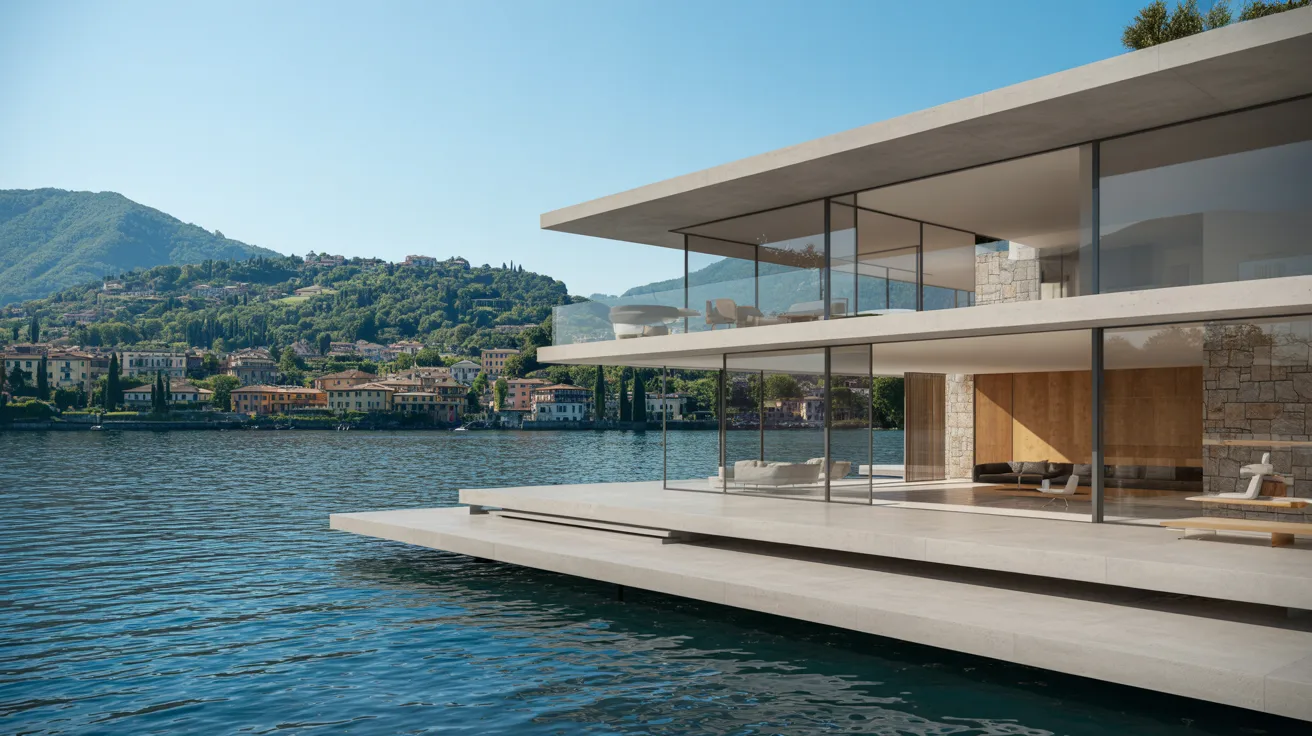
Lake Como is known for grand waterfront properties. Modern villas here combine glass, concrete, and natural stone.
Large terraces face the water, and indoor-outdoor living is a priority. The architecture is clean and restrained, letting the landscape do the talking.
These homes are built for long summer days and quiet evenings by the lake.
16. Coastal Marche Homes with Courtyards
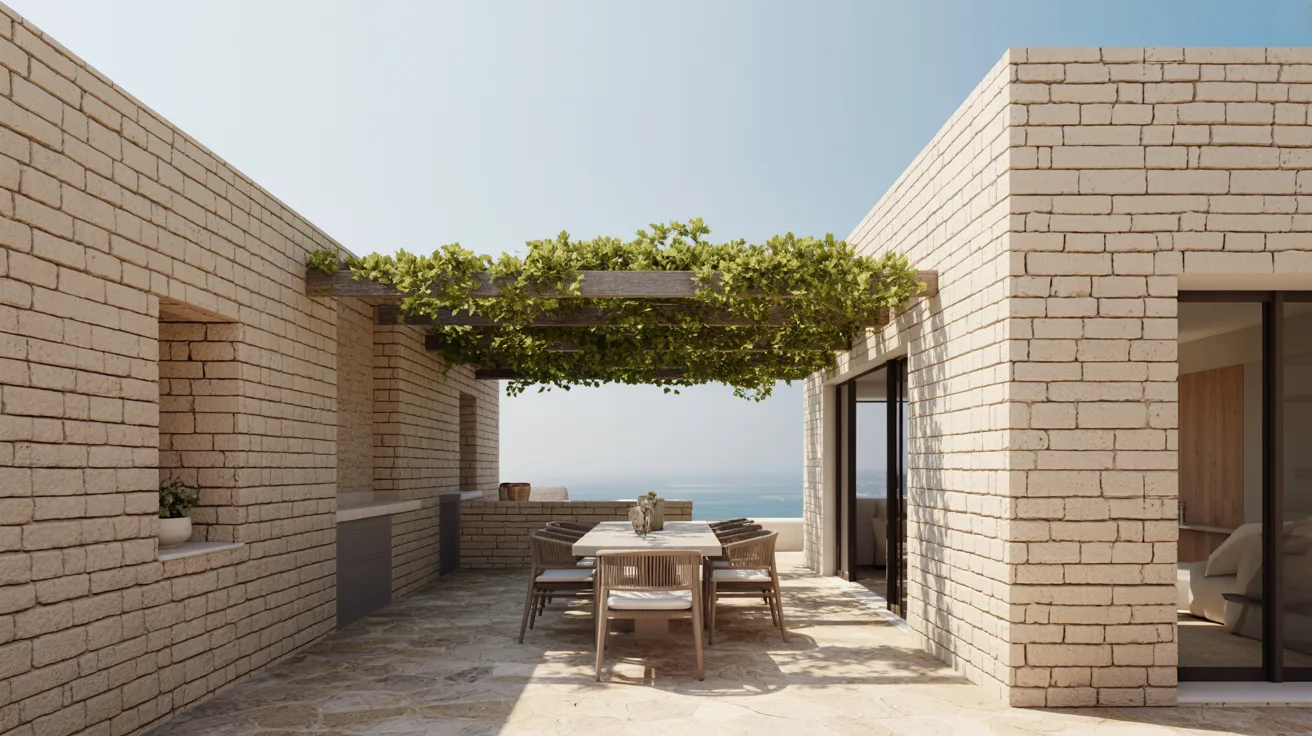
The Marche region sits between the Apennines and the Adriatic Sea. Homes here often include private courtyards that provide shade and shelter from coastal winds.
Modern versions use local stone and simple lines. The courtyard becomes an outdoor room, used for dining and relaxing.
It is a practical feature that also looks good.
17. South Tyrol Homes with Contrasting Facades
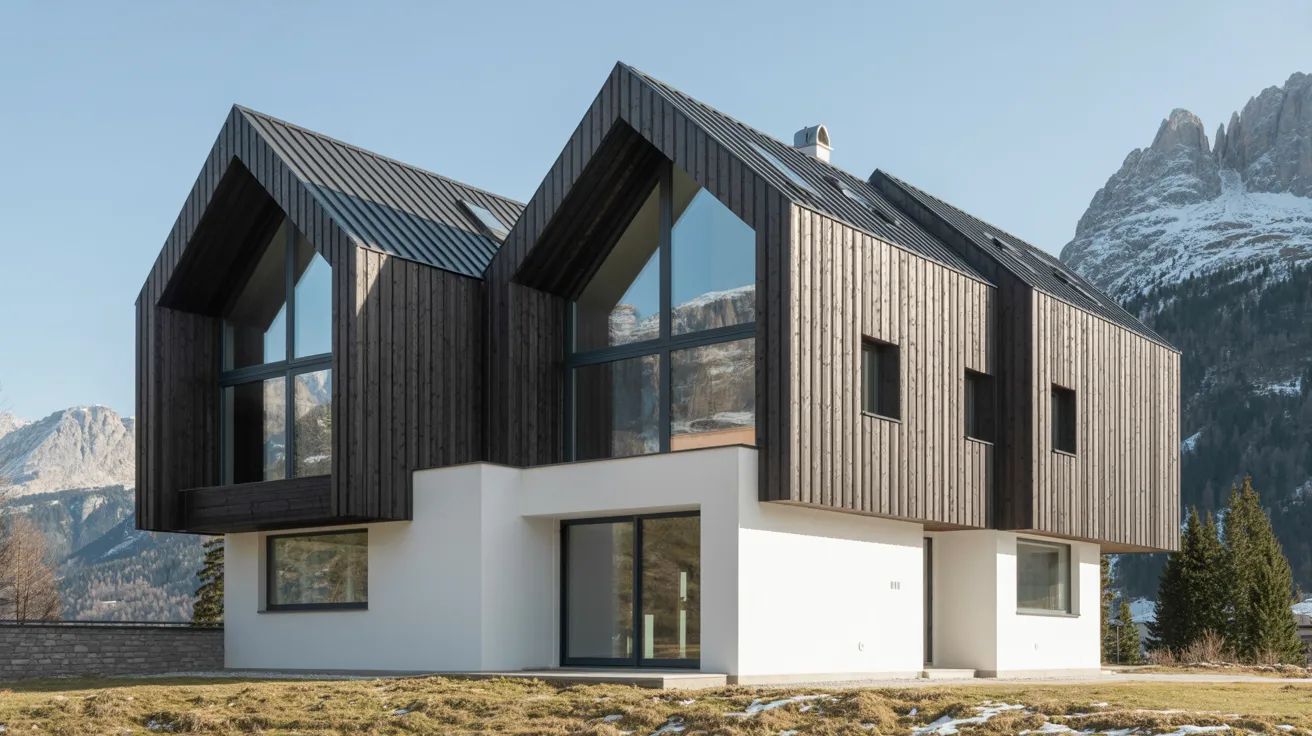
South Tyrol sits in northern Italy near the Austrian border. Homes here blend Alpine and Italian influences.
Modern designs use contrasting materials, pairing dark wood cladding with white render or stone. The rooflines are steep to handle snow.
Large windows face the mountains. It is a style that feels both regional and forward-thinking.
18. Alpine Shingle-Clad Houses
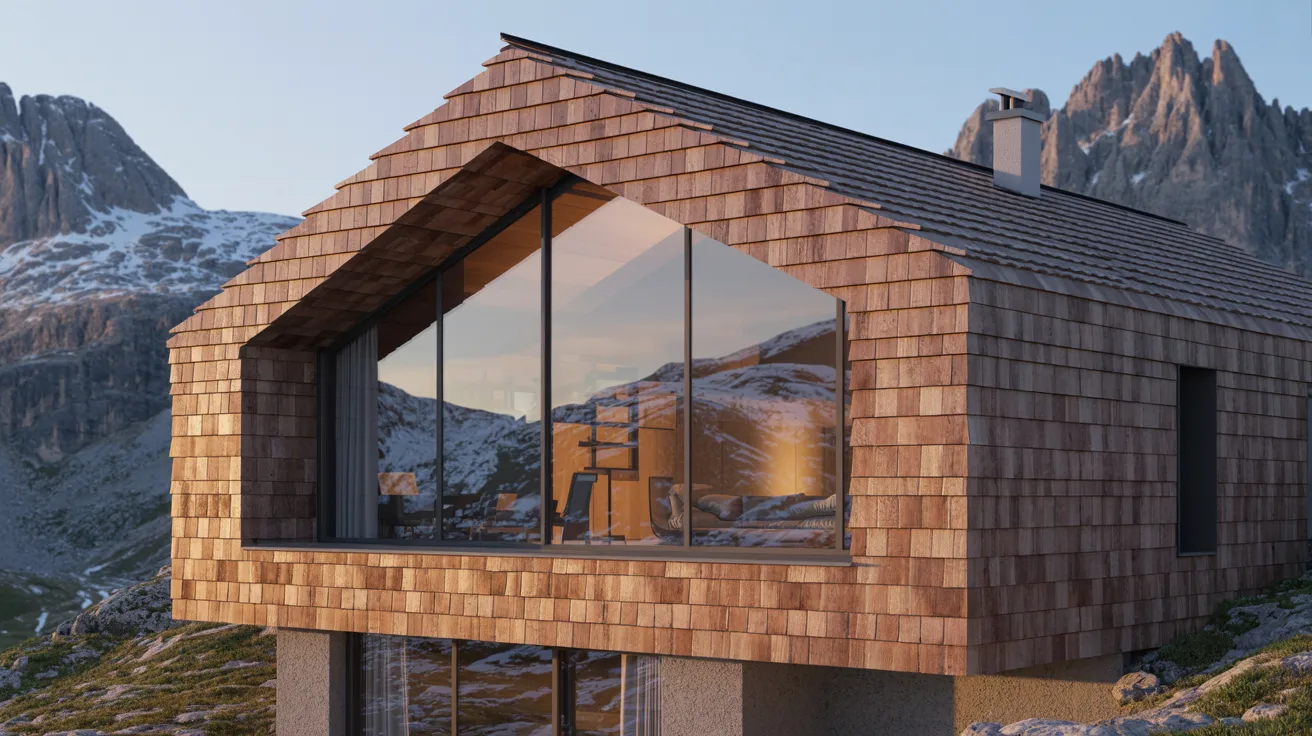
In the mountain regions of northern Italy, wooden shingle cladding protects homes from harsh winters.
Modern versions use this material as a design statement. The shingles cover the facade in a textured pattern that weathers gracefully over time.
Combined with large glazed openings, these homes strike a balance between shelter and openness.
19. Lazio Luxury Villas
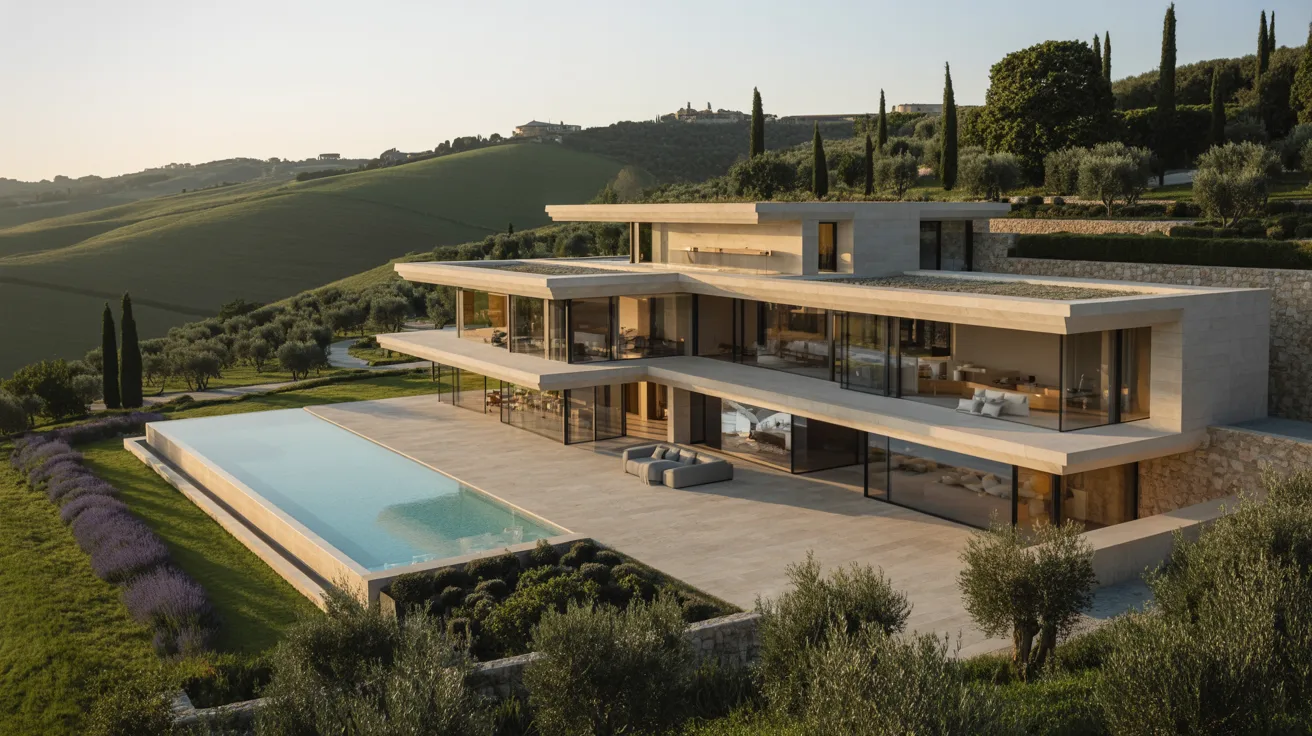
Lazio, the region surrounding Rome, is home to some of Italy's most impressive private residences.
Modern luxury villas here draw on classical proportions while using contemporary materials.
Infinity pools, landscaped gardens, and private courtyards are standard features. Interiors balance comfort with restraint.
20. Modern Coastal Resorts
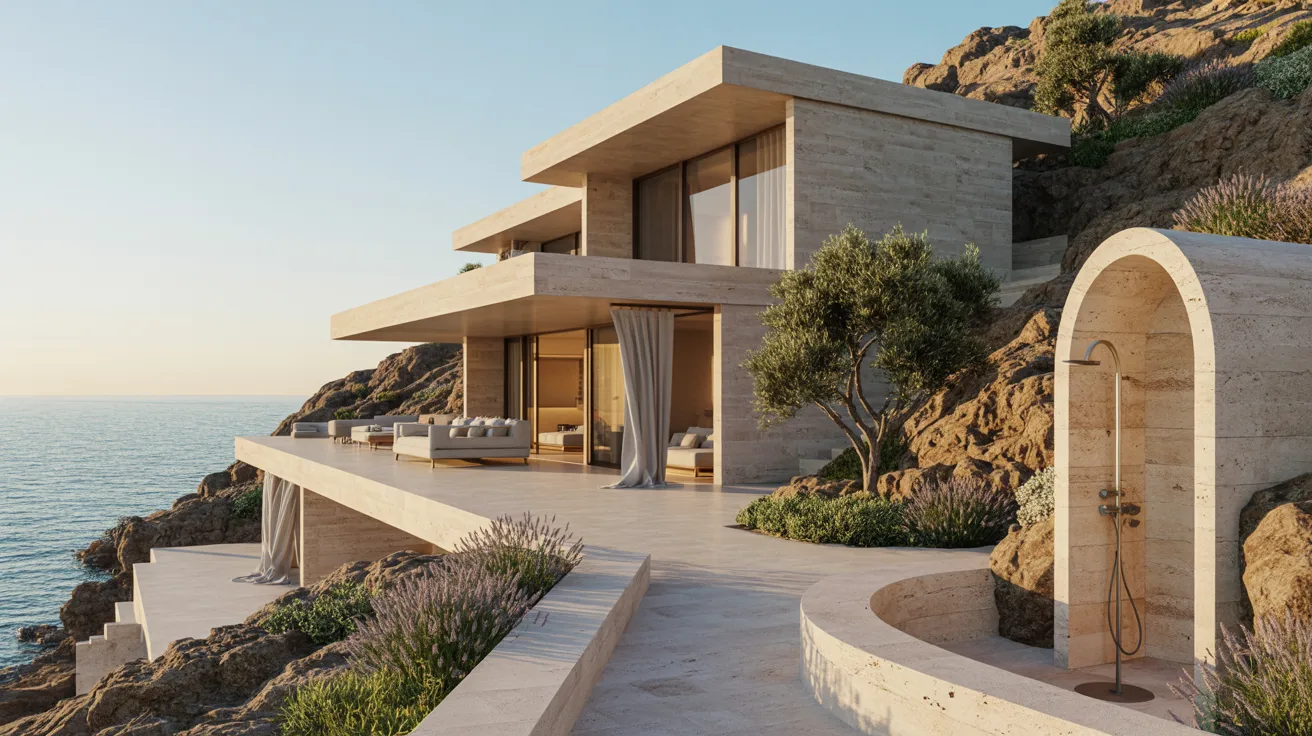
Italy's coastline has inspired a generation of resort-style private homes. These properties borrow from hospitality design, with outdoor showers, shaded lounge areas, and sea-facing terraces.
Materials are kept natural: travertine, linen, and whitewashed render.
The layout prioritizes flow between inside and outside. Living near the sea has never looked this considered.
21. Hillside Italian Homes with Panoramic Views
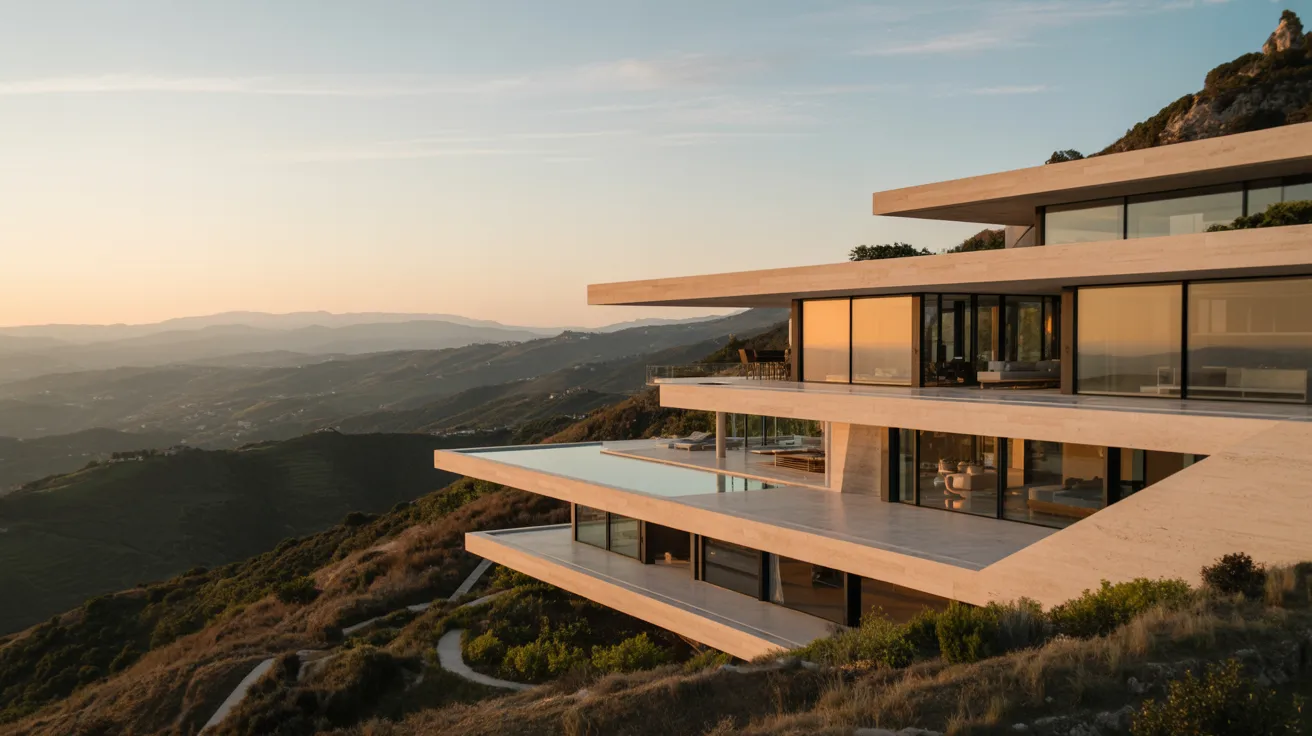
Building on a hillside in Italy comes with challenges and rewards. Modern homes in these locations are designed around the view.
Cantilevered terraces extend over the slope. Large glass panels frame the landscape from inside.
The structure often follows the natural contours of the hill. These homes feel both dramatic and deeply connected to the land.
22. Eclectic Interiors Combining Rustic and Modern
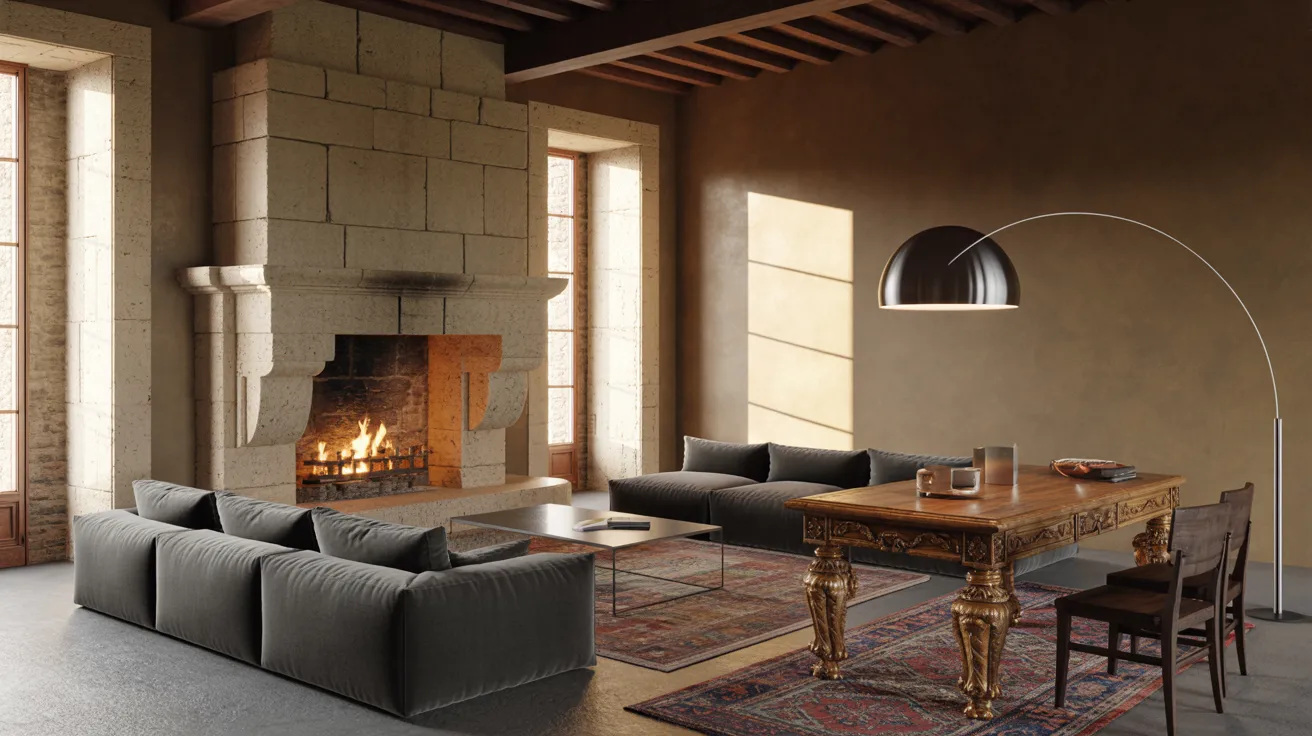
Many Italian homeowners mix old and new without apology. A stone fireplace sits next to a sleek sofa.
An antique table holds a modern lamp. This mixing of periods and materials feels lived-in and personal.
It takes confidence to pull off, but when it works, the result is a home that tells a real story.
23. Contemporary Italian Minimalist Homes
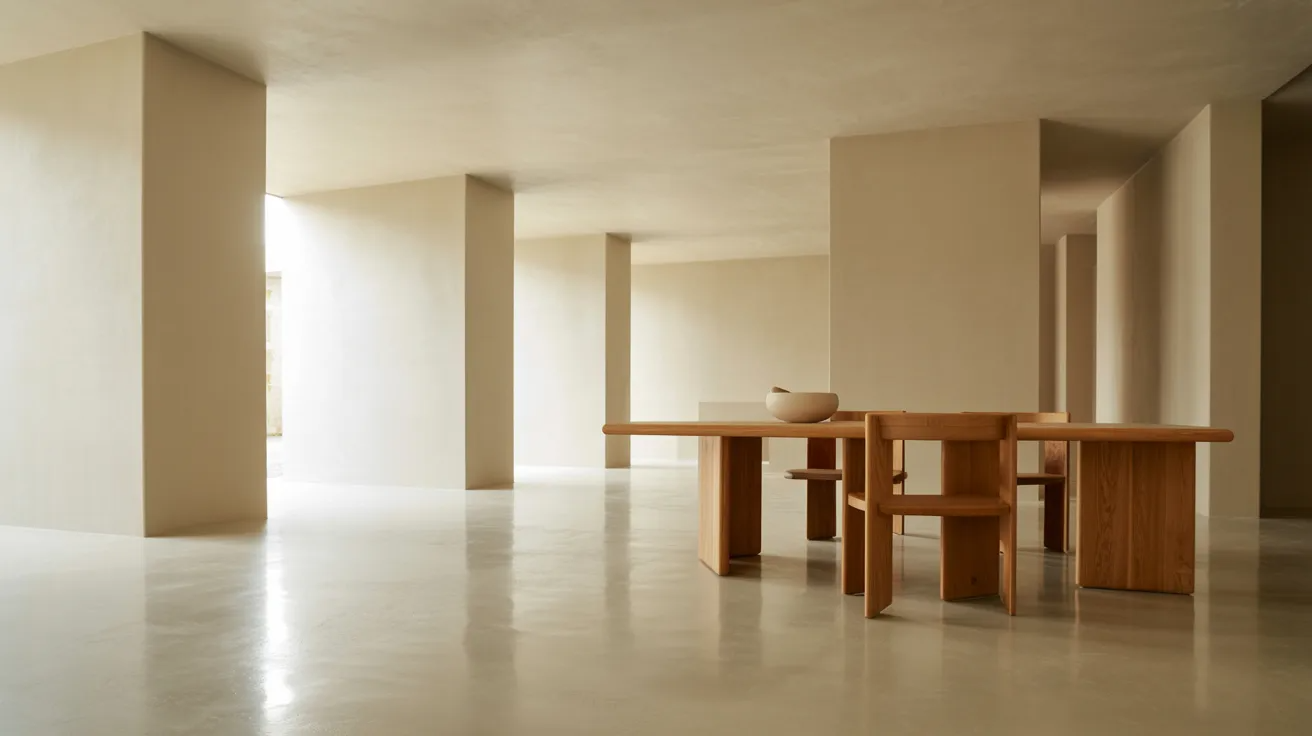
Minimalism has found a natural home in Italy. These spaces use very few materials and very few objects, but each one is chosen with care.
White walls, polished concrete floors, and simple wooden furniture are common. There is no clutter.
Natural light becomes the main decoration. These homes are calm, focused, and deeply comfortable to live in.
Tips for Choosing and Designing Italian Homes
Picking the right Italian style takes thought. Here are five tips to help you get it right:
- Study the region first: Tuscan, Lombardy, and Sicilian homes all look very different. Match your style to the right region for the most authentic result.
- Use natural materials: Stone, terracotta, wood, and plaster age well and connect the home to its surroundings.
- Keep the palette grounded: Stick to ochre, cream, terracotta, olive, and sand. Use stronger colors only for accents.
- Balance old and new carefully: Let the architecture set the tone, then layer in contrasting details with a light hand.
- Prioritize outdoor living: A terrace, courtyard, or garden is a core part of the living space, not an add-on.
Take your time with every choice, and you will end up with a home that truly feels like yours.
Conclusion
Italian homes are built around real life, not just looks. I grew up admiring these styles in design books, and I truly believe anyone can bring this warmth into their own space.
I hope this guide gave you the clarity you needed.
Found a style you love? Drop it in the comments below.
Share this post with someone planning their next home project, and check out our other home design guides for more ideas.
Frequently Asked Questions
What makes Italian home design different from other European styles?
Italian homes stand out for regional materials, handcrafted details, and a strong indoor-outdoor connection.
Can I use Italian design ideas in a non-Italian home?
Yes, natural materials, warm tones, and open layouts work in any home.
What is the most popular traditional Italian home style?
The Tuscan villa, known for stone walls, terracotta floors, and earthy tones.
Are modern Italian homes expensive to build or decorate?
Not always. Many Italian design ideas fit different budgets.
How do I start planning an Italian-style home interior?
Pick one region or style, then build your colors and materials around it.