
I wasn't planning to stop. But something about that street in Beaufort, South Carolina made me slow down.
Raised homes, wide shaded porches, tall windows open to the breeze. I sat there longer than I should have.
That moment stuck with me. If you've ever felt the same pull toward this style, this guide is for you.
I'll cover the history, key features, cultural roots, and modern takes on Lowcountry architecture.
By the end, you'll know exactly what makes these homes so hard to forget.
History and Evolution of Lowcountry Architecture
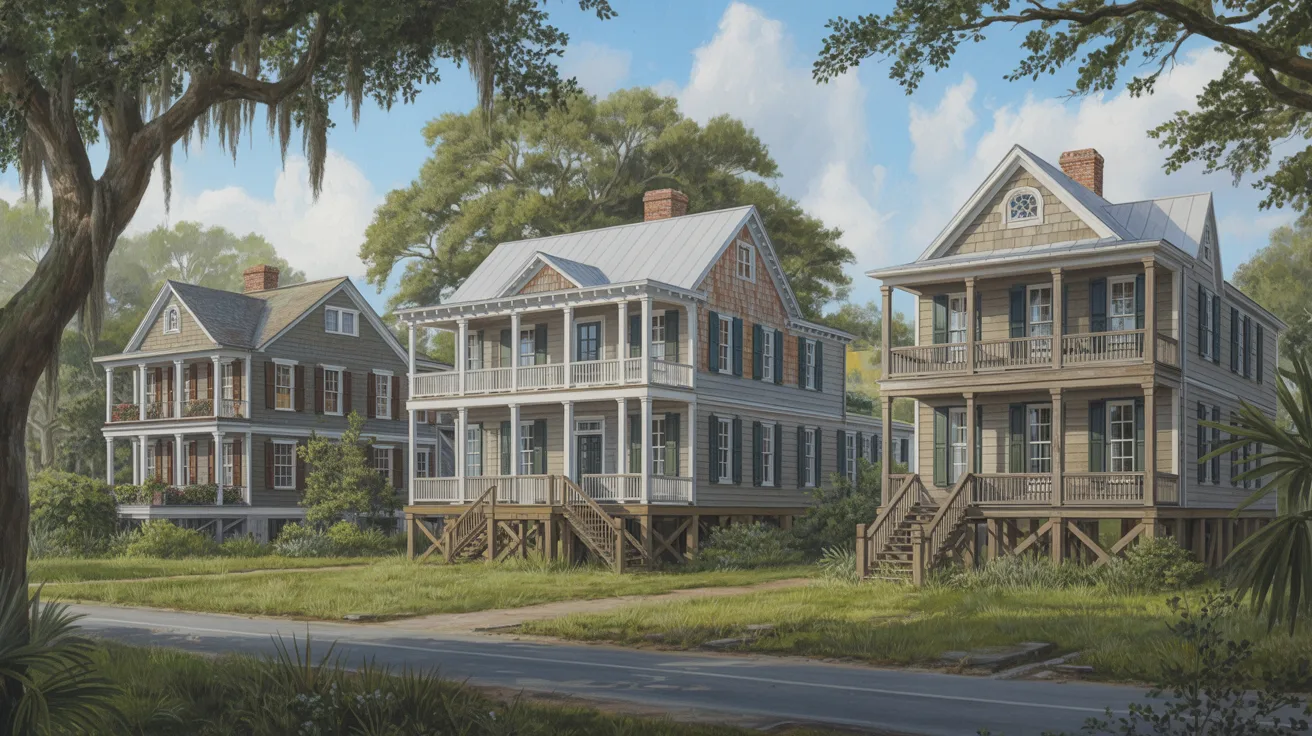
Lowcountry architecture developed along the coastal regions of South Carolina and Georgia during the 17th and 18th centuries.
Early settlers faced intense heat, high humidity, and regular flooding. They adapted fast.
Homes were raised off the ground, wide porches were added for airflow, and local materials like cypress wood and tabby were put to use.
Building methods came from West African, Caribbean, and European traditions, each adding something different to the mix.
Over time, the style passed through Colonial, Federal, and Victorian periods, but the core ideas, raised foundations, outdoor living spaces, and natural ventilation, stayed consistent throughout.
Characteristics of Lowcountry Architecture
Lowcountry homes are built around climate, culture, and craftsmanship that have stood the test of time.
1. Climate-Responsive Design

Lowcountry homes were built to handle heat, humidity, and flooding. Raised foundations keep floors above flood levels and allow air to flow underneath.
Deep overhanging roofs block the harsh sun. Cross-ventilation was planned into every layout, with windows and doors positioned to catch the breeze.
These weren't just design choices. They were survival strategies. The climate shaped every decision, from the roof angle to the porch depth.
2. Outdoor Living Integration
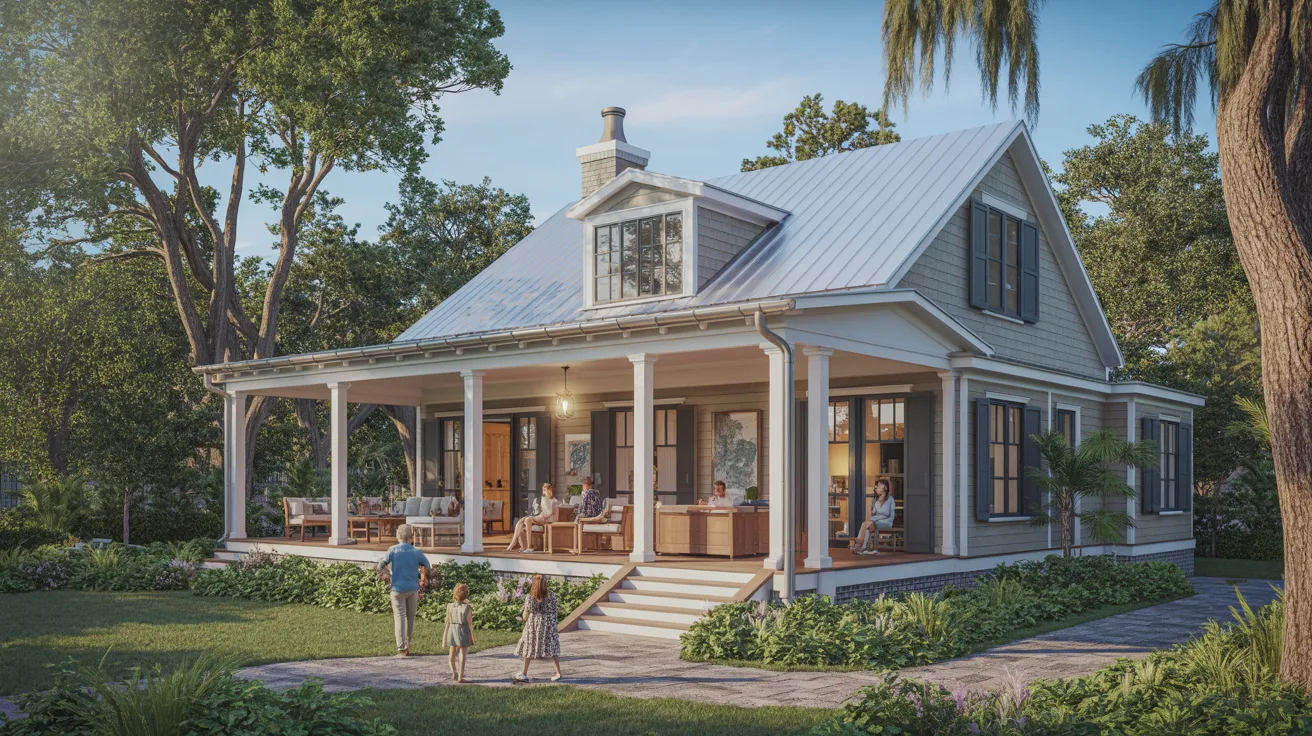
In Lowcountry design, the outside is just as important as the inside. Wide porches, called piazzas, stretch across the front or sides of a home.
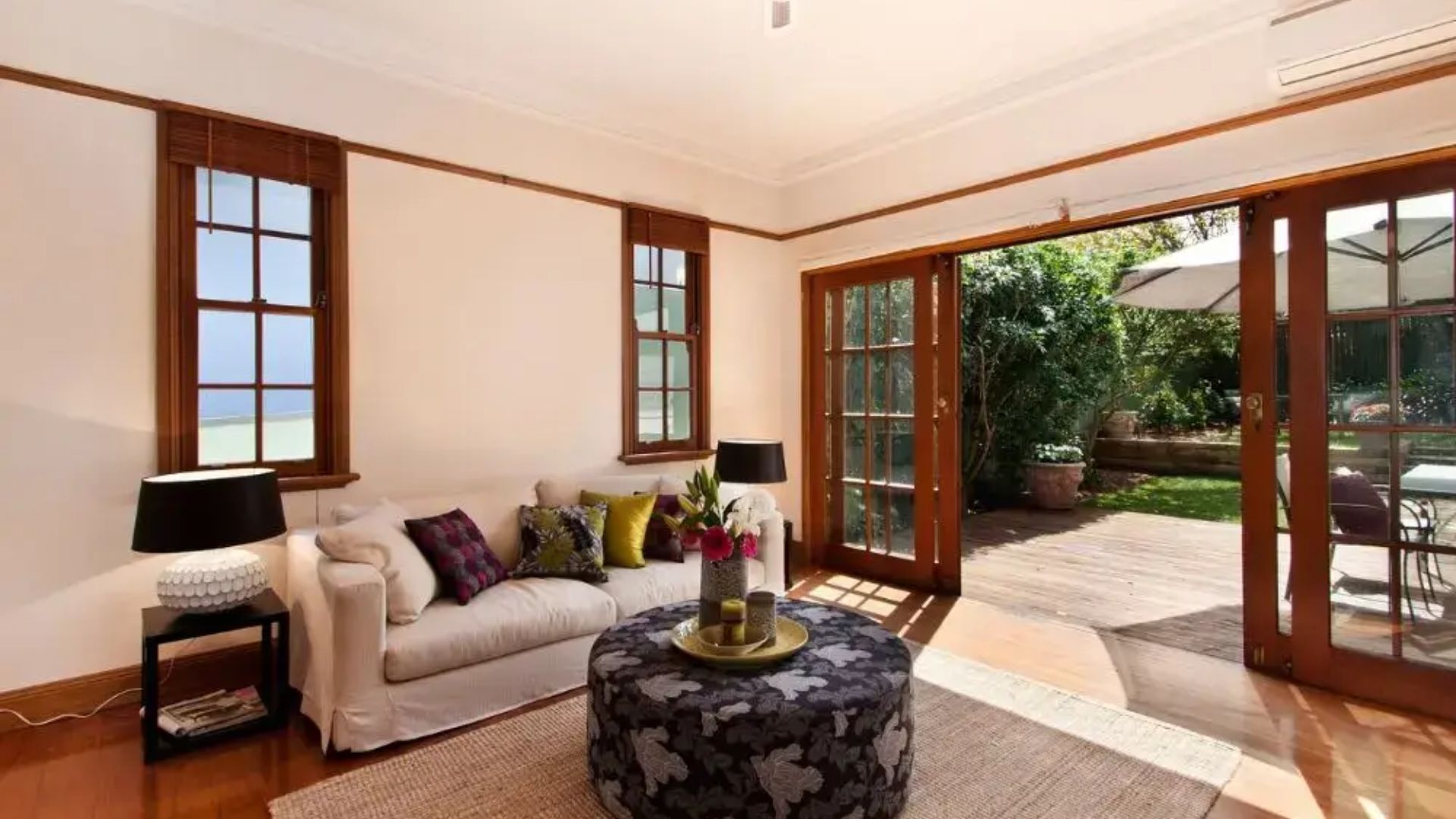
They serve as extra living space for gathering and relaxing. Gardens and covered walkways connect indoor and outdoor areas. The line between inside and outside is intentionally blurred.
This connection to nature started as a practical choice but became one of the most loved features of this style.
3. Symmetry and Proportion
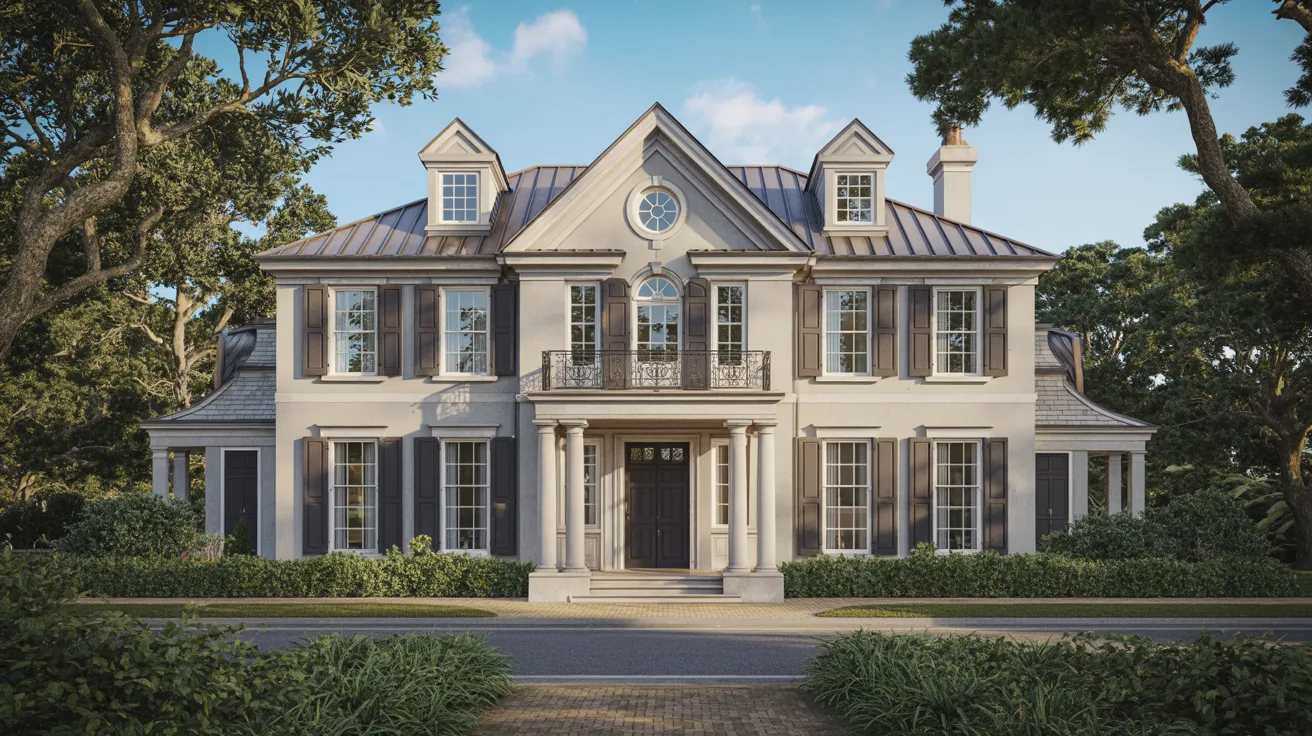
Lowcountry homes follow a clear sense of order. Facades are often symmetrical, with evenly spaced windows and a centered front door.
Rooms are proportioned to feel open without being wasteful. Ceilings are tall to let heat rise. Doorways are wide to allow airflow.
This sense of balance came from Georgian and Federal architectural traditions. It gives Lowcountry homes a calm, grounded look that feels deliberate, not accidental.
4. Cultural Heritage Influences
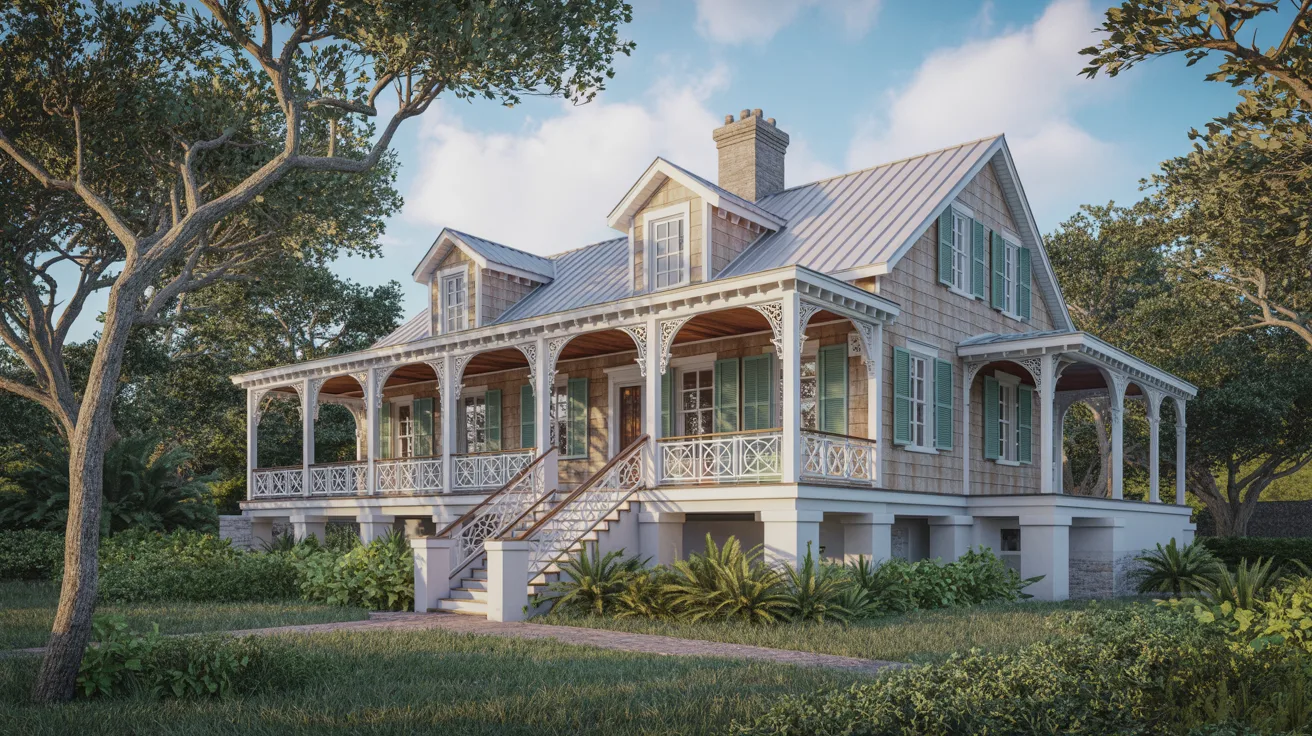
The Lowcountry was shaped by many cultures. West African craftsmen brought techniques that influenced roof styles, ironwork, and layout.
Caribbean influences show up in raised foundations and open-air design. European settlers added Georgian symmetry and Federal detailing.
These traditions merged into something new over time. The result is a style that carries deep cultural meaning, built by communities with different backgrounds but a shared sense of place.
5. Timeless Materials
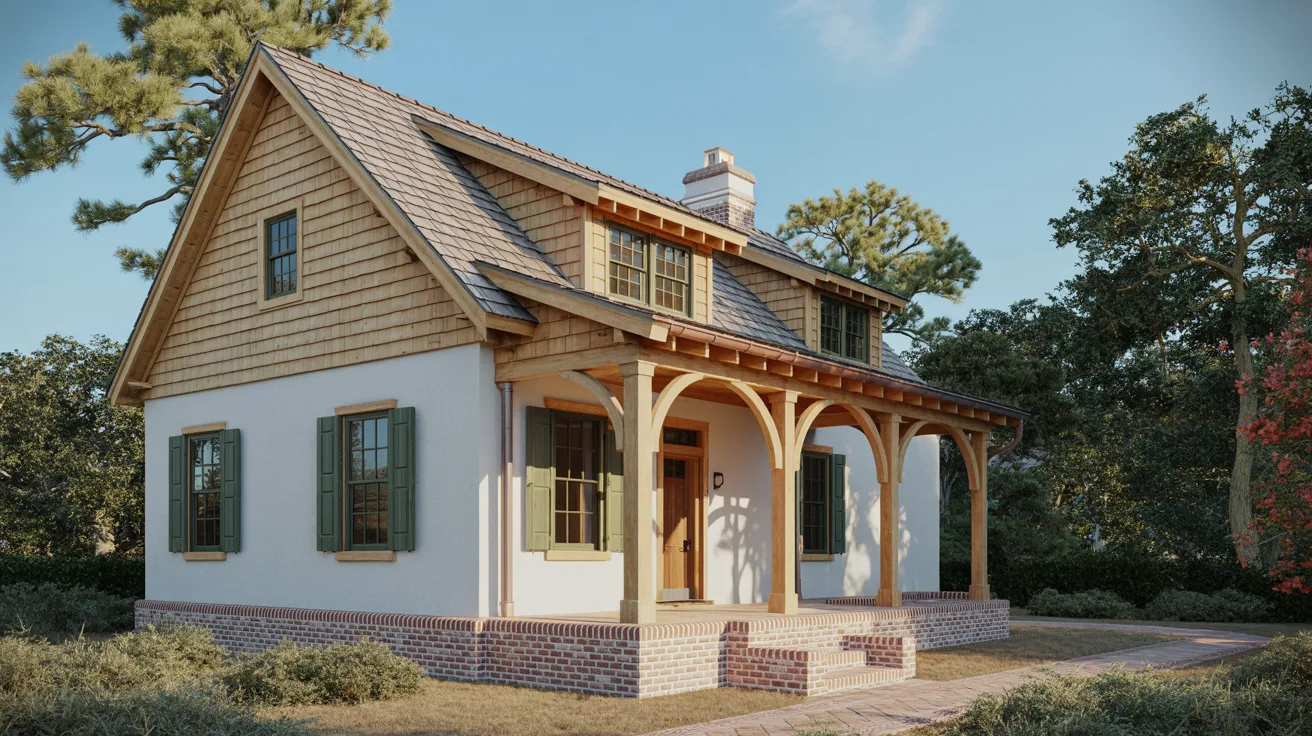
Lowcountry builders used what the land provided. Cypress wood resists rot and insects, making it ideal for humid climates.
Tabby, a mix of oyster shells, lime, sand, and water, was used for walls and foundations. Heart pine floors are still found in historic homes today. Brick and stucco were also common.
These materials weren't chosen for looks alone. They were chosen because they lasted, and many of them still do.
List of 9 Key Features of Lowcountry Homes
Every detail in a Lowcountry home has a purpose, from the raised floors to the wide-open porches.
1. Elevated Homes
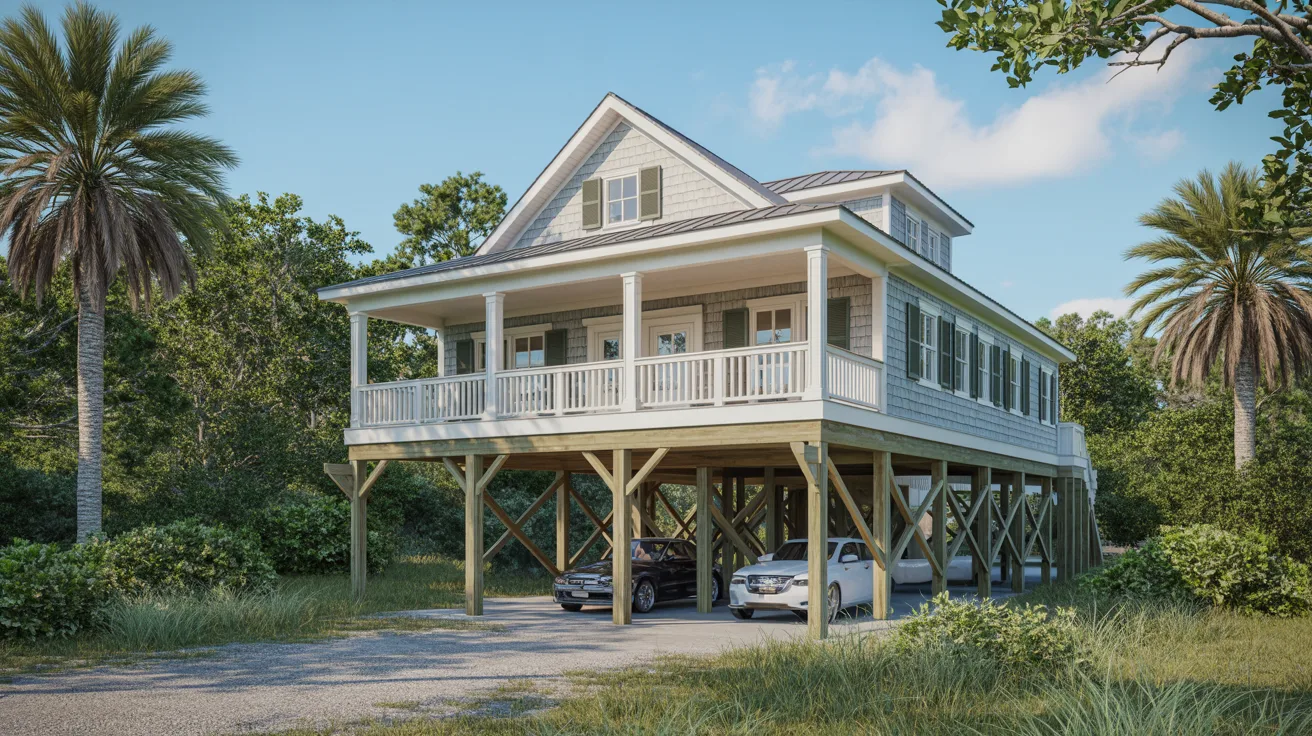
Lowcountry homes sit several feet above the ground on raised foundations. This protects them from flooding, which is common in coastal areas.
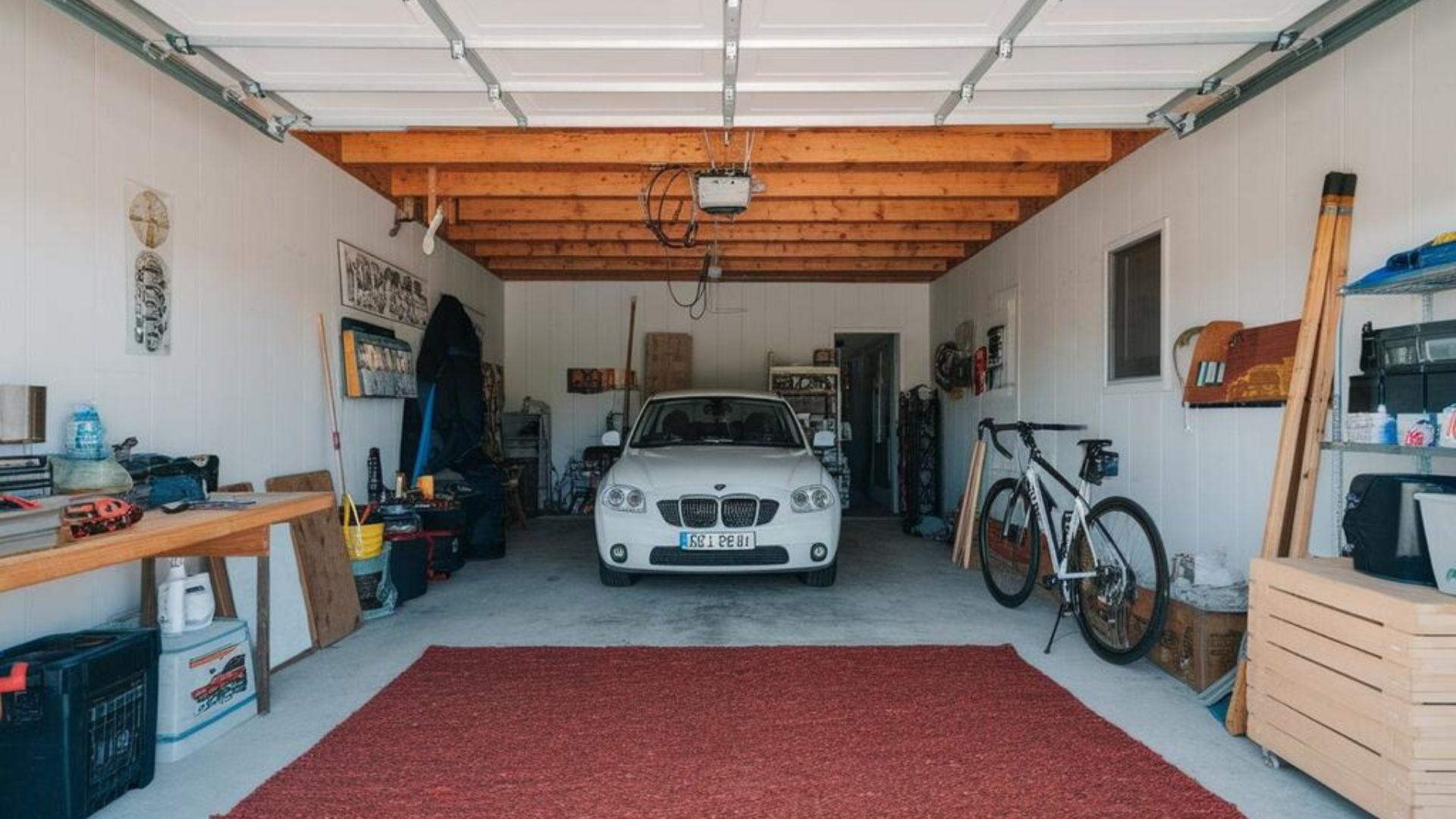
Raising the home also allows air to move underneath, keeping floors cooler in summer. The space below is often used for storage or parking.
This feature is one of the most defining parts of the style. It's both practical and visual, giving homes a stately, lifted appearance.
2. Wide Porches and Piazzas
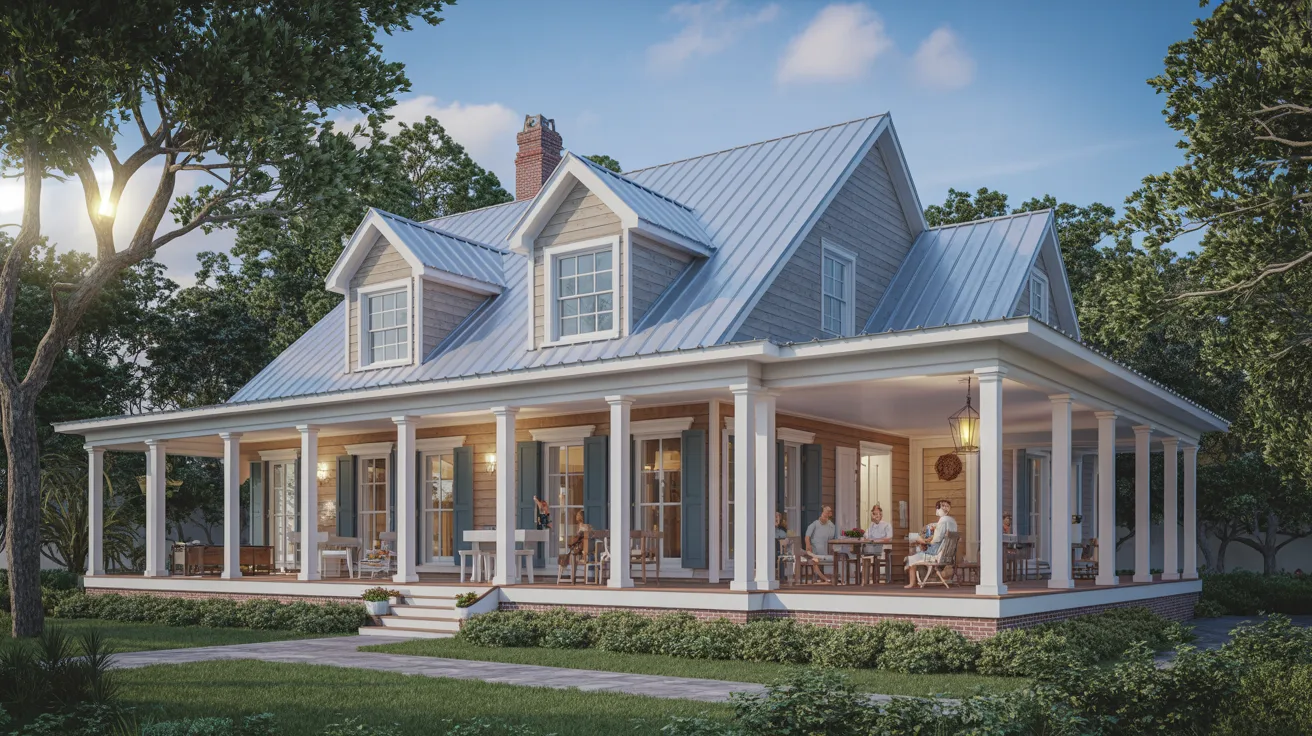
The porch, or piazza, is central to a Lowcountry home. It runs along the front or side of the house, often on two levels.
It blocks direct sunlight, shades the interior, and creates a cool outdoor area. Families used the piazza for meals and evening cooling.
In many historic Charleston homes, the piazza faces sideways to catch cross breezes. This simple design choice made a big difference in comfort before air conditioning existed.
3. High Ceilings
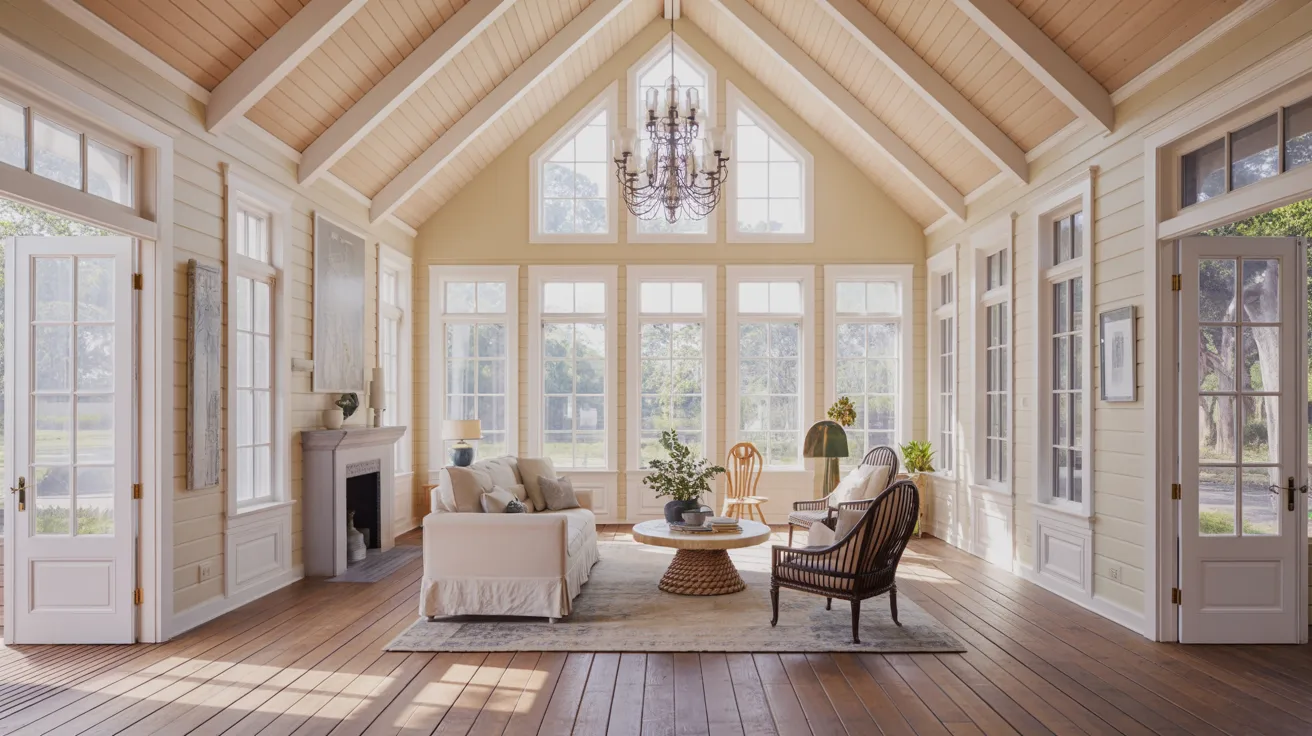
Ceilings in Lowcountry homes are noticeably tall, often 10 to 14 feet high. Hot air rises, so taller ceilings keep living spaces cooler.
This was a smart solution in a time before air conditioning. High ceilings also make rooms feel larger and more open.
They're often paired with tall windows and transoms above doorways to further push heat upward and pull cool air in from below.
4. Windows and Doors for Ventilation

Windows in Lowcountry homes are tall, operable, and placed opposite each other. This creates cross-ventilation, pulling cool air through and pushing hot air out.
Doors often have transom windows above them for added airflow. Shutters help control light and breeze. Every opening was carefully placed.
Ventilation wasn't just a comfort feature. It was a core part of how these homes worked before modern cooling systems existed.
5. Roofs, Dormers, and Cupolas
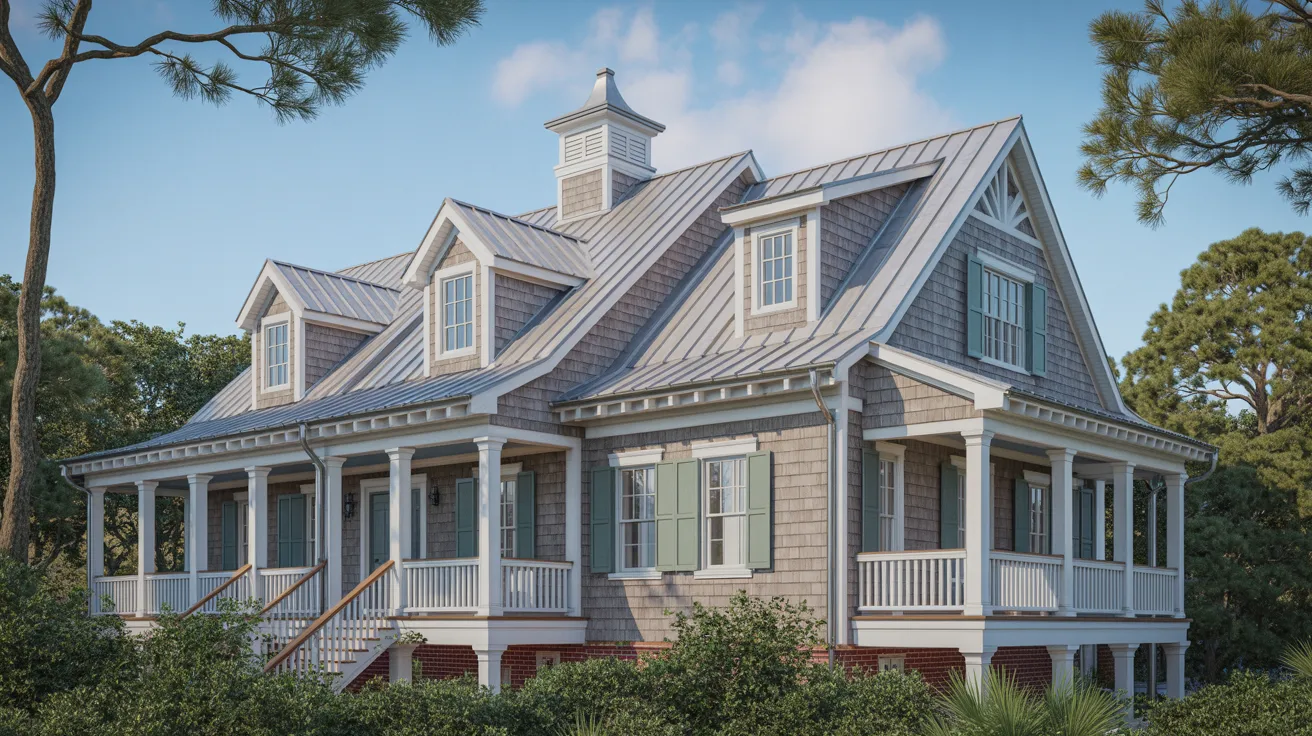
Lowcountry roofs are pitched steeply to shed the heavy rainfall common in coastal regions. Dormers, small windowed structures that project from the roof, add light and ventilation to upper floors.
Cupolas sit at the peak of some roofs, acting as vents that release trapped heat. These elements aren't just decorative. Each one solves a real problem.
Together, they give Lowcountry homes their distinctive roofline that's both practical and visually interesting.
6. Exterior Materials and Finishes
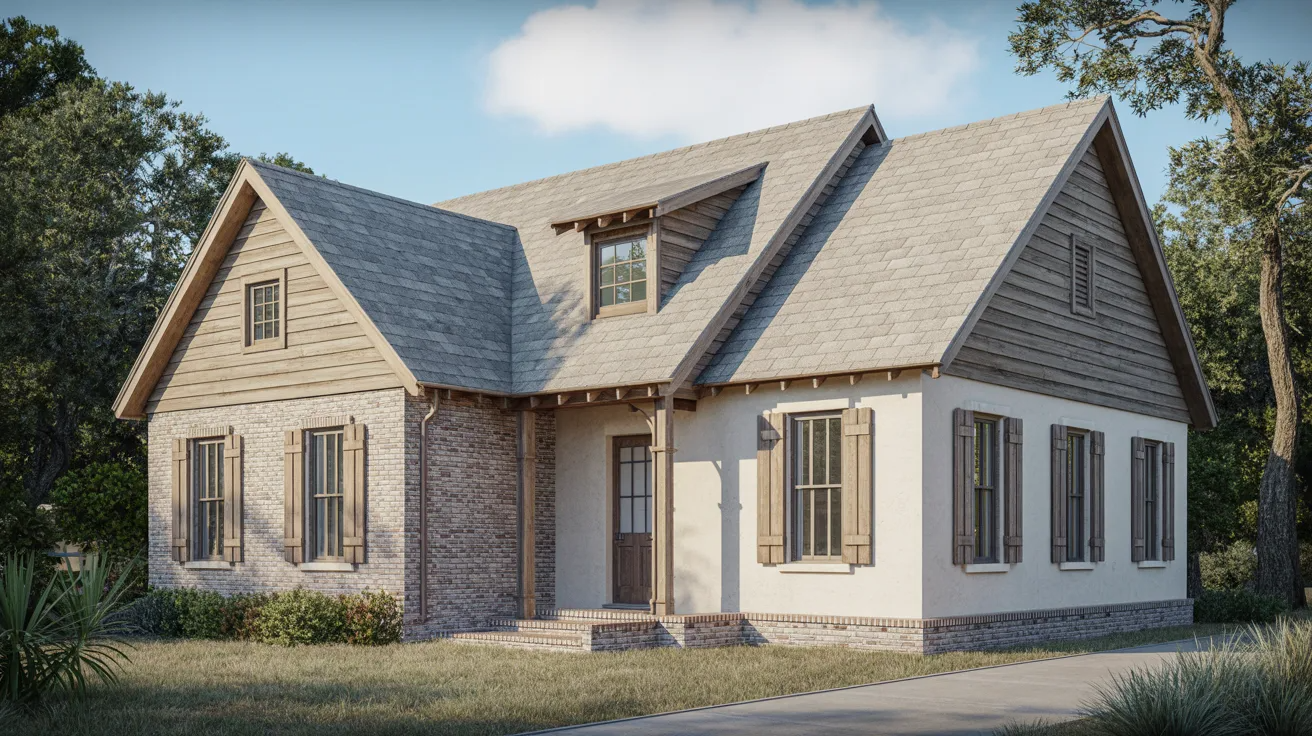
Traditional Lowcountry homes used cypress wood siding, tabby concrete, and handmade brick. These materials hold up well in heat, humidity, and saltwater air.
Paint colors are typically muted, with soft whites, grays, and warm creams. Wood trim and shutters add contrast.
In historic areas like Beaufort and Charleston, many of these original finishes are still intact. The materials were built to last, and they have.
7. Landscaping and Outdoor Spaces
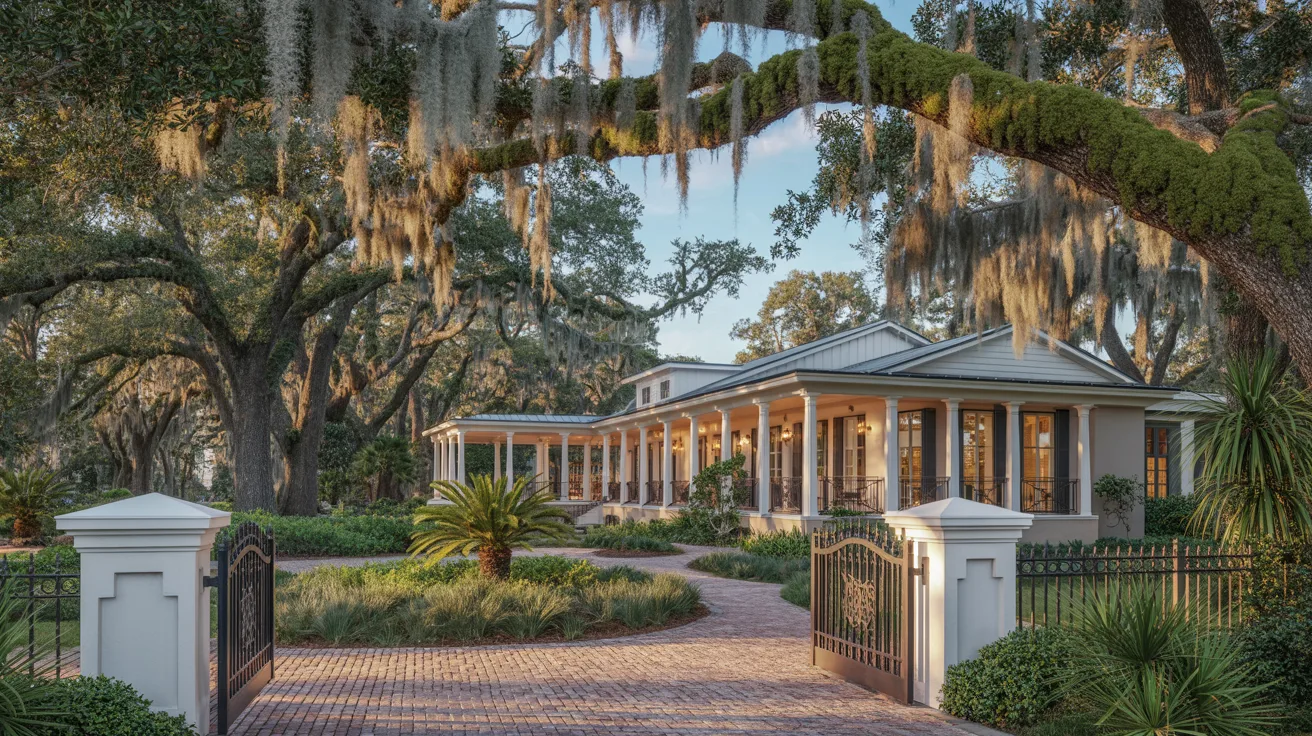
Outdoor spaces in Lowcountry homes are designed as extensions of the living area. Covered walkways, courtyards, and garden walls define the outdoor rooms.
Live oaks, Spanish moss, palmetto trees, and native plants are common across Lowcountry landscapes. These plants are low-maintenance and suited to the climate.
Brick pathways and iron gates are traditional touches. The landscape ties the home to its coastal surroundings in a way that feels natural and intentional.
8. Decorative Features and Southern Look
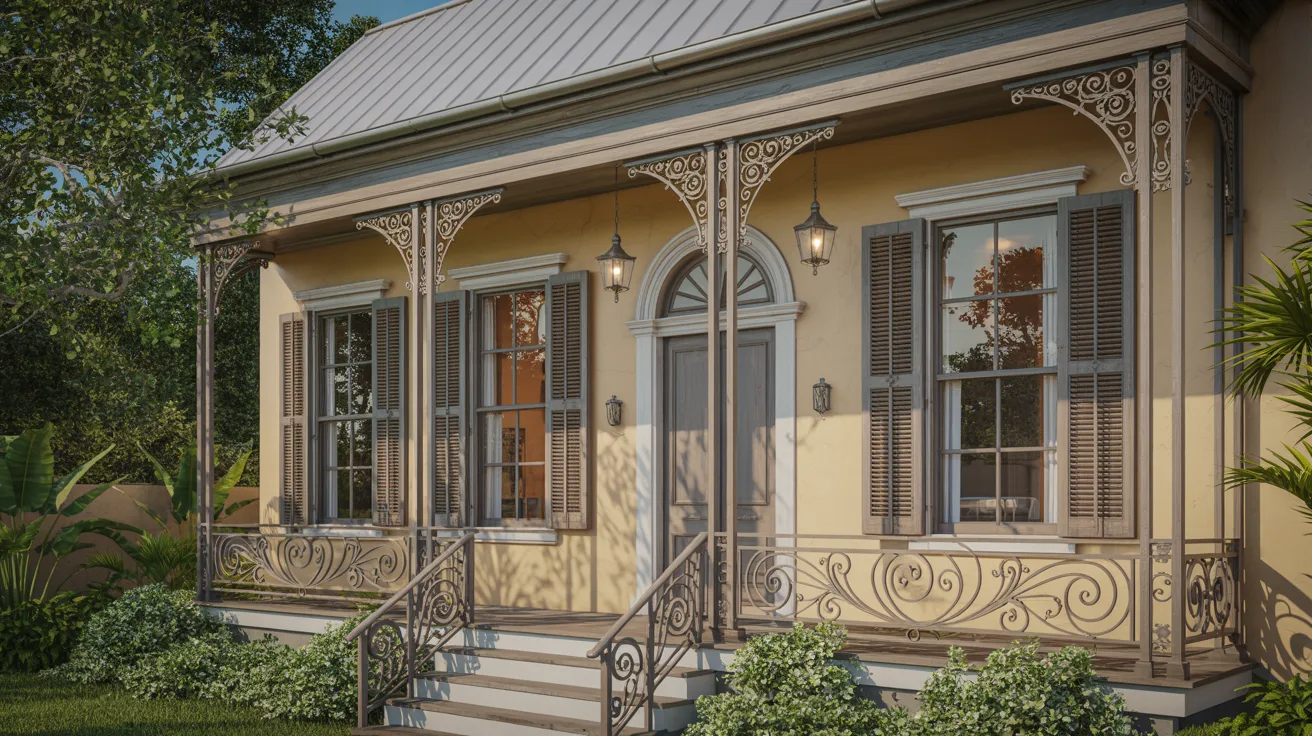
Lowcountry homes carry a quiet charm that shows up in the details. Decorative ironwork, especially in Charleston, is famous for its craftsmanship.
Columns, shutters with working louvers, and fanlights above doorways add character. Interior details include wide-plank wood floors, plaster walls, and hand-carved mantels.
These touches weren't added to impress. They reflect the skill of local craftsmen over generations. The detailed work is restrained but clearly thoughtful.
9. Climate-Responsive Layouts
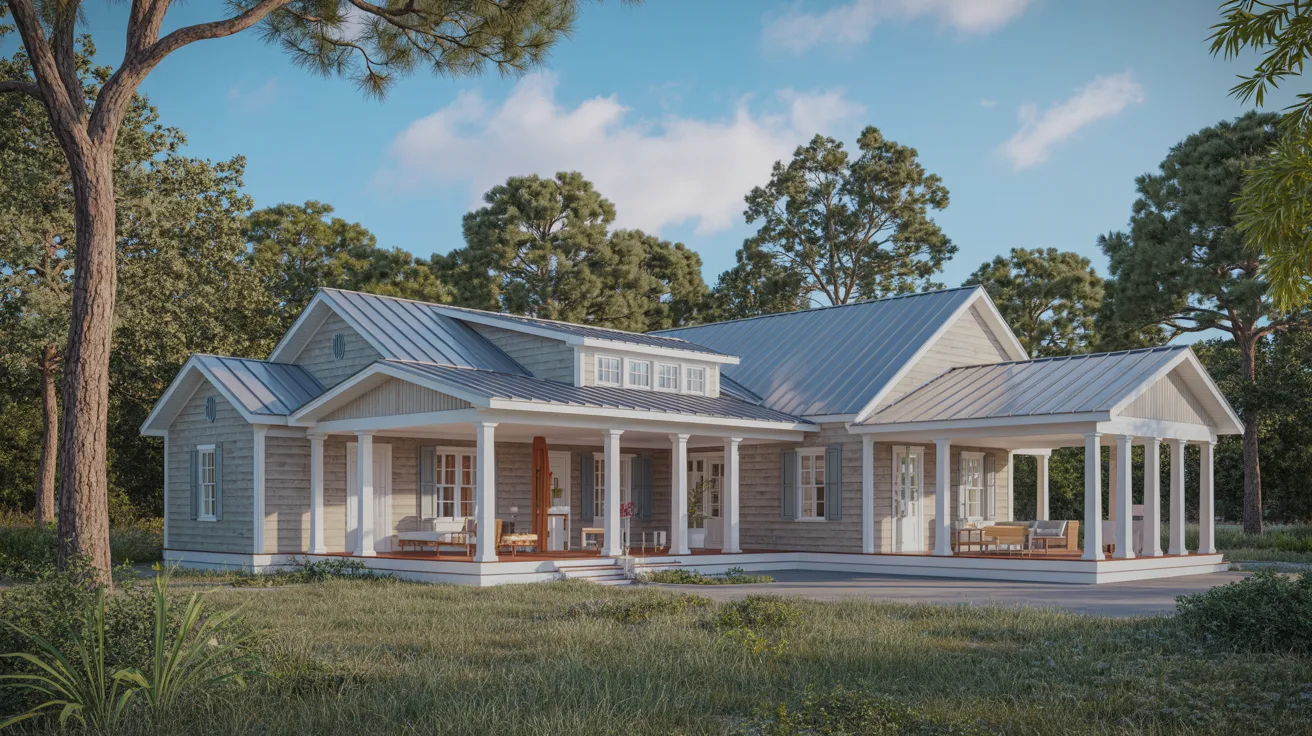
The floor plan of a Lowcountry home was designed to fight the heat. Rooms run front to back to allow air to move through.
Hallways act as channels for airflow. Kitchens were often placed in separate buildings to keep heat out of the main house. Bedrooms sit near windows for nighttime cooling.
Every layout decision was made with the climate in mind, and it shows in how naturally comfortable these homes feel.
Modern Adaptations of Lowcountry Architecture
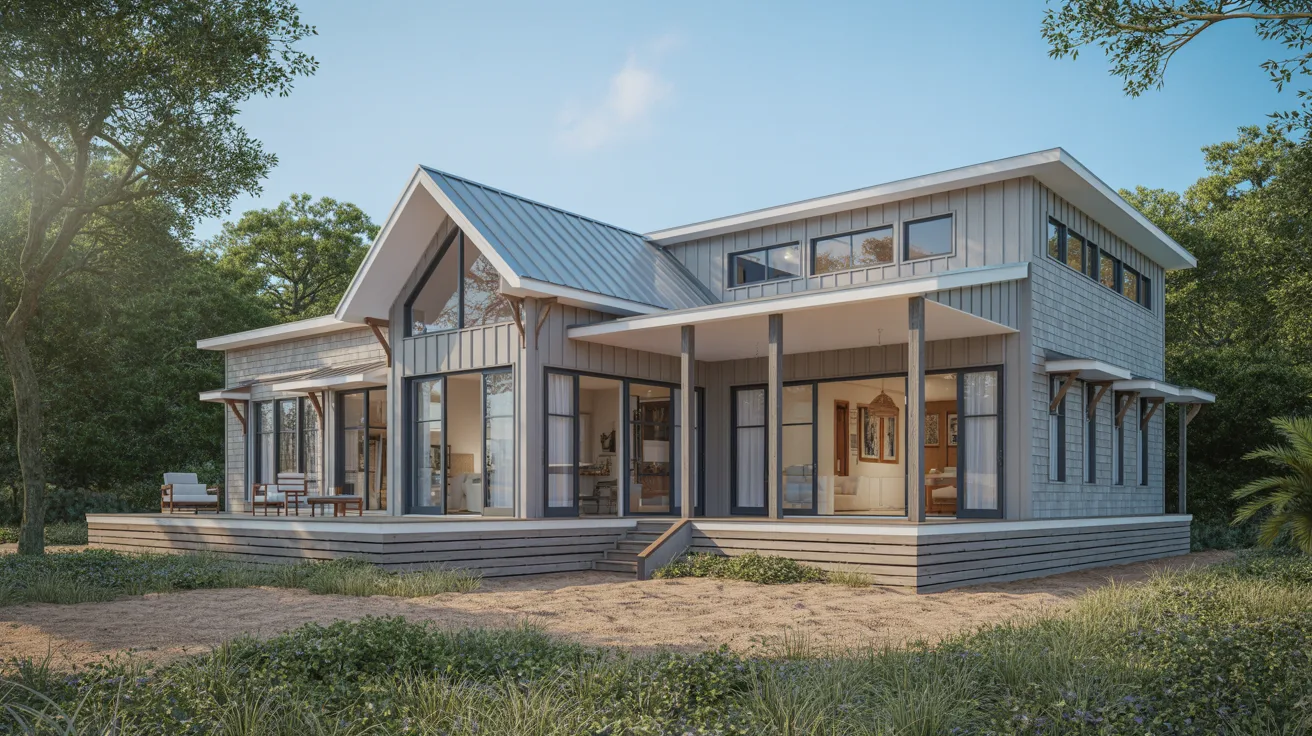
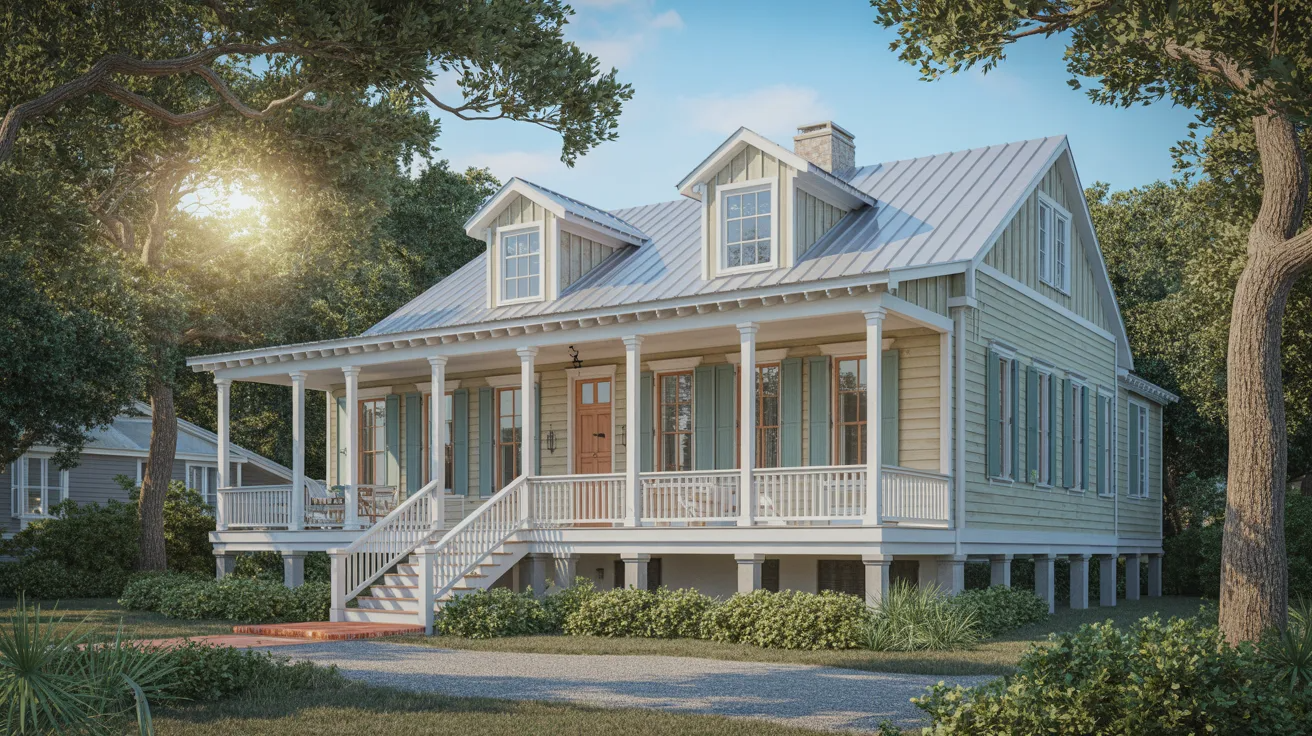
Modern Lowcountry homes keep the classic look while updating what's inside. Open floor plans replace divided rooms, and large glass doors bring in more light.
Fiber cement siding and engineered hardwood now do the work that cypress once handled.
Neotraditional builds use raised foundations, deep porches, and shiplap walls to reference the historic style without copying it directly.
Sustainable upgrades like impact-resistant windows, reinforced roofing, and elevated foundations meet today's flood zone standards.
The exterior stays rooted in tradition while the structure performs better than ever.
Conclusion
Lowcountry architecture is more than looks. It's history, climate, and culture built into every detail.
I've always loved how these homes feel grounded yet open at the same time.
Once you notice the logic behind the raised floors and deep porches, it all makes sense.
If this guide helped you, share it with someone planning a build or renovation.
Got questions or thoughts on Lowcountry style? Drop a comment below. I'd love to hear from you.
Frequently Asked Questions
What is Lowcountry architecture?
A coastal building style from South Carolina and Georgia, known for raised homes, wide porches, and ventilation-focused design.
What makes Lowcountry homes different from other Southern styles?
They place a stronger focus on airflow, raised foundations, and outdoor living spaces.
Are Lowcountry homes expensive to build?
They can cost more, but modern versions are available at a range of price points.
Can Lowcountry design work in climates outside the Southeast?
Some features translate well, but the style performs best in hot, humid, coastal environments.
What materials are most common in Lowcountry homes?
Cypress wood, brick, and heart pine are traditional, while modern builds often use fiber cement siding.