
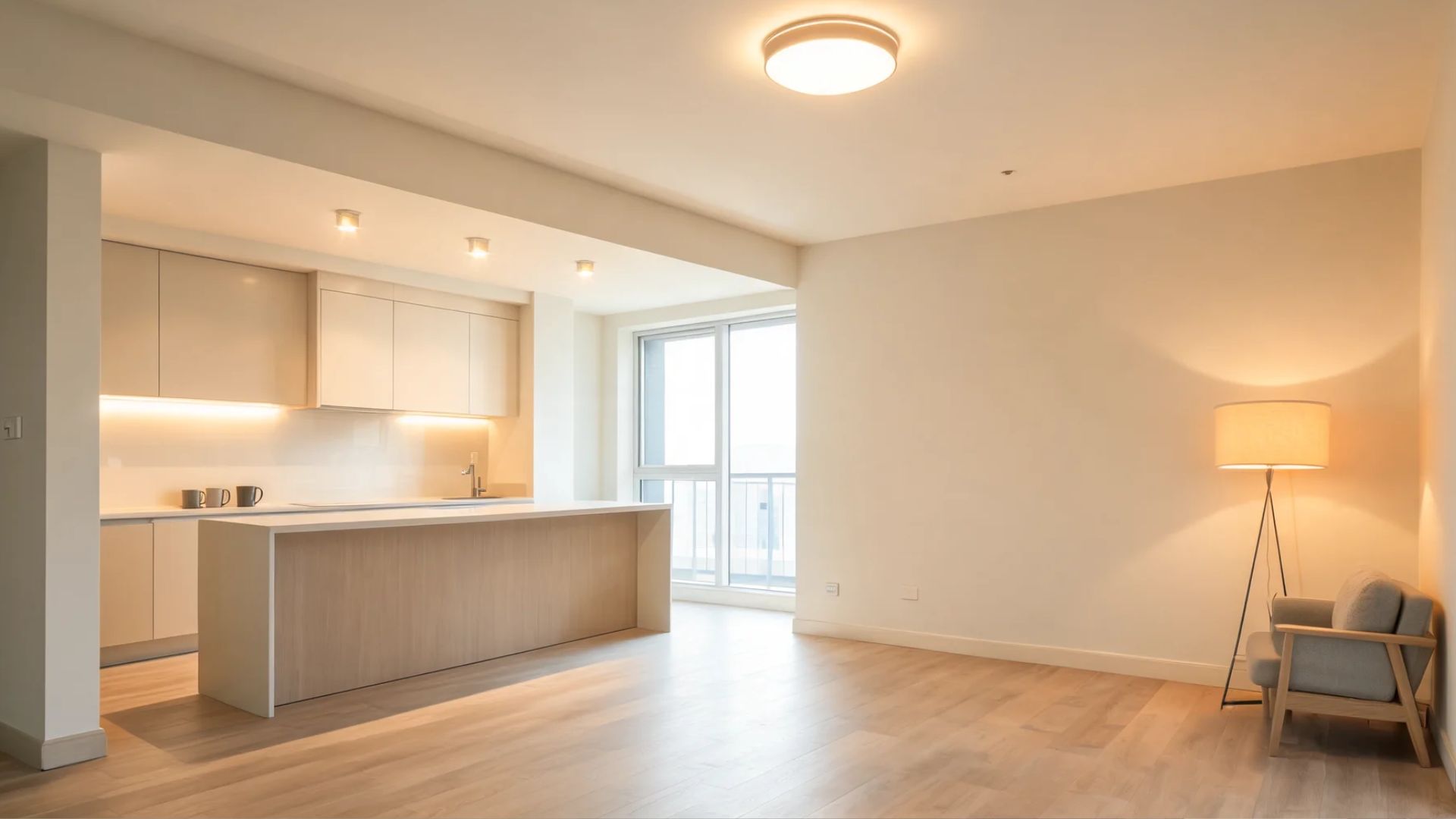
Here’s something I tell in a 480-square-foot one-bedroom I worked on, swapping a bulky sectional for a curved sofa with slim legs and clearing the console down to one grouping made the whole room feel noticeably bigger, and that catches people off guard every time. Honestly, some of the most refined spaces I’ve worked on are the ones with the least visual clutter, and that catches people off guard every time.
That matters even more in a small condo, because every finish, every fixture, every furniture piece is pulling double duty on how the whole room feels to live in.
Good small luxury design isn’t about adding more. It’s about making fewer choices that actually land for the person living there. Once you understand your space, you can build a home that feels polished without making it feel smaller.
Okay, so let’s start with what your layout can actually support.
What “Small Luxury” Actually Means in a Condo
Small luxury comes from material quality and restraint, not from piling on more decor. That’s the one thing almost every small condo gets wrong, people assume luxury means more. More texture, more ornament, more statement pieces. In a small space, that backfires fast.
The real factor here is proportion. A few well-chosen materials, placed with intention, read richer than a dozen competing ones ever will. I’m obsessed with how much restraint actually pays off here.
This also shifts depending on your layout:
- A unit with tall ceilings or big windows can carry more pattern and layering without feeling busy.
- A boxy, low-ceiling unit needs a tighter, calmer hand to read as elevated instead of cluttered.
Push “luxury” too far toward ornate, and it breaks down right there. That’s the exact point where a small condo stops reading elevated and starts reading cluttered.
Before You Buy Anything, Read the Space
Before you choose a single material, walk the unit and find its best feature.
Every small condo has one or two things worth building around, a window wall, a great ceiling height, an exposed structural line. Find that feature first. Everything else, lighting, color, furniture, should work with it, not against it.
What you do next depends on your layout:
| Layout Type | First Decision | Why It Matters |
|---|---|---|
| Open-plan | Zoning: where each area starts and ends | Without zones, your design choices get applied room-wide and feel scattered |
| Segmented | Flow: how you move between rooms | Choices need to carry through doorways, or the condo feels disconnected |
Skip this step and the room ends up designed in pieces instead of as one plan. That’s where most small luxury projects start going sideways, and it happens before a single finish even gets picked.
15 Small Luxury Condo Interior Design Ideas
These are ordered from highest-impact to most situational, starting with what’s going to change a room fastest.
1. Layer Your Lighting in Three Types

One fixture flattens a room. Three layers give it depth.
- Combine ambient, task, and accent lighting, a sleek chandelier, wall sconces, and under-cabinet LEDs.
- Round it out with automated, slim-profile shades, they let you control how much of that layered light gets in by day and reset the mood at night without adding another fixture.
- Together they remove the shadow buildup that makes small rooms feel boxed in.
This is the fastest fix on this whole list, hands down.
2. Pick a Palette That Expands the Room

Soft neutrals make walls recede. Ivory, beige, and warm gray reflect light instead of absorbing it.
In a small condo, that reflection is literally what makes the room feel bigger than it actually is. Such a simple swap, and it changes the whole feel of the space.
3. Or Anchor It With a Moody Tone

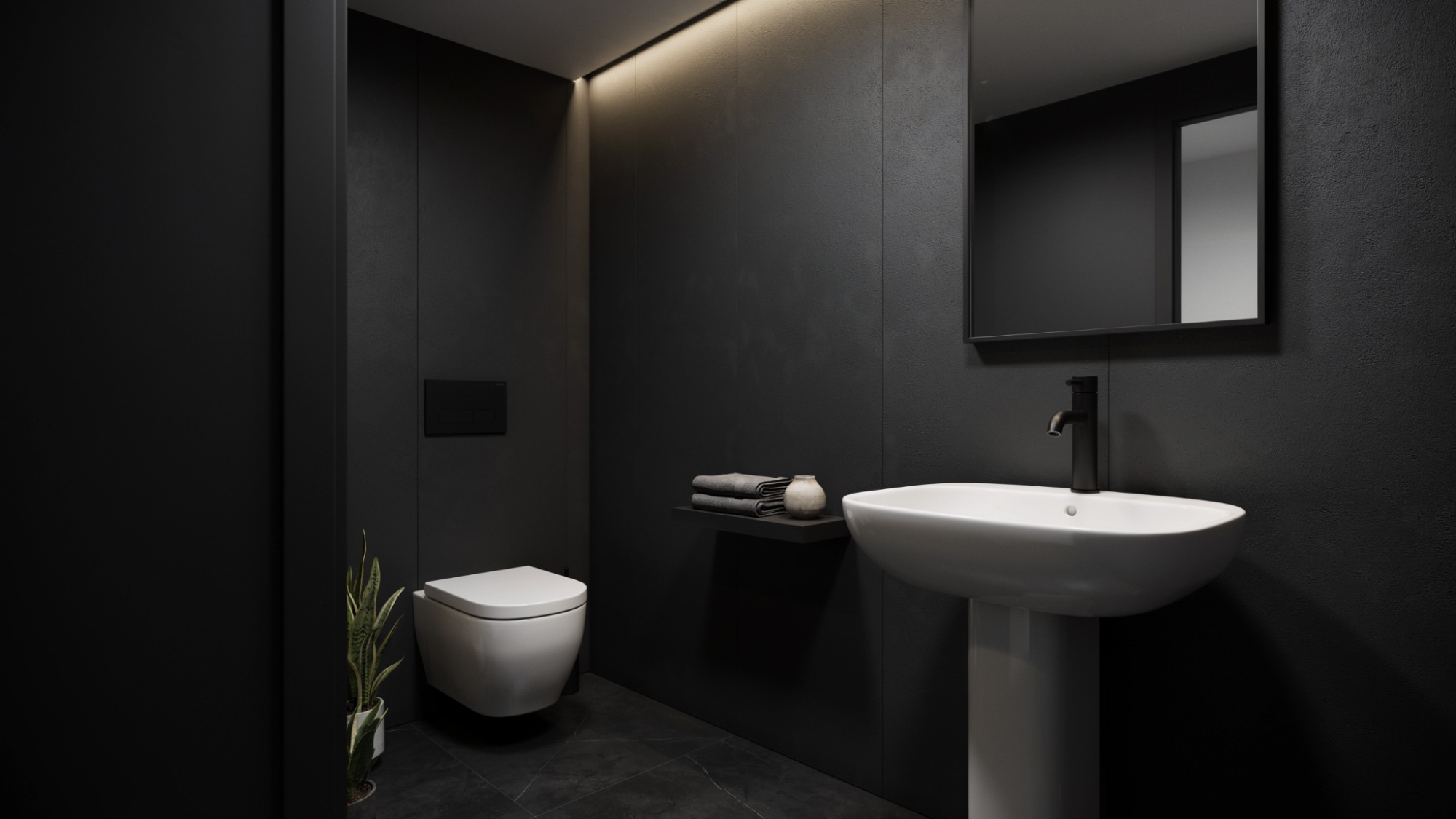
Dark colors can absolutely work, but only with enough light to back them up.
Deep navy, charcoal, and emerald green add real richness, the same moody palette that works so well in a dark minimalist bedroom.
Pair them with reflective surfaces or strong lighting, or the room reads smaller instead of richer. It’s a gorgeous option, but you can’t skip the lighting part.
4. Draw the Eye Up With Floor-to-Ceiling Drapery

Full-height drapery pulls attention upward, not sideways.
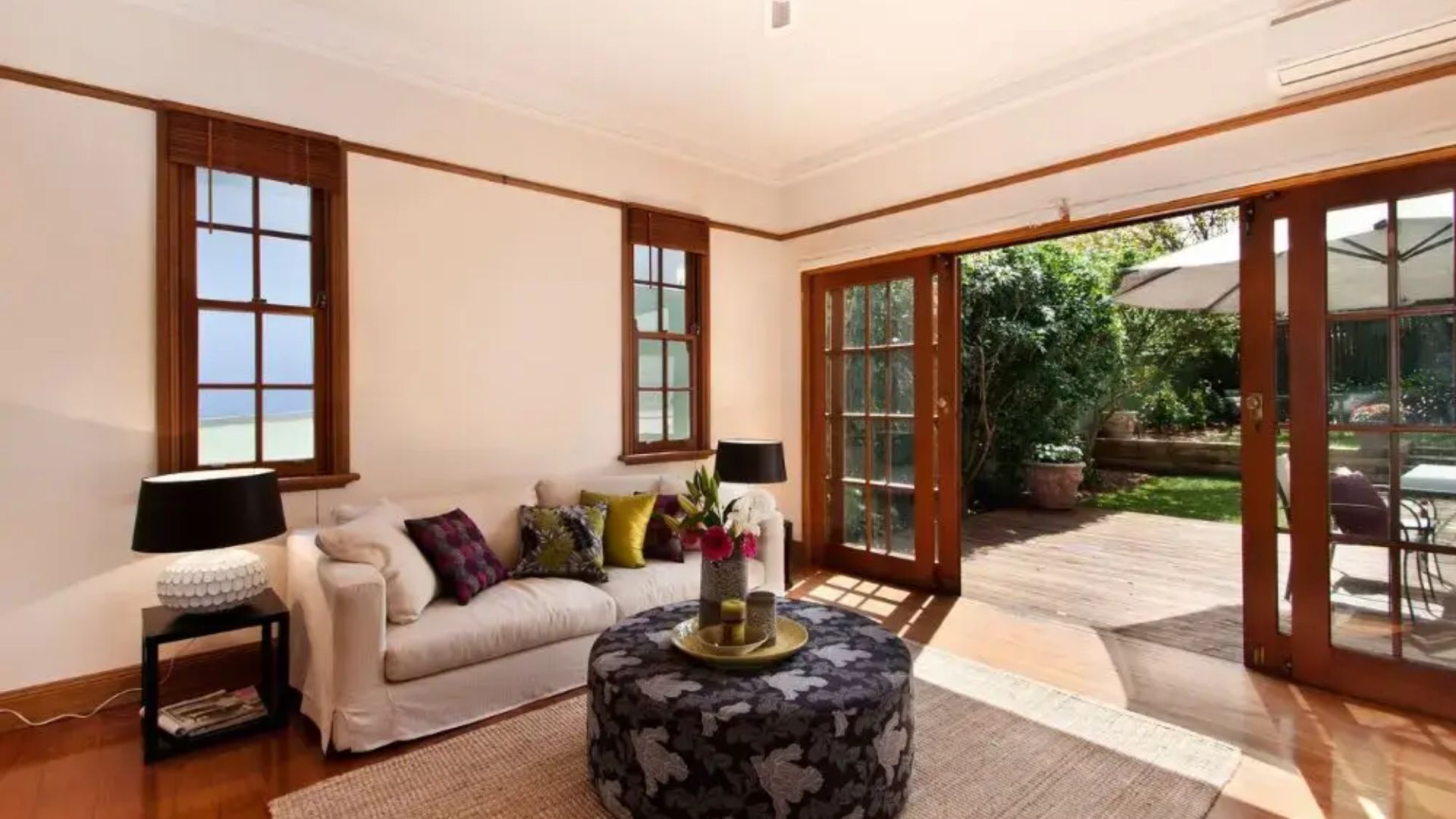
Hang curtains from ceiling to floor, even above a shorter window, and the ceiling instantly feels taller. One of the simplest height tricks there is, and no construction required.
5. Add Tall Built-In Millwork or Vertical Shelving

Vertical storage uses height your floor plan doesn’t have.
Tall built-ins and floor-to-ceiling shelving draw the eye up the same way drapery does, and they solve storage without eating into floor space. Height and function, in a single move.
6. Place a Large Mirror Opposite a Window

A well-placed mirror can genuinely double how big a room feels.
Set it directly across from a window, and it bounces natural light across the room, creating an illusion of extra depth. This one’s basically free square footage, and it takes five minutes to hang.
7. Bring in Tactile Textures

Texture signals quality before anyone even touches a thing.
- Plush velvet, raw linen, heavy wool, and a little leather add richness through feel, not size.
- One or two textures, chosen well, outperform a dozen competing ones every time.
Restraint here is what sells the whole room.
8. Choose Reflective and Natural Surfaces

Material finish carries more weight than material quantity.
Marble, brushed brass or bronze, dark wood, and fluted glass each read high-end completely on their own.
Pair one polished material with one raw, matte one, micro-cement, limewashed plaster, or a touch of exposed brick, so the palette reads curated instead of like a showroom.
Pick one as your anchor, not all of them at once. Mixing every finish you love just cancels out the richness each one brings.
9. Replace Standalone Storage With Custom Millwork

Built-in storage disappears into the wall instead of taking up the room.
Swap bulky furniture for built-in hidden storage, a floating media console, or custom wall panels. The floor space you get back is what actually makes the room feel open. It’s not about owning less, it’s smarter storage.
10. Use Multifunctional Furniture

Furniture that does two jobs frees up space a single-purpose piece just can’t.
- Storage ottomans, extendable dining tables, and modular sectionals flex for hosting or everyday life.
- One flexible piece can replace two fixed ones.
For anyone who actually entertains in a small space, that’s a game changer.
11. Choose Furniture With Exposed Slim Legs

Visible floor under furniture makes a whole room feel lighter.
Sofas and chairs with slim, raised legs let the eye travel underneath them, and that visual gap does more for the room than the piece itself does. A small detail with a surprisingly big payoff.
12. Add Transparent Accents

Clear materials take up space without looking like they do.
A glass coffee table or an acrylic chair holds its function while staying visually out of the way, which is perfect anywhere a solid piece would feel heavy. Love that these pieces manage to feel almost invisible in a tight layout.
13. Create Zones Within One Open Layout, Without Breaking Cohesion

An open floor plan still needs separation, just not walls.
Use a rug, a lighting change, furniture placement, or a half wall to mark where living, dining, and work areas begin and end. It keeps the whole layout from reading as one blur, which is the fastest way an open plan starts feeling messy.
Here’s the part people get wrong: zoning isn’t the same as fragmenting. Repeat the same one or two finishes, the same wood tone, the same metal, the same palette, across every zone, so the space still reads as one continuous, elevated room instead of a few disconnected ones stitched together.
14. Use One or Two Vintage or Statement Pieces

A single standout piece adds character. Several of them just compete for attention.
A vintage table or a bold accent chair can carry a room’s whole personality. Keep it to one or two so nothing’s fighting for the spotlight. Your eye should always know where to land first.
15. Apply the 3-5-7 Rule When Styling Surfaces

Odd-numbered groupings read as intentional, not random.
Group objects on a shelf or console in threes, fives, or sevens, varying height and size. A fast, reliable way to keep a surface from looking cluttered or sparse, and honestly the styling trick worth reaching for most often.
The Failure Point: Where Luxury Tips Into Clutter
Too many of the 15 ideas applied at once is what breaks a small luxury room.
Each move works beautifully on its own. Stack enough of them together, though, and they start competing instead of standing out.
| Room Type | Design Density | The Reason |
|---|---|---|
| Living areas | More layering, more statement moves | Bigger space and sightlines absorb density without feeling busy |
| Bedrooms | Fewer, calmer choices | The same density that works in a living room reads as busy here |
This is also where pattern tends to trip people up. One patterned textile, a rug, a set of pillows, drapery, can add richness. Two or three competing patterns in a small room almost always reads as busy rather than rich. So if you’re torn between pattern and texture to add interest, texture is the safer bet in a compact space.
A Quick Check: Does the Room Actually Read as Luxury?
Stand in the doorway and count what you see.
Pick one sightline, a wall, a corner, a view into the room, and count the distinct materials or statement pieces visible at once.
The rule: three or four reads as intentional and rich, while anything beyond that is usually the tipping point into clutter.
This count is the fastest way to catch overcrowding before it happens, not after the room is already furnished.
Why Restraint Is the Real Luxury
A luxurious condo isn’t defined by how much you fit into it. It’s defined by how thoughtfully each detail works together for the person actually living there.
Good small luxury condo design is really about knowing when to add something and when to leave room to breathe. That balance is what makes a compact home feel inviting, functional, and refined. Thoughtful choices make a bigger impact than expensive ones almost every time.
Start with one area of your condo. Make intentional changes. Build a space that actually feels like yours.
Frequently Asked Questions
How Can I Style a Small Condo to Make It Look Stylish?
Choose one or two standout materials instead of many finishes, and layer your lighting instead of relying on one overhead fixture. Keep furniture legs visible so the floor still shows through.
What Is the 3-5-7 Rule for Interior Decorating?
It groups objects in threes, fives, or sevens so a display feels balanced instead of random. It also doubles as a quick check against clutter on shelves or consoles.
How Do I Make a Small Apartment Look Luxurious?
Use layered lighting, one strong palette, and a few high-quality materials instead of a lot of decorative pieces. A mirror or glass table opens up the space.
What Does a Luxury Condominium Look Like?
A luxury condo pairs high-end finishes, marble, brass, dark wood, with intentional lighting and a cohesive palette. Smaller units show that same luxury through restraint, with fewer, better pieces doing all the work.
What Is the Cheapest Way to Make a Small Condo Feel More Luxurious?
Relayer your lighting and declutter before you buy anything new. Swapping a single overhead fixture for ambient, task, and accent lighting, and clearing surfaces down to one or two intentional groupings, changes how a room feels at little to no cost. Painting in a reflective neutral and hanging one well-placed mirror are the next lowest-cost, highest-impact moves.
Should I Use Bold Patterns in a Small Luxury Condo?
Generally, keep it minimal. One patterned piece, like a rug or a set of pillows, can add richness, but layering several competing patterns in a small room tends to fragment the space visually. If you want texture without that risk, lean on tactile materials like velvet or wood grain instead of pattern.