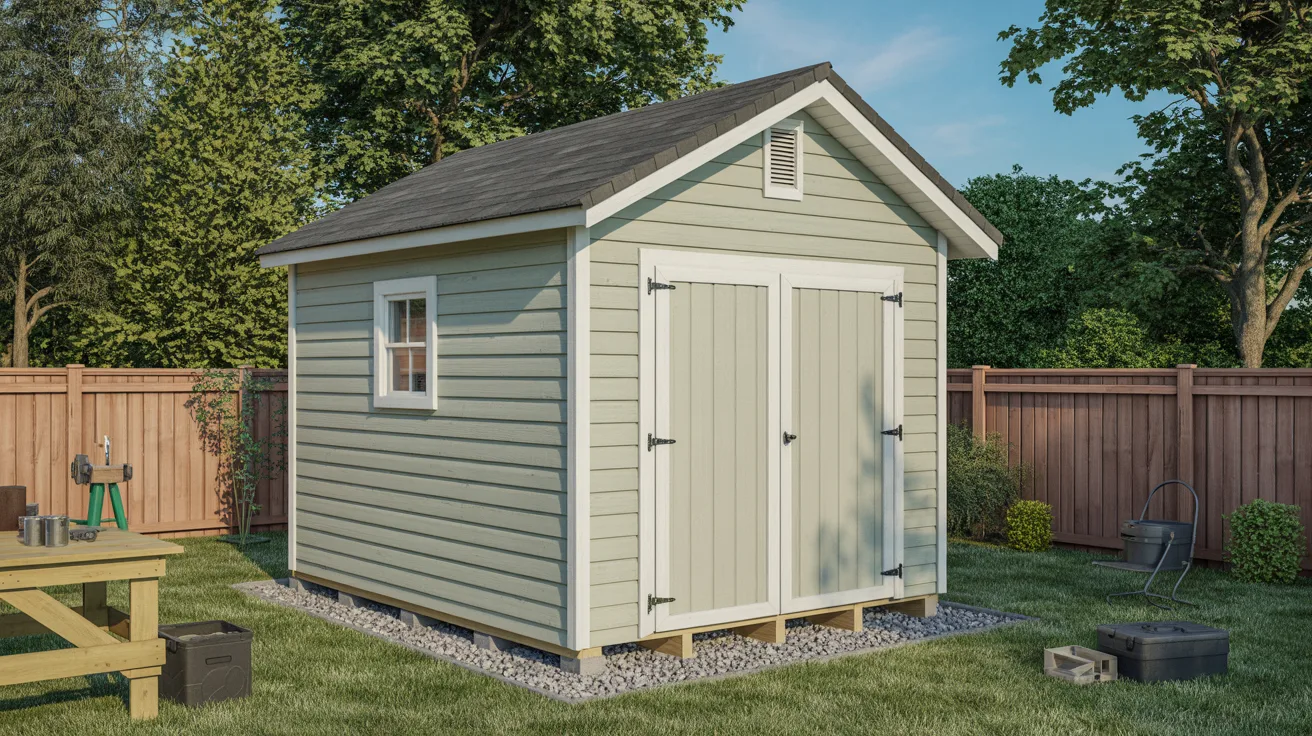

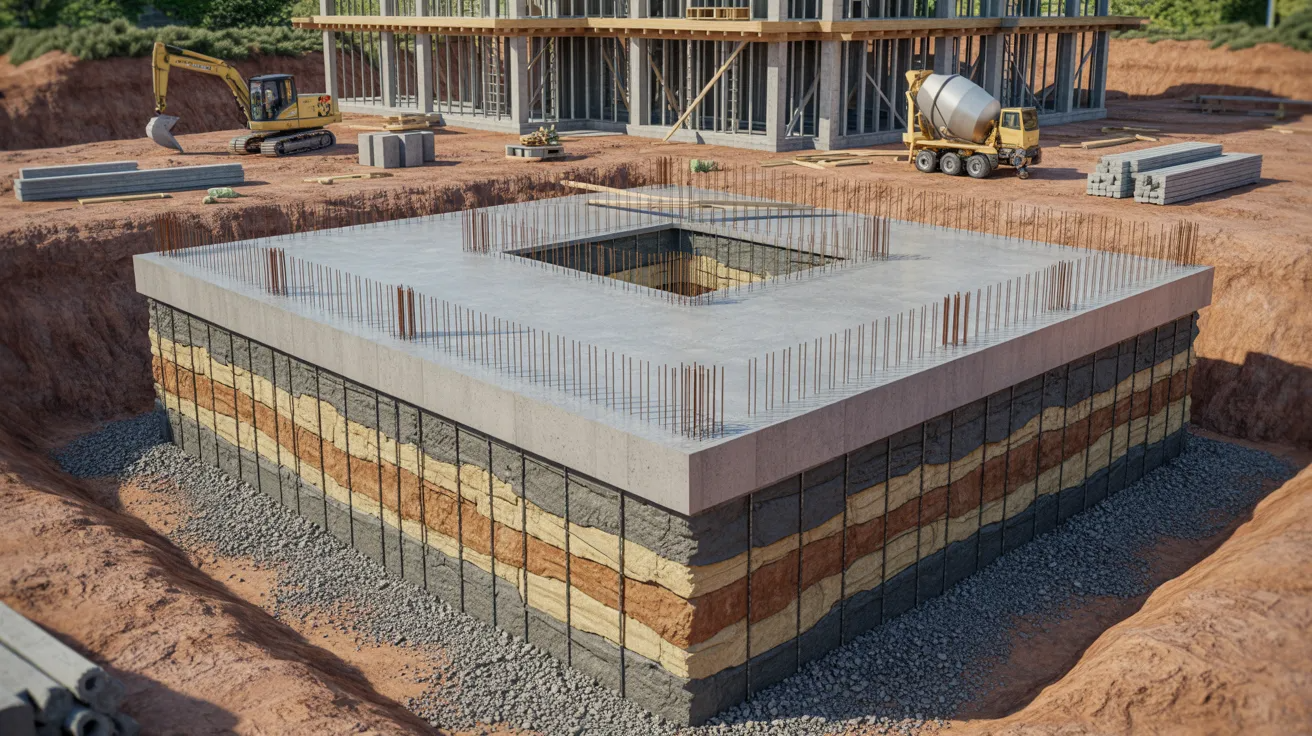
I used to mix up footings and foundations all the time. Most people do. These two terms get used interchangeably, but they are not the same thing.
In this article, I will break down exactly what each one is, how they differ, and why it matters for your build.
You will also see how they work together to keep a structure standing.
Getting this right is not optional. It affects safety, permits, and long-term stability.
Let me walk you through it clearly.
What is a Footing?
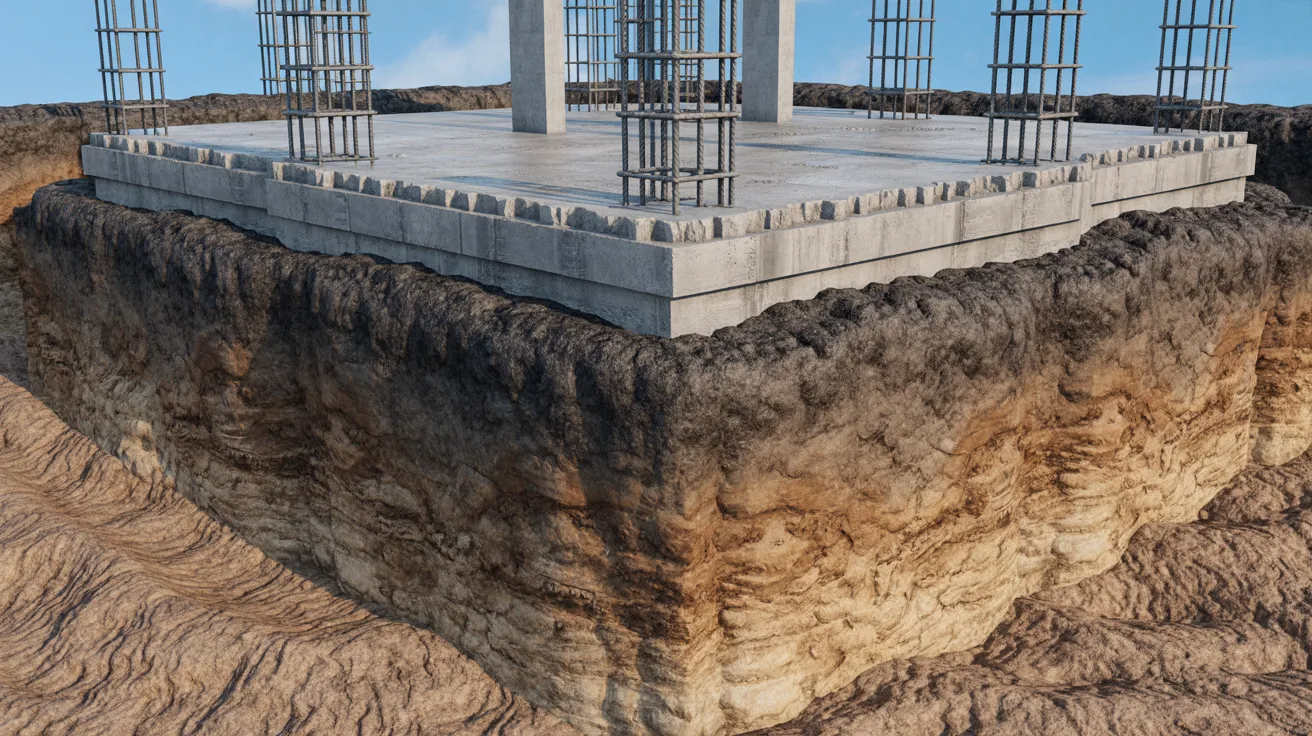
A footing is the lowest part of any structure. It sits directly in the soil and carries the load from walls or columns down into the ground.
It is the first point of contact between your building and the earth beneath it. Without a properly sized footing, the load has nowhere safe to go.
Most people overlook it because it is buried underground. But it is one of the most important parts of any build. Get it wrong and everything above it suffers.
Purpose
A footing spreads weight over a wider area of soil. This stops any single spot from taking too much pressure.
When load is spread out evenly, you avoid uneven settling. That means your walls stay straight, your floors stay level, and your structure does not shift over time.
A good footing is what keeps everything above it stable.
Types of Footings
There are four main types you will come across in construction. Each one suits a different situation.
Strip Footings: These run in a continuous line under load-bearing walls. They are common in homes and support long stretches of wall without interruption.
Spread or Pad Footings: These sit under individual columns or posts. They handle concentrated, heavy loads and are shaped like flat square or rectangular pads.
Raft Footings: These cover the full footprint of a building. They are used on weak or unstable soil where the load needs to be spread across the entire base.
Pile Footings: These go deep into the ground to reach stronger soil or rock layers below. They are used when surface soil is too soft to carry the load.
Each type has a specific job, and picking the right one depends on your soil and building design.
Common Applications
Footings show up in more places than you might expect. Residential homes use strip footings under their walls.
Deck posts sit on spread footings. Retaining walls need footings to stay in place under lateral soil pressure.
Shallow commercial buildings also rely on footings to carry their loads safely into the ground. The right footing type keeps each of these structures from sinking, cracking, or shifting.
What is a Foundation?
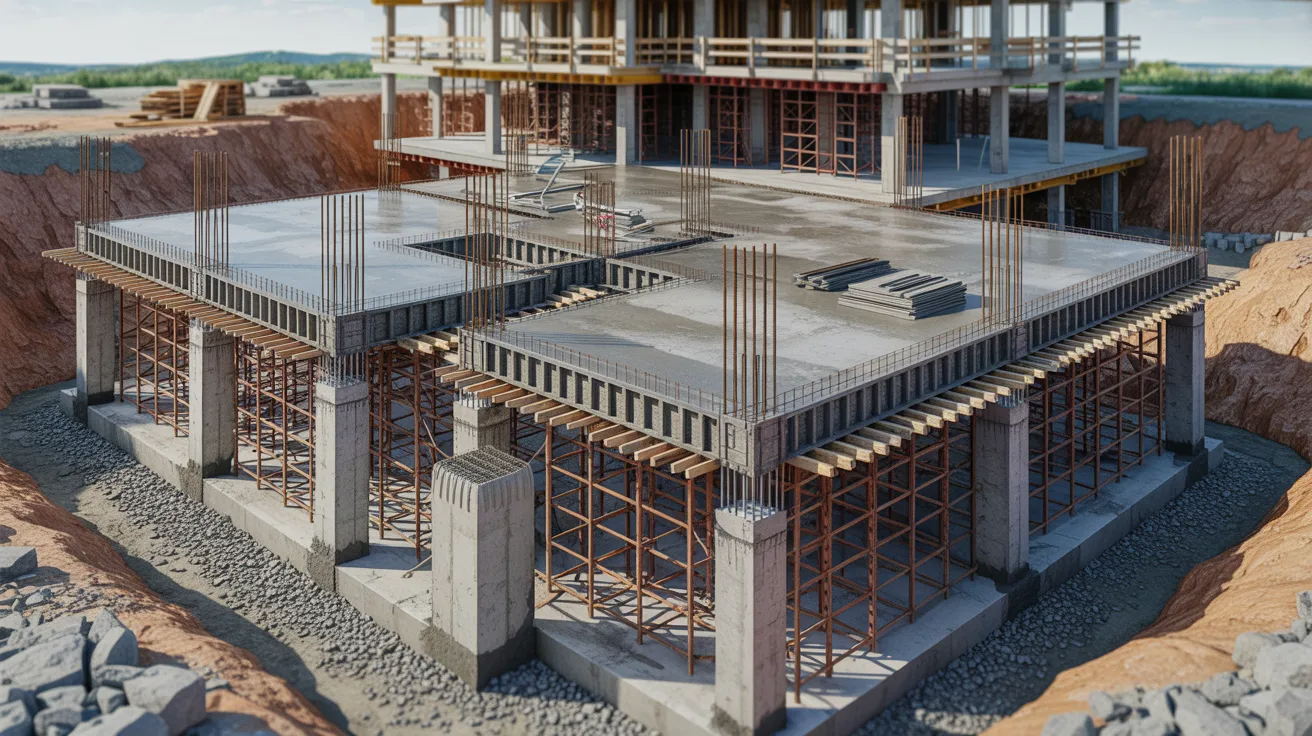
A foundation is the full substructure that supports everything above it. It transfers the total weight of the building, including walls, floors, roof, and contents, into the soil below.
It is not just one part. It is a complete system. Footings, walls, slabs, and piers all work together to hold the structure in place.
Without a solid foundation, even a well-built structure can crack, shift, or settle over time. It is what keeps the whole building standing safely.
Purpose
A foundation does more than just hold up a building. It keeps the structure from shifting with soil movement, frost, or groundwater changes.
It provides a stable base that resists settling, cracking, and lateral movement. Without a solid foundation, even a well-built home can develop serious structural problems.
It also acts as a barrier between the structure above and the ground conditions below.
Types of Foundations
Foundations fall into two broad groups based on depth and load.
Shallow Foundations: These include slab-on-grade, crawlspace, and basement types. They sit close to the surface and work well when the upper soil is strong enough to carry the building load.
Deep Foundations: These include piles, drilled piers, helical piles, and caissons. They go far below the surface to reach soil or rock with higher load-bearing capacity when shallow soil is too weak.
Choosing between the two depends on soil conditions, building weight, and local code requirements.
Applications
Foundations are required for every building, from small homes to large industrial structures. They are designed based on soil type, load requirements, and local climate.
Factors like frost depth, groundwater levels, and seismic activity all affect which foundation type gets used.
Every foundation must also meet local building codes. Getting this wrong can mean costly repairs or serious structural failure down the line.
Key Differences Between Footings and Foundations
These two terms are related, but they are not the same. Here is a clear side-by-side look at how they differ.
|
Feature |
Footing |
Foundation |
|
Function |
Transfers load from a specific wall or column to soil |
Supports the entire building and distributes all loads |
|
Depth |
Shallow, typically 1 to 3 feet |
Shallow to deep, depending on soil and building load |
|
Scope |
Single concrete pad or strip |
Complete system including walls, footings, piles, and piers |
|
Analogy |
Feet of the building |
Legs of the building |
|
Component |
Concrete, rebar |
Footings, walls, piles, grade beams, anchors |
|
Cost |
Smaller portion of budget |
Larger investment depending on complexity |
In short, the footing is one part of the foundation system, not a replacement for it.
How Footings and Foundations Work Together
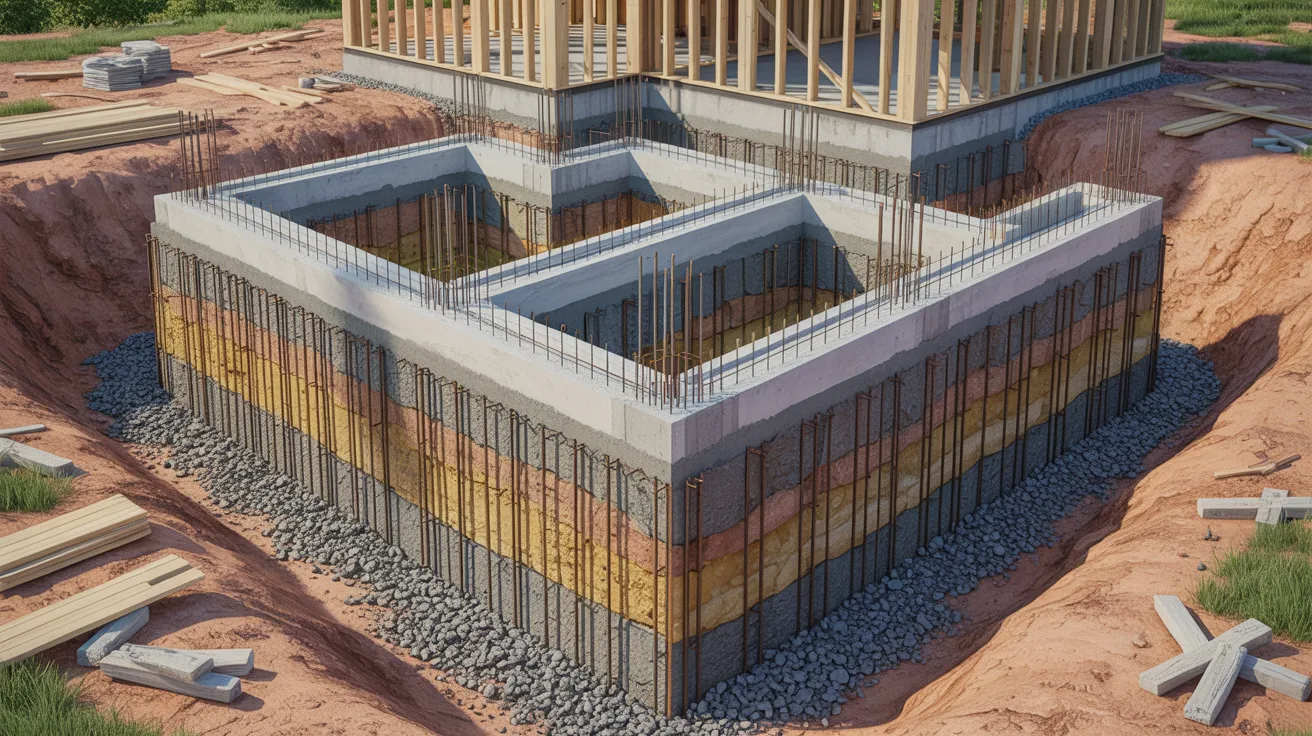
Footings and foundations are not separate systems. They work as one. The footing is always the base of the foundation.
It sits in the soil first and takes on direct ground contact. The foundation walls or slabs then build up from the footing and carry the load from the structure above.
In a standard residential home, strip footings run under the perimeter walls. Foundation walls then rise from those footings to ground level.
Without the footing doing its job first, the rest of the foundation has no stable base to stand on.
Common Mistakes to Avoid
Small errors at the footing and foundation stage can cost a lot to fix later. Here are the most common ones to watch out for.
- Mixing up footings and foundations: Leads to permit errors and design problems late in the build.
- Skipping soil testing: Weak or expansive soil needs a different approach. Never skip this step.
- Undersized footings: Too small means poor load distribution, which causes cracking and settlement.
- Poor rebar placement: Not enough reinforcement leaves footings vulnerable to tension cracks.
- Ignoring drainage: Water buildup causes erosion, pressure, and long-term settling.
Getting these details right from the start saves time, money, and stress later on.
Conclusion
I know this can feel like a lot at first. But once you see how footings and foundations connect, it all makes sense.
I remember when it finally clicked for me. It made every conversation with a contractor so much easier.
You do not need to be a builder. You just need the basics, and now you have them.
Found this helpful? Drop a comment below, share it with someone planning a build, or check out our related posts.
Frequently Asked Questions
Is a footing the same as a foundation?
No. A footing is one part of the foundation system, not the whole thing.
Can a building have a foundation without footings?
Rarely. Most foundations rely on footings to safely transfer load into the soil below.
How deep should footings be?
Footing depth depends on soil type, local frost depth, and building load, but typically ranges from 1 to 3 feet.
What happens if the footings are too small?
Undersized footings cause uneven settling, wall cracks, and structural instability over time.
Do all buildings need deep foundations?
No. Deep foundations are only needed when surface soil is too weak or unstable to support the building load.