
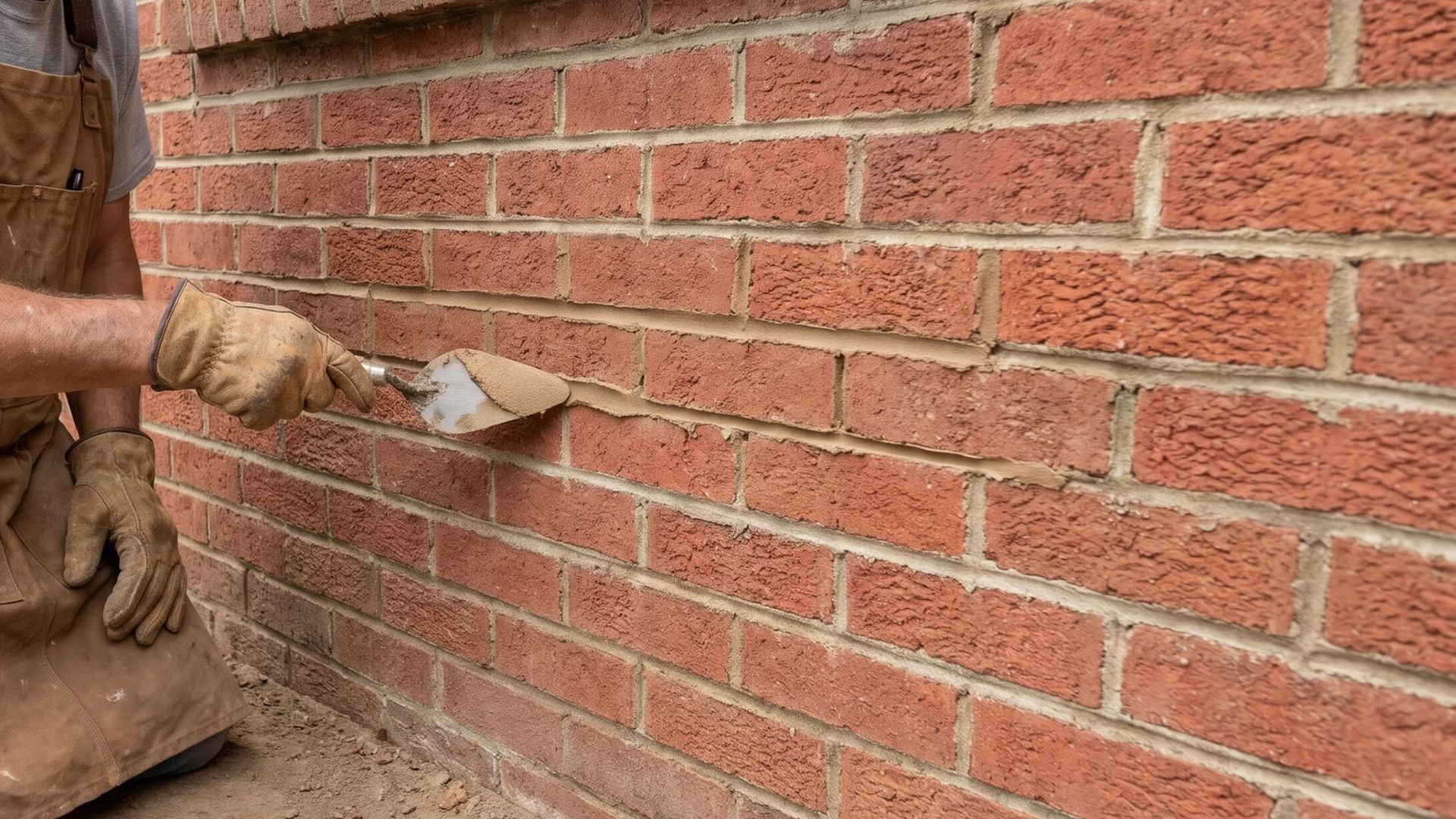
Here’s the thing about repointing cost… it’s not one number, no matter what the online calculators tell you.
I’ve had homeowners call me with a quote in hand, convinced they got ripped off, when really they were comparing a small patch job against a full house repoint.
Different jobs, different price tags. So before we get into dollars, we need to be straight about what you’re actually pricing.
Could run you $400 for a touch-up. Could run $8,000 or more for a whole exterior. Big gap, but it makes sense once you see why. Let’s break it down.
What Does Repointing Brickwork Cost by Project Type?
Repointing costs vary mostly by the size and type of project. Prices run from about $400 for a small patch to $8,000 or more for a full house exterior, and the national average for a standard 100-square-foot job runs around $1,450.
So why’s the per-square-foot rate all over the place? Comes down to two things:
- How much area’s involved: a big, flat, ground-level wall is the cheapest job per square foot you’ll find, because a mason can just keep working, no stopping to drag equipment around
- How easy that area is to reach: smaller or fiddlier areas cost more per square foot, not less, since setup time and careful work don’t shrink just because the job is small
I’ve seen homeowners assume a small job should cost less overall, then get surprised by the per-foot rate.
Chimneys and steps fall into that pricier bracket, chimneys because of height and roof access, steps because of awkward angles and tighter joints.
Now, at the top of the range sits tuckpointing, a fancier technique where a mason creates a thin, raised line of lime putty inside the joint to mimic finely cut brick . Real skill, and a lot more time than a standard repair.
Cost by Project Type
| Project type | Typical cost | Why |
|---|---|---|
| Mortar joint spot repair | $8 – $15/sq ft | Small, isolated areas of missing mortar; no setup overhead for scaffolding or a full crew day |
| Standard repointing (100 sq ft) | $400 – $2,500 (~$15–$35/sq ft) | Many masons charge a minimum callout fee regardless of size, which pushes small jobs toward the top of the range |
| Historic / lime-mortar repointing | $25 – $50/sq ft | Period-appropriate lime mortar is hand-mixed and hand-applied to match the original material |
| Chimney | $2,000 – $6,000 per chimney | Jump comes almost entirely from access; roof staging or a lift adds cost before any mortar work starts |
| Steps or stoops | $1,500 – $5,000 | Slow, careful work on a load-bearing surface with daily foot traffic |
| Full house exterior | $2,500 – $8,000+ | Range depends on house size, stories, and how much old mortar has failed |
| Tuckpointing (full house) | $7 – $25+/sq ft ($4,000 – $15,000+) | Two jobs stacked into one: structural repair, then a precise decorative line on top |
What Factors Change the Price?

Two houses the exact same size can get quotes thousands of dollars apart. Here’s the thing: labor, access, and mortar type do almost all the work in that gap. The brick itself barely moves the needle.
Labor
Most of what you’re paying for is labor, not material. That catches a lot of homeowners off guard, they figure they’re mostly paying for mortar.
Here’s the actual job:
- Grind out the old mortar without chipping the brick around it. Pack new mortar in too shallow and it won’t bond properly, it’ll fail again in a few years, and now you’re paying for this job twice
- Pack, tool, and cure the new mortar joint by joint, matched to the existing look
It’s slow, hands-on work. A single mason can usually only grind and repack a few dozen square feet in a full day. That’s it.
Access
A single-story, ground-level wall is simple to work. Anything above that, a second or third story, a steep roof near a chimney, a tight side yard, and the math changes fast.
Now you’re usually looking at scaffolding or a lift. Scaffolding alone often adds $5,000 to $7,000 for a large or multi-story facade, before any mortar work even starts. Layout matters as much as square footage.
Mortar Type
Mortar type is the factor that trips people up most when they’re comparing quotes.
| Mortar | Typical use | Cost impact |
|---|---|---|
| Portland cement | Most modern brick (roughly post-1900s) | Cheaper; standard rate |
| Lime mortar | Older or historic brick | Costs more; hand-mixed, hand-raked, cured slowly under controlled humidity |
Lime mortar’s softer and more porous than cement. That lets a wall flex a little and lets moisture escape, instead of trapping it behind the brick face.
This is where I see the most damage done by well-meaning repair work: using cement mortar on a historic wall. It’s a common mistake, and it’s a costly one.
Cement doesn’t flex or breathe the way the brick around it does, so moisture gets forced to evaporate through the brick itself instead of the joint. That speeds up cracking and flaking on brick that was otherwise fine.
DIY vs. Hiring a Pro
DIY repointing materials run about $0.50 to $0.75 per square foot , a fraction of what a pro charges. For a 100-square-foot wall, that’s roughly $50 to $75 in mortar.
The catch is getting the mortar hardness right.
Pack in mortar that’s harder than the brick around it, and the brick takes the stress instead of the joint. That’s how you crack or spall brick that was otherwise fine.
That risk is why masons push back on DIY even when the material cost looks tempting.
DIY makes sense for small, visible patches on modern brick, where a mismatched mortar hardness won’t do real damage. Anything structural, historic, or above ground level, hand it to a pro.
Repointing vs. Tuckpointing: Which Costs More?

Repointing’s cheaper than tuckpointing, typically by 30% to 60%. It’s a simpler, single-step structural repair .
| Repointing | Tuckpointing | |
|---|---|---|
| Process | Removes and replaces failed mortar | Repointing, then a fine decorative mortar line added on top |
| Typical cost | $15 – $35/sq ft | $7 – $25+/sq ft |
| Best for | Structural repair, most homes | Historic or decorative brick where a crisp, finely cut look matters |
The real cost gap comes down to process. Standard repointing stops once the new mortar’s packed, tooled, and cured.
Tuckpointing adds a second, finer layer on top, a thin ribbon of lime putty worked into the still-wet mortar to get those crisp, straight lines. Different skill. A lot more time per foot of joint.
Wrapping Up
Repointing cost comes down to three questions: how much area needs work, how hard that area is to reach, and what kind of mortar the brick actually needs.
Pin those down before you call a contractor. The quotes you get back will actually make sense next to each other, instead of looking like three different jobs.
For anything beyond a small, visible patch, especially on older brick or anything above ground level, get a mason out to look at the wall in person. That’s the only way to turn these ranges into a real number for your house.
Frequently Asked Questions
Why is repointing so expensive?
Repointing costs more than it looks like it should because the price is mostly labor, not material. A mason has to grind out old mortar by hand without damaging the brick, then repack and finish new mortar joint by joint. It’s slow, skilled work that can’t be rushed, especially on multi-story or hard-to-reach walls.
Is repointing cheaper than tuckpointing?
Yes, in almost every case. Standard repointing runs about $15 to $35 per square foot, while tuckpointing adds a decorative contrasting mortar line on top and typically costs $7 to $25 or more per square foot, roughly 30% to 60% more overall, since it’s two processes instead of one.
How much would it cost to repoint a 30-square-foot brick wall?
At typical rates of roughly $15 to $35 per square foot, a 30-square-foot section would run about $450 to $1,050. Small jobs sometimes get billed against a contractor’s minimum callout fee instead of a strict per-foot rate, so ask whether a minimum applies before you assume the lower end.
Is it worth repointing brickwork?
Yes, in most cases. Repointing protects the structural integrity of a wall by keeping water out of the joints. Put it off, and you’re usually looking at more expensive brick damage later. A properly repointed wall can last up to 30 years, which makes the upfront cost worth it against the cost of structural repairs down the line.