
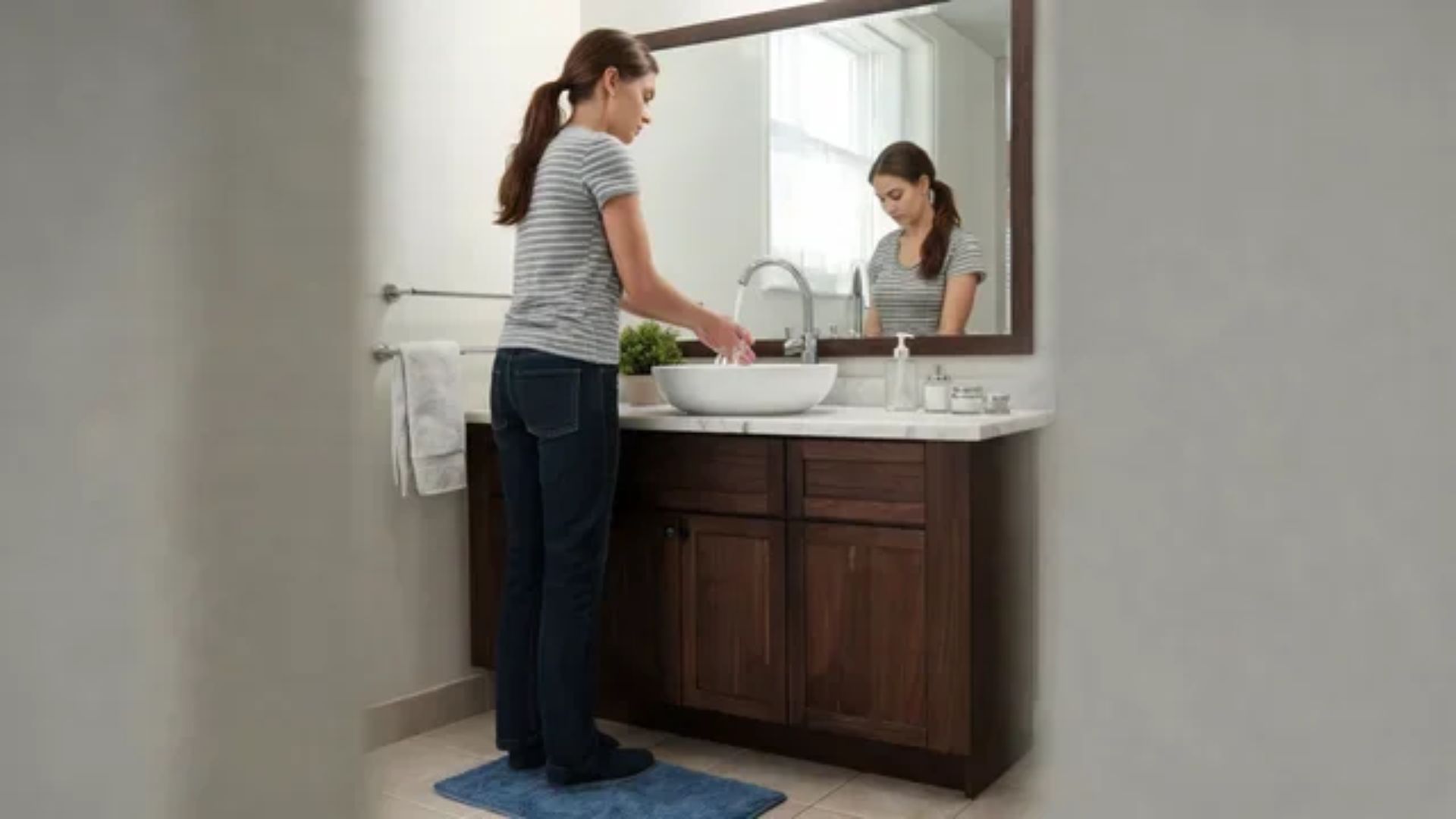
You finish brushing your teeth and realize you spent the whole time hunched over the sink.
That’s not your posture; that’s your vanity. A couple of inches off the right height and you feel it every single morning for years.
Finding the right fit means balancing three things: who’s using the bathroom, how tall they are, and whether it needs to work for everyone sharing that space, not just one person.
So before you commit to a vanity you love, let’s look at the standard height categories first.
What Is Standard Bathroom Vanity Height?
Here’s a myth worth busting: there’s no single “standard” vanity height; there are three. All get measured the same way, floor to countertop, but which one’s right depends entirely on who’s using that sink.
- Traditional height: 30 to 32 inches. The older norm, still great for kids or anyone who sits while grooming.
- Comfort height: 34 to 36 inches. This one matches your kitchen counter and has become the default in newer builds because it saves your back and neck.
- ADA-compliant height: 34 inches max, with knee and toe clearance built underneath for accessibility.
If your home has the traditional height, that’s not a choice; that’s just what builders used decades back. Pick based on who actually lives there, not what sounds modern.
What’s Included in Each Height Category
Every household is different, so let’s break down what you’re actually getting with each of these three ranges.
1. Traditional Height (30–32″)

This one sits at the lower end, and honestly, it’s not “outdated”; it’s just built for a specific group of people, not every bathroom out there.
- Height range: 30 to 32 inches, floor to countertop
- Best for: kids, shorter adults, or anyone who sits while brushing teeth or doing makeup
- Keep in mind: it matches the plumbing in most older homes, which makes a retrofit way simpler
If your household skews younger, or someone in it prefers sitting at the sink, this range genuinely still works for you.
2. Comfort Height (34–36″)

This is the one I’m obsessed with for most families; it’s built for adults who stand the whole time they’re getting ready.
- Height range: 34 to 36 inches, floor to countertop
- Best for: average-to-tall adults who want less bending and less strain on the back and neck
- Keep in mind: 36″ isn’t too tall for most adults, but a mixed-age household often does better landing at 34″. It keeps the ergonomic benefit without pushing kids or shorter adults onto their toes.
You know what’s nice about 34 inches? It keeps most of that ergonomic win without making the sink a reach for anyone shorter in the house.
3. ADA-Compliant Height (max 34″)

This category isn’t about preference at all; it’s set by accessibility requirements, full stop.
- Height range:maximum 34 inches to the countertop or sink rim
- Best for: wheelchair users and anyone who needs to pull directly up to the sink
- Keep in mind: the height alone doesn’t actually meet the standard; you need knee and toe clearance underneath too
Why There’s No Single Right Answer
Your height choice isn’t really about personal preference alone it comes down to sink type, countertop thickness, and the plumbing you’re already working with.
Let me walk you through how each one actually shifts the number:
| Factor | What Happens | Why It Matters |
| Vessel sink | The bowl sits on top, adding 4–6″ of its own height | The cabinet gets built lower (around 30″) to compensate it’s the bowl’s rim that’s the real number, not the cabinet itself |
| Cabinet box vs. finished height | The raw box is 30.5″ or 34.5″, and the countertop adds another 0.75–1.5″ on top | The box number alone won’t tell you the final height; you’ve got to add the countertop in |
| Plumbing rough-in | Your supply and drain lines are fixed in the wall or floor | Raise the height too much, and you can push the cabinet right out of reach of plumbing that’s already there |
“Just buy comfort height” is honestly great advice for a new build , where the plumbing gets placed to match.
But if you’re doing a retrofit? Check your rough-in first. That’s the step people skip, and it’s the one that bites you later.
Why Getting the Height Right Matters
This isn’t just a looks thing; the height you pick shapes how comfortable that bathroom feels every single day, and yeah, it even plays into how buyers see the space down the road.
- Daily strain: a traditional-height vanity forces taller adults to hunch over that sink every morning, and honestly, that adds up to real back and neck strain over time. It’s not dramatic; it’s just constant
- Resale perception: comfort height has basically become the expected norm in newer homes now, so a lower vanity can actually read as dated to someone touring your space
- The trade-off: going too low doesn’t save you anything long-term, and going too high without thinking about who actually uses that bathroom just creates the same discomfort, flipped
So here’s my take: get as close to the comfort range as your plumbing allows. Your back will notice. And honestly? So will your next buyer.
Which Height Is Actually Right for You?
The right vanity height should make your routine easier, not something you adjust your posture around. A couple of inches really changes how comfortable a shared bathroom feels.
So skip the tallest option or whatever’s trending; prioritize whoever actually uses that bathroom most, and factor in sink design and plumbing too.
Before you finalize anything, measure the finished height and test the reach. That’s what makes it work for real life, not just the showroom.
Frequently Asked Questions
Is 36 Inches Too High For A Bathroom Vanity?
No, not at all. 36″ actually matches your kitchen counter height, and it’s become the modern comfort standard for most adults. It can feel a little tall for kids or shorter folks, though.
Is 37 Inches Too Tall For A Bathroom Vanity?
Yes. That pushes past the typical comfort-height range, and it can make a vessel sink’s rim uncomfortably high to actually use.
How High Off The Ground Should A Bathroom Vanity Be?
Standard height runs 30 to 36 inches, measured floor to countertop. The right number really comes down to who’s using it and what your local building code requires.
Are Bathroom Vanities Taller Now Than They Used To Be?
Yes, honestly. Older homes typically stuck with 30–32″ vanities, while newer builds lean toward that 34–36″ comfort height to ease the strain.