
I almost walked past it at the nursery. No blooms, plain pot, nothing exciting. Then my neighbor’s front yard stopped me completely.
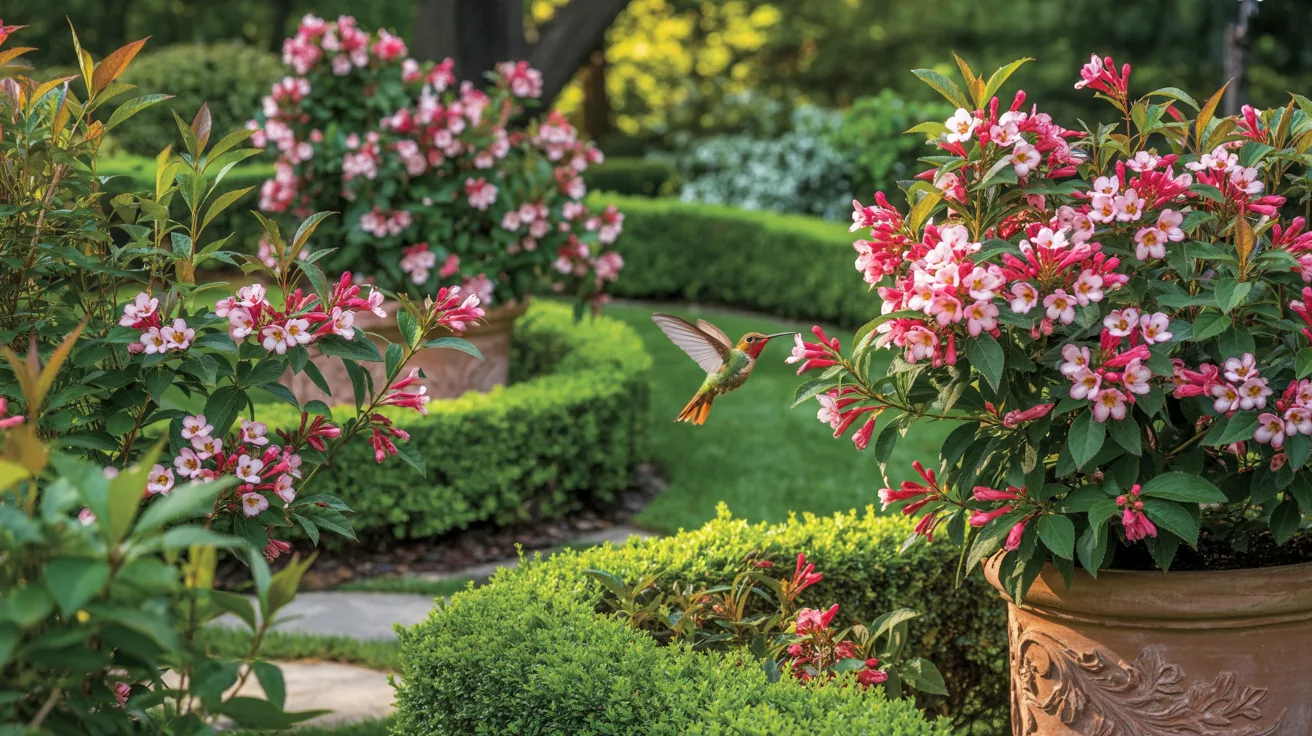
Pink and red blooms everywhere, hummingbirds darting in, dark foliage making every other plant pop. She told me it was Weigela. I bought three that same afternoon.
Five years later, it’s in borders, hedges, and containers across my garden.
This post covers the right varieties for your space, 11 design ideas that work, and simple care tips to keep it blooming.
What Makes Weigela Worth Planting
I’ve grown Weigela in small beds and large open yards, and it never disappoints.
It blooms in late spring when most shrubs are still bare, then holds rich, colorful foliage all summer long.
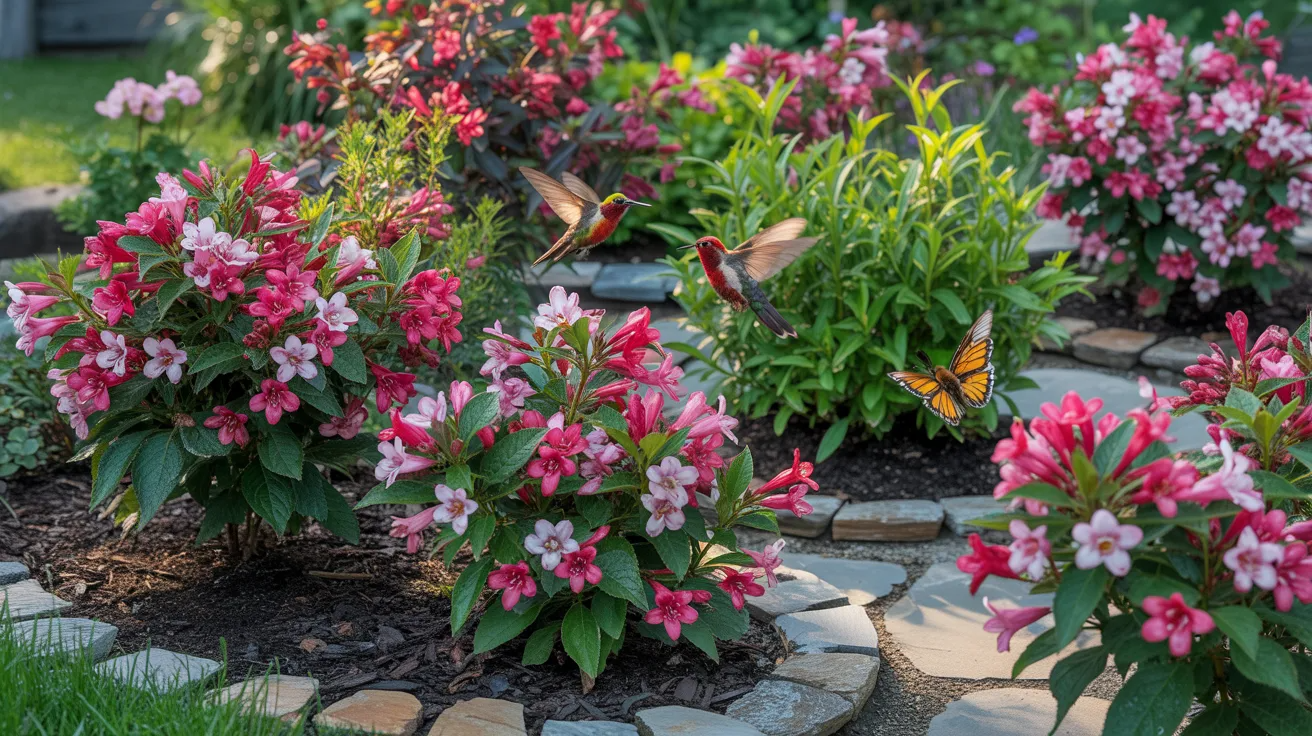
The flowers pull in hummingbirds, bees, and butterflies without any extra effort on your part.
It’s not fussy about soil, doesn’t need constant pruning, and comes back reliably every year. Varieties range from 18 inches to over 8 feet, so there’s a size for every space.
If you want color, structure, and wildlife value all at once, Weigela earns its spot.
List of 11 Creative Landscape Design Ideas with Weigela
Weigela fits more spots in your garden than you might think, and these ideas prove it.
1. Garden Borders and Pathways
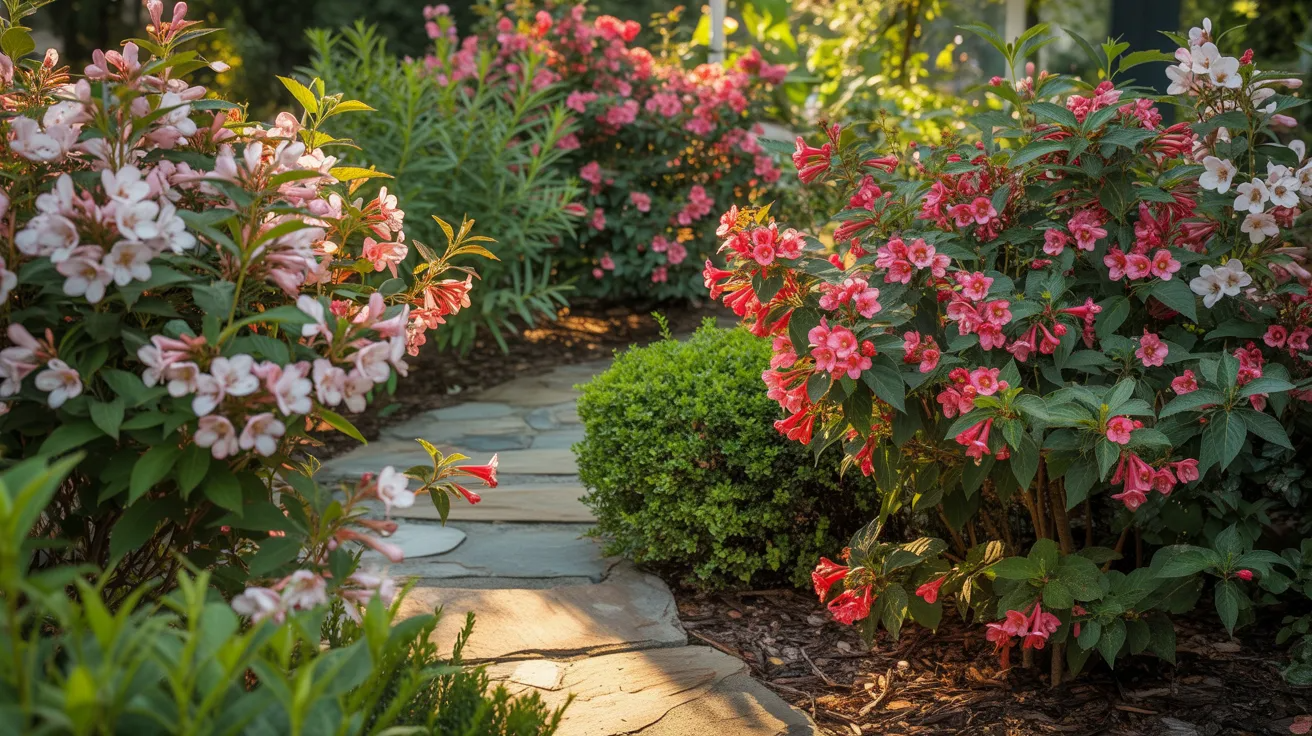
Lining a garden bed or walkway with Weigela is one of the easiest wins in landscape design. The colorful blooms draw the eye right where you want it.
I like using Wine and Roses along a stone path. The dark leaves frame the walkway all season long.
Use full-sized varieties for wider paths and dwarf types for narrow ones. Space them evenly so the border looks clean and intentional, not random.
2. Mass Plantings
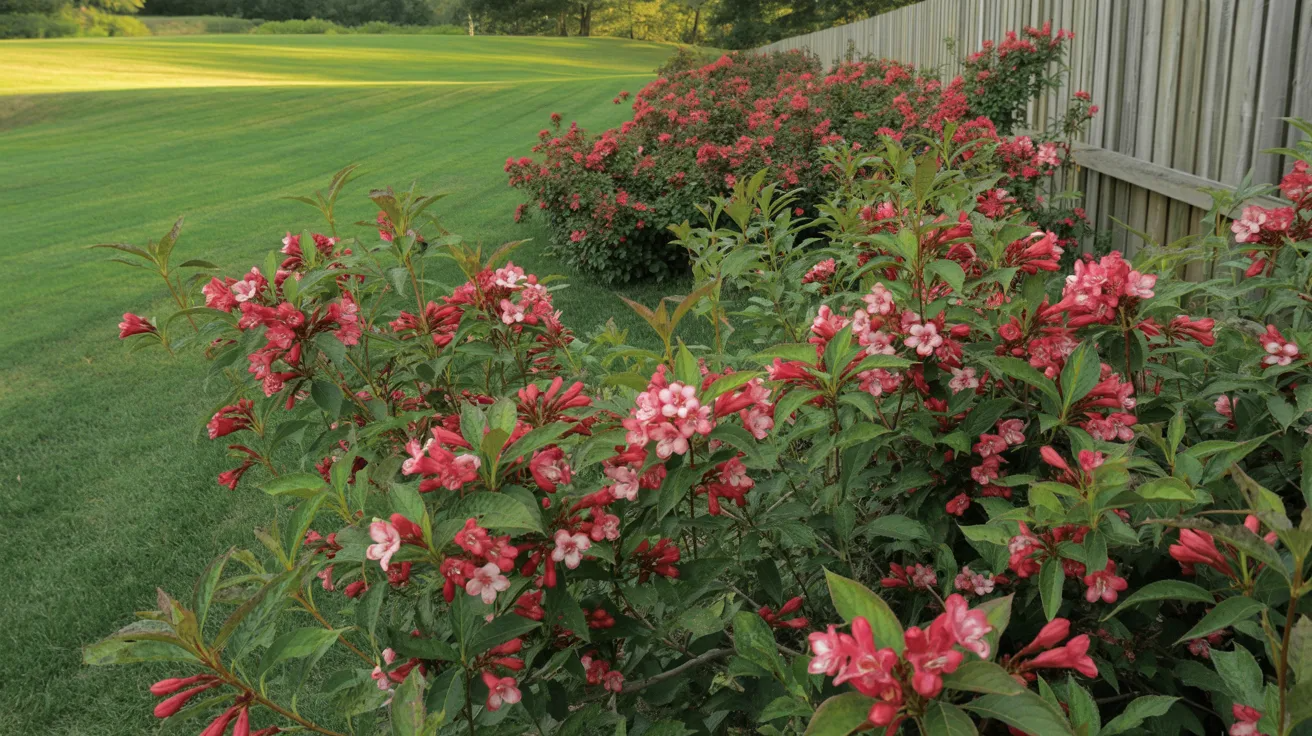
Plant three or more Weigelas together and you get a bold, full display. Mass plantings work well on slopes, open lawns, or large front yards.
The key is picking one variety and repeating it. This creates a cohesive look instead of a scattered one.
I’ve seen Red Prince planted in groups of five along a fence line, and the effect in spring is hard to beat. Go big here. It’s worth it.
3. Layered Borders
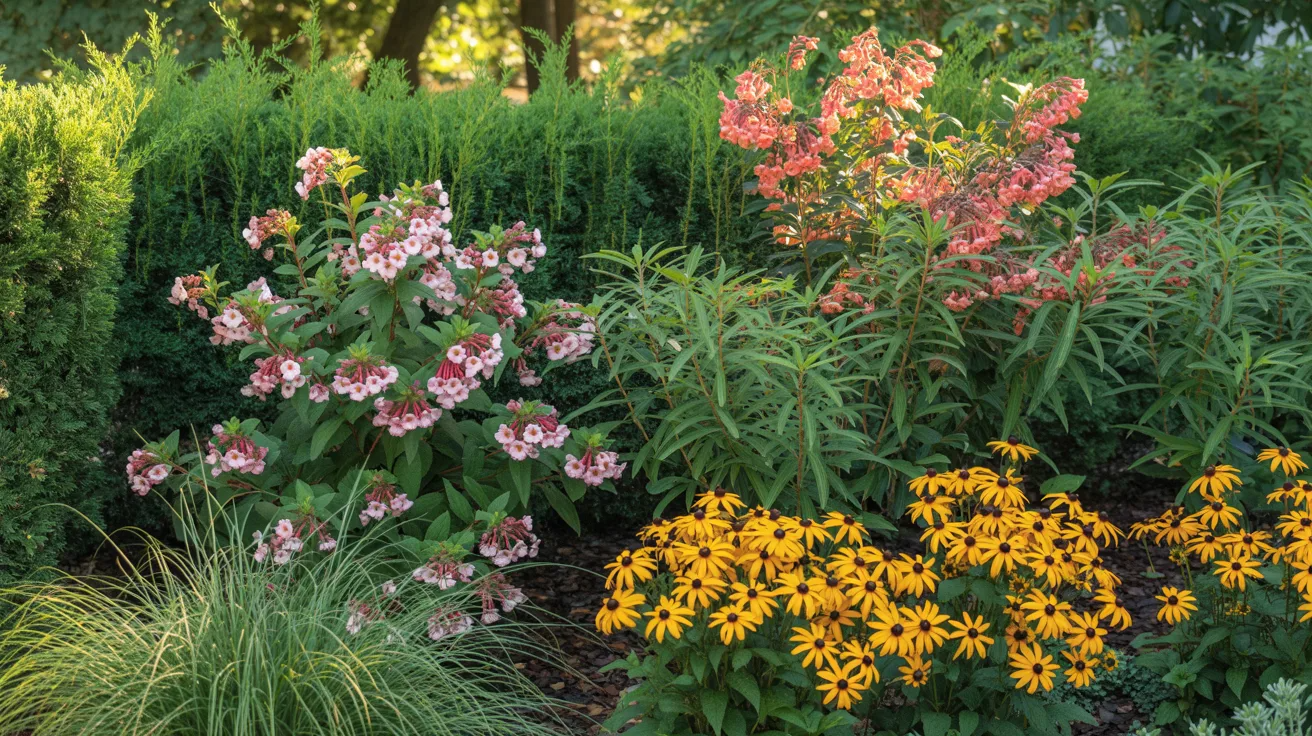
Layering is all about height. Put taller shrubs at the back, Weigela in the middle, and shorter perennials at the front.
This gives your border depth and keeps something in bloom at almost every point in the season. I pair Weigela with ornamental grasses and black-eyed Susans.
The textures work well together. Layering also hides the bare lower stems of larger shrubs once Weigela fills out below them.
4. Container Gardens
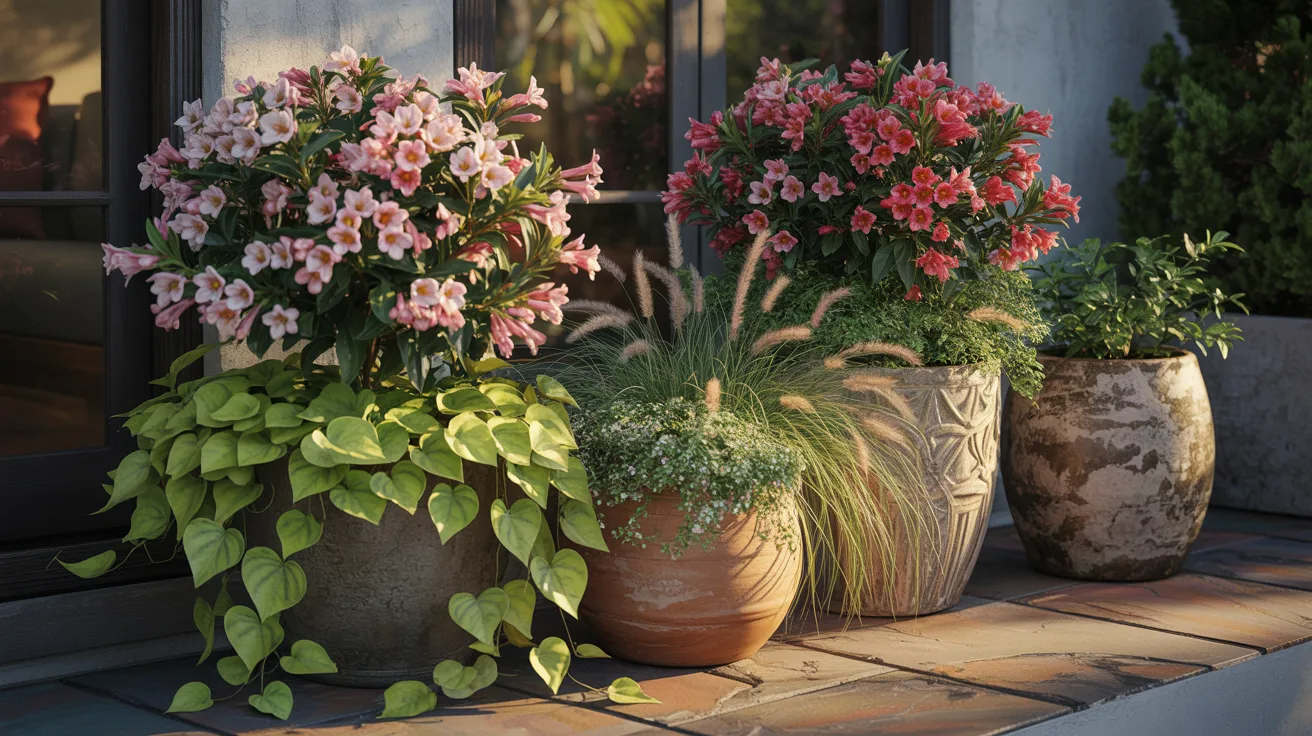
Dwarf Weigela does really well in containers. I’ve kept a My Monet in a large pot on my patio for two seasons now.
Pair it with trailing sweet potato vine or a compact ornamental grass for contrast. Use a pot with good drainage and quality potting mix.
In cold winters, move the container to a sheltered spot. It’s a low effort for a display that looks intentional and well-put-together all season.
5. Hedges and Privacy Screens
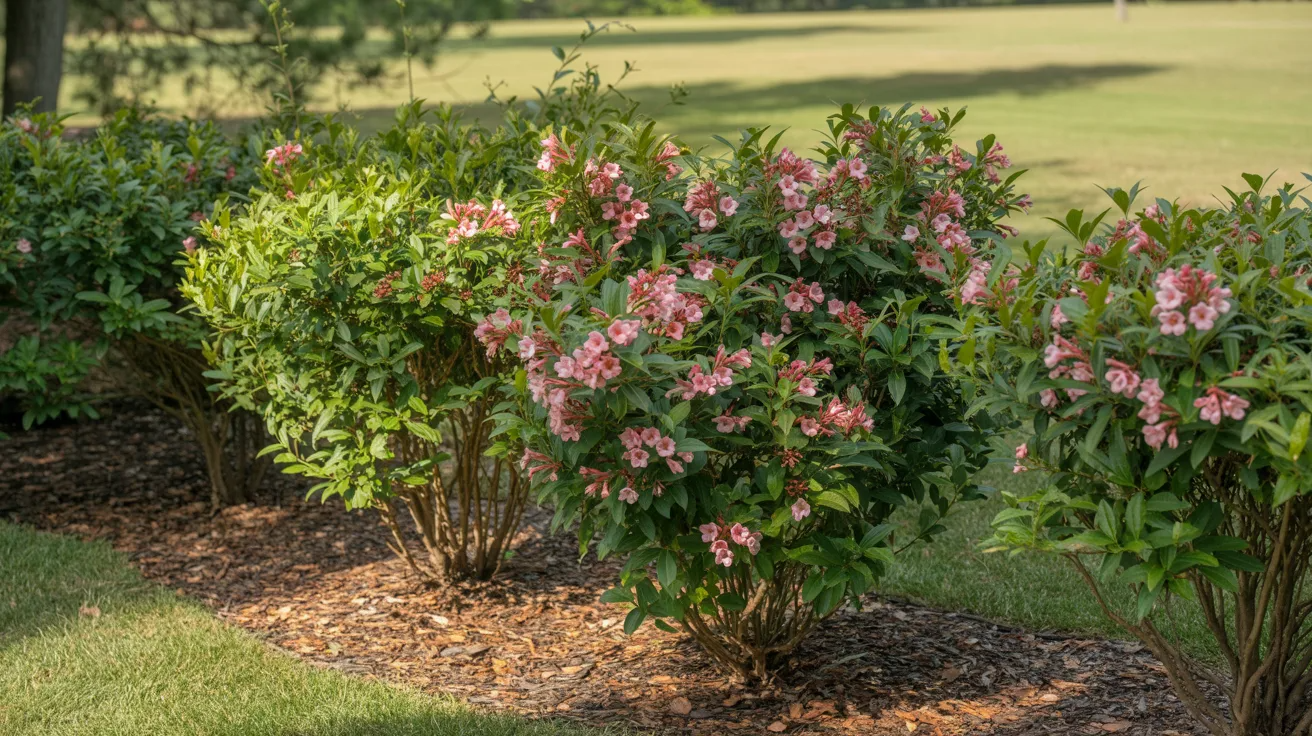
Large Weigela varieties grow dense enough to act as a natural screen. Plant them in a staggered double row for better coverage.
This looks more natural than a straight line and fills in faster too. I’ve used a full-sized Weigela along a property edge, and within two seasons, it blocked the view completely.
You get privacy and seasonal blooms at the same time. That’s a practical and attractive combination worth considering.
6. Cottage Garden Accents
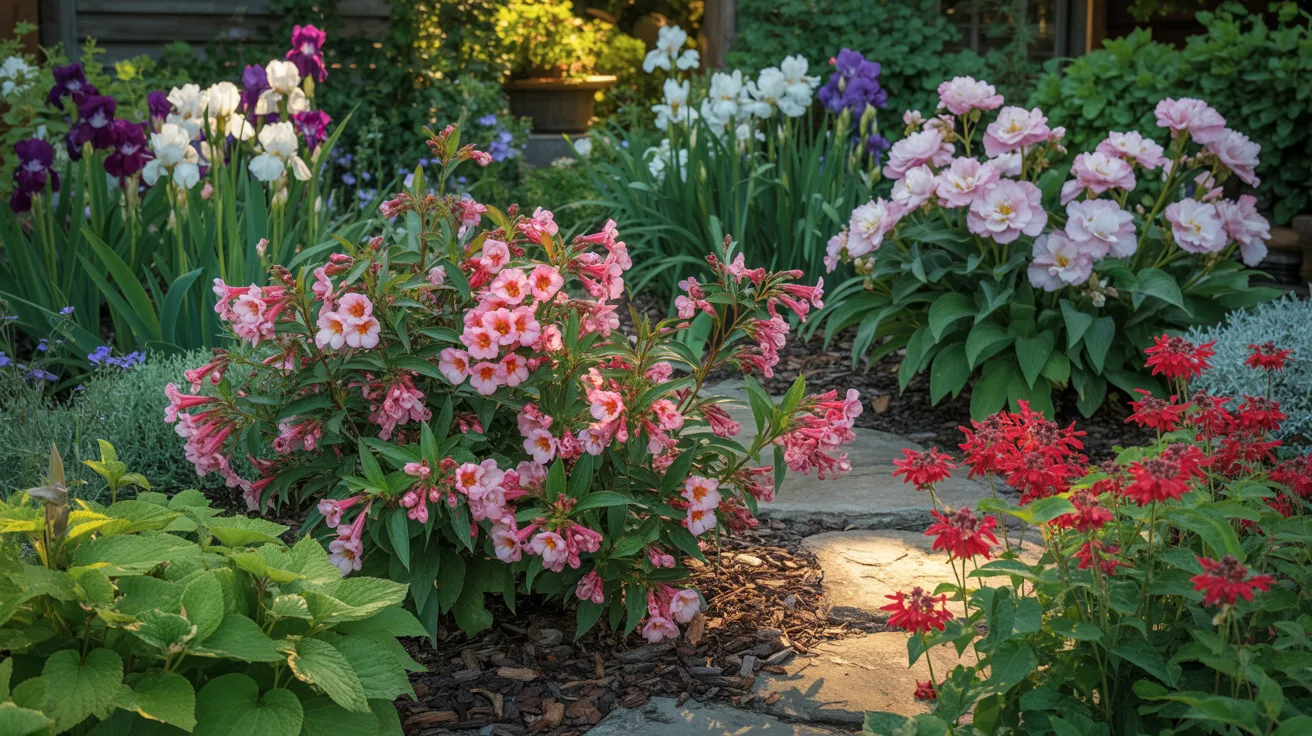
Weigela fits right into a cottage-style garden. Plant it beside Iris, Peonies, and Bee Balm for a layered, classic look.
The pink or red blooms of Weigela complement the softer tones of Peonies and the bold color of Bee Balm. I think of it as the anchor shrub in a cottage bed.
It provides structure while everything else stays soft and informal. The combination feels natural and genuinely lived-in.
7. Pollinator-Friendly Corners
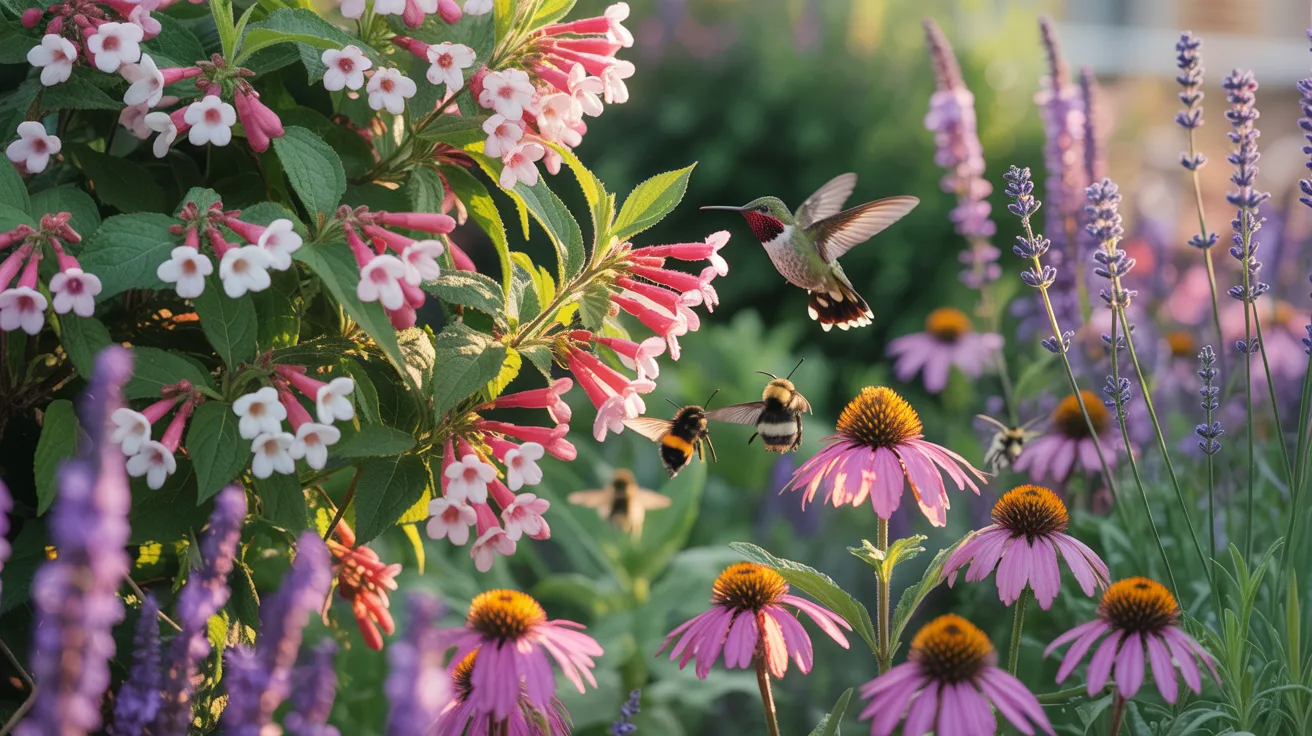
Weigela is a magnet for hummingbirds, bees, and butterflies. If you want more wildlife in your yard, plant a few Weigelas in a sunny corner.
I’ve watched hummingbirds visit my Wine and Roses bush every morning in June. Combine Weigela with Salvia, Coneflower, and Lavender to build a full pollinator garden.
The blooms overlap just enough to keep visitors coming through most of the warm season.
8. Living Fountains
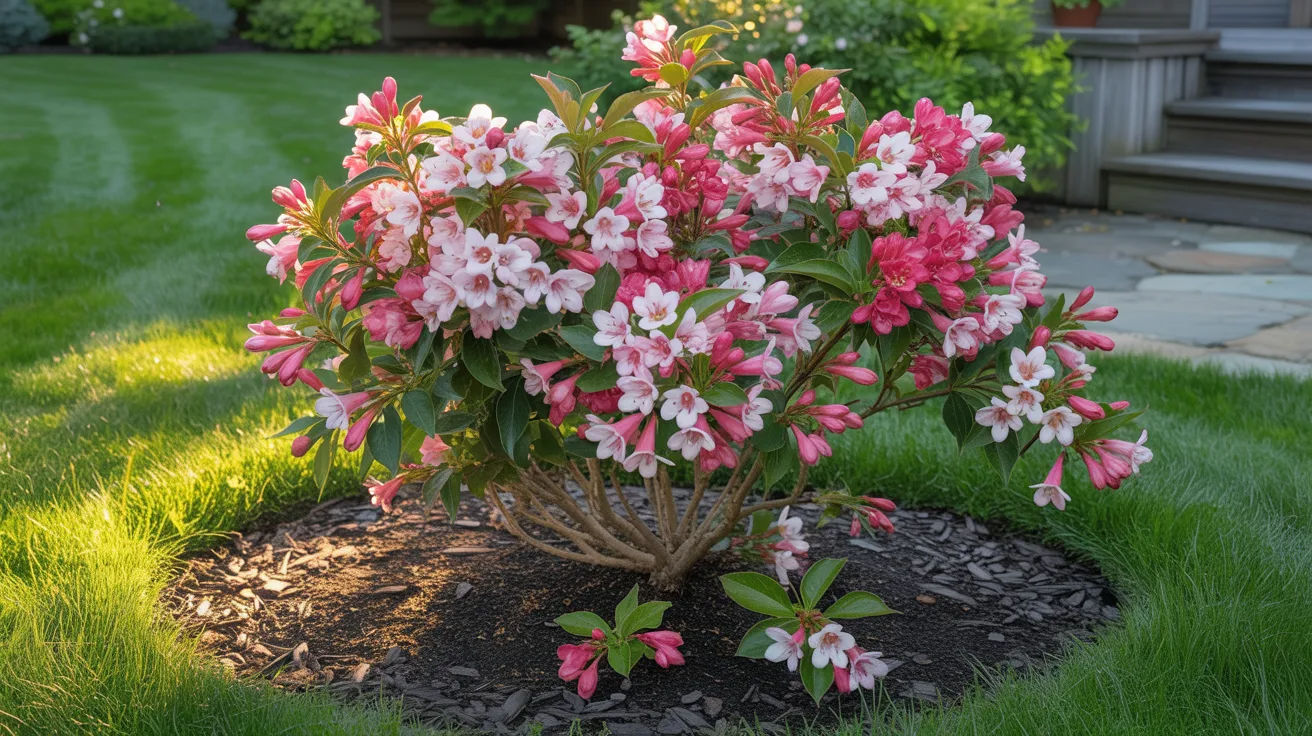
A single large Weigela planted as a focal point can anchor a whole yard. Its arching branches grow outward in a natural fountain shape.
Place it at the end of a lawn, near a patio corner, or in the center of a circular bed. The natural form does the work for you.
No special pruning needed. Just let it grow, and it becomes a standout plant all on its own without any extra effort.
9. Gate or Entry Accents
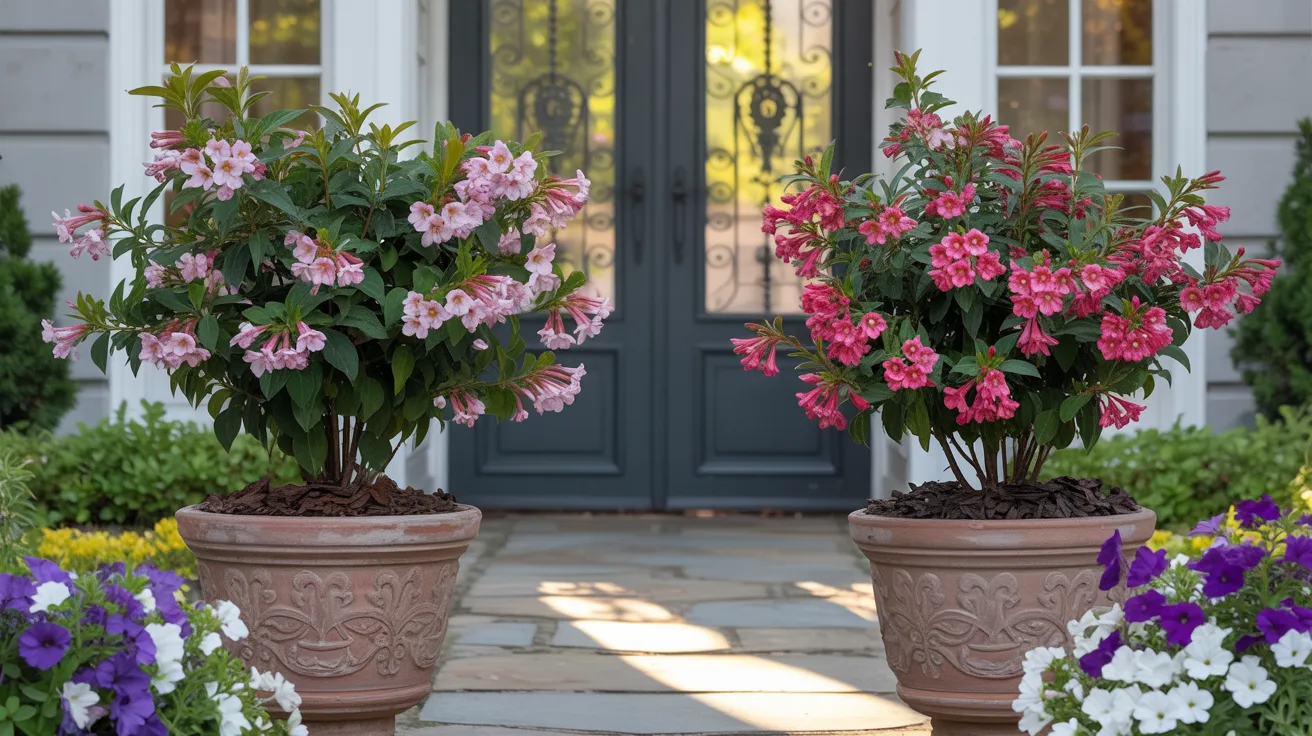
Pair two container-grown Weigelas on either side of a gate or front entrance. This is one of my favorite tricks for adding instant curb appeal.
Use matching pots and the same variety on both sides for a clean, symmetrical look. Dwarf types like Minuet or My Monet work best here since they stay manageable in pots.
Swap out the surrounding plants seasonally to keep the entry spot feeling fresh and well-tended throughout the year.
10. Seasonal Color Bridging
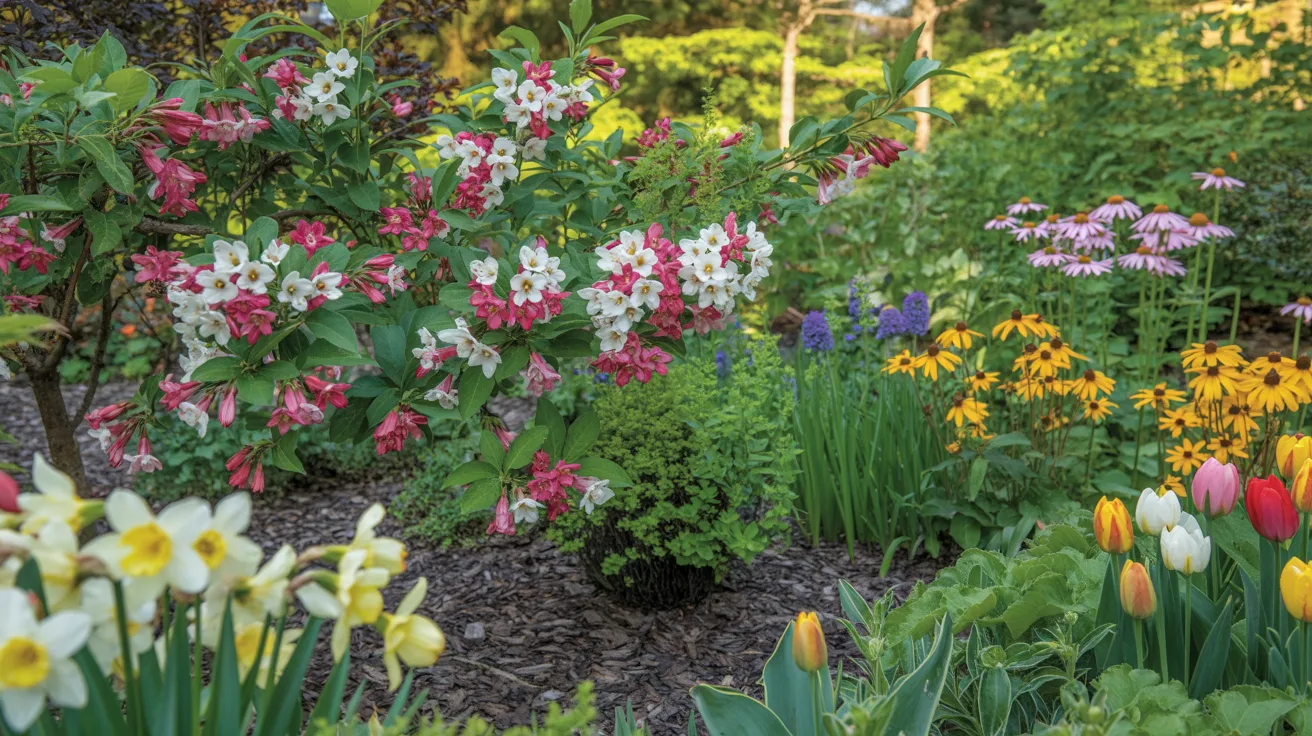
There’s a gap in most gardens between spring bulbs and summer perennials. Weigela fills that gap well. It starts blooming just as tulips and daffodils fade.
By the time Weigela finishes its main bloom, your coneflowers and black-eyed Susans are picking up. I plan my beds around this overlap.
It keeps the garden looking full from April through September without any dead zones. That smooth seasonal transition is something most gardeners don’t plan for, but should.
11. Textural Contrast
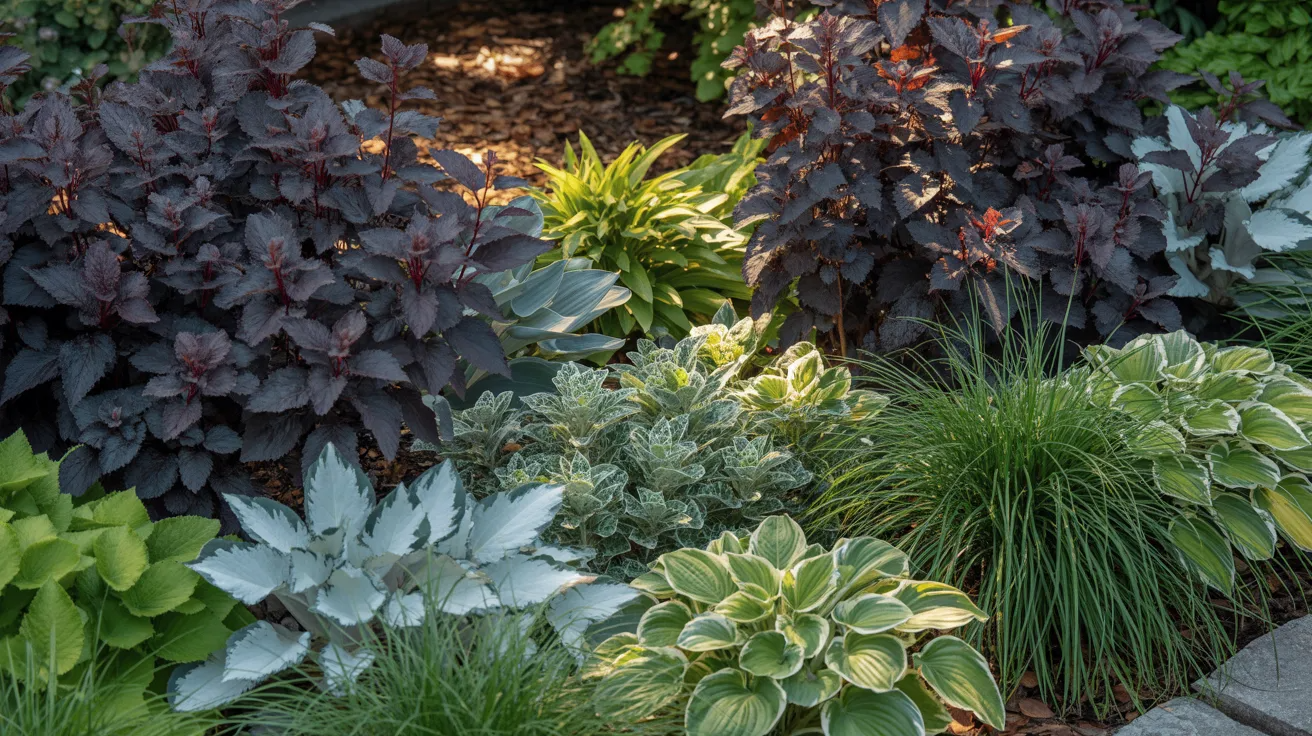
Weigela has strong textural value even when it’s not in bloom. Dark-leaved varieties like Tuxedo contrast sharply against silver or chartreuse plants nearby.
Try planting it next to ornamental grasses, hostas, or lamb’s ear. The difference in leaf shape and color creates visual interest all season long.
I use foliage-focused combinations like this to keep a border looking intentional in July and August, when fewer plants are actively flowering and gardens tend to look flat.
Care Tips to Keep Your Weigela Landscape at Its Best
Weigela is low maintenance, but these five care habits will keep it blooming season after season.
- Prune right after flowering, and remove the oldest stems at the base every two to three years for renewal.
- Plant in well-drained soil and water deeply during the first season to help roots settle before summer heat.
- Feed with a slow-release, bloom-boosting fertilizer in early spring. Skip high-nitrogen lawn fertilizers.
- In fall, clear leaves from the base and add a light mulch layer to protect roots through winter.
- In early spring, remove any winter-damaged branches before new growth starts.
These simple steps keep your Weigela healthy, full, and ready to bloom year after year.
Conclusion
I’ve planted Weigela in borders, containers, and hedge rows, and it never lets me down.
It blooms reliably, holds great foliage all summer, and pulls in pollinators without any extra effort. It’s simply one of the easiest shrubs you can grow.
If you try any of these tips, drop a comment below and tell me how it goes.
And if this helps, share it with a fellow gardener who’s ready to add some real color to their yard.
Frequently Asked Question
When is the best time to plant Weigela?
Spring or fall works best, when temperatures are mild and the soil is easy to work with.
How often should I water Weigela?
Water deeply once a week during the first season, and after that, it needs water only during long dry spells.
Can Weigela grow in shade?
It prefers full sun but tolerates partial shade, just expect fewer blooms in lower light conditions.
How tall does Weigela get?
It depends on the variety: full-sized types reach 6 to 10 feet while dwarf types stay well under 2 feet.
Does Weigela attract pollinators?
Yes, its tubular blooms draw hummingbirds, bees, and butterflies throughout spring and into summer.