

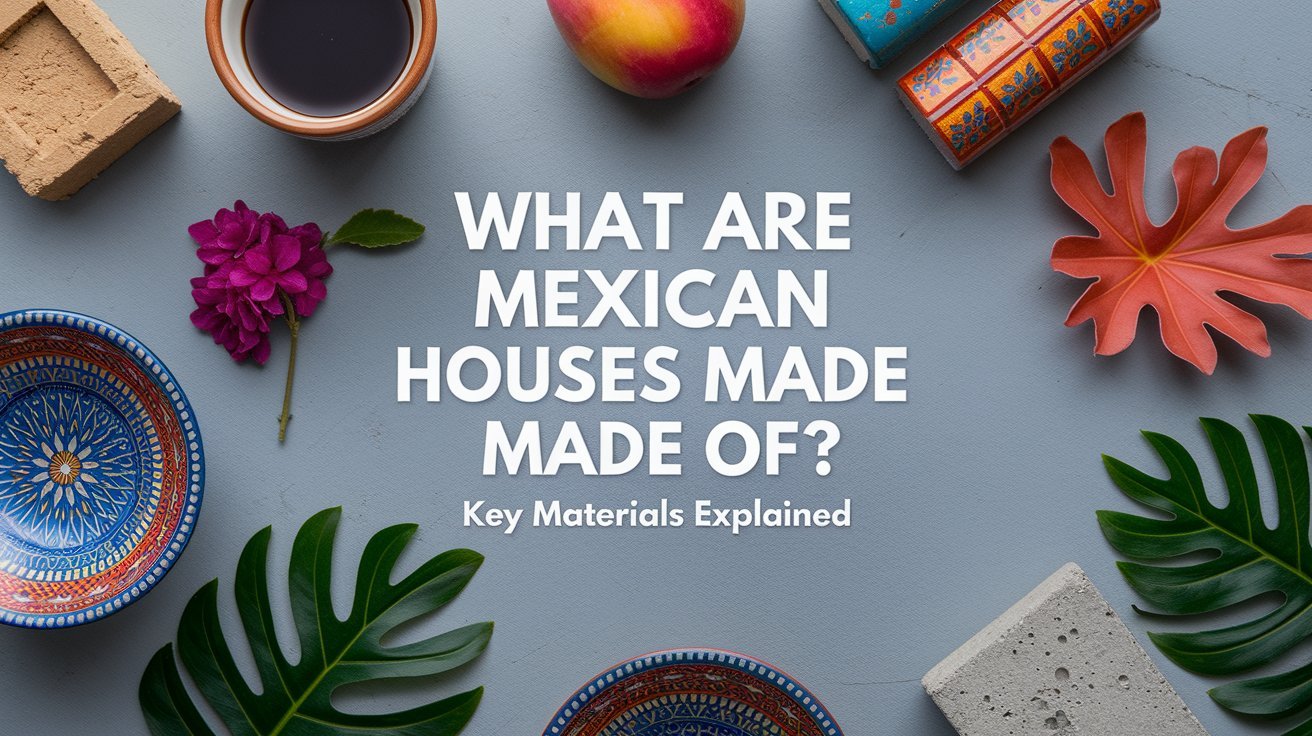
In this article, I will share how houses in Mexico differ from those in the United States or Canada. First timers may find walls of thick concrete a surprise instead of wood, and roofs flat instead of sloped. All things possess increased weight and density.
So what are these homes? Concrete blocks, steel reinforcement bars, and cement make them. Also, they are made with tile. These materials for the Mexican climate could withstand hurricanes and earthquakes.
If you’re considering buying a property in Mexico, understanding how construction materials literally get used will save you money, energy, and maintenance headaches, and increase the value of your home. Here are a few things to know about construction materials.
What Are Mexican Houses Made Of? (The Core Materials)
Mexican residential construction relies on four main materials that work together to create strong, long-lasting homes. These materials differ significantly from typical North American building methods.
Concrete Blocks (Ladrillo and Bloque)

Mexican builders use two types of blocks for walls. Red clay blocks (ladrillo) are traditional fired bricks, while gray concrete blocks (bloque) are the modern standard. Both types stack together with mortar to form the walls of nearly every home.
These blocks form the basic structure of the house. Unlike wood studs in US homes, these blocks are the wall itself, not just a frame. They’re solid, heavy, and built to last for generations.
This is why Mexican homes feel so permanent. When you knock on a wall, you’re hitting solid concrete or clay, not hollow drywall. This construction method has been used for over a century in Mexico.
Steel Rebar Reinforcement

Inside the walls and columns, steel rebar runs vertically and horizontally. Builders pour concrete around these metal bars to create reinforced columns at regular intervals. The rebar connects the foundation to the roof in one continuous structure.
This steel framework gives Mexican homes their strength against natural disasters. In earthquake zones, the flexible steel can bend without breaking. In hurricane areas, the reinforced walls resist strong winds that would tear apart wood-frame houses.
This approach is completely different from wood construction. Instead of nailing boards together, Mexican builders create a steel skeleton wrapped in concrete. It takes longer to build but creates a much stronger structure.
Cement and Mortar Finishes

After the blocks go up, workers apply multiple layers of cement plaster. The first coat fills gaps and levels the surface. Additional coats create a smooth finish that’s ready for paint. This process can take several weeks for a whole house.
The result is walls that feel like solid concrete throughout. There’s no drywall, no paper backing, and no hollow spaces. Every wall is hard, dense, and fire-resistant from one side to the other.
Most foreign buyers need time to adjust to these walls. You can’t just hammer in a nail anywhere. You need special concrete anchors and sometimes a drill. But the walls are nearly indestructible once finished.
Flat Concrete Roofs with Waterproofing

Mexican roofs are flat concrete slabs, not sloped wood with shingles. Builders pour concrete over steel rebar forms to create the roof. Then they apply a waterproof sealant called impermeabilizante. This coating keeps rain from seeping through the porous concrete.
These flat roofs serve double duty as outdoor terraces. Many homes have sitting areas, laundry spaces, or even gardens on the roof. The strong concrete can support the weight of furniture, planters, and people.
The downside is maintenance. You need to reapply waterproofing every 3-5 years in most climates. Coastal areas with salt air may need it more often. Skipping this maintenance leads to leaks that can damage your home.
Why These Materials Are Chosen in Mexico
Mexican construction methods have developed over centuries to match the country’s specific needs. These choices aren’t random; they solve real problems that builders face.
Climate adaptation: Concrete stays cooler than wood in hot weather. The thermal mass absorbs heat during the day and releases it at night. In humid coastal areas, concrete resists mold and rot better than organic materials.
Durability and longevity: Mexican homes regularly last 50 to 100 years with basic maintenance. The concrete doesn’t warp, crack, or deteriorate like wood. Many colonial-era buildings from the 1500s still stand strong today.
Pest and fire resistance: Termites can’t eat concrete. Fires can’t spread through cement walls. These benefits save homeowners money on insurance and pest control over the years.
Seismic safety: Mexico sits in active earthquake zones. Reinforced concrete construction with steel rebar flexes during earthquakes. This design has saved countless lives during major quakes.
Cost-effectiveness: Concrete and blocks are made locally throughout Mexico. Labor costs for skilled masons are reasonable. The materials cost less than importing lumber in many regions.
Low maintenance: Besides roof waterproofing, concrete homes need little upkeep. No exterior painting. No siding replacement. No termite treatments. The basic structure stays solid for decades.
Understanding what Mexican houses are made of helps explain why these homes feel so different from US construction. The materials match the environment perfectly.
Additional Materials in Mexican Home Construction
Beyond the basic concrete structure, Mexican homes use specific materials for floors, windows, and fixtures. These choices also reflect climate needs and local preferences.
Ceramic and Porcelain Tile Flooring
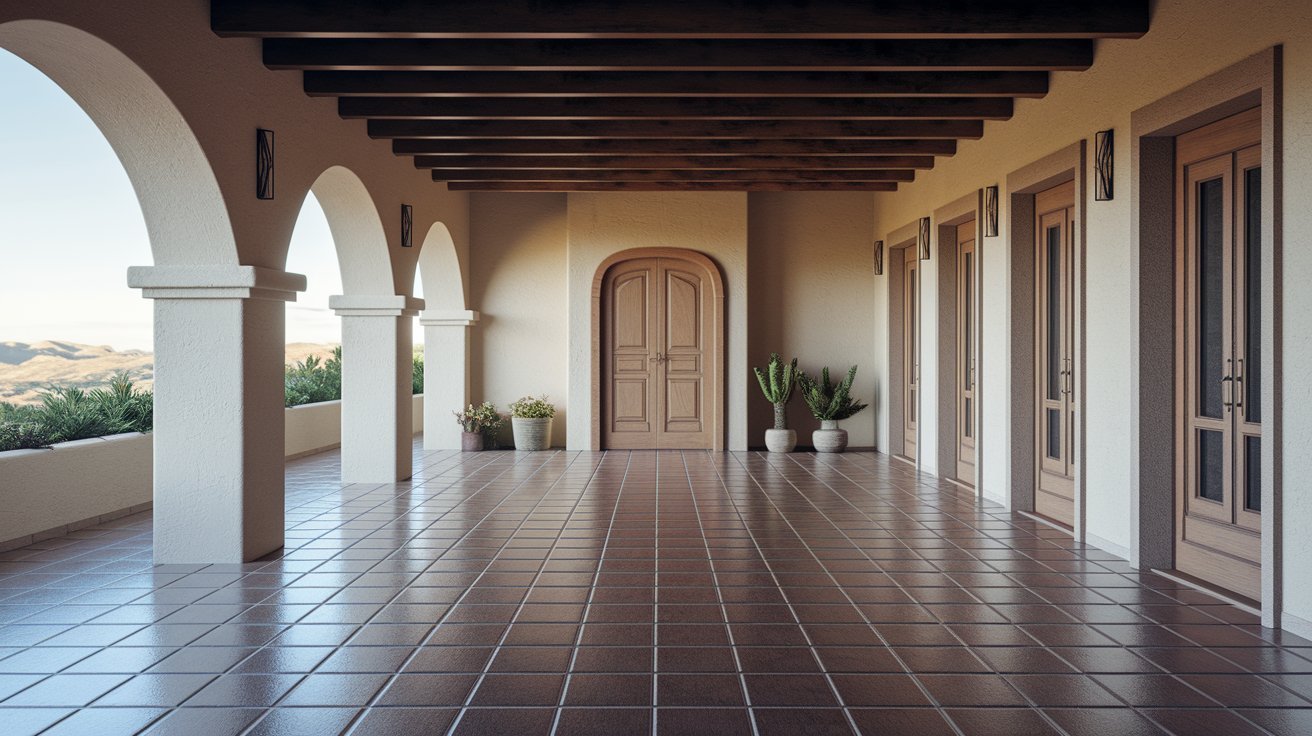
Walk into almost any Mexican home and you’ll find tile floors throughout. Ceramic and porcelain tiles cover living rooms, bedrooms, kitchens, and bathrooms. Hardwood floors are extremely rare, and carpet rarely appears except in some bedrooms.
Tile stays cool in hot weather. When temperatures hit 90 degrees outside, tile floors feel refreshing on bare feet. The surface doesn’t absorb heat like wood or carpet, keeping the whole house cooler naturally.
Maintenance is simple. Sweep and mop, and the floors stay clean for years. No refinishing, no carpet cleaning, no water damage worries. Tiles can last 20+ years before they need replacement.
Aluminum and Iron Windows and Doors

Most Mexican homes use aluminum-frame windows with glass panes. Iron bars (rejas) often cover windows and doors for security. Many windows have built-in mosquito screens that slide or swing open. Wood-frame windows are uncommon in modern construction.
These metal frames resist rust in humid coastal climates. They don’t warp, swell, or rot like wood. The frames also provide strong mounting points for security bars, which many Mexican homeowners want for peace of mind.
The downside is insulation. Metal frames conduct heat and cold more than wood or vinyl. In hot climates, this matters less since you want air circulation. But in mountain towns with cold winters, metal windows can feel drafty.
Concrete Countertops and Built-In Cabinets

Many Mexican kitchens feature poured concrete countertops and built-in cement cabinets. Builders form the shapes on-site, pour concrete, and finish with tile or sealed concrete surfaces. This differs from the granite or quartz slabs common in US kitchens.
In coastal areas, concrete resists the humidity that makes wood cabinets warp and develop mold. The solid construction also handles water exposure better around sinks. You can spray down the whole kitchen without worry.
Custom designs allow for any shape or size. Builders can create curved counters, built-in shelves, or specialized storage. Once finished, these fixtures last for decades without sagging or deteriorating.
PVC Plumbing and Electrical Systems

Modern Mexican homes use PVC pipes for plumbing. Many homes have on-demand gas or solar water heaters instead of tank systems. The electrical setup typically includes both 110V and 220V circuits to handle different appliances.
If you’re buying a resale home, check the water heater type. On-demand systems save energy but need good water pressure. Solar heaters work great, but may need electric backup for cloudy days.
The electrical panel should have proper circuit breakers and ground wires. Older homes might have outdated wiring. Ask when the system was last updated and whether it can handle modern loads like air conditioning.
How Mexican Construction Differs from US Homes
When you compare what Mexican houses are made of to US construction, the differences are significant. Here’s a quick comparison:
|
Feature |
Mexican Homes |
US Homes |
|
Wall Structure |
Concrete blocks |
Wood studs with drywall |
|
Wall Finish |
Cement plaster |
Painted drywall |
|
Foundation |
Slab-on-grade concrete |
Often, a basement or a crawlspace |
|
Roof Type |
Flat concrete |
Sloped with shingles |
|
Floor Material |
Ceramic/porcelain tile |
Hardwood, carpet, vinyl |
|
Sound Quality |
More echo (hard surfaces) |
Better sound absorption |
|
Insulation |
Thermal mass of concrete |
Fiberglass in wall cavities |
These differences affect how the house feels to live in. Concrete homes have different acoustics; voices echo more on hard surfaces. Room temperature stays more stable because the concrete mass resists temperature changes. But adding insulation later is harder since you can’t open up walls like in wood-frame construction.
Conclusion
Most houses throughout Mexico use concrete blocks, steel rebar, cement plaster, and tile floors. These houses resist heat. These houses resist hurricanes. These houses resist earthquakes. These houses resist insects. The materials can last for generations. This happens with appropriate upkeep.
These houses were no worse than wood-frame construction; their solid concrete walls and flat roofs suited the Mexican climate well. Once you know how these were constructed, it becomes clear why they work.
Knowing about what Mexican houses are made of will make you a more informed buyer. You will ask good questions, spot problems, and make good decisions. So now you know why Mexican construction is built to last!
Frequently asked questions
Do Mexican Houses Require Special Construction Permits?
Yes, building permits (permisos de construcción) are required. Your municipality issues these permits after reviewing plans. Requirements vary by location, but all construction needs proper permits and inspections to be legal.
How Long Does It Typically Take to Build a House in Mexico?
A standard home takes 6 to 12 months to complete. Concrete construction moves more slowly than wood framing. Weather, labor availability, and material delivery affect the timeline. Custom homes with detailed finishes can take 18 months or more.
Can Foreign Buyers Finance Construction Materials in Mexico?
Most Mexican banks don’t finance construction for foreigners. You’ll typically need to pay cash or get financing from your home country. Some developers offer payment plans, but these are less common for individual construction projects.
Are Building Codes Standardized Across Mexican States?
No, building codes vary by state and municipality. Some areas follow strict codes, while others have minimal requirements. Earthquake zones have stronger requirements for reinforced construction. Always check local regulations before building.
What Is the Average Cost Per Square Meter for Construction?
Construction costs range from $600 to $1,200 USD per square meter, depending on location and finish quality. Basic construction costs less. High-end finishes with imported materials cost more. Labor rates are lower than in the US or Canada.