
My foundation crack started as something I could cover with my thumb.
Two years later, it cost me more to fix than I care to admit. And the cause? Everything I had piled up around the base of my house without thinking twice.
Most homeowners never consider what to put around foundation of house until something goes wrong. By then, the damage is already done.
Here’s what I’ve learned since: the right materials and a little planning make a bigger difference than most people expect. What you’re about to read could save you thousands.
Why Proper Landscaping Around the Foundation Matters
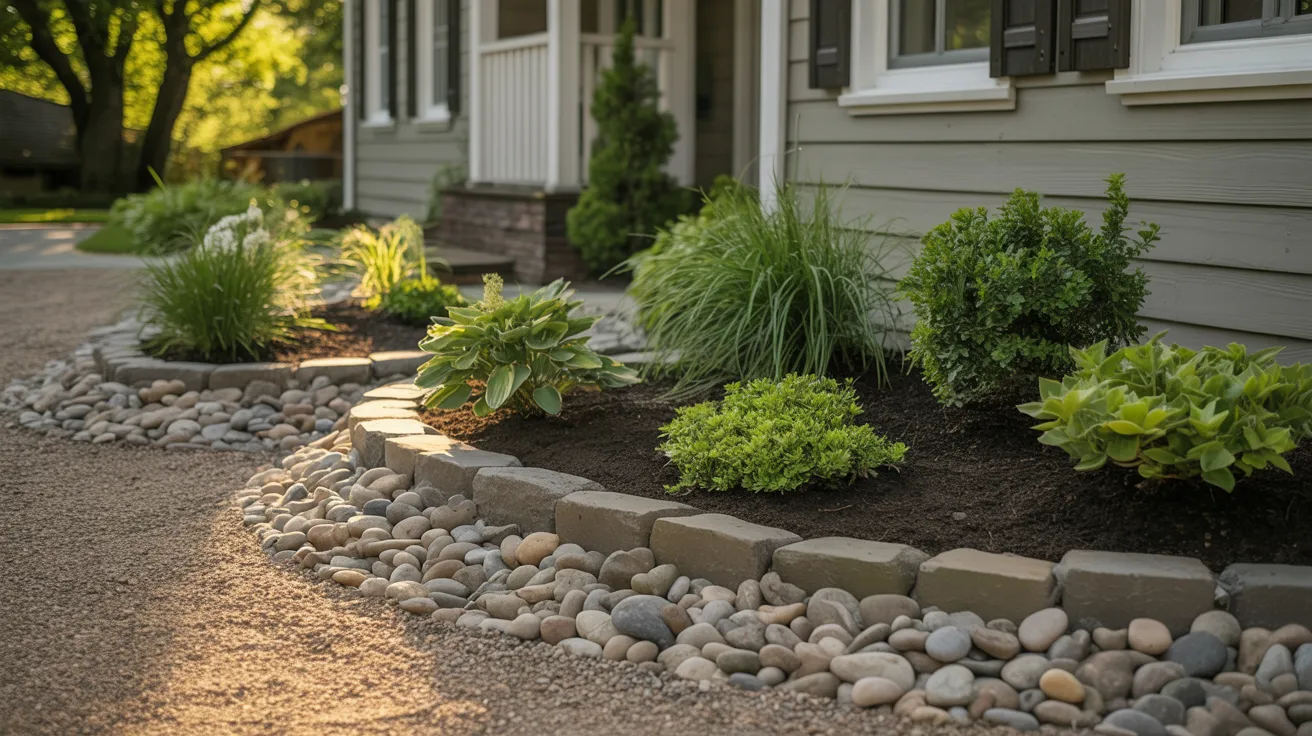
Water is the biggest enemy of any foundation. When it pools against the base of your home, it seeps into cracks, causes erosion, and over time leads to serious structural damage.
Poor drainage around the foundation also creates conditions for mold and dampness inside the home. Once mold gets into the wall cavity, it spreads fast and costs a lot to fix.
Beyond protection, the area around your foundation is the first thing people see when they look at your home. A well-maintained foundation bed instantly lifts the curb appeal and perceived value of the property.
The soil and materials you choose also affect what grows near your foundation. The wrong plants or too much moisture in the soil can cause roots to push against the structure over time.
Best Materials to Put Around Foundation of House
The material you choose for the area around your foundation does two jobs at once. It needs to look good and it needs to manage water properly.
Here are the best options across both natural and hardscape categories:
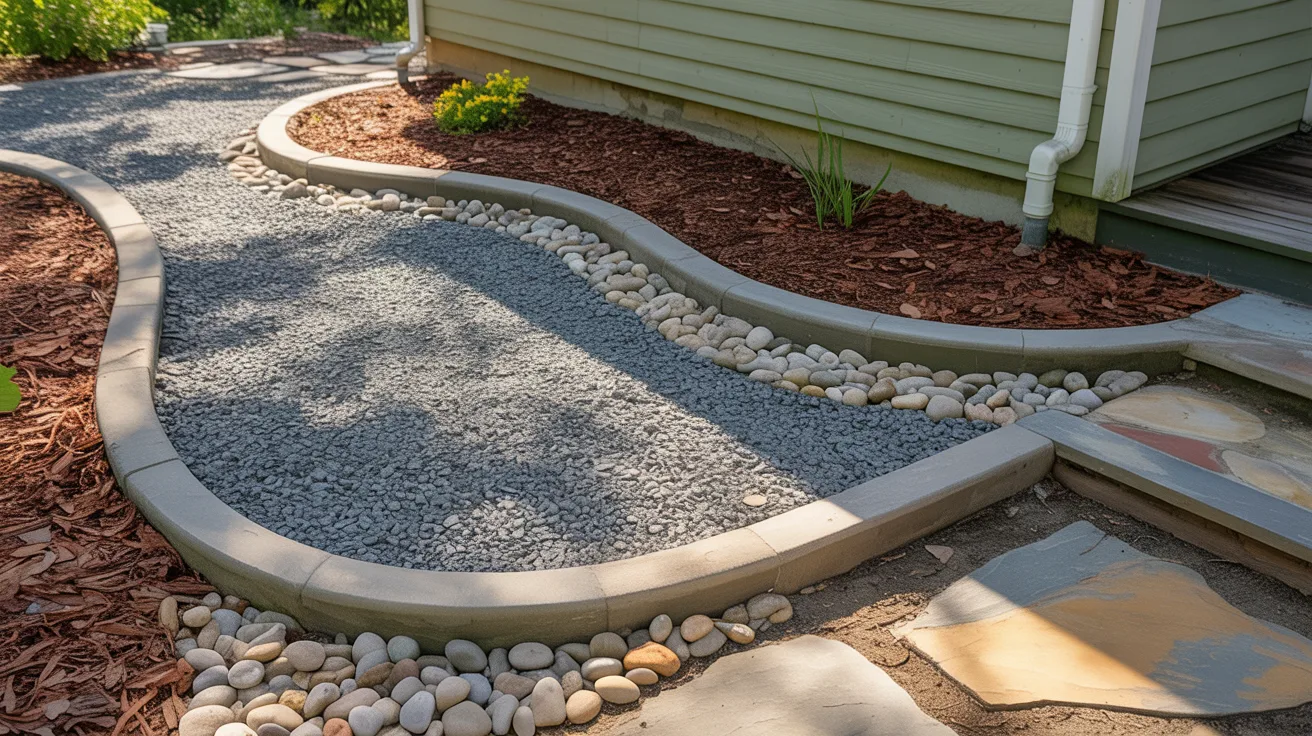
- Gravel: One of the most effective choices. It drains quickly, doesn’t retain moisture, and keeps water moving away from the foundation wall. Use a layer of at least 3 to 4 inches for best results.
- River rocks: Heavier than gravel, visually attractive, and great for areas where erosion is a concern. They stay in place well even during heavy rain.
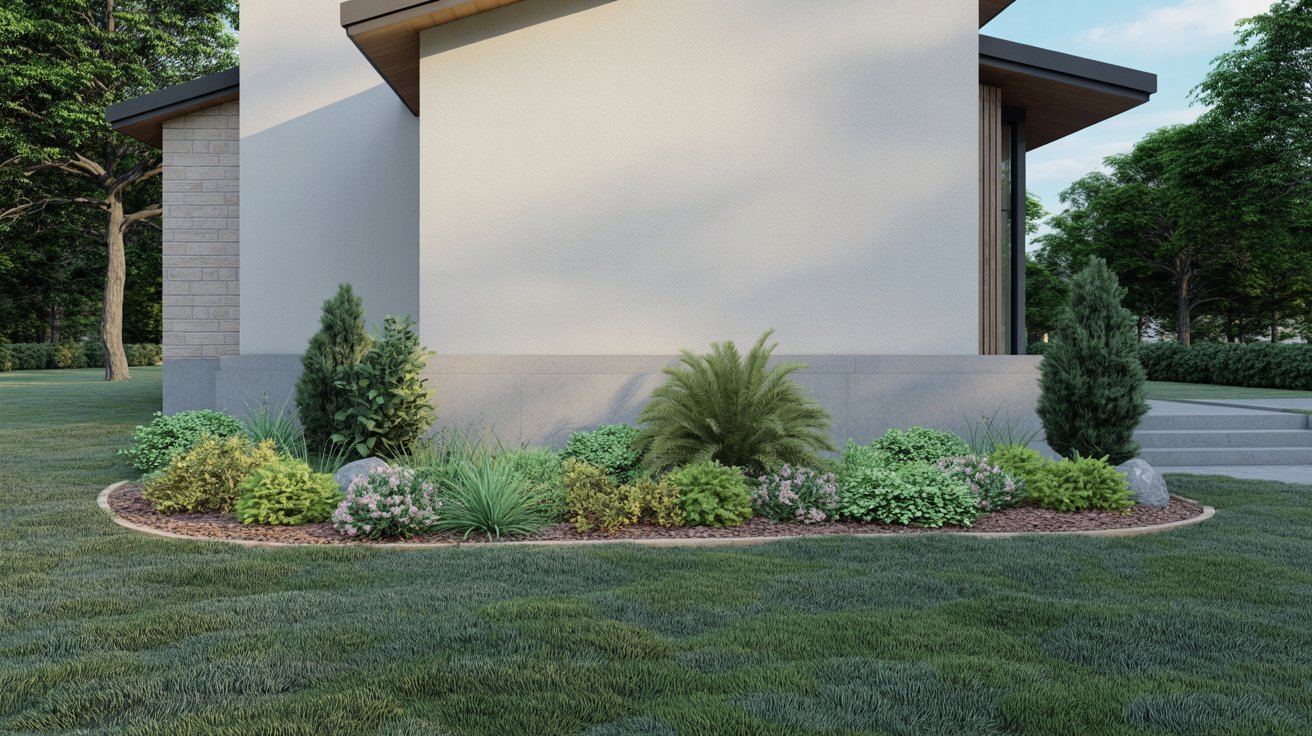
- Mulch: Affordable and good for planting beds. Keep it at least 6 inches away from the foundation wall itself to avoid trapping moisture against the structure.
- Pavers: A solid hardscape option that creates clean, walkable surfaces close to the home. They direct foot traffic and protect the soil from compaction.
- Decorative stones: Low maintenance and long-lasting. They work well as a border or in dry beds where you want a clean, finished look.
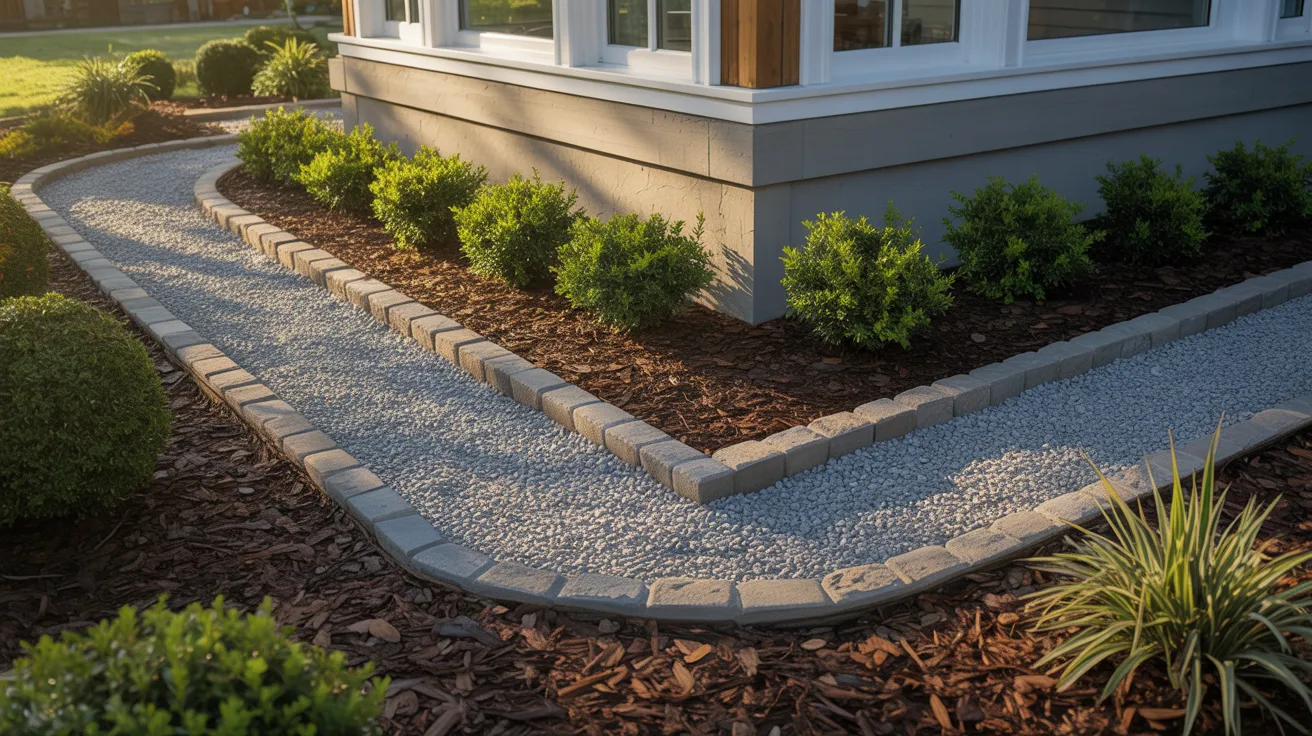
- Concrete edging: Keeps mulch and soil in place while creating a clear boundary between the foundation bed and the lawn.
Using the right materials around the foundation not only improves the look but also prevents erosion and water damage. Think about your climate and drainage needs first, then choose the material that fits.
Plant Choices Around Foundation
Not every plant belongs near a foundation. The wrong choice can trap moisture, attract pests, or send roots toward your structure.
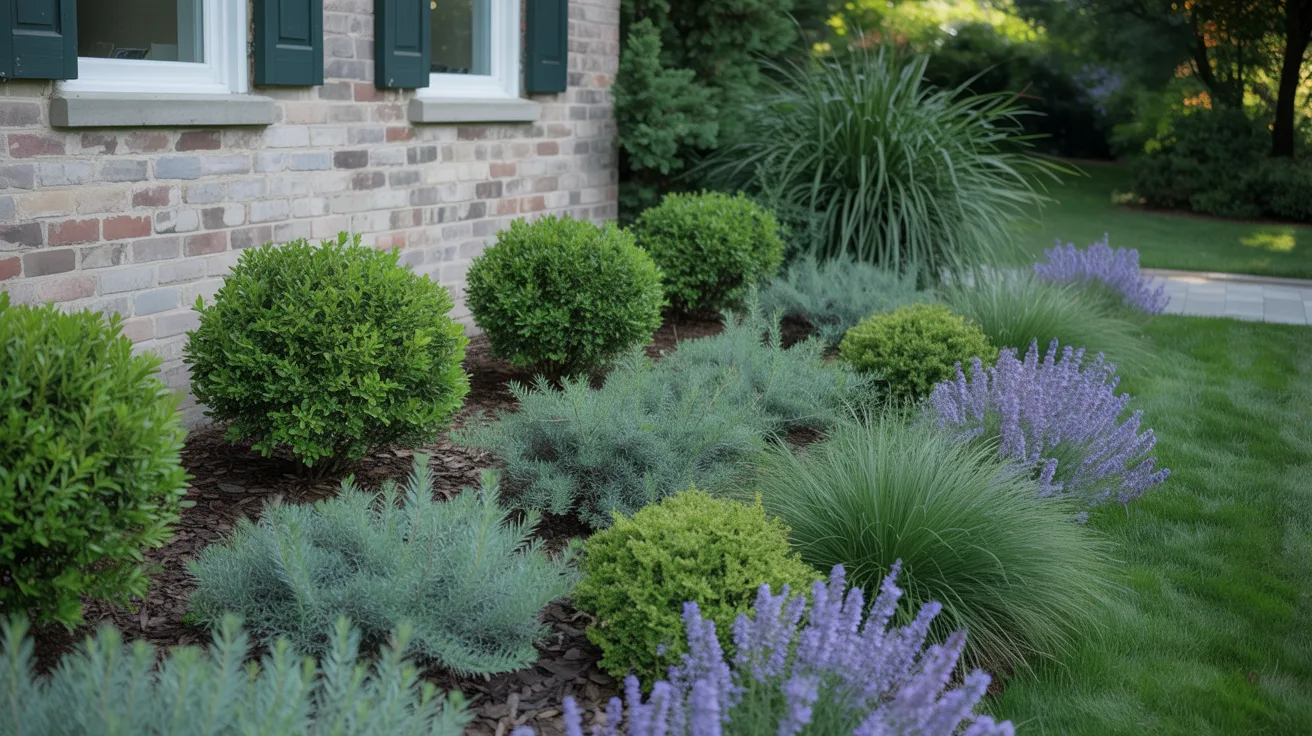
Shallow-rooted shrubs are among the safest options. Plants like boxwood, juniper, and dwarf yew stay manageable in size and don’t send aggressive roots toward the foundation wall.
Leave at least 12 to 18 inches of clear space between any plant and the foundation itself. This gap allows air to circulate, reduces moisture buildup, and makes it easier to inspect the wall for cracks or damage.
Perennial flowers like lavender, black-eyed Susans, and ornamental grasses work well in foundation beds. They come back each year, need minimal upkeep, and add strong visual interest without creating structural risk.
Avoid large trees anywhere near the foundation. Tree roots travel far and wide underground, and they will find water sources near your foundation wall. Keep any tree at least 20 feet away from the structure, more for larger species.
Drainage Solutions Around House Foundation
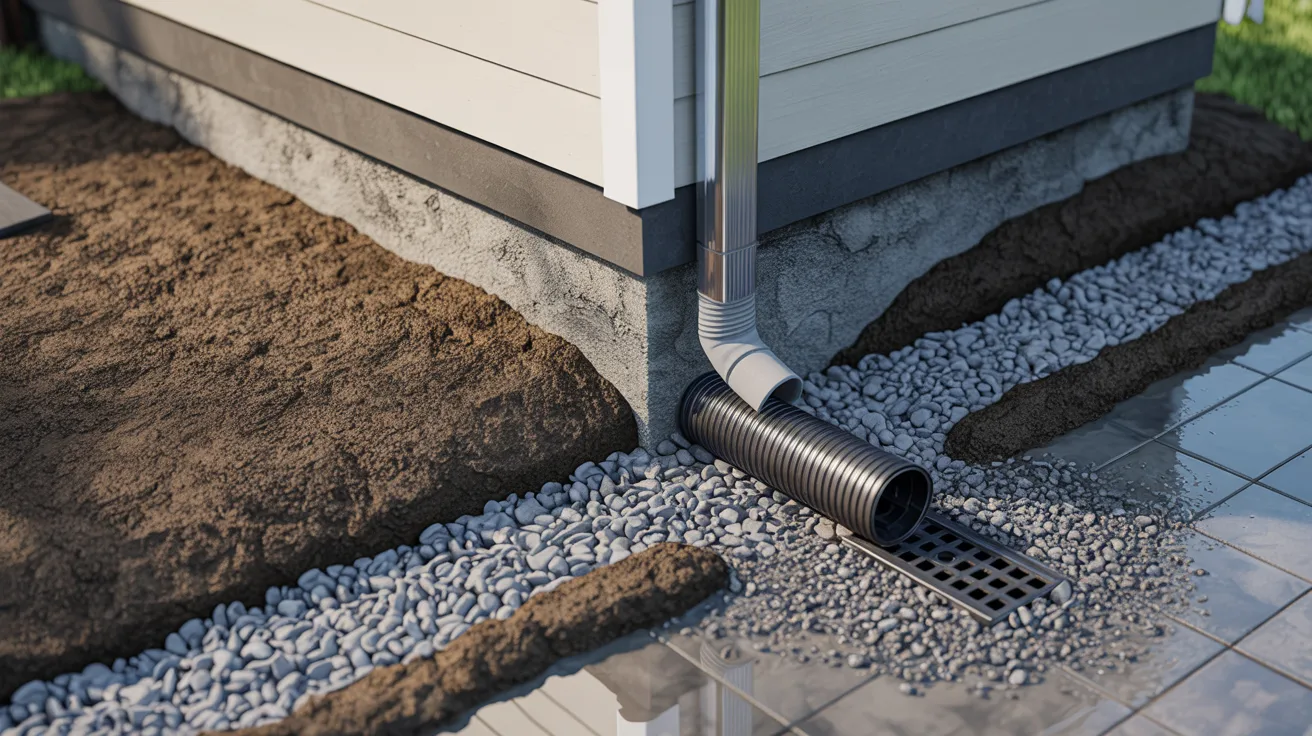
Good drainage is the most important part of protecting your foundation. Everything else, the plants, the materials, the landscaping, only works well if water has somewhere to go.
Start with the grade. The soil around your home should slope away from the foundation at a rate of about 6 inches for every 10 feet. This simple slope keeps rainwater moving outward instead of pooling at the base of the wall.
French drains are worth considering if you have persistent water pooling on one side of the home. These are trenches filled with gravel and a perforated pipe that collects water and redirects it away from the structure. They’re not complicated to install but make a significant difference.
Downspout extensions are one of the easiest and most overlooked fixes. If your gutters drop water right at the foundation, add an extension that carries it at least 4 to 6 feet away from the wall before releasing it.
Keep your gutters clean too. Blocked gutters overflow at the roofline and send water cascading directly down the side of the house and into the ground at the foundation. It happens slowly, but the damage adds up.
Decorative and Functional Features
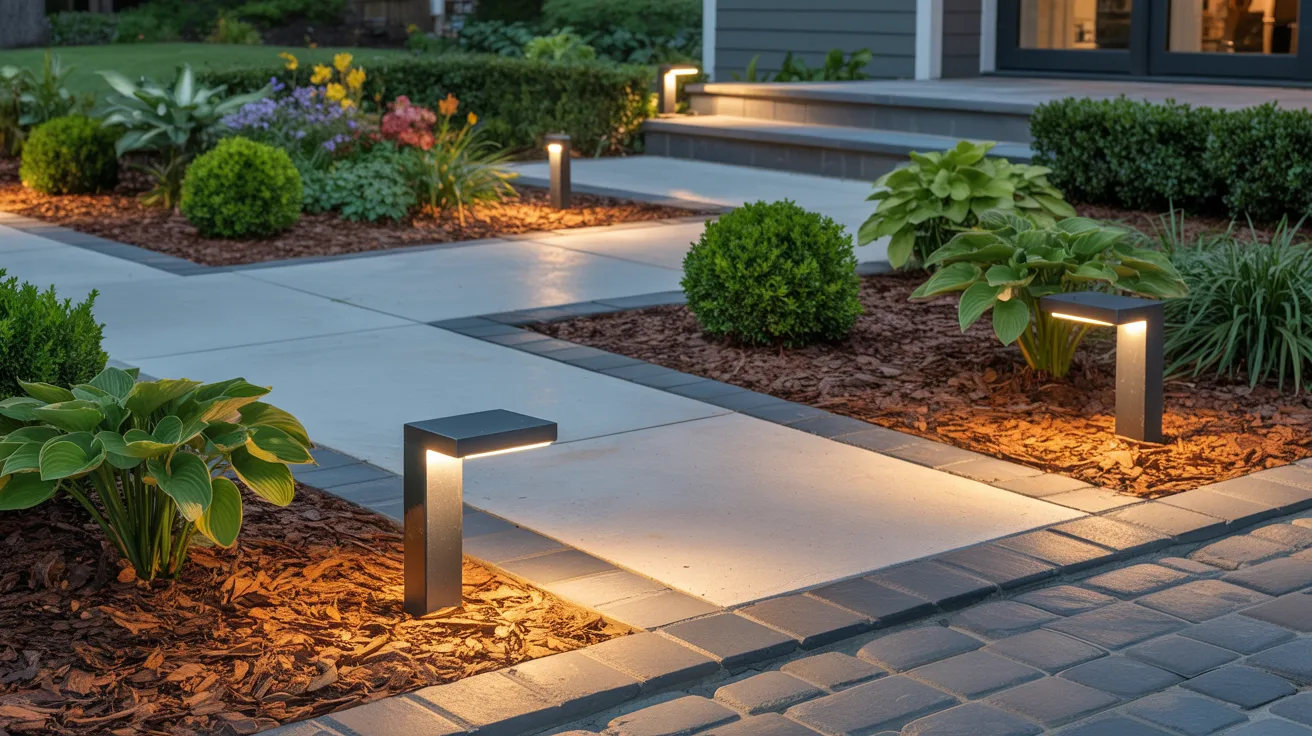
The space around your foundation doesn’t have to be purely practical. With the right features, it can look intentional and well-designed while still doing its protective job.
Here are the options worth considering:
- Walkways and edging: Concrete or paver walkways running alongside the home protect the foundation bed from foot traffic and create a clean visual boundary. Edging materials like steel, stone, or plastic borders keep mulch and gravel exactly where you want them.
- Mulch beds for flowerbeds and shrubs: A well-defined mulch bed around foundation plantings retains soil moisture for the plants, reduces weeds, and gives the whole area a neat, finished look. Keep mulch pulled back from the wall itself.
- Landscape lighting: Low-voltage lights along the foundation bed add safety at night and make the exterior of your home look polished. Solar-powered options are easy to install and cost nothing to run.
Even small additions like these make a visible difference. The goal is a foundation area that protects the structure and looks like it was planned from the start.
Common Mistakes to Avoid Around House Foundations
I’ve made a few of these myself. Most people don’t realise the damage they’re causing until it shows up inside the house.
Here are the mistakes that come up most often:
- Overwatering plants near the foundation. Too much moisture in the soil directly against your foundation wall is one of the leading causes of seepage and cracks. Water your foundation plantings deeply but infrequently, and always check that drainage is working before adding more.
- Planting trees too close. This is a slow-moving problem that catches people off guard. Tree roots follow water, and water is often found near foundations. The damage can take years to show but costs thousands to fix.
- Using materials that trap moisture. Dense ground covers, heavy organic mulch pushed right against the wall, or improperly graded soil that holds water are all common culprits. Always prioritise drainage over appearance when the two conflict.
- Grading soil toward the house. Some homeowners add soil or mulch that accidentally creates a slope toward the foundation instead of away from it. Check the grade regularly, especially after heavy rain reshapes the ground.
Avoiding these mistakes is just as important as choosing the right materials. A well-planned foundation bed that’s poorly maintained will still cause problems over time.
Conclusion
Your foundation holds everything up. The ground around it either helps or hurts that job. You now know what works, what doesn’t, and what mistakes to avoid.
So pick one thing and act on it today. Not next season. Today. Even a single fix, fixing your drainage slope or clearing mulch from the wall, can stop a problem before it starts.
Tell me in the comments: what does the area around your foundation look like right now? I’ll tell you exactly what I’d do first.
And if this helped, share it. Your neighbors probably need it too.
Frequently Asked Questions
What should I avoid putting around my house foundation?
Avoid dense materials that trap moisture like heavy organic mulch pushed against the wall, and never plant large trees close to the structure. Anything that holds water against the foundation wall over time will eventually cause damage.
Can I use mulch directly against the foundation? 3
No, mulch should be kept at least 6 inches away from the foundation wall to prevent moisture buildup and pest entry. Use gravel or leave a clear gap right at the wall, then start your mulch bed from there.
What are the best plants for foundation landscaping?
Shallow-rooted shrubs like boxwood, juniper, and dwarf yew are solid choices, along with low-maintenance perennials like lavender and ornamental grasses. Avoid anything with aggressive root systems or plants that require heavy, frequent watering.
How far should the soil slope away from the foundation?
The standard recommendation is a drop of at least 6 inches over the first 10 feet away from the foundation wall. This slope keeps rainwater moving outward and prevents it from pooling against the structure.
Can rocks and gravel help protect my foundation?
Yes, gravel and river rocks are among the best materials to use near a foundation because they drain quickly and don’t retain moisture. A 3 to 4 inch layer of gravel against the foundation wall is one of the simplest and most effective protective measures you can put in place.