
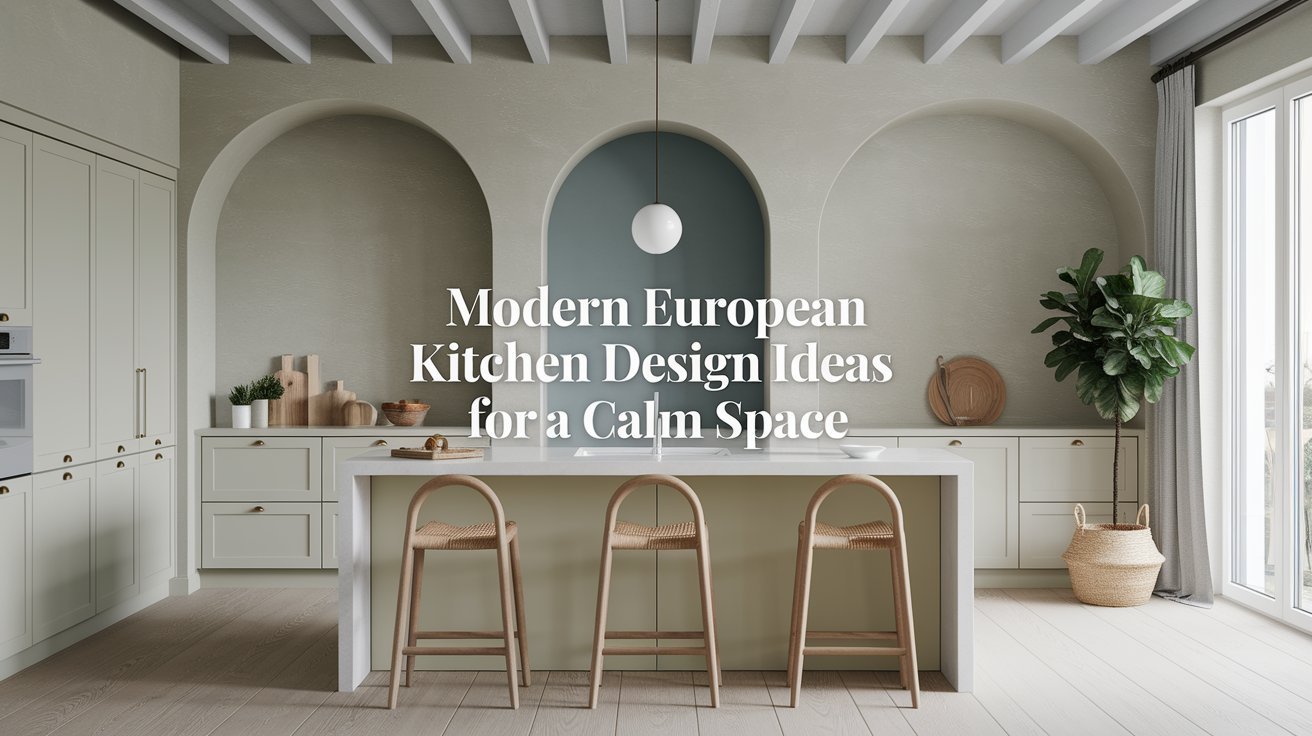
Think about the last time you walked into a kitchen that just felt right. Everything had its place, the space felt open and calm, and you could actually breathe. That’s what modern European kitchen design does best.
European kitchens focus on making cooking and gathering easier, not just looking good in photos. They use natural materials like wood and stone, stick to simple color schemes, and hide clutter behind smooth cabinet doors. The result? A kitchen that works hard but looks effortless.
In this guide, you’ll learn what makes modern European kitchen design different from other styles, see seven practical ideas you can use in your own home, and get tips for creating this look without starting from scratch. Even small changes can make a big difference.
What Defines Modern European Kitchen Design
Modern European kitchen design starts with one main idea: less is more. Instead of filling every space with cabinets, decorations, or gadgets, this style keeps things simple and functional. You’ll see flat cabinet doors without handles, counters that stay clear, and colors that stick to whites, grays, and natural wood tones.
The focus here is on quality, not quantity. European designers choose materials that last and look better with age, like solid wood, natural stone, and stainless steel. These kitchens feel open and airy because they use smart storage solutions that hide everyday items. Everything has a purpose and a place.
What makes modern European kitchen design different from American kitchens? American styles often feature large islands, lots of upper cabinets, and decorative details. European kitchens skip the extras and focus on clean lines, efficient layouts, and materials that speak for themselves. The goal is a space that feels calm and organized, where cooking becomes easier because everything makes sense.
Modern European Kitchen Design Ideas to Try
Ready to bring this style into your home? These seven ideas work in kitchens of any size. Start with one or two that fit your space and budget.
1. Choose Handle-Free Cabinets for a Streamlined Look

Handle-free cabinets are a signature feature of modern European kitchen design. These cabinets use push-to-open systems or integrated grooves instead of traditional knobs and pulls. When you touch the cabinet door, it pops open smoothly.
This design choice creates uninterrupted lines across your cabinetry, making the whole kitchen feel cleaner and more spacious. You can also try two-tone cabinets with this style—dark lower cabinets with light uppers, for example. The lack of hardware keeps the focus on the materials and colors you’ve chosen.
2. Install Full-Height Backsplashes
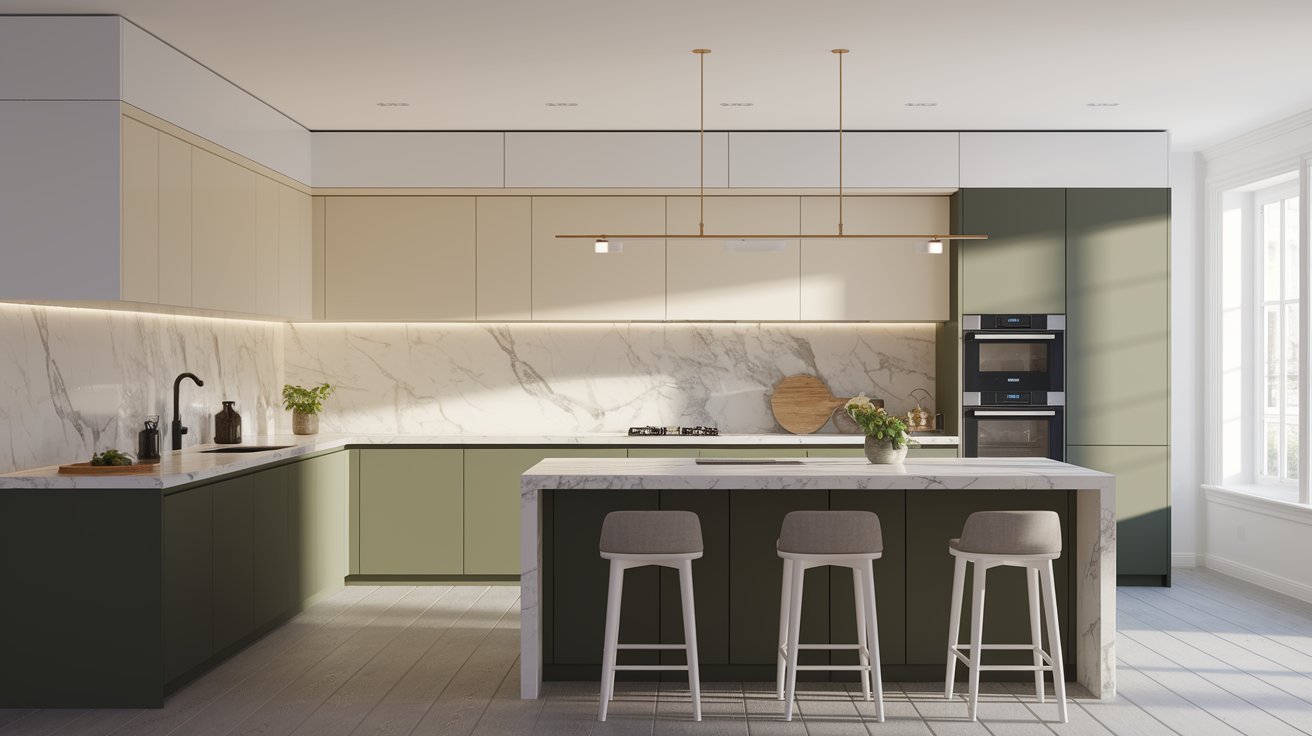
Instead of a standard backsplash that stops a few inches above your counter, take it all the way to the ceiling. Use the same stone or tile for the entire wall behind your stove and sink areas. This creates a strong visual line that makes your ceilings look higher.
Full-height backsplashes are also easier to clean than painted walls. One quick wipe and you’re done. Choose materials like marble, subway tile, or large-format porcelain. The continuous surface is a key element in modern European kitchen design that adds both style and function.
3. Use Light Wood Tones

Light woods like oak, ash, and birch bring warmth to your kitchen without making it feel heavy or dark. These natural tones work well with white walls and light countertops, creating a bright, welcoming space. Wood grain adds texture and interest without needing extra decorations.
Light wood cabinets age beautifully and match almost any style as trends change. They soften the look of modern European kitchen design while keeping that clean, minimal feel. Pair them with simple metal hardware or go handle-free for an even sleeker look.
4. Add Slim Open Shelving

Open shelving replaces bulky upper cabinets and keeps your kitchen feeling open. Use thin metal or wood shelves to display your everyday dishes, glassware, and a few nice serving pieces. This works especially well in smaller kitchens where upper cabinets can make the space feel closed in.
The key is keeping these shelves neat and organized. Only put out what you actually use and what looks good together. Open shelving is common in modern European kitchen design because it forces you to be intentional about what you own and display.
5. Select Matte Finishes

Glossy cabinets show every fingerprint and smudge. Matte finishes in neutral colors like gray, white, or navy look cleaner longer and feel more grown-up. The surface doesn’t reflect light in a distracting way, which helps your kitchen feel calm and put-together.
Matte finishes work on cabinets, countertops, and even appliances. They give a modern European kitchen design that understated, high-quality look without trying too hard. The surface texture itself becomes part of the design.
6. Incorporate Mixed Materials

Combining different materials adds depth to your kitchen without adding clutter. Try pairing warm wood cabinets with cool stone counters, or stainless steel appliances with brass faucets. The contrast between materials creates visual interest while staying simple.
The trick is using each material with purpose. Wood brings warmth, stone adds strength, and metal provides shine. In modern European kitchen design, these materials balance each other instead of competing. Stick to two or three main materials and repeat them throughout the space.
7. Create Dedicated Zones
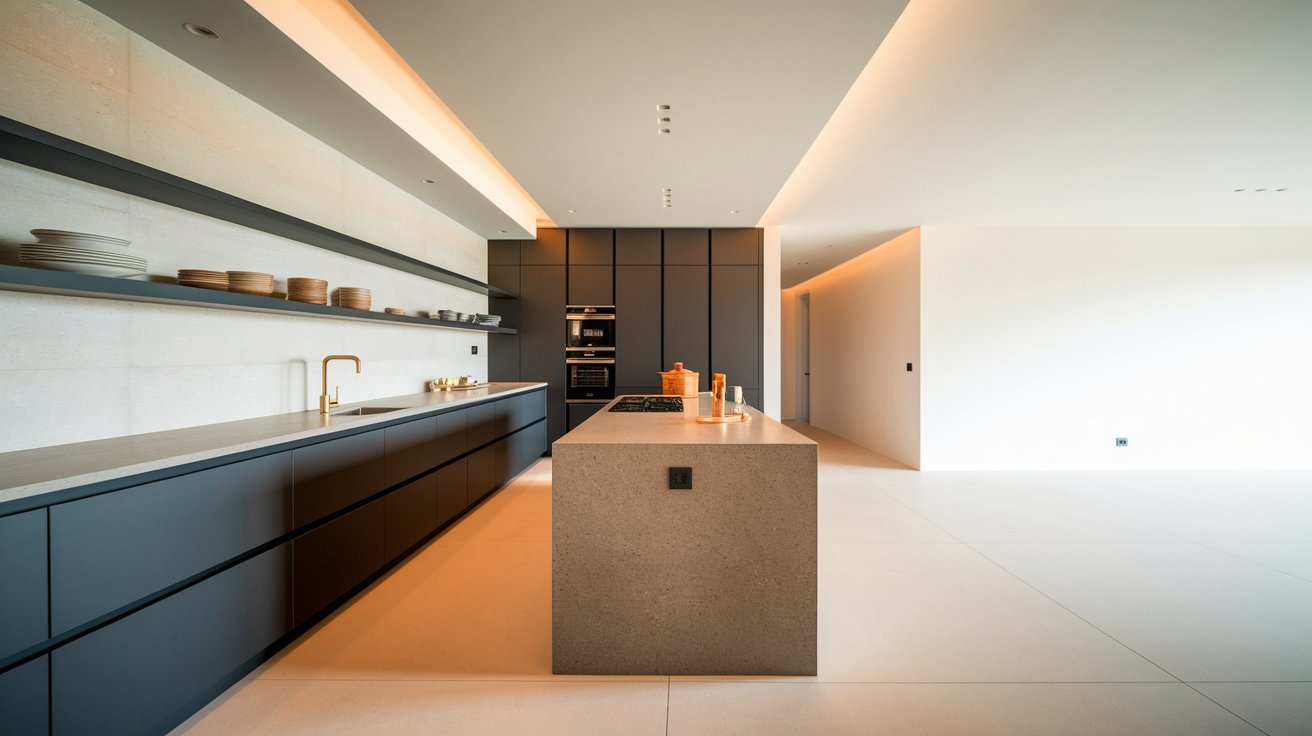
Organize your kitchen into clear areas for different tasks: one zone for cooking, another for food prep, and a third for cleaning. Keep the tools and storage for each task in its own zone. This makes cooking faster and easier because you’re not running back and forth across the kitchen.
Smart zone planning is at the heart of modern European kitchen design. Each area has everything you need within arm’s reach. Use drawers and pull-outs to store items where you’ll use them. A well-planned layout saves time every single day.
Tips for Achieving the Modern European Kitchen Look
Creating a modern European kitchen design doesn’t mean gutting your entire space. Start with these practical tips that make a real difference.
- Keep countertops clear and put away small appliances when not in use
- Choose quality materials that age well instead of trendy options that date quickly
- Stick to a limited color palette with only 2-3 colors throughout the space
- Maximize natural light by using simple window treatments or none at all
- Invest in built-in appliances that sit flush with cabinetry for clean lines
- Select simple hardware in brushed nickel or matte black finishes
- Choose compact, multi-functional pieces that serve more than one purpose
- Use under-cabinet lighting to brighten work areas without overhead fixtures
- Focus on vertical storage solutions that go up instead of out
- Consider a slim dining table instead of a large island if space is tight
- Use drawer dividers and organizers to keep everything in its place
- Install pull-out shelves in lower cabinets for easier access
These changes work together to create that European feel. Pick the ones that fit your budget and start there. Even one or two upgrades will shift how your kitchen looks and functions.
Conclusion
Modern European kitchens show that simple does not mean boring. With clean lines, strong materials, and smart storage, you get a kitchen that works well and looks good for a long time. This style fits any space, from small apartments to big homes.
You do not need to change everything at once. Start with one idea—maybe cabinets without handles or a tall backsplash. Each small change brings your kitchen closer to the calm, organized feel of European kitchens.
When planning your updates, remember “less is more.” Pick items you will like for years. Keep counters clear, show good materials, and create areas that make cooking easier. Your kitchen should work for daily life, not just look nice.
Frequently Asked Questions
What Colors Work Best in Modern European Kitchens?
Stick with whites, soft grays, and natural wood tones as your base. These neutrals create a calm backdrop that never feels dated. You can add small pops of black, navy, or sage green through accessories and textiles.
How Can I Make My Small Kitchen Feel More European?
Remove some upper cabinets and replace them with open shelving, or leave the wall bare. Use light colors throughout and add good lighting. Vertical storage solutions and handle-free cabinets help small spaces feel larger and more organized.
Are European Kitchens Expensive to Create?
Modern European kitchen design works at any budget. Splurge on quality countertops and cabinet fronts if you can, but save on hardware by going handle-free. IKEA and other retailers offer European-style cabinets at reasonable prices.
What Type of Flooring Suits Modern European Kitchen Design?
Wide-plank wood floors, polished concrete, or large-format tiles all work well. These materials have clean lines and minimal grout joints. Light or medium wood tones keep the space bright, while concrete adds an industrial edge.
How Do I Keep My European Kitchen Organized?
Built-in storage with drawer dividers keeps everything in its place. Follow the “one in, one out” rule so clutter doesn’t build up. Clean your counters completely each night, and only keep out items you use daily.