

A small home does not mean you must have unsteady stairs inside. A common problem for people is fitting a staircase inside a small space.
Fortunately, there are stairs of a very wide variety that can be designed to be both attractive and functional in a very small space. This guide will show you the best limited-space small-space stairs design options that will fit smaller homes.
We’ll focus on space-saving, storage, and safety. This guide will show the stair style that suits a home best by the end.
Best Stair Designs for Small Spaces

When you’re working with a limited space small space stairs design, certain styles work much better than others. The best designs use less floor space while still being safe and easy to climb.
Spiral stairs, floating stairs, and storage stairs are among the top choices. These designs take up less room than traditional straight stairs. They also let light pass through, which makes your home feel more open.
Think about four main things when choosing stairs: how much floor space they need, how tall your ceiling is, whether they’re safe to use, and how they look. The right limited space, small space, and stairs design will check all these boxes without making your home feel cramped.
7 Creative Stair Design Ideas for Compact Homes
Here are seven proven stair designs that work great in small homes. Each one solves the space problem differently.
Spiral Staircases

Spiral stairs are perfect for tight spaces because they go up in a circle. This means they only need about 5 to 6 feet of floor space, which is much less than regular stairs.
You can build spiral stairs from many materials. Wood gives a warm feeling, while steel or metal looks modern and industrial. Some designs mix materials for a unique style that fits your home.
These stairs work best when connecting different floors in tight spots. They’re great for getting to basements, lofts, or second floors. This limited space, small space stairs design is one of the oldest and most reliable options.
Floating Stairs with Open Risers
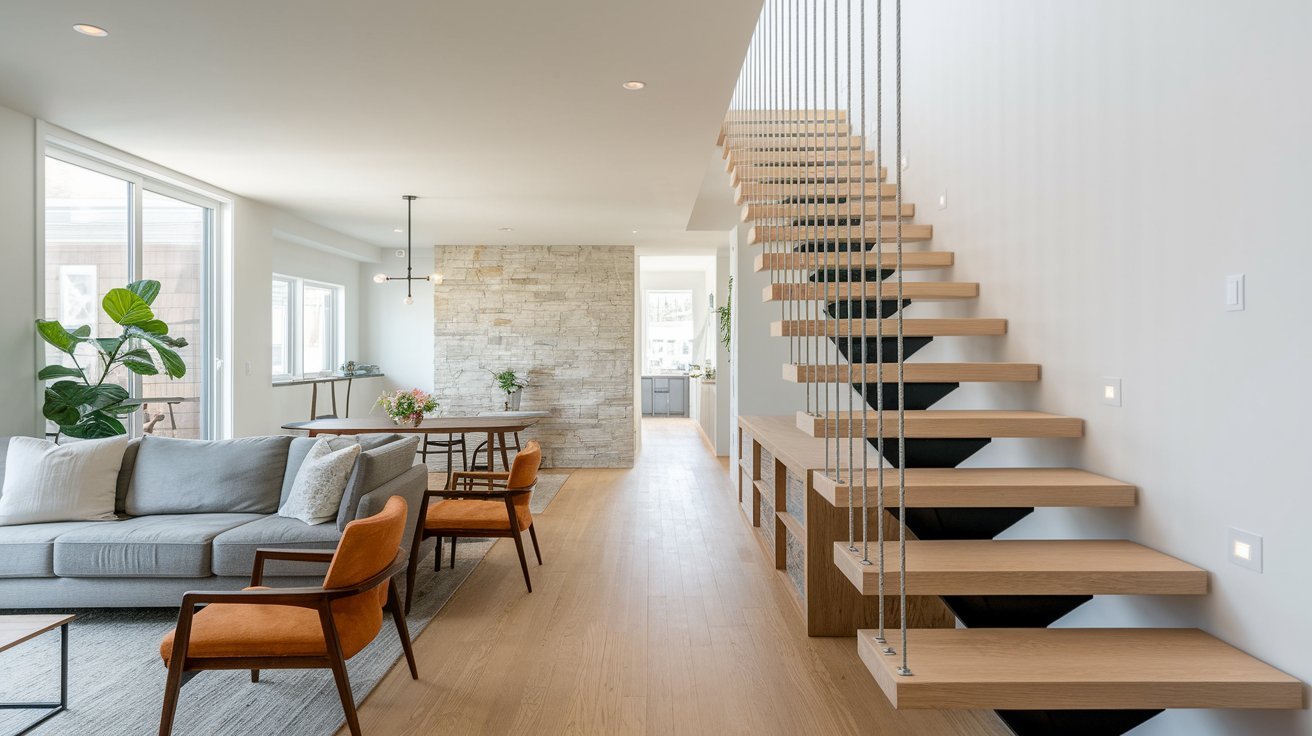
Floating stairs don’t have backs between the steps. This open design lets light flow through and makes your space look bigger than it really is.
These stairs usually have wood steps attached to the wall with metal supports. Glass railings or thin cables on the sides keep them safe without blocking your view. The minimal design is perfect for modern homes.
Because you can see through them, floating stairs don’t create a visual wall in your room. This makes your whole space feel more open and less crowded.
Storage Stairs (Tansu Style)

Storage stairs do two jobs at once. They get you upstairs and give you places to store your stuff. Each step can have drawers, cabinets, or shelves built right in.
This limited space, small space stairs design comes from Japanese homes, where every inch matters. You can store shoes, books, clothes, or anything else you need to tuck away. The storage is hidden but easy to reach.
In tiny homes and small apartments, storage stairs are a game-changer. They let you use space that would normally be wasted. You get stairs and storage without taking up extra floor space.
L-Shaped Stairs with Landing
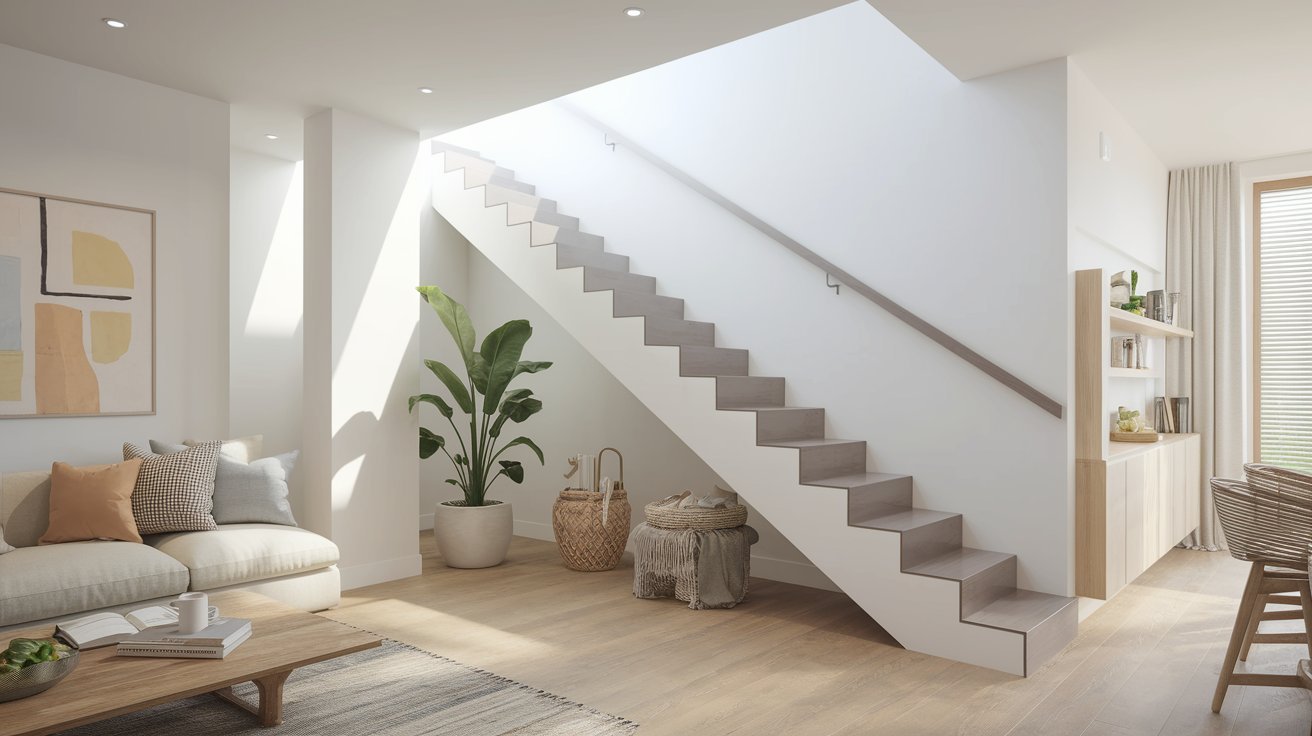
L-shaped stairs turn 90 degrees with a flat landing in the middle. This corner design takes up less wall space than a long, straight staircase.
The landing gives you a natural place to rest halfway up. This makes climbing easier and safer. You can also place these stairs in a corner, which works well in many home layouts.
These stairs are flexible. You can adjust the length of each section to fit your space. They’re one of the most practical limited space small space stairs design choices for typical homes.
Alternating Tread Stairs

Alternating tread stairs have steps that switch sides as you go up. The left side has a step, then the right side has the next one. This lets the stairs be steeper while using less floor space.
Because they’re steeper, these stairs take up about 30% less room than regular stairs. They work best for getting to lofts, attics, or other spaces you don’t use constantly.
You need to be careful with these stairs. They require more attention when climbing. Make sure to install handrails on both sides and use non-slip materials on the steps.
Under-Stair Utilization

The space under your stairs doesn’t have to sit empty. You can turn it into useful storage or work areas that keep your main rooms neat and organized.
Some popular ideas include shoe closets, coat storage, small home offices, reading nooks, or pet beds. You can add custom shelves, pull-out drawers, or built-in cabinets that fit the exact shape of the space.
This approach works with any limited space, small space stairs design you already have. It makes every square foot count without building anything new or expensive.
Compact Straight Stairs with Minimal Railings

Sometimes the simplest design is the best. A straight staircase can work in small spaces if you keep it narrow and use the right railings.
Make your stairs 30 to 36 inches wide instead of the standard 36 to 42 inches. Use cable railings or thin metal bars instead of thick wooden posts. This keeps the stairs feeling light and open.
The clean, simple lines of this design work great in modern homes. It’s also usually the least expensive option. This limited space, small space stairs design proves that the basic can still be beautiful.
Tips for Making Your Small Staircase Work
Once you pick your stair design, these tips will help you make the most of it.
- Use mirrors on walls near the stairs to reflect light and create depth
- Pick strong materials that can handle daily use without wearing out
- Keep handrails secure but not bulky
- Add a runner rug or fun wallpaper for style
- Always follow building codes for safety
- Measure everything twice before building
- Hire professionals for complex designs
These small changes make a big difference. Your limited space, small space, and stairs design will look better and work better when you pay attention to the details.
Conclusion
Small spaces allow you to create with your stair design. Your compact home does not require that you accept boring stairs that eat up space.
A staircase that is pleasant, safe, and comfortable is an important part of good design. Consider your lifestyle. Consider who it will have use for. Consider how your house works. What works for one person may not work for another.
Talk to professionals. A designer or contractor can help you find the perfect limited space, small space,e stairs design for your home. They understand building codes and building stairs that last.
Your small space can do so much more, especially with the right stairs, making your little abode feel as spacious, organized, and personalized as possible.
Frequently Asked Questions
What Is The Smallest Space For A Staircase?
The smallest safe staircase is a spiral design needing just 5 to 6 feet of floor space. Alternating tread stairs use even less room but work best for secondary spaces like attics or lofts.
How Do You Make A Small Staircase Look Bigger?
Use light paint colors and let in natural light. Choose open risers with glass or cable railings. Place mirrors nearby to reflect light. Keep the area clean and simple without extra stuff.
Can I Add Storage Under My Existing Stairs?
Yes, you can add storage under most stairs. Install pull-out drawers, built-in cabinets, or closet systems. A carpenter can help design custom storage that fits your exact space and needs.
What Materials Work Best For Compact Staircases?
Wood offers warmth and works with many styles. Steel and metal stay strong while looking slim and modern. Glass keeps sightlines open and makes spaces feel larger. Pick materials that handle heavy use well.
Are Spiral Stairs Safe For Everyday Use?
Spiral stairs are safe when built correctly with proper handrails, good lighting, and wide enough steps. Check your local building codes. Consider who lives in your home—small children or elderly people may find it challenging.