
Landscaping around your house foundation does more than look good. It protects your home, controls drainage, and ties your whole yard together.
I’ve spent years working on foundation beds, making plenty of mistakes along the way, and learning what actually holds up over time.
That hands-on experience is exactly what I’m sharing here. In this blog, you’ll find 55 practical ideas, the best plants to use, and smart layout tips that work in real yards.
Whether your space gets full sun or deep shade, there’s a solution here for you.
Let’s get your foundation looking its best.
What Is Foundation Landscaping?
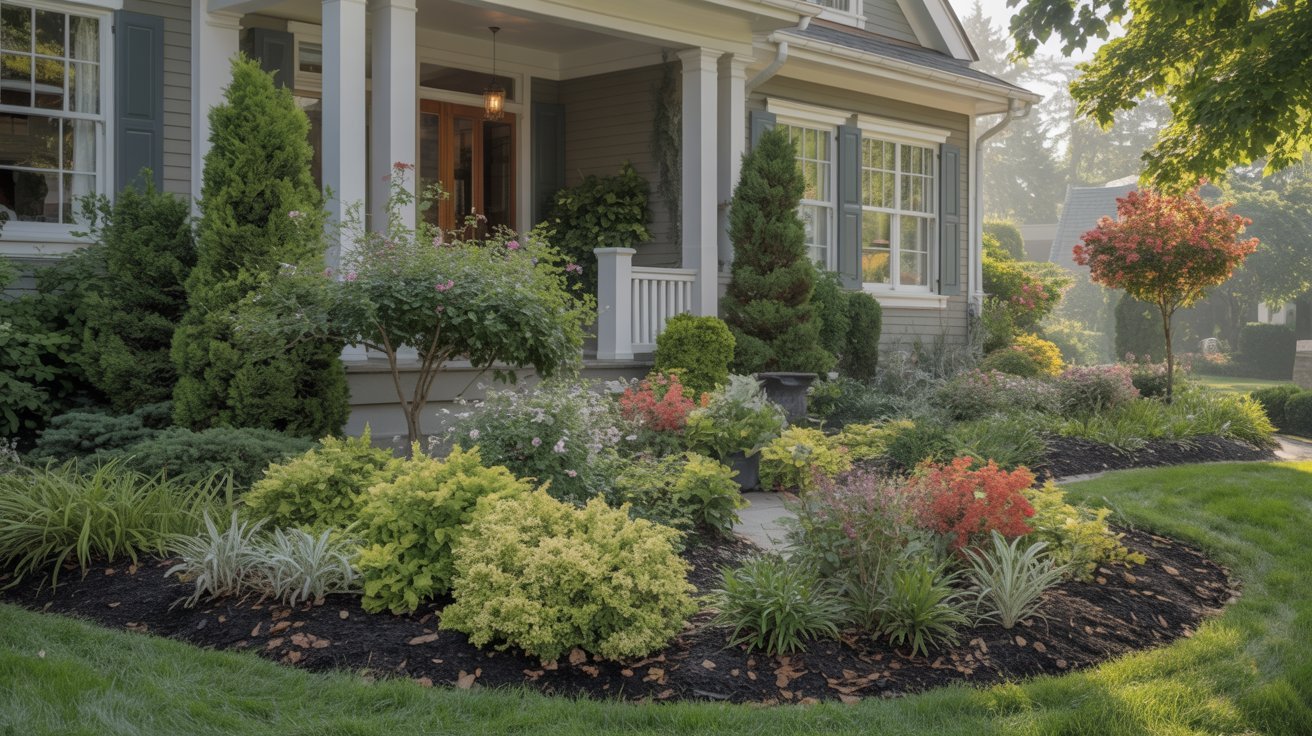
It’s the art of planting and designing the area directly around your home’s base.
Foundation landscaping refers to the plants, mulch, rocks, and design elements placed along the base of your home’s exterior walls.
It creates a natural border between your house and the yard. Done right, it adds structure, controls moisture, and keeps your home looking polished year-round.
It also plays a practical role most people overlook. The right plants slow down water runoff, reduce soil erosion, and keep excess moisture away from your foundation walls.
It’s one of the simplest ways to make a big visual difference without a major renovation. You don’t need a big budget or a professional crew to get real results.
How to Plan Landscaping Around House Foundation
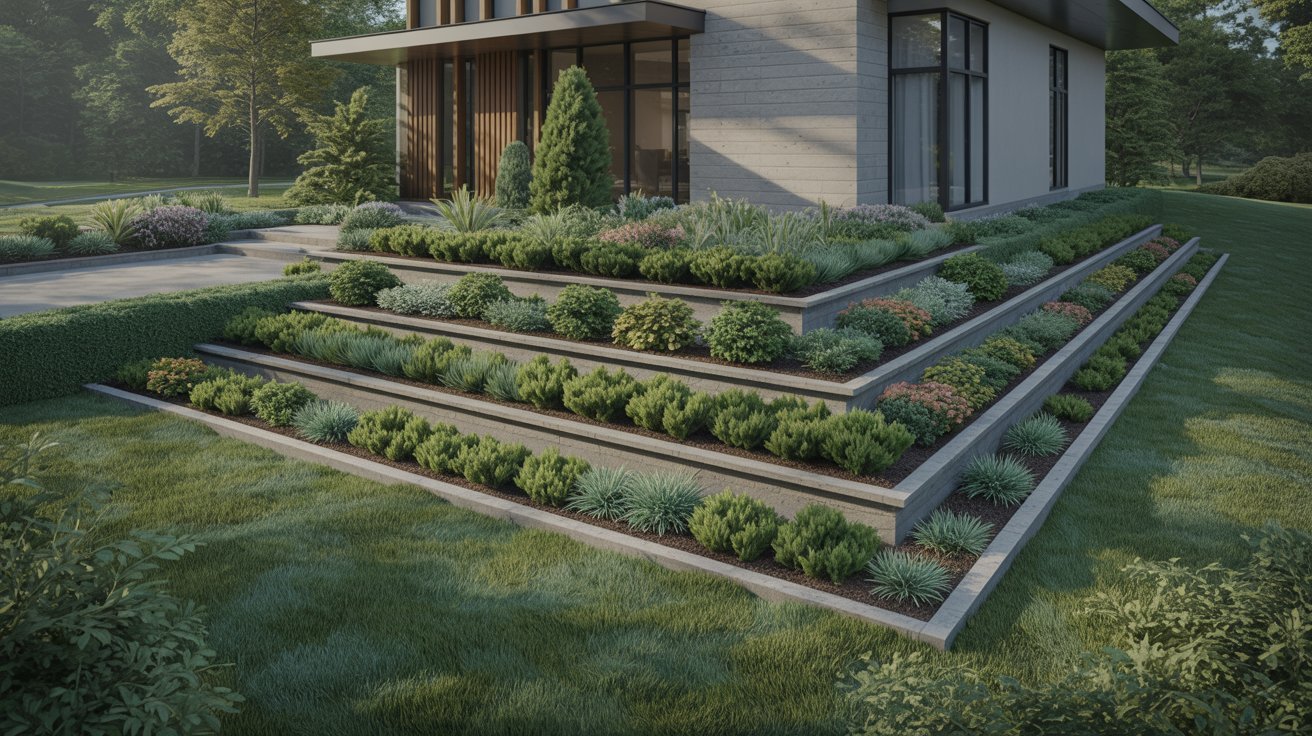
Before you pick a single plant, you need to assess your space carefully. Rushing into planting without a plan is one of the most common mistakes homeowners make.
Consider Sunlight and Shade
Walk around your foundation at different times of day. Note which spots get full sun, partial shade, or deep shade. Getting this wrong means plants that struggle or die within a season.
Evaluate Soil and Drainage
Foundation soil is often compacted and low in nutrients. Check if water pools near your home after rain. Improve soil with compost and make sure the grade slopes away from your house.
Match Plants with Architecture
Modern homes suit clean, minimal plantings. Traditional homes work well with layered, mixed designs. Matching your plant style to your home creates a more cohesive look.
Choose Low-Maintenance Plants
Stick with drought-tolerant, hardy species that need less care once established. This matters most along foundations where heat and dry soil are common.
Plan for Growth and Spacing
Always check the mature size before buying. Overcrowding leads to disease, water competition, and beds pressing against your siding.
55 Landscaping Ideas Around House Foundation
Here are the top foundation plants and design layouts that actually work.
1. Low-Growing Sedum Ground Cover
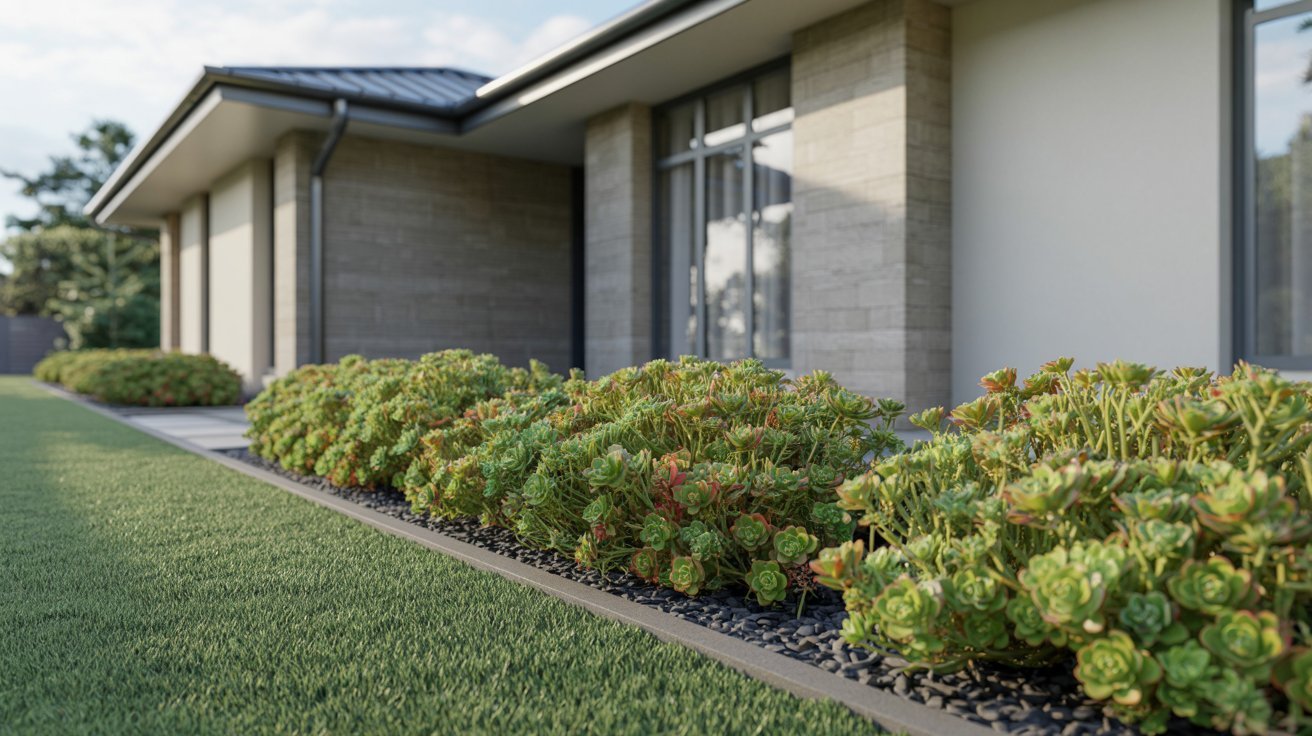
Works well in sunny, dry areas. It spreads slowly and needs almost no water once established. Sedum also stays low enough to never block windows or crowd your siding.
2. Creeping Thyme Along Edges
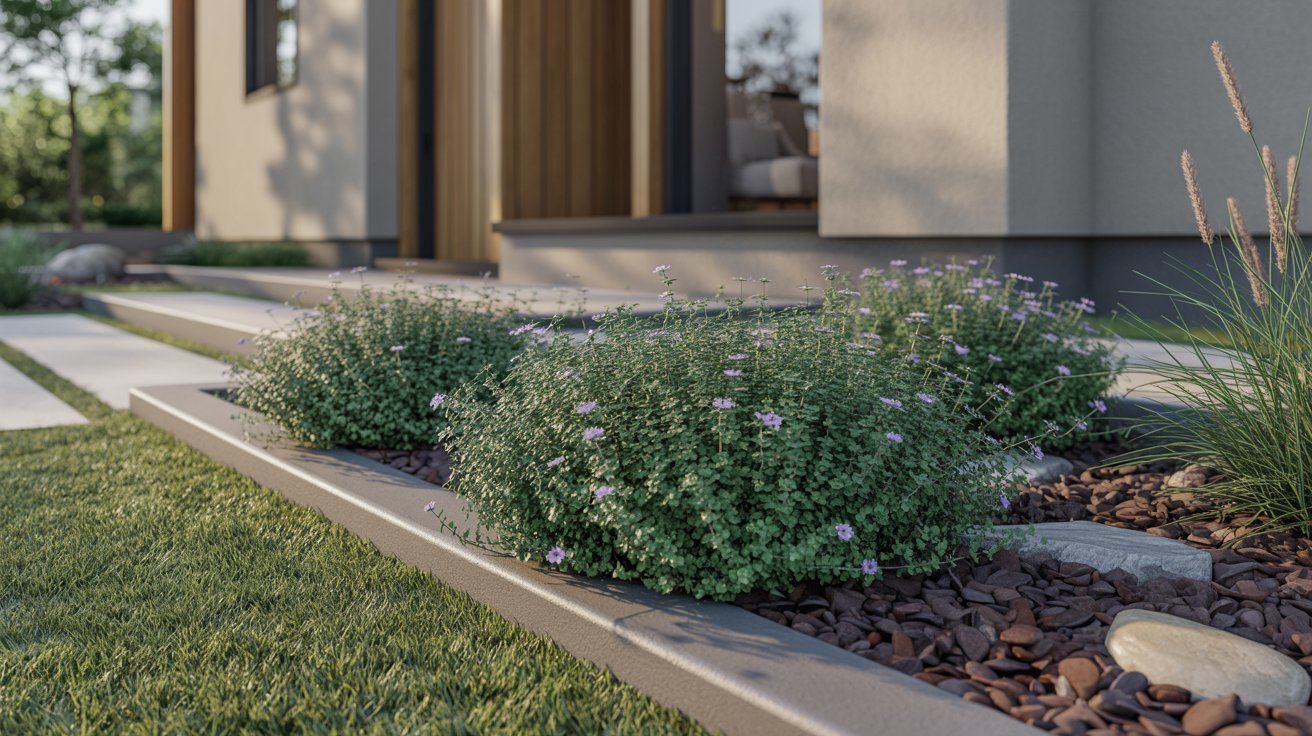
Great for edges and pathways. It handles foot traffic well and releases a soft fragrance when brushed. It also fills gaps between stones for a natural, finished look.
3. Moss Phlox for Colorful Borders
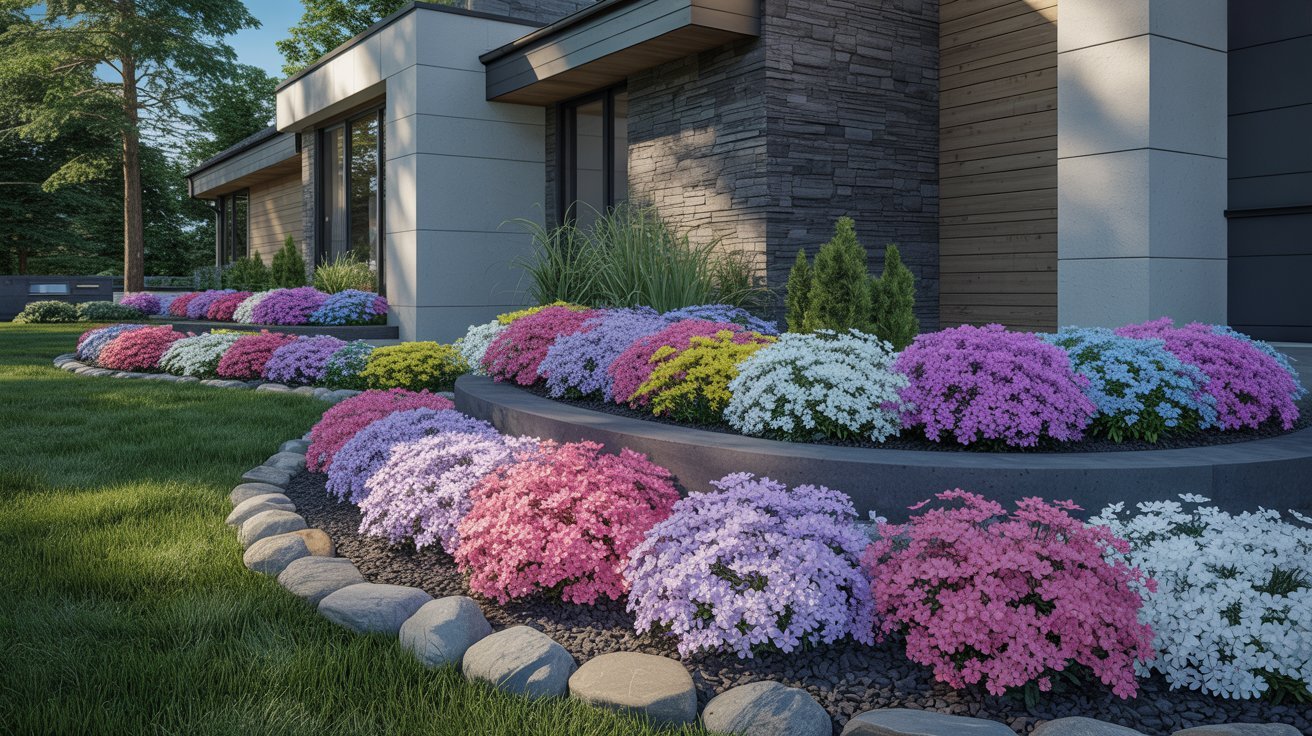
Creates a carpet of color in spring and stays neat the rest of the year. It works beautifully along the front edge of a foundation bed and needs very little water once rooted.
4. Ice Plant for Dry Sunny Areas
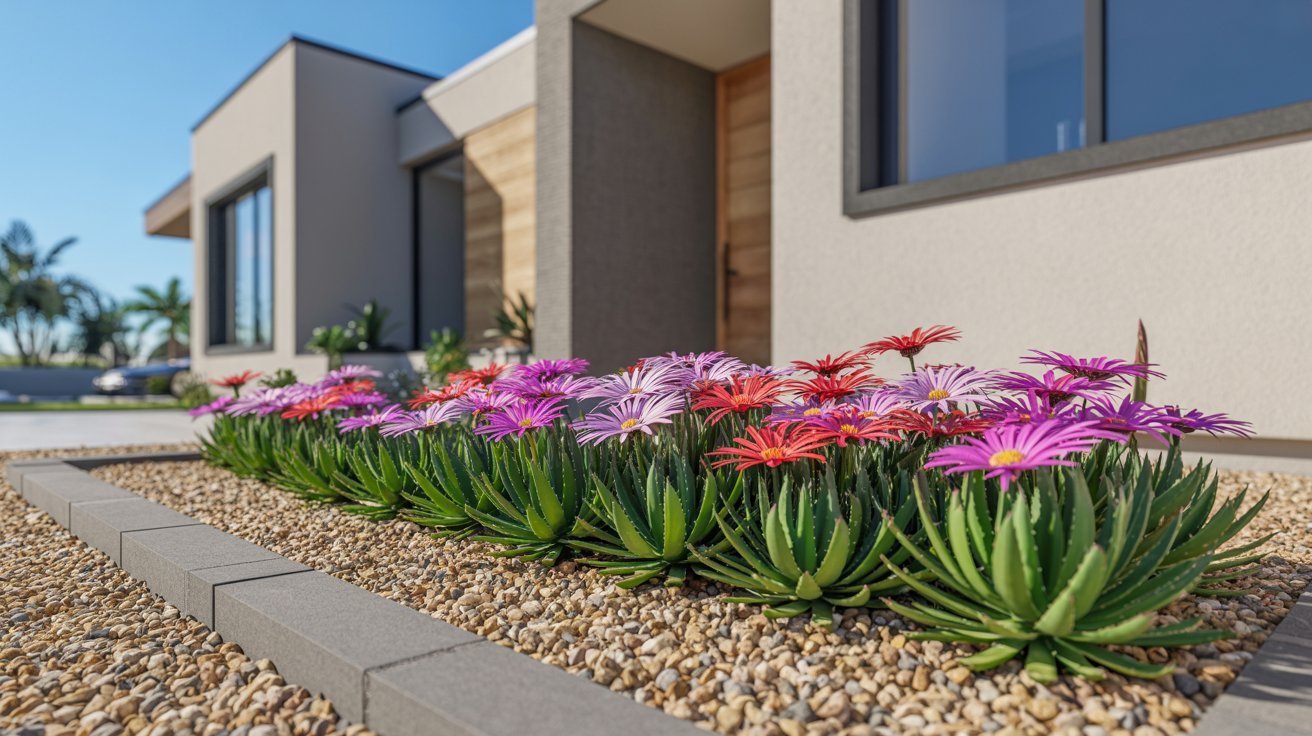
Handles reflected heat from walls without complaint. It’s ideal for hot, dry climates where most other ground covers struggle. The bright flowers are a bonus through summer.
5. Dwarf Mondo Grass for Neat Edging
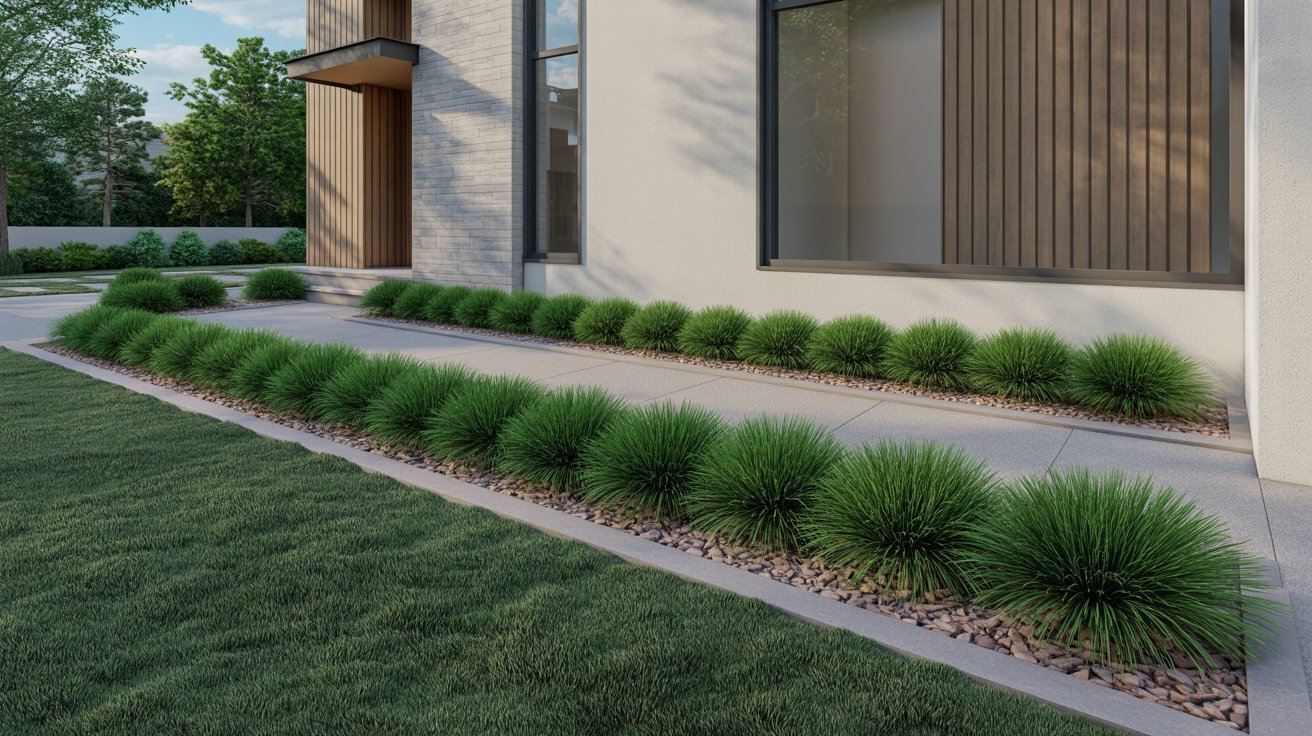
Gives clean, dark green edging that stays compact through every season. It grows slowly, holds its shape without trimming, and works well in both sun and partial shade.
6. Hostas for Shaded Foundation Areas
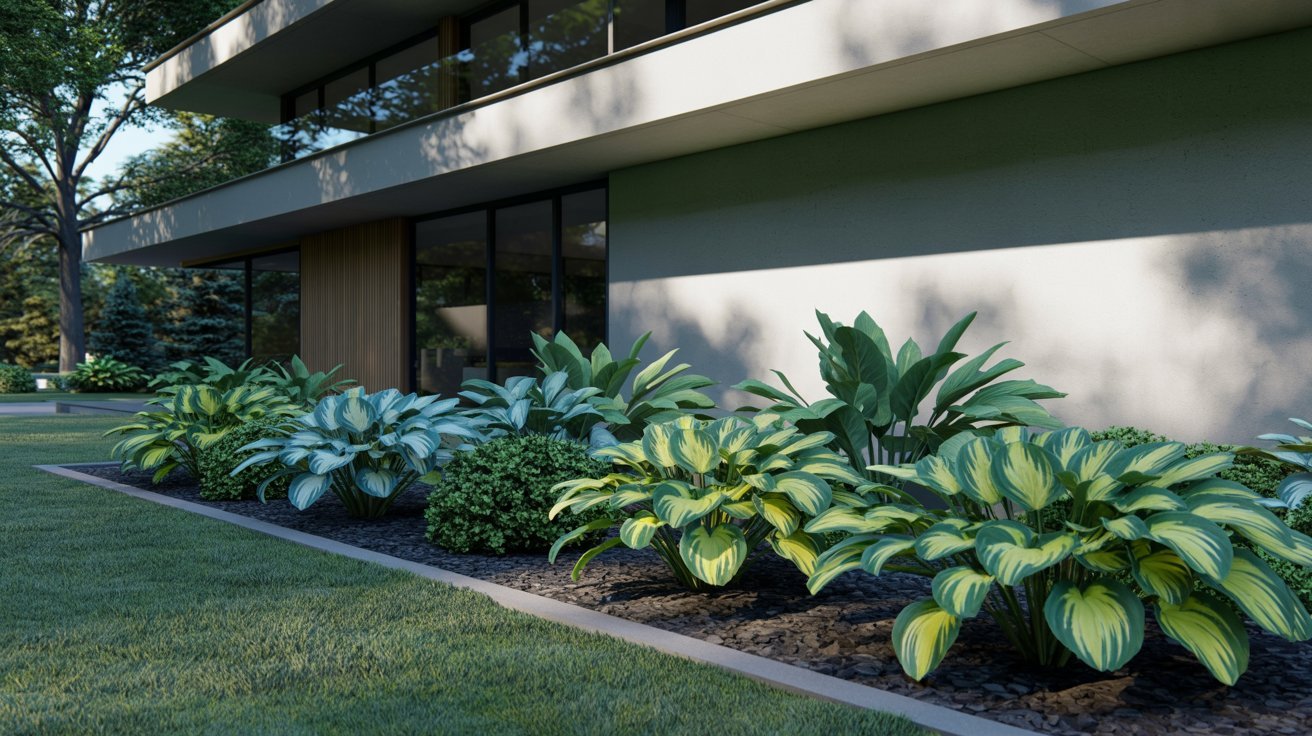
Come in dozens of leaf sizes and colors. They are a reliable go-to for shaded beds where other plants won’t perform. Hostas also fill space quickly and suppress weeds naturally.
7. Ferns for Lush Shade Landscaping
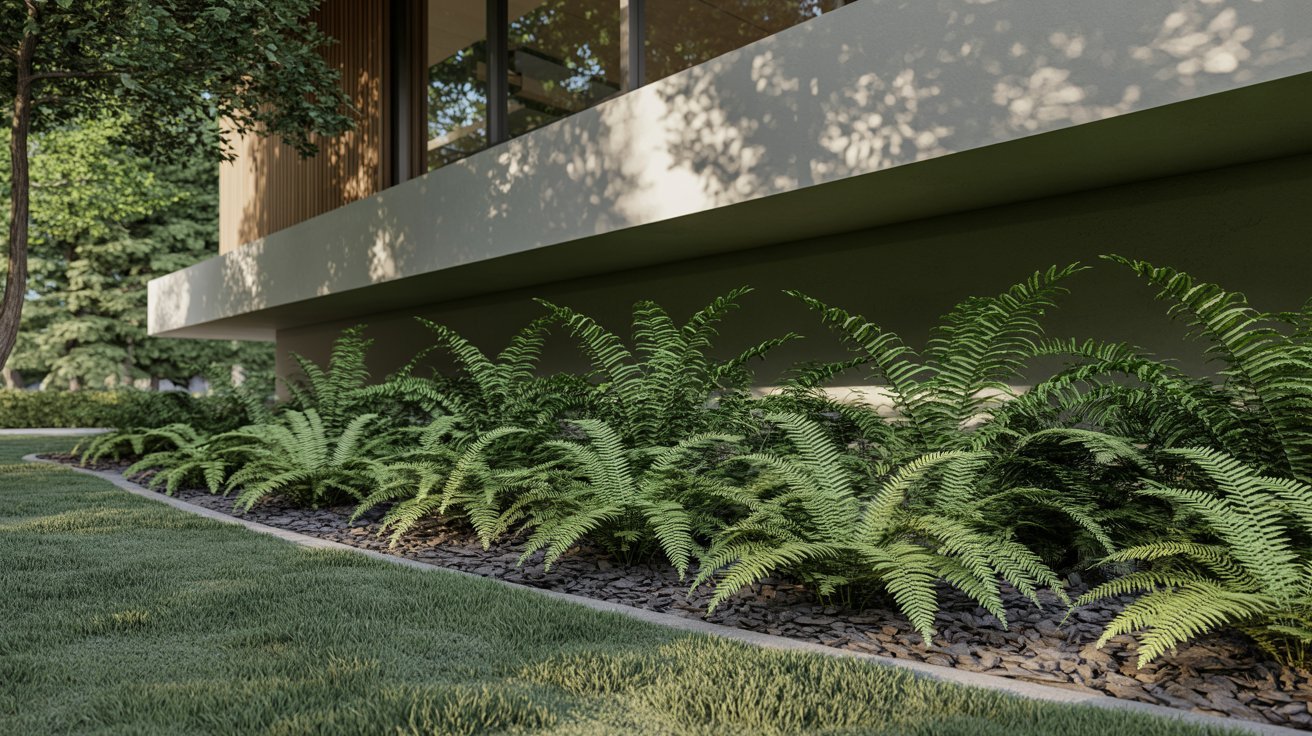
Add feathery texture in damp, shaded corners with very little upkeep. They pair well with hostas and coral bells to create a layered, full look in darker foundation areas.
8. Coral Bells (Heuchera) for Foliage Contrast
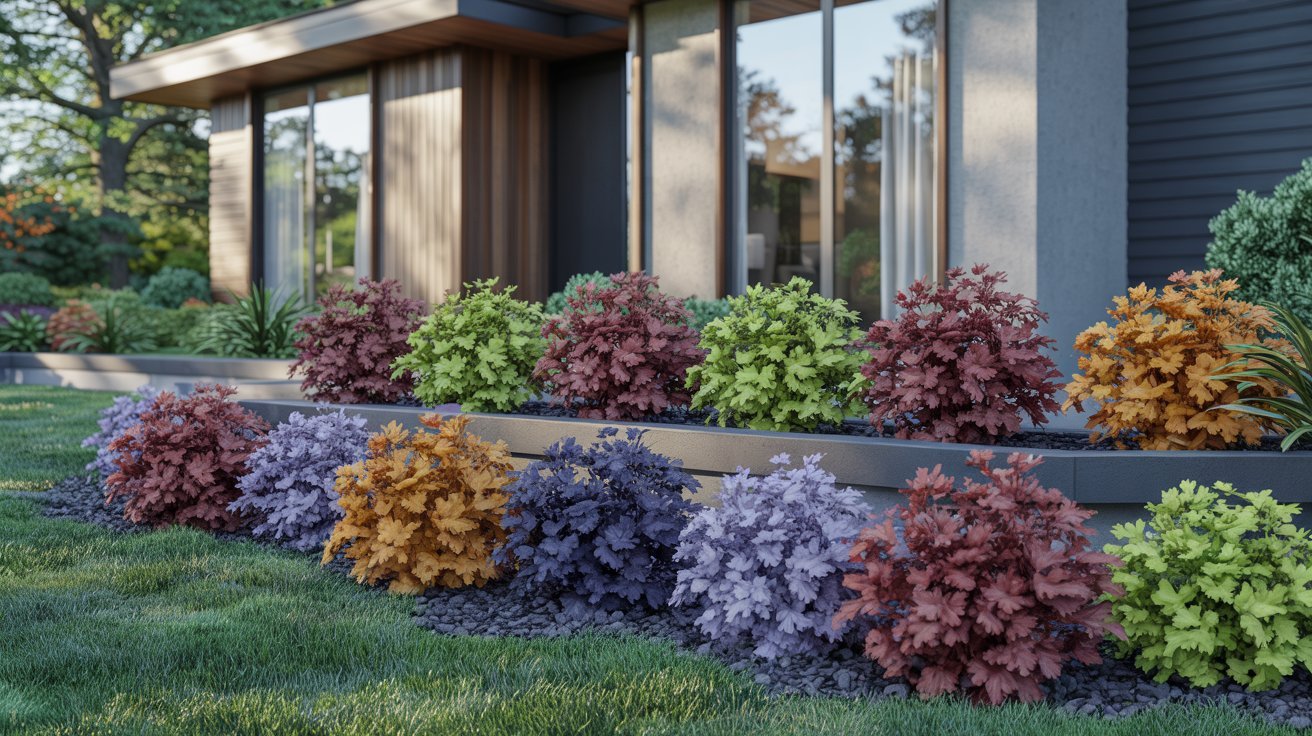
Rich foliage in burgundy, copper, and lime green with minimal care needed. Coral bells hold their color through most of the year and add visual contrast next to green shrubs.
9. Astilbe for Shaded Flowering Accents
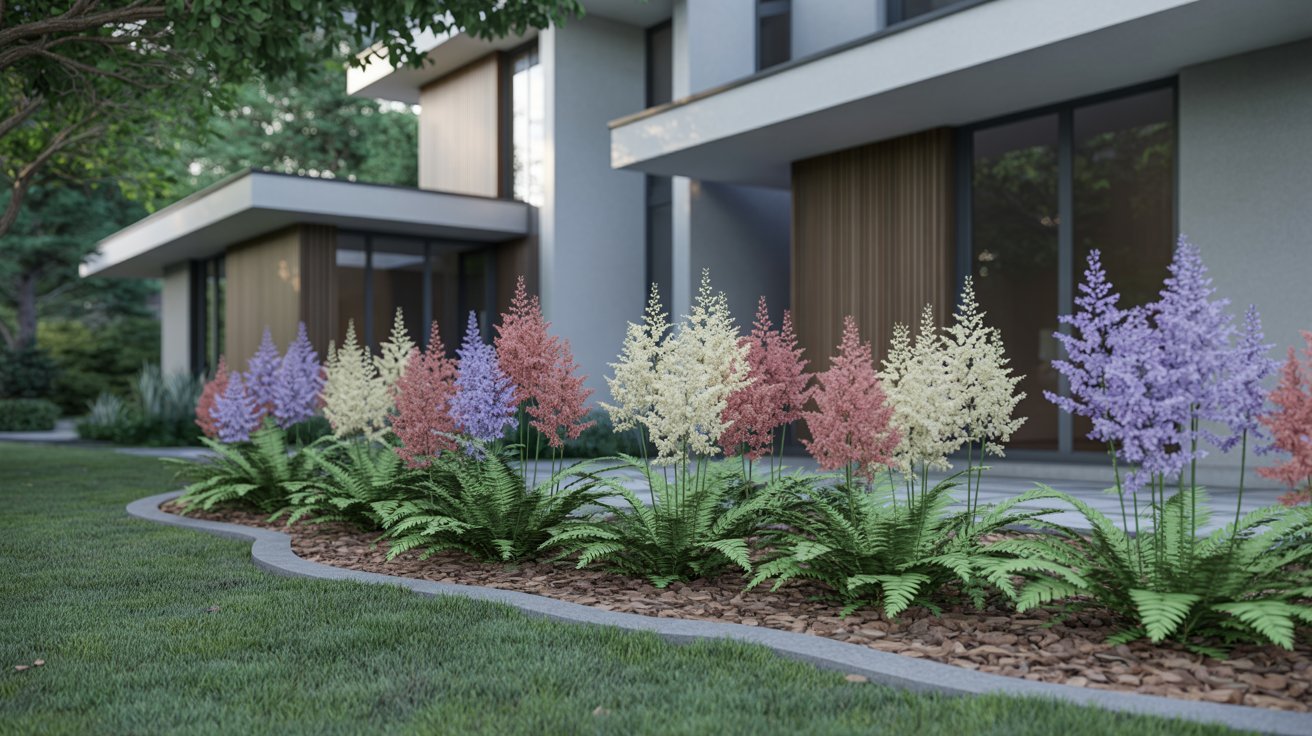
Fills shaded spaces with tall feathery blooms in pink, white, and red. It blooms in early to midsummer and works well alongside ferns and hostas in low-light beds.
10. Japanese Forest Grass for Texture
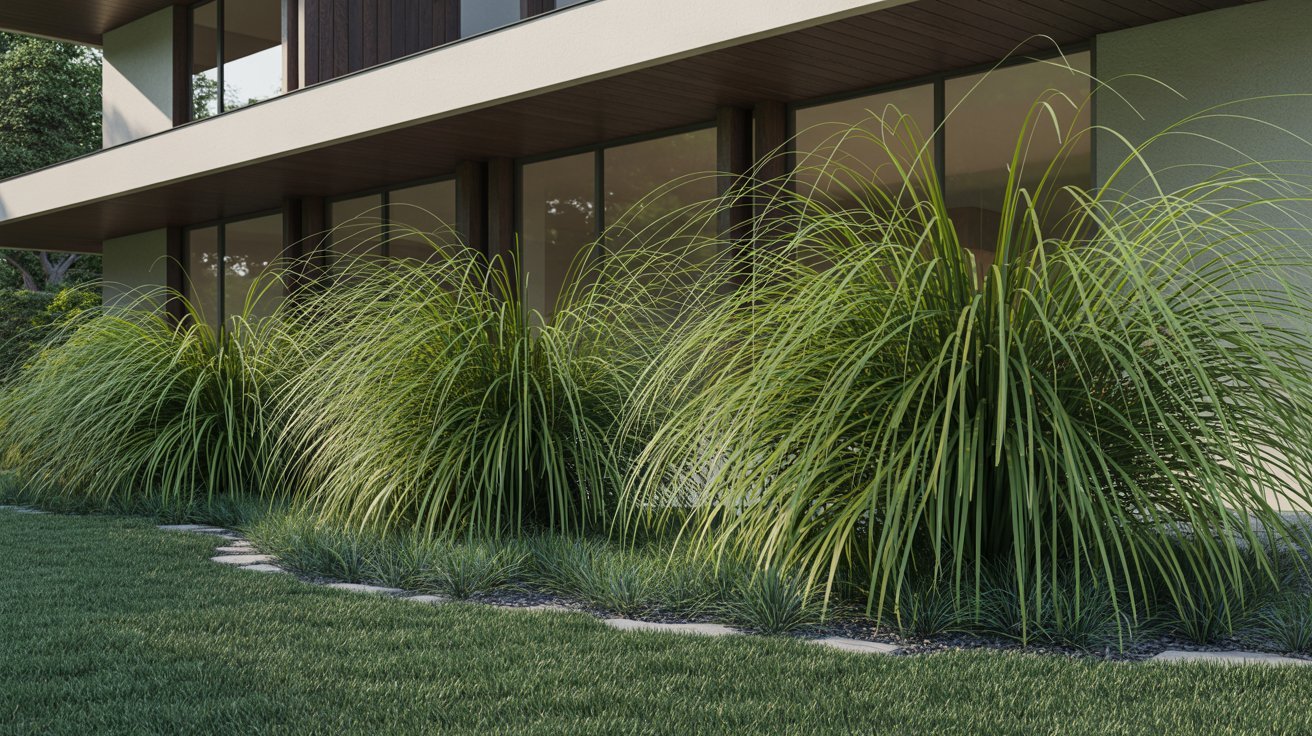
Creates soft, arching mounds with a golden shimmer in partial shade. It adds movement and a light, airy feel to foundation beds that might otherwise look heavy and dense.
11. Boxwood Shrubs for Formal Structure
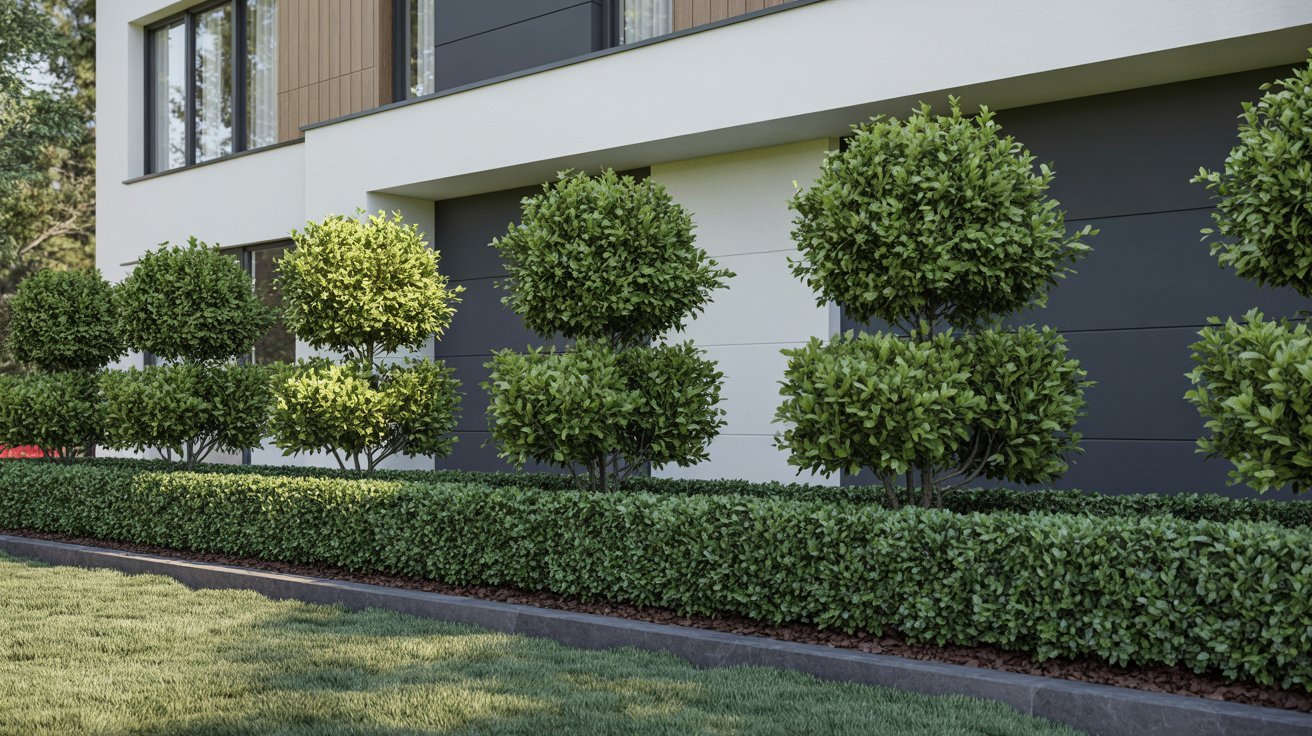
Holds shape with minimal pruning and stays green all year long. Boxwoods are one of the most dependable foundation shrubs and work well in both symmetrical and mixed layouts.
12. Dwarf Arborvitae for Evergreen Height
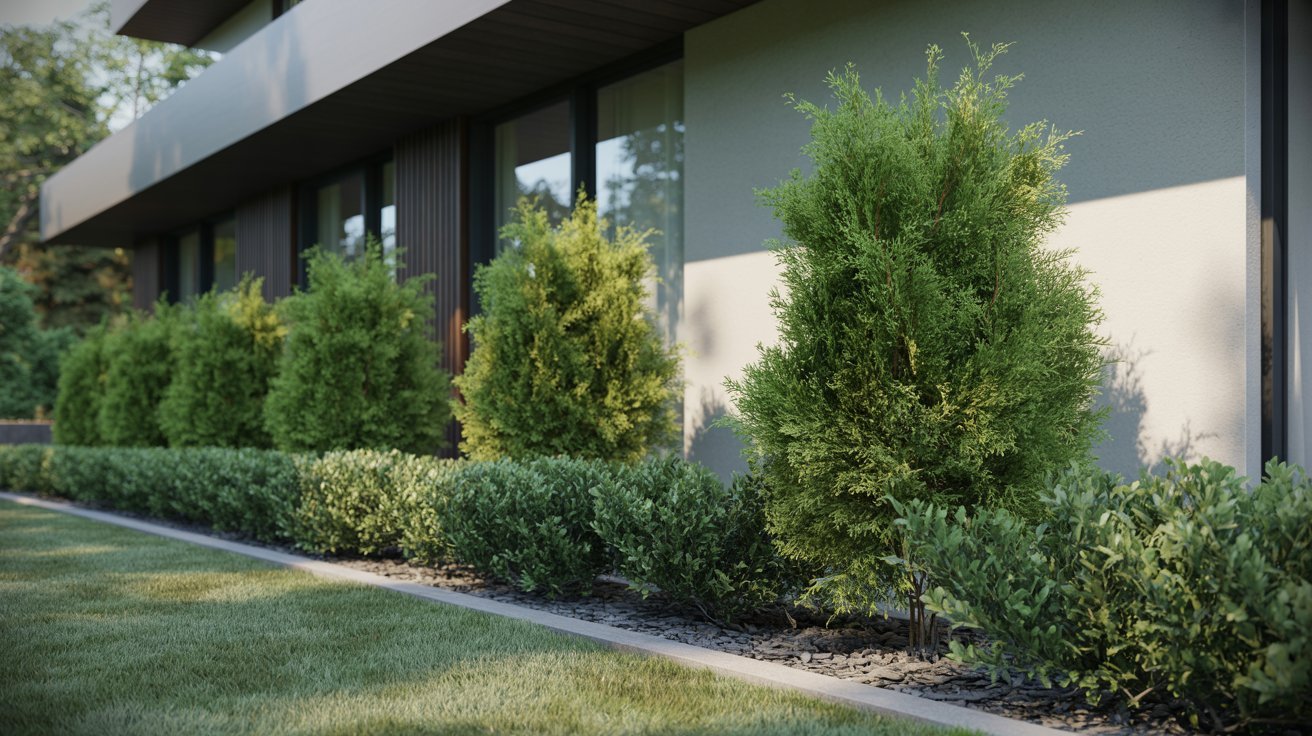
Adds vertical height without spreading wide. It’s reliable for corners and tight spots along the foundation. Most dwarf varieties grow slowly, so they won’t outgrow their space quickly.
13. Juniper Ground Cover for Low Maintenance
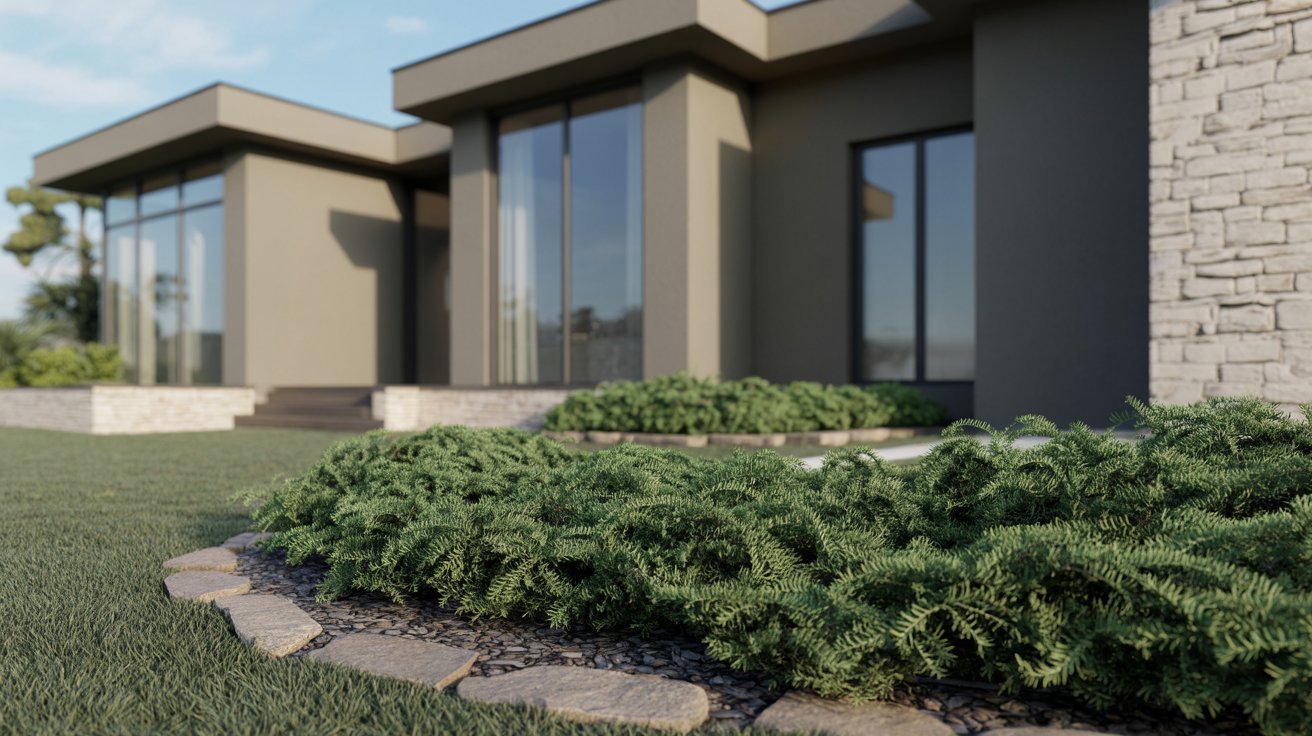
Spreads across dry slopes with almost no upkeep required. It handles poor soil, heat, and drought better than most plants. A solid choice for difficult spots around the foundation.
14. Compact Holly Shrubs for Year-Round Greenery
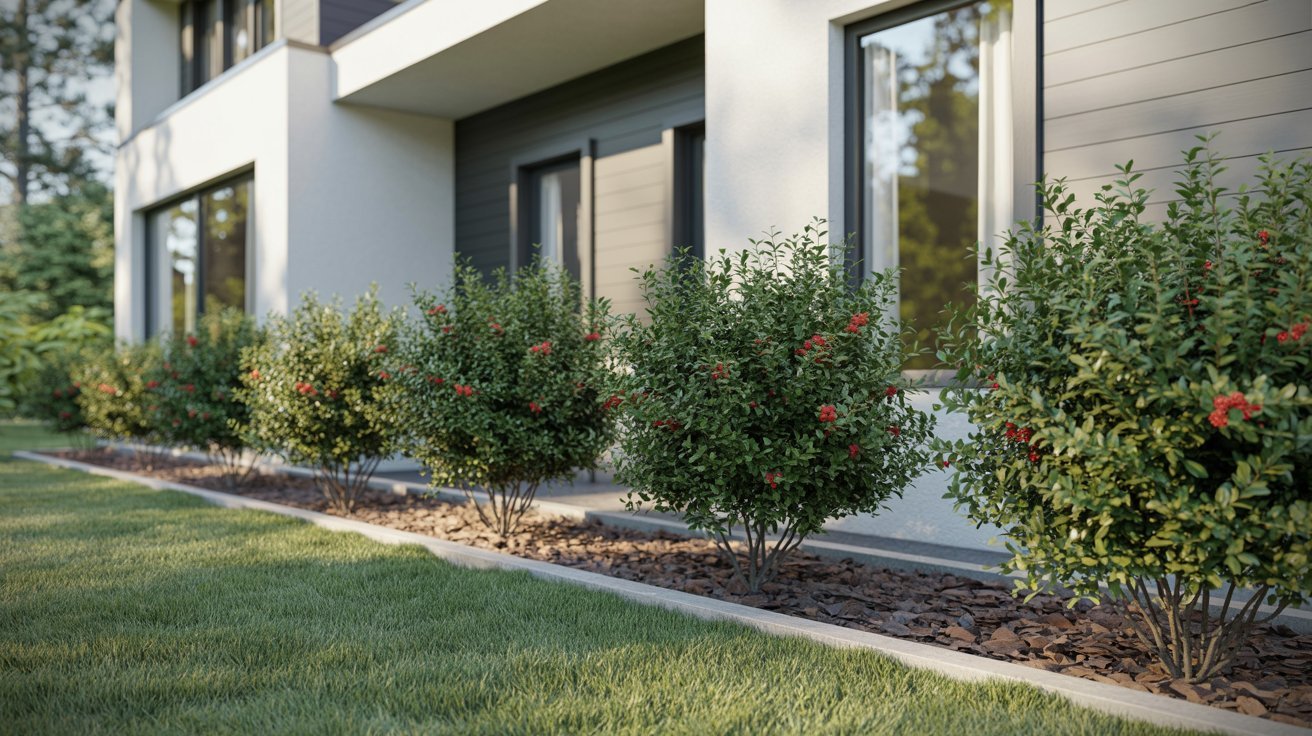
Offers glossy leaves and red berries that last through winter. Compact hollies stay manageable in size and add color to the foundation even when everything else has gone dormant.
15. Yew Shrubs for Dense Foundation Hedges
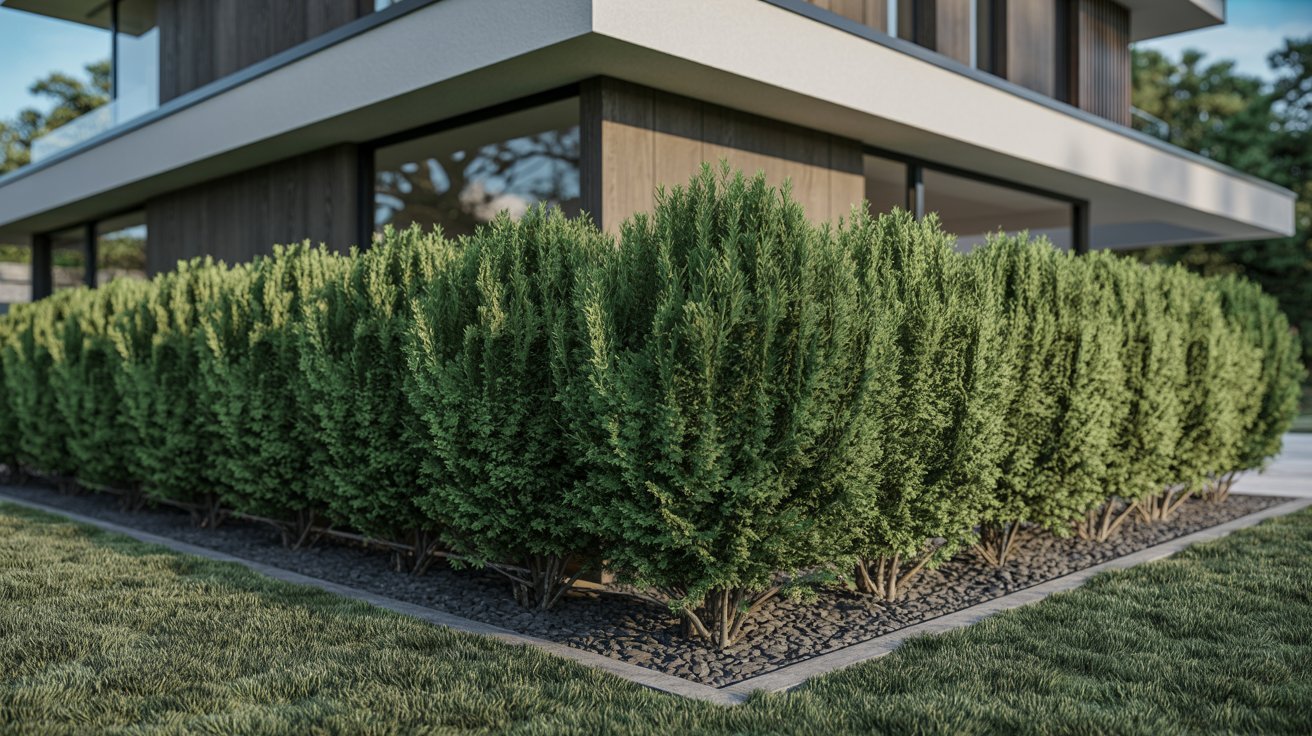
Dense and easy to shape into formal hedges with regular trimming. Yews tolerate shade better than most evergreens and stay full from top to bottom with very few bare spots.
16. Inkberry Holly for Native Evergreen Appeal
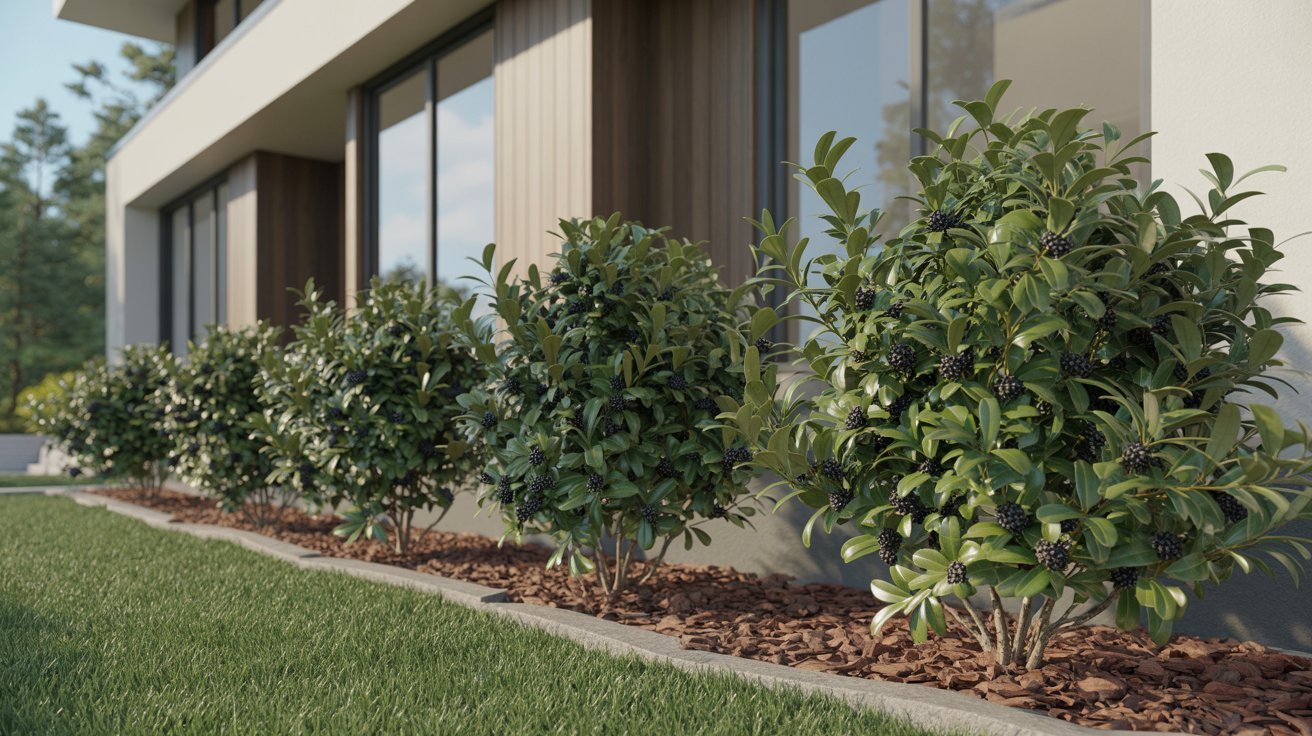
A native pick that handles wet soil well and attracts birds. It’s a good choice for foundation areas where drainage is poor and other shrubs tend to struggle over time.
17. False Cypress for Soft Evergreen Texture
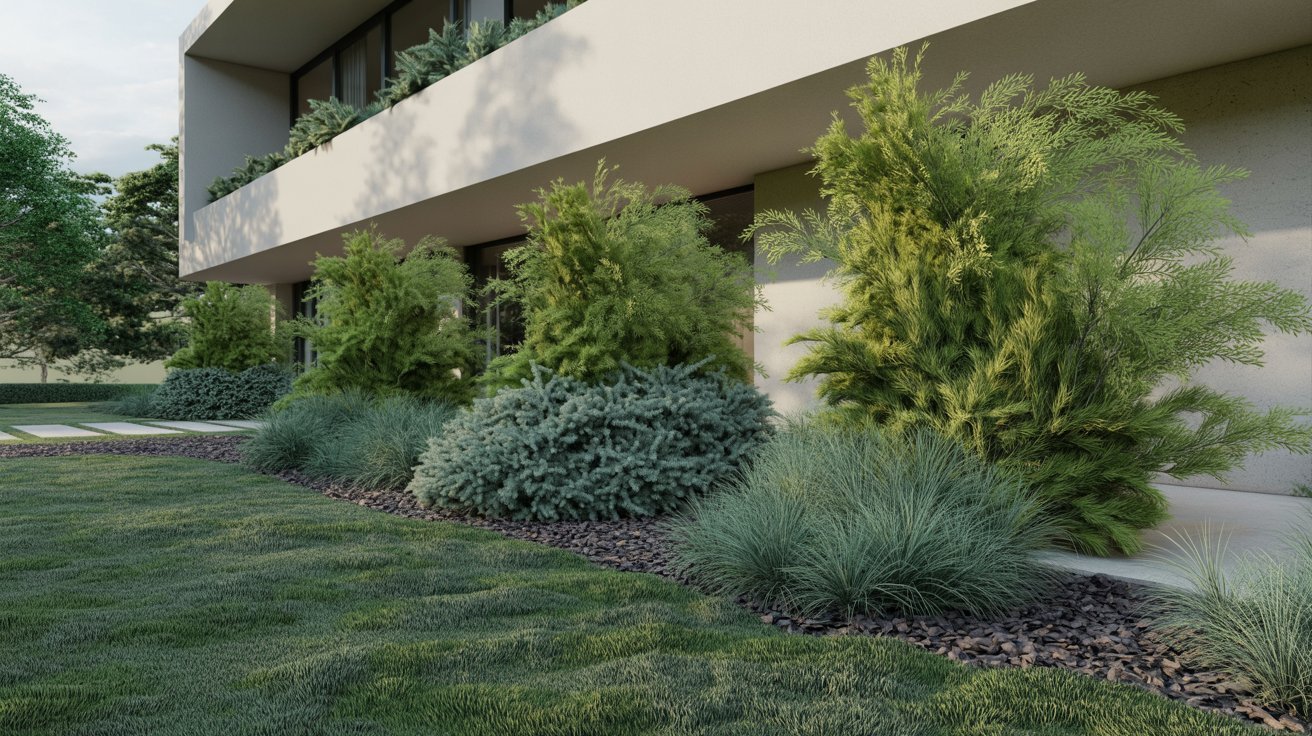
Soft, feathery texture that suits both formal and natural settings. It comes in several sizes and colors, from golden yellow to blue-green, making it easy to fit into most designs.
18. Dwarf Spruce for Compact Structure
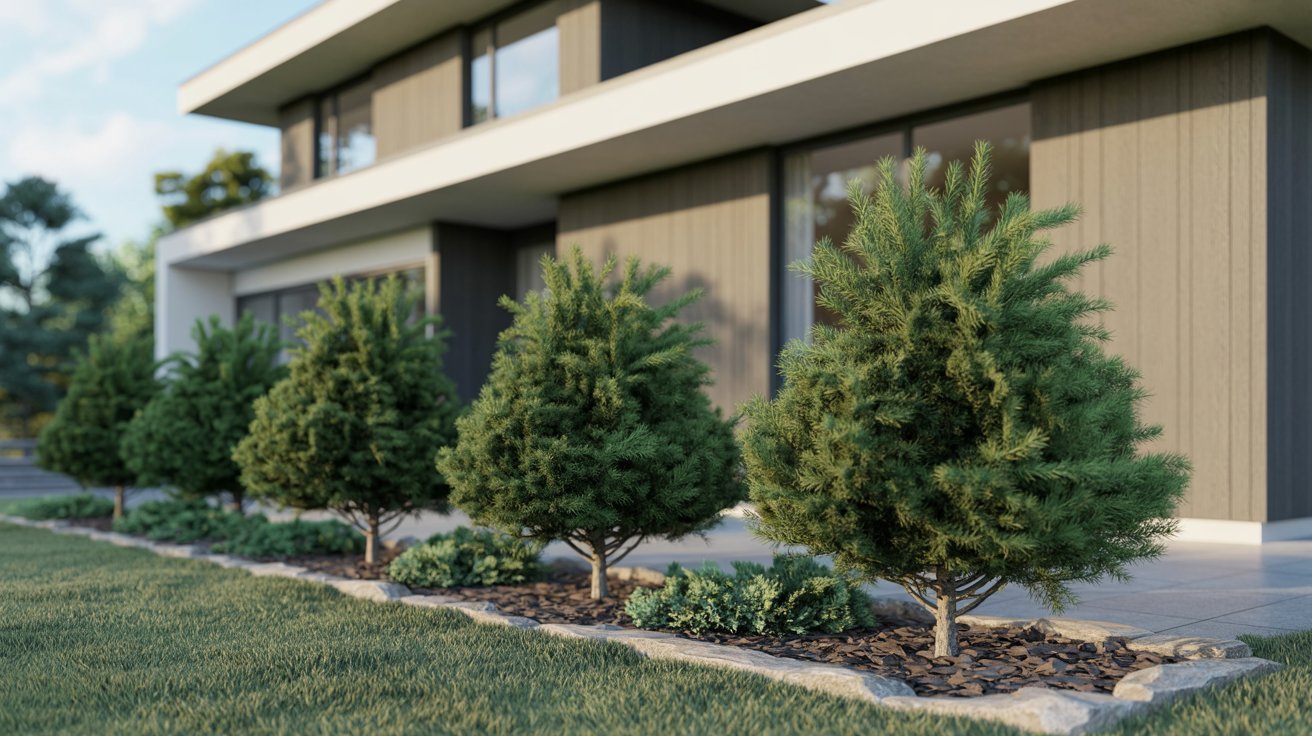
Stays compact for years and adds steady structure to mixed beds. It works well as a corner plant or as a backdrop for shorter flowering perennials along the foundation.
19. Mountain Laurel for Flowering Evergreen Shrub
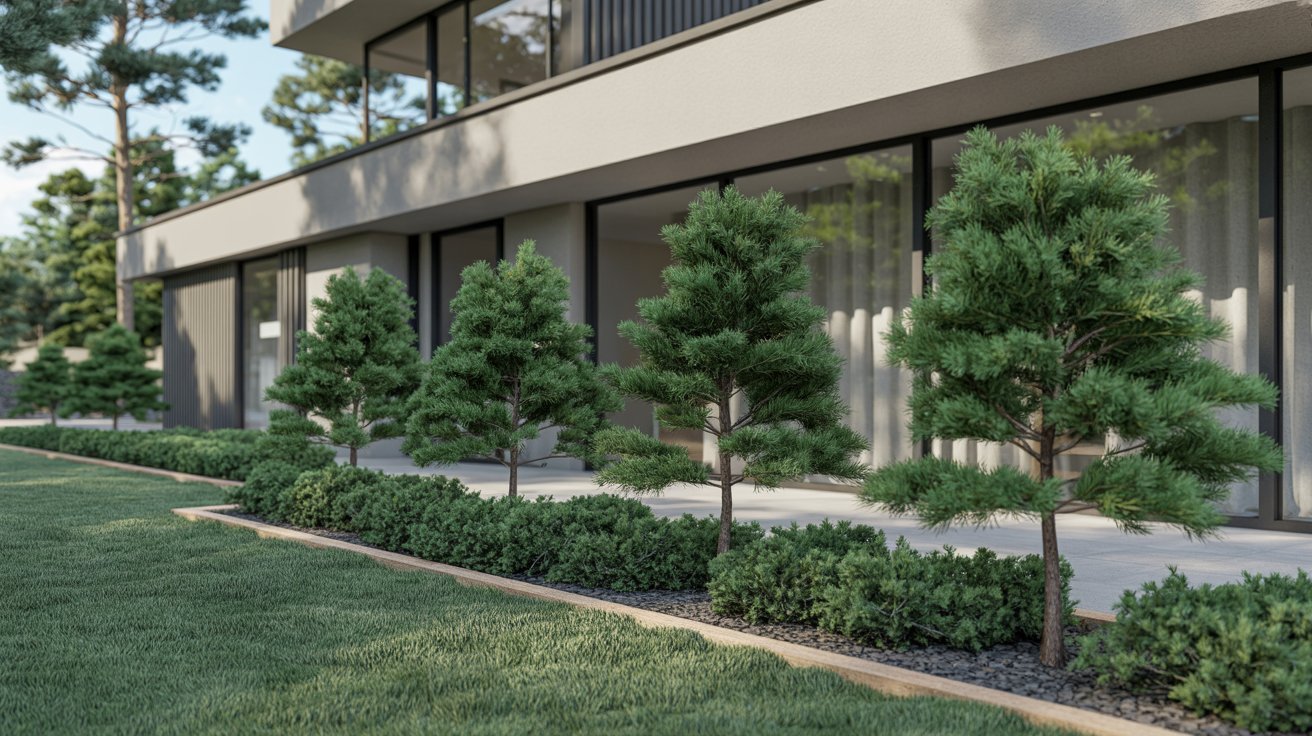
Clusters of pink and white spring flowers with evergreen foliage year-round. Mountain laurel does best in acidic soil with good drainage and partial shade near the foundation.
20. Azaleas for Seasonal Color
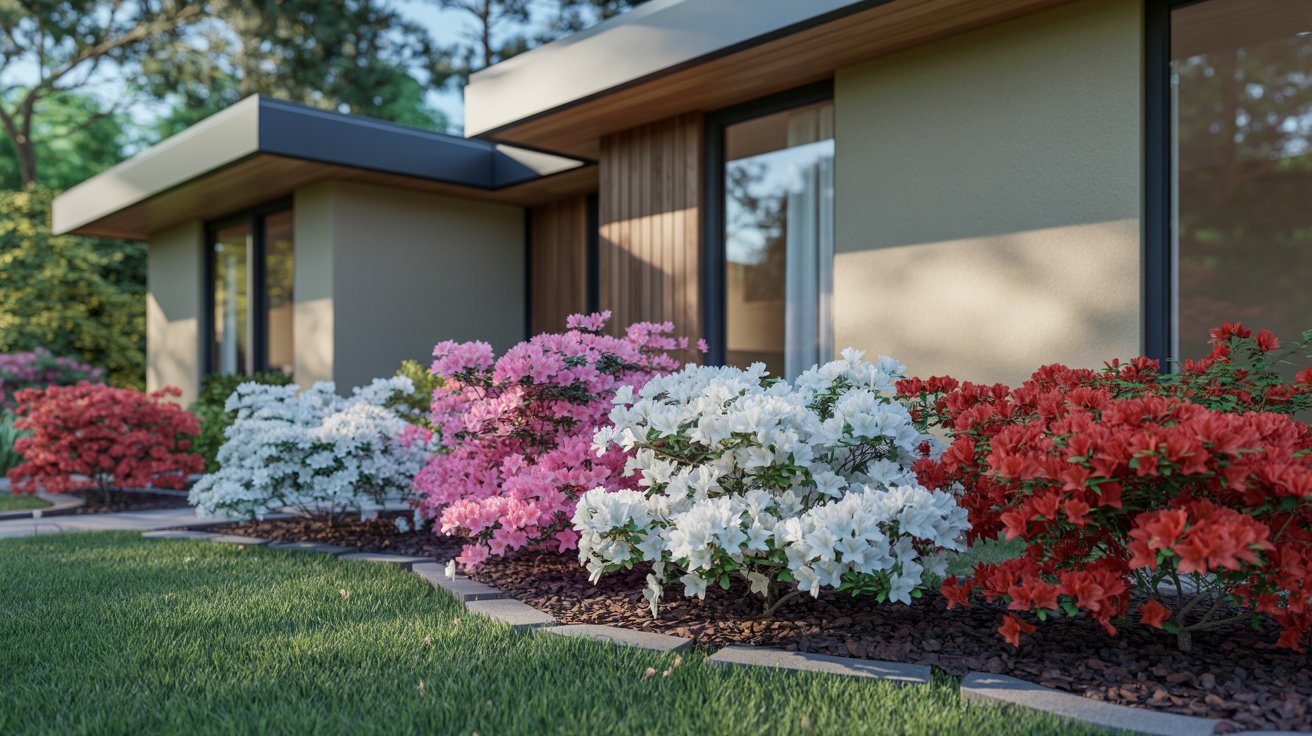
Reliable spring bloomers in red, pink, white, and purple. They do best in acidic, well-drained soil with dappled shade. Once established, they bloom heavily every year with minimal care.
21. Hydrangeas for Large Floral Impact
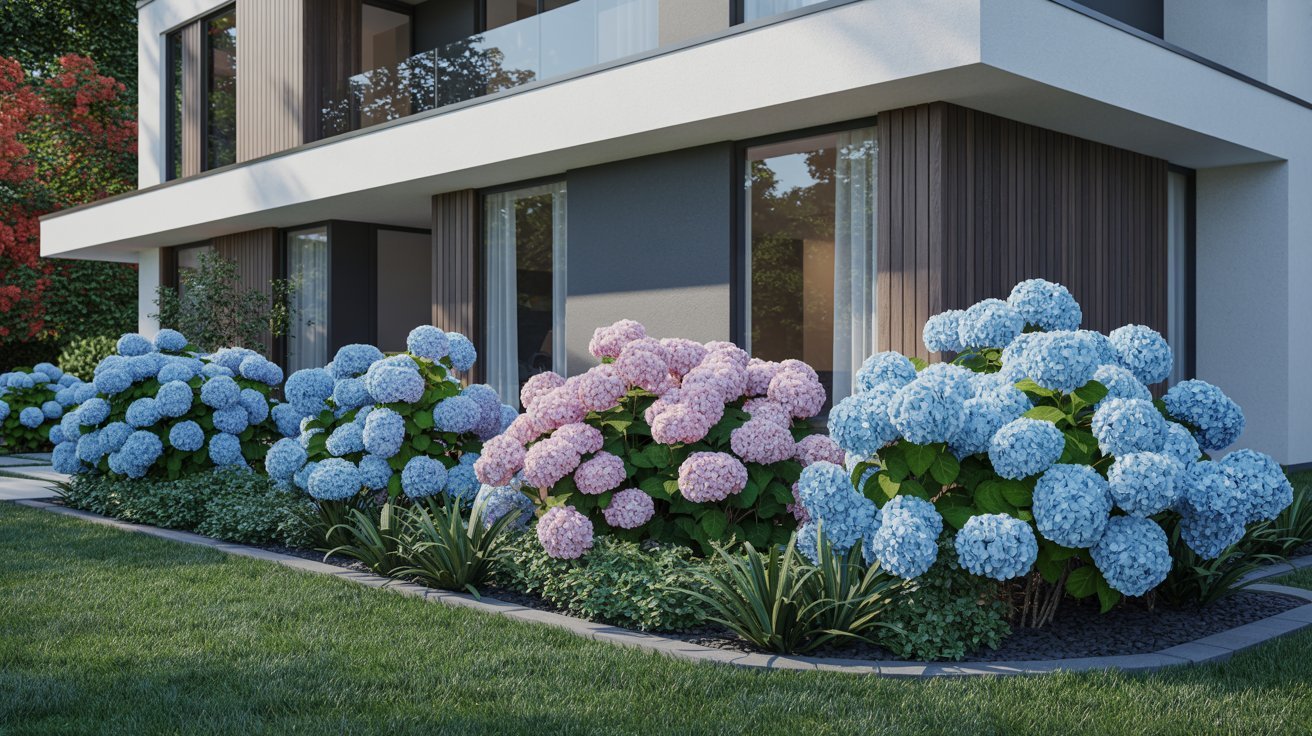
Bold summer blooms in shaded to partial sun spots around the foundation. They fill large spaces well and create a strong visual statement with very little effort once settled in.
22. Panicle Hydrangeas for Sun-Tolerant Blooms
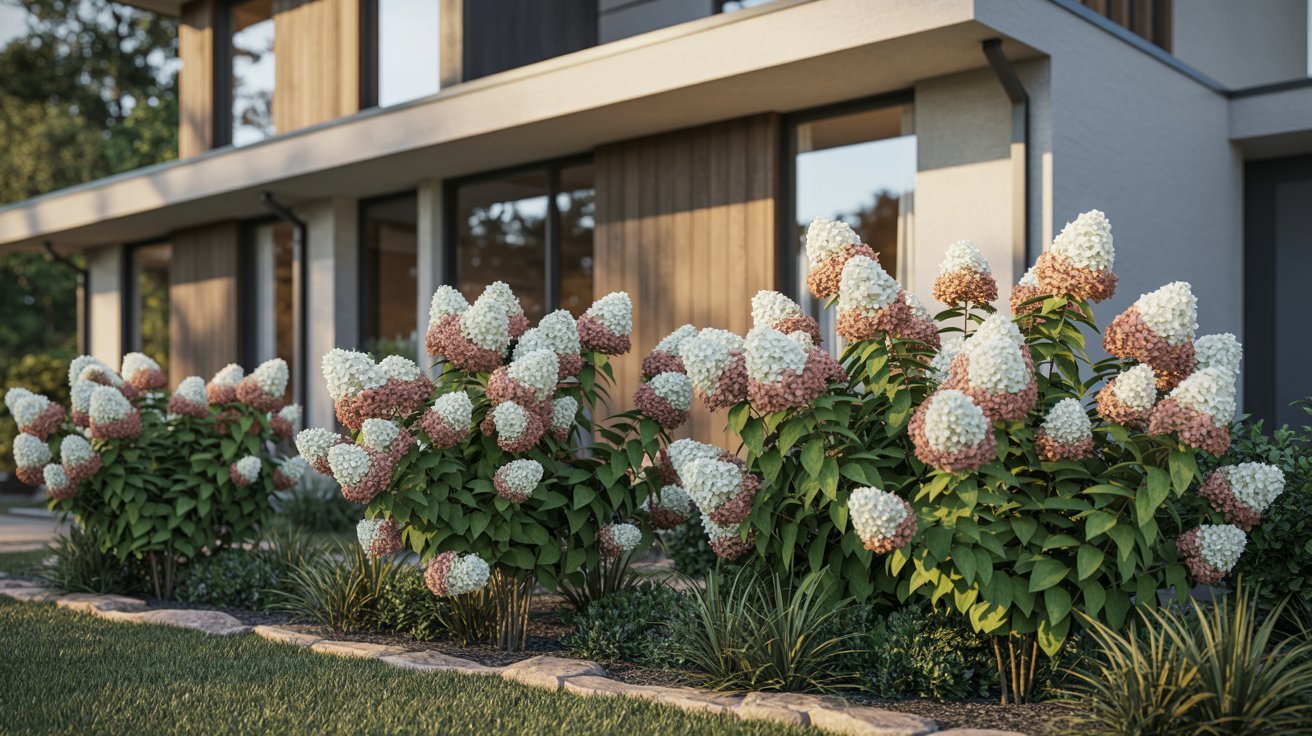
Handle full sun well and bloom later in the season than standard varieties. Their cone-shaped flower clusters start white and turn pink as summer fades into fall.
23. Rose of Sharon for Tall Flowering Accents
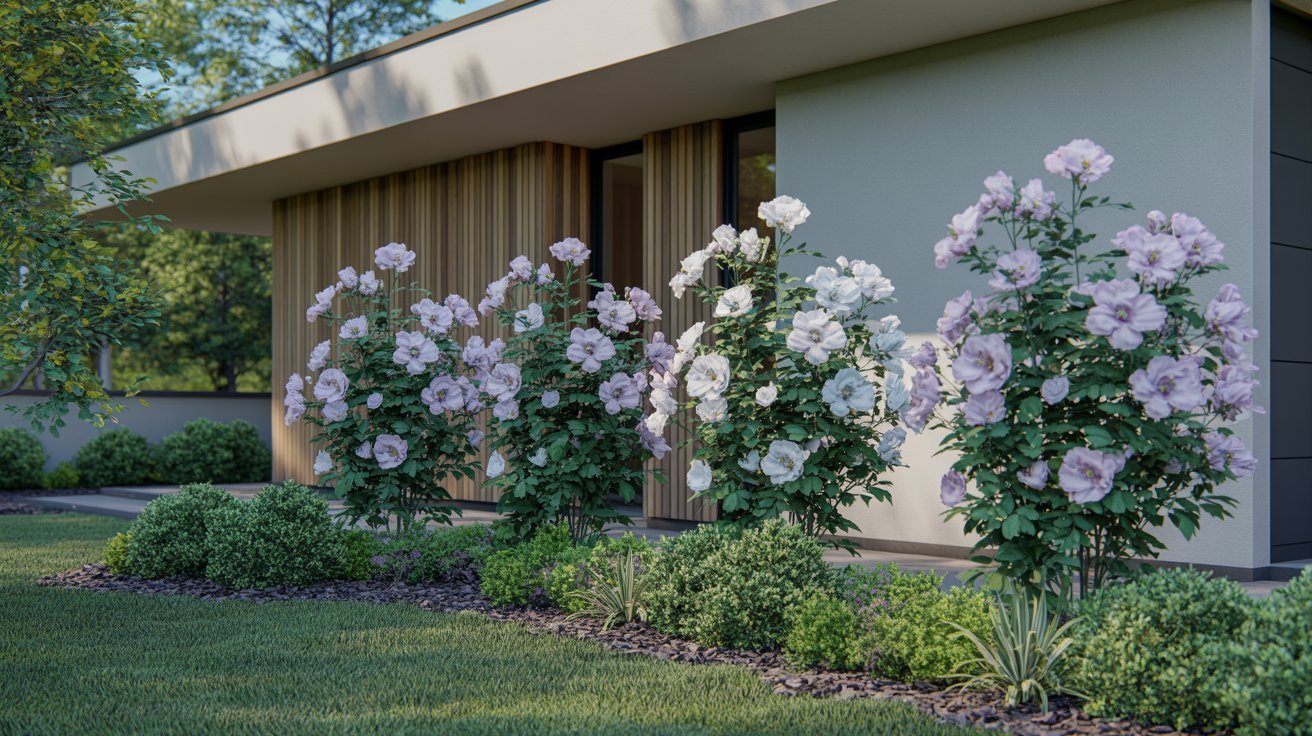
Grows tall with hollyhock-like flowers from summer through fall. It works well in the back row of a layered foundation bed or as a corner accent near entryways.
24. Knock Out Roses for Continuous Blooms
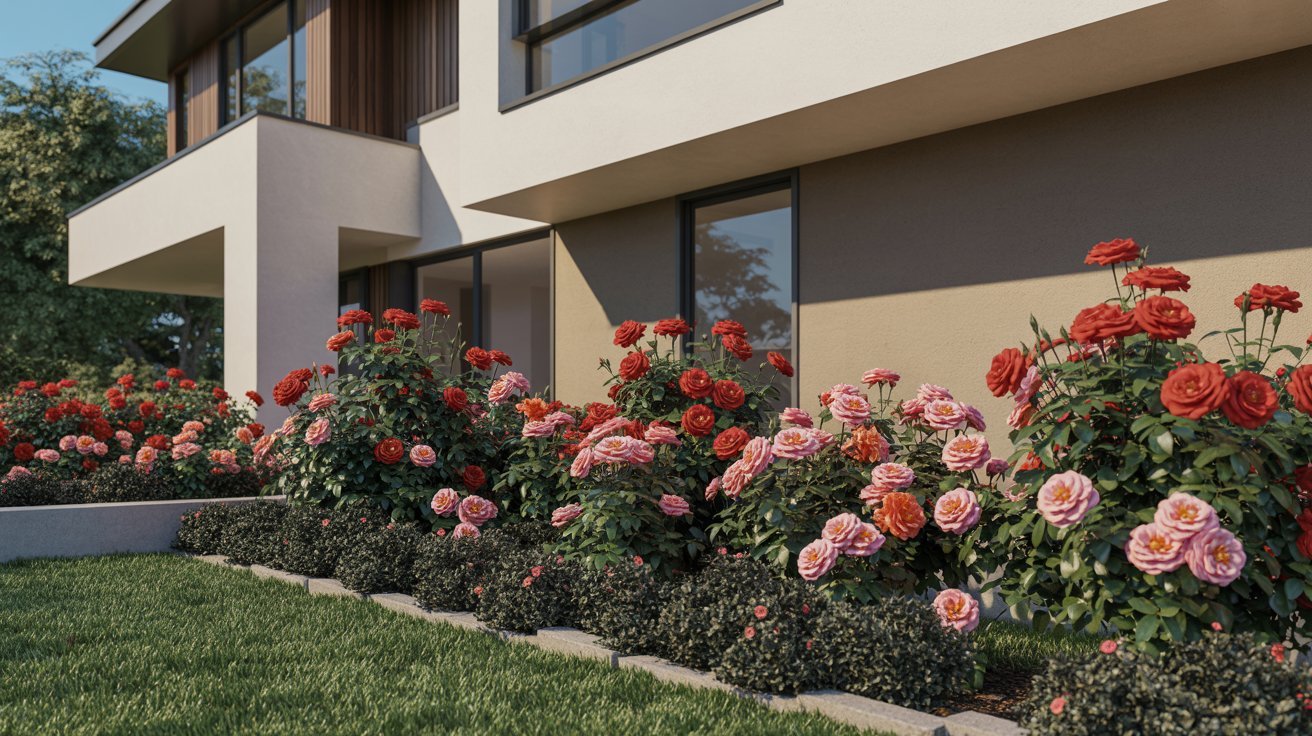
Bloom from late spring to frost with strong disease resistance. They need very little deadheading and come back reliably each year, making them one of the easiest roses to grow.
25. Shrub Roses for Border Planting
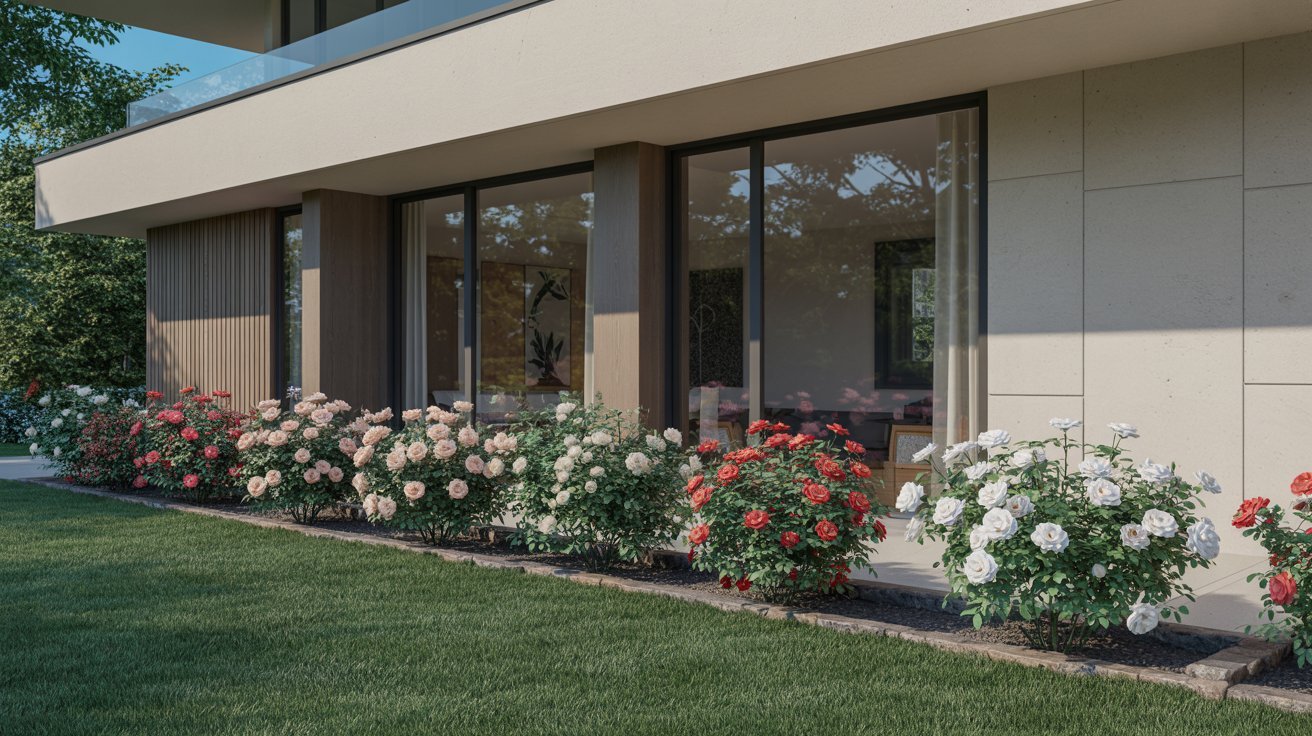
Work well as a low, spreading border along foundation beds. They add color and texture through the growing season and hold their shape without constant pruning or attention.
26. Lavender for Fragrance and Pollinators
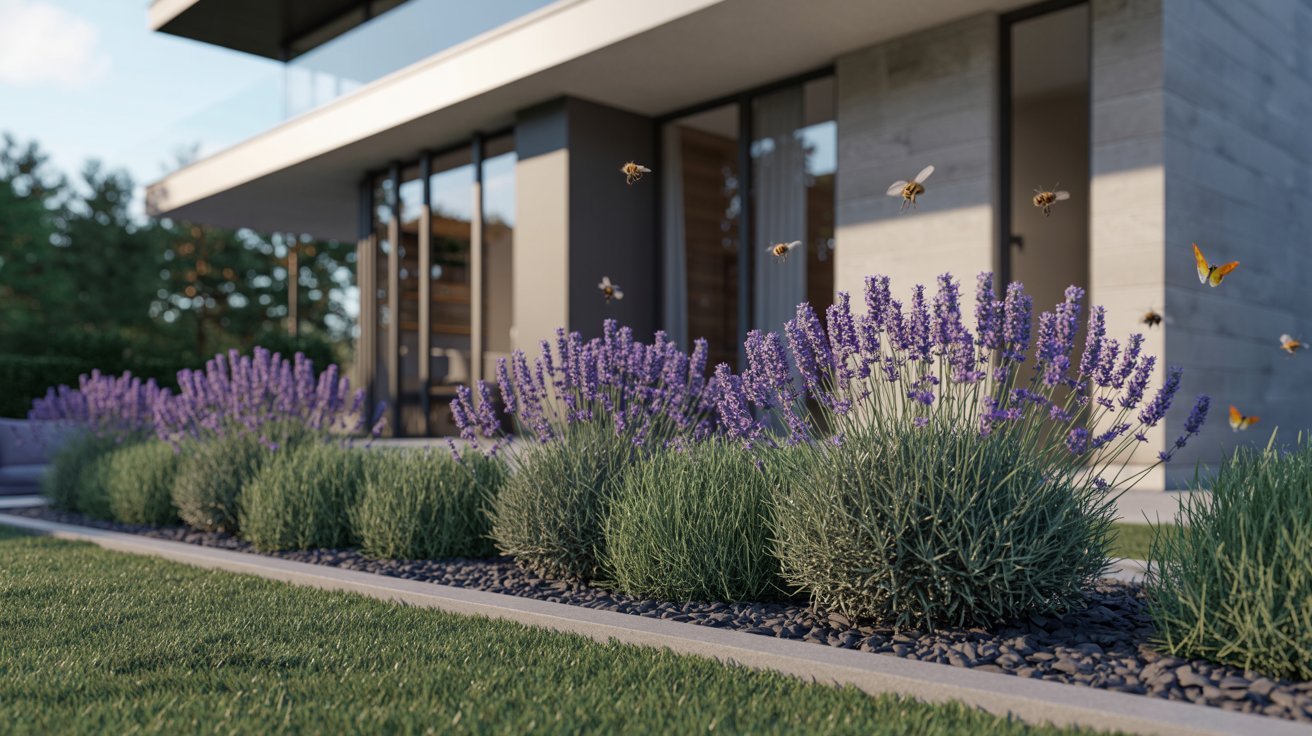
Handles heat and drought well. It draws bees and butterflies throughout the season and adds a soft purple color that contrasts nicely with green shrubs along the foundation.
27. Salvia for Long-Lasting Blooms
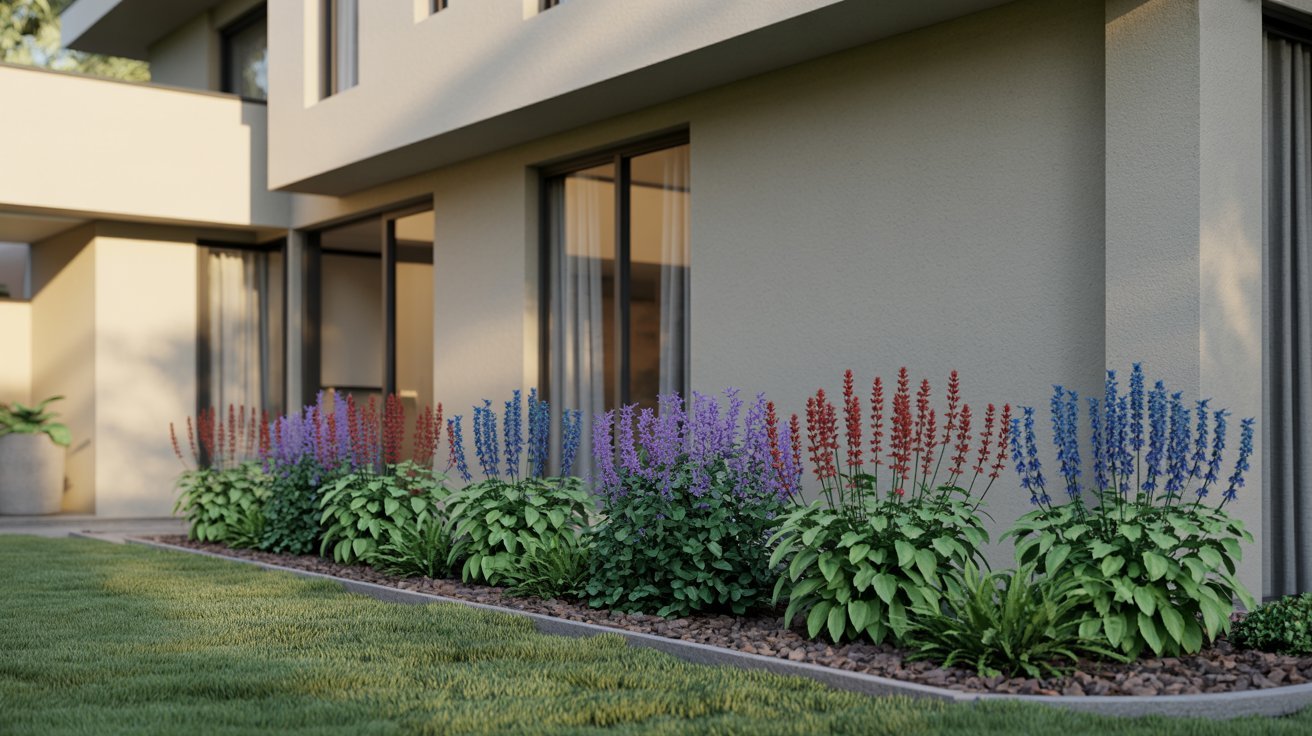
Produces tall spikes of purple and blue flowers that last for months. It’s drought-tolerant, deer-resistant, and blooms repeatedly through summer with very little maintenance needed.
28. Catmint for Low-Maintenance Color
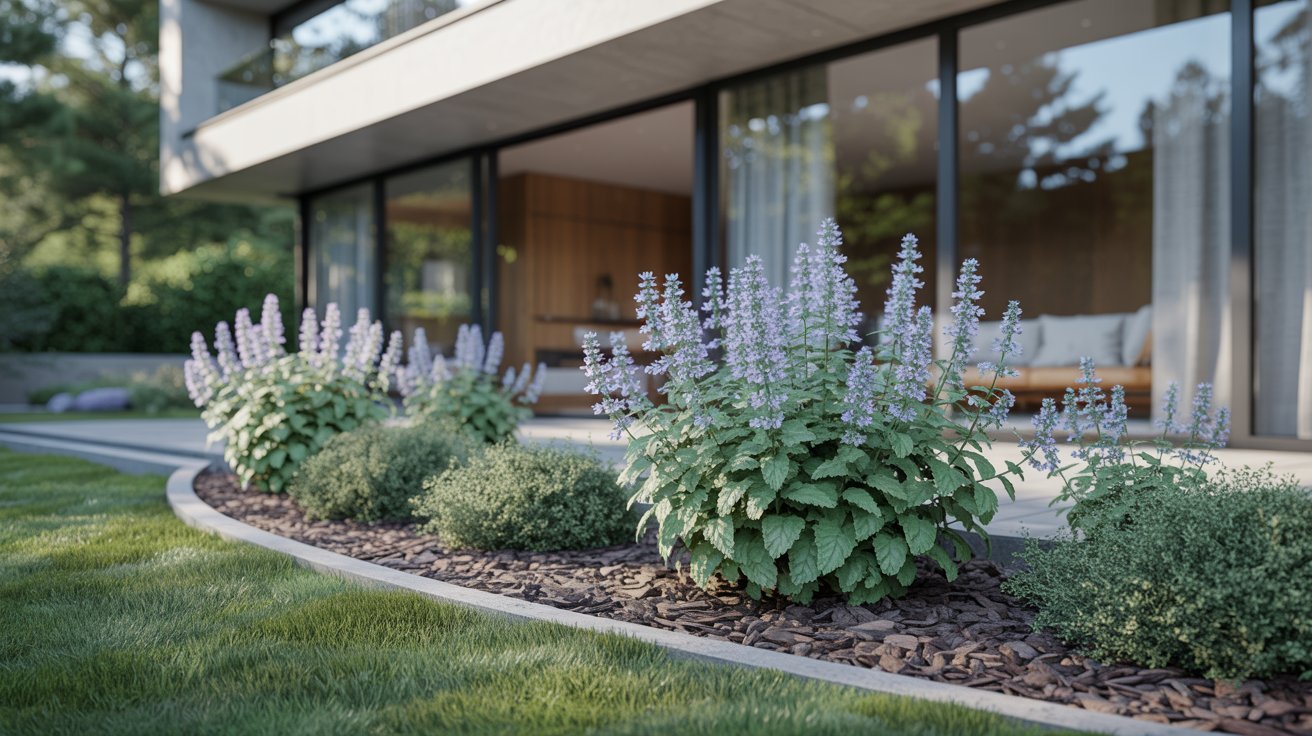
Blooms in spring, gets cut back, then blooms again in fall with ease. It forms soft, spreading mounds with silver-green foliage that looks tidy even when not in bloom.
29. Daylilies for Reliable Perennial Blooms
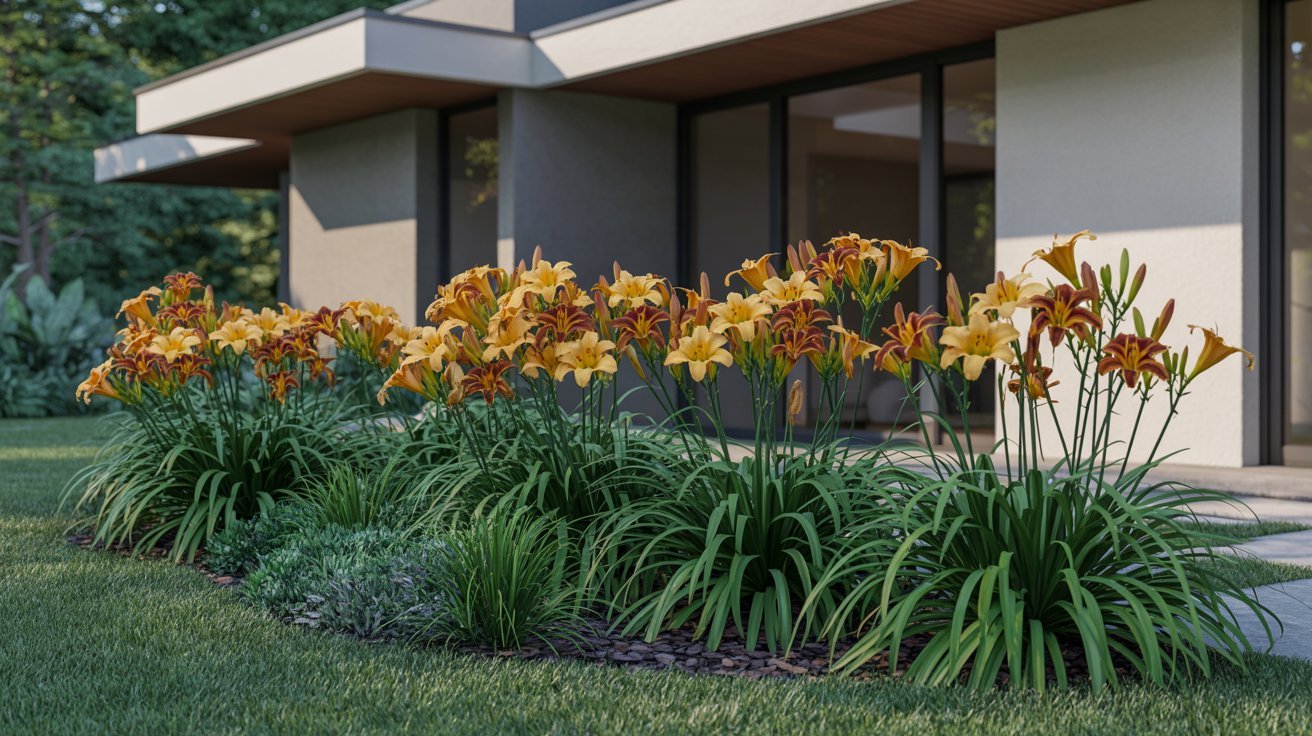
Nearly indestructible and available in hundreds of colors for any style. They multiply on their own, fill space quickly, and come back stronger every year with no special care.
30. Black-Eyed Susans for Sunny Spots
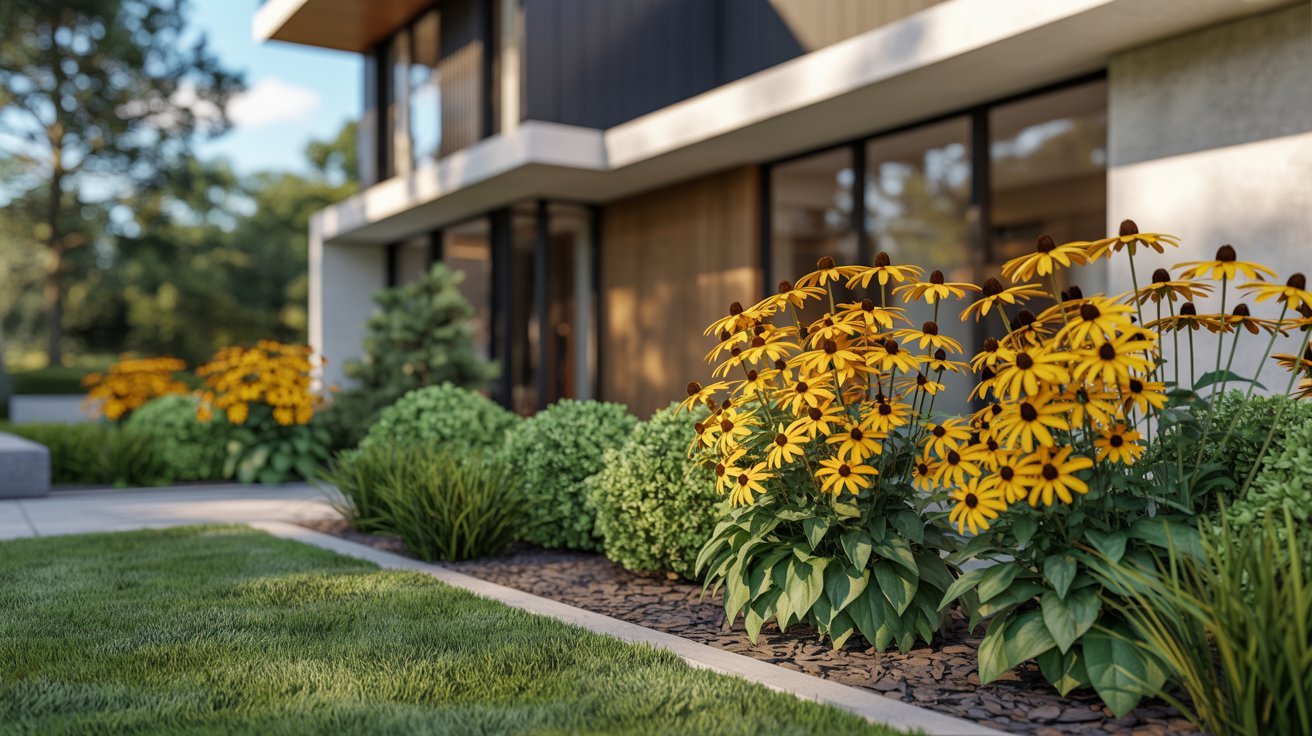
Spread naturally and bring bold late summer color to dry, sunny beds. They pair well with ornamental grasses and work beautifully in the middle row of a layered foundation planting.
31. Ornamental Grasses for Movement and Texture
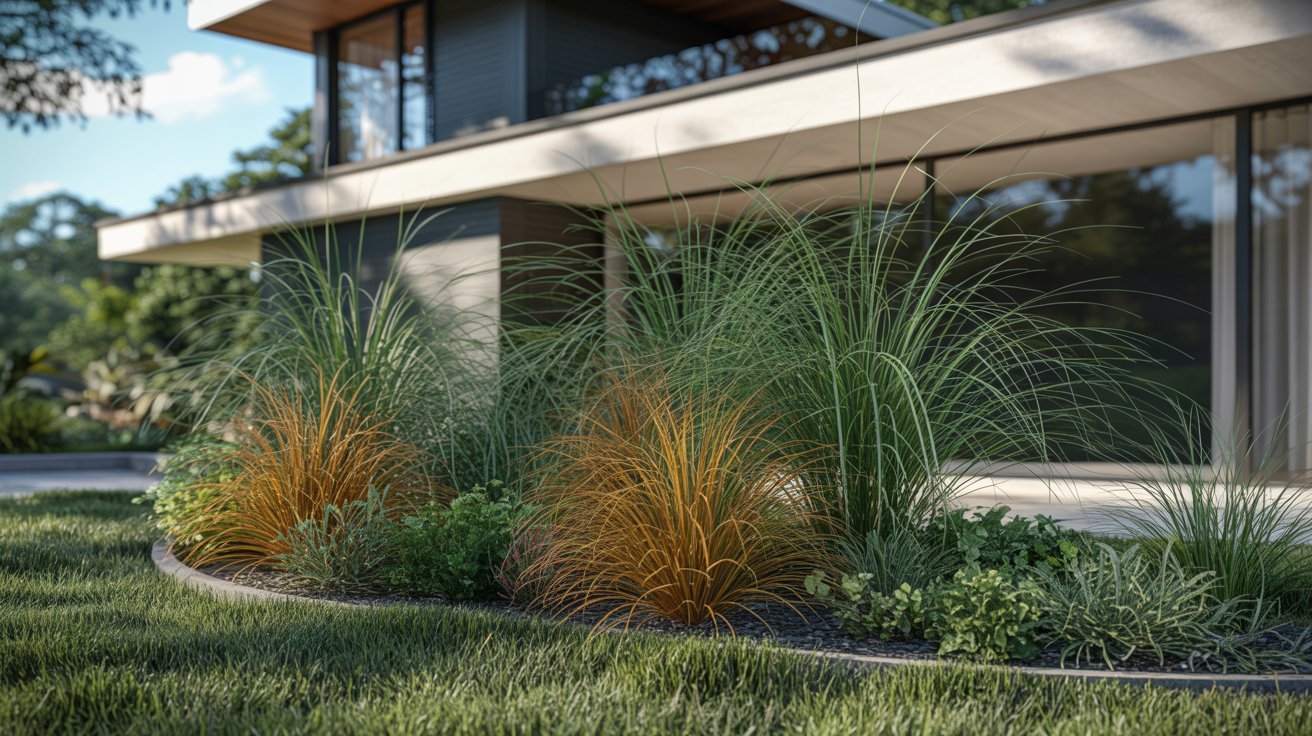
Bring a softness to foundation beds that hard shrubs simply can’t provide. They sway in the breeze, add year-round interest, and require very little pruning or maintenance over time.
32. Fountain Grass for Soft Vertical Accents
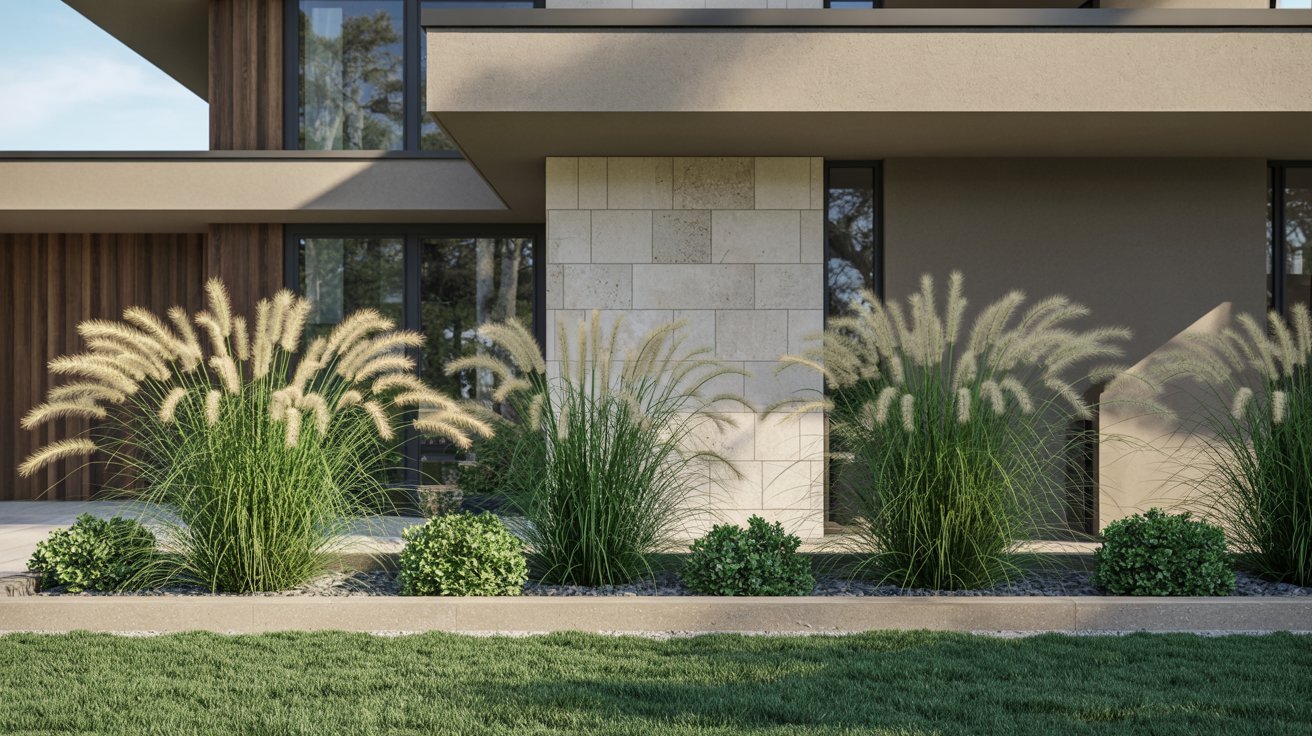
Arching mounds with feathery plumes that look great from summer to fall. It works well in groups of three or as a single accent plant between lower-growing foundation shrubs.
33. Switchgrass for Native Durability
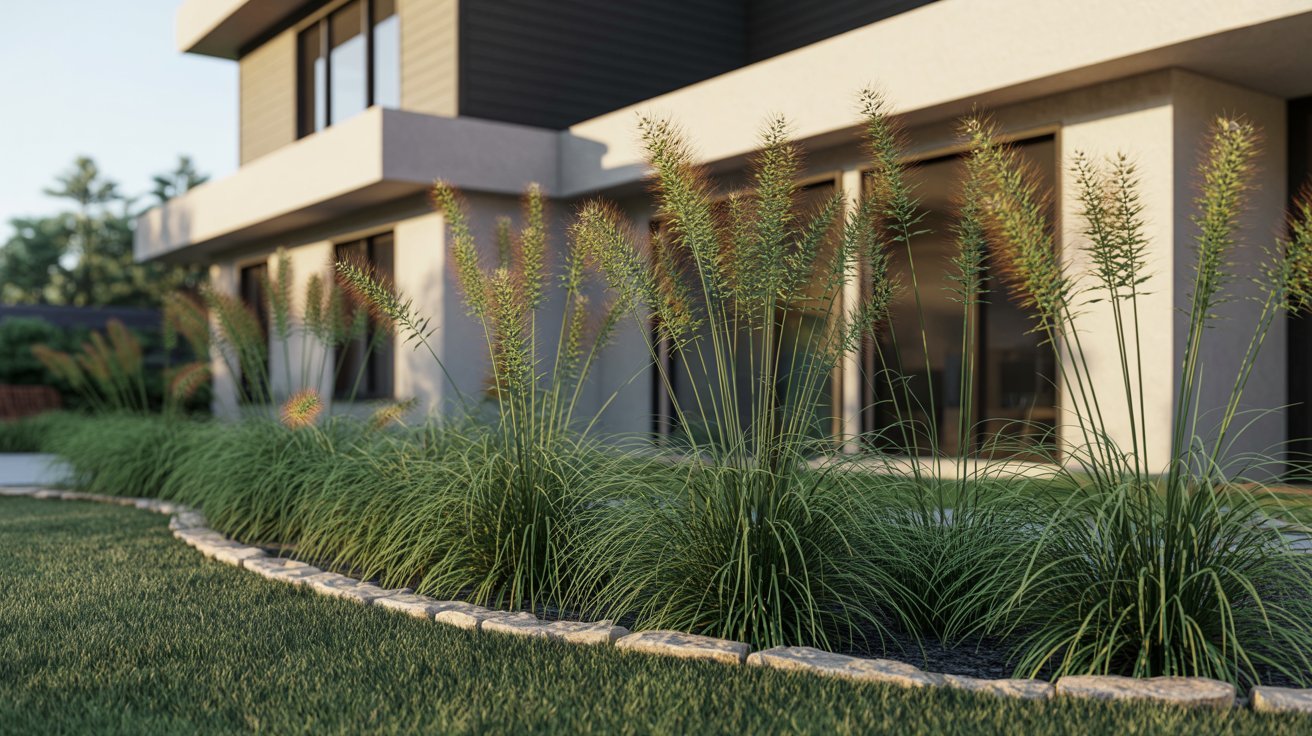
Handles poor soil and dry conditions well. It’s a strong low-maintenance native choice that also provides cover for birds and pollinators through the cooler months of the year.
34. Feather Reed Grass for Upright Structure
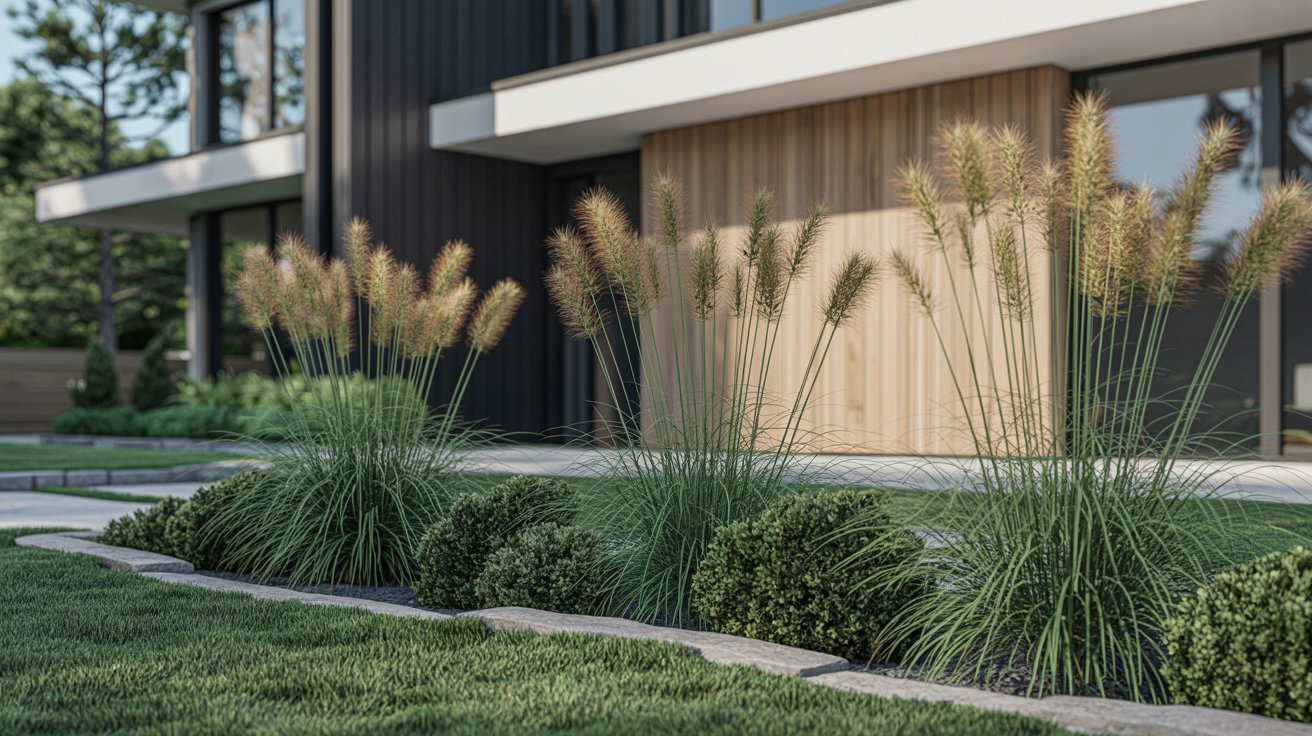
Grows in tight upright columns. It’s perfect for narrow foundation spaces where you need height without spread. It stays attractive from late spring all the way through winter.
35. Blue Fescue for Compact Mounding Form

Compact silvery blue mounds that also work well in rock gardens. It stays small, needs very little water, and holds its color well through heat and drought conditions.
36. Maiden Grass for Taller Screens
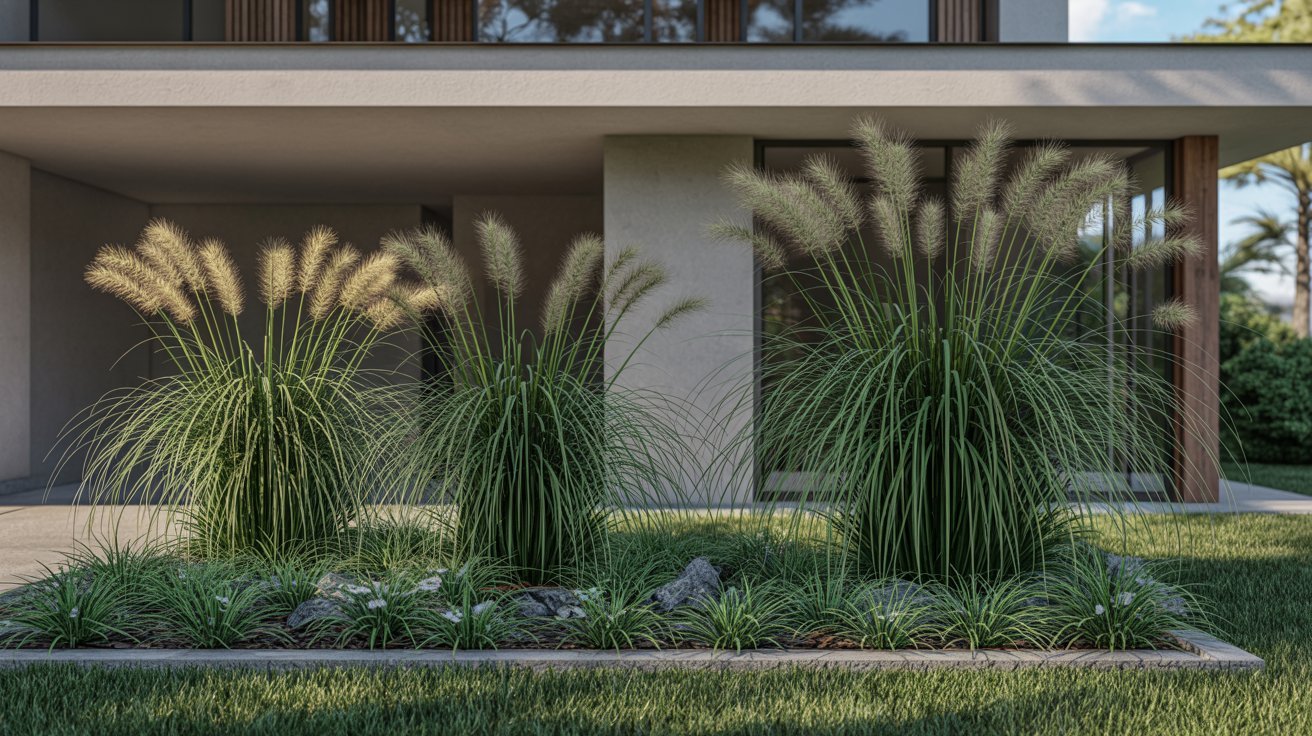
Grows taller and works well as a natural backdrop in open beds. It produces silvery plumes in late summer and turns golden in fall, adding long-lasting interest to the foundation.
37. Pampas Grass for Dramatic Height
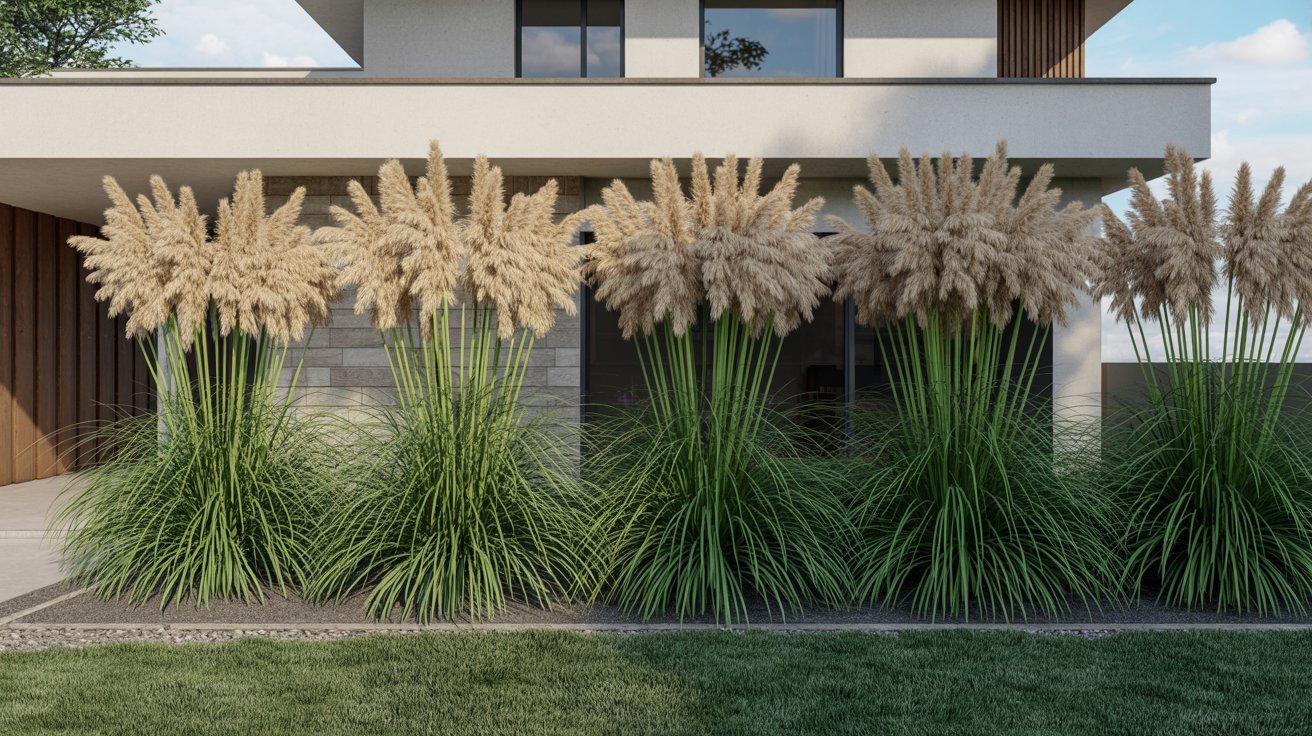
Makes a bold statement in large open beds with tall silvery plumes. It’s best suited for spacious foundation areas where it has room to grow without crowding nearby plants.
38. Zebra Grass for Striped Foliage Interest
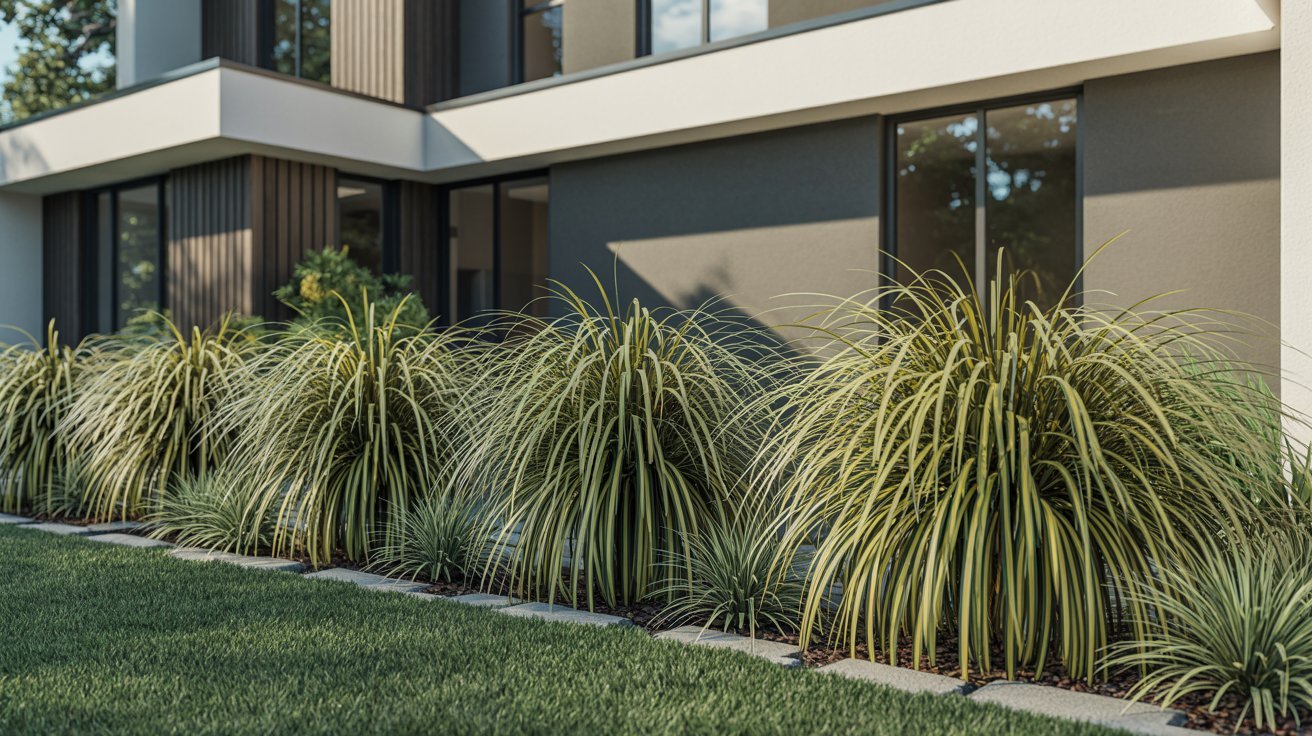
Horizontal gold bands on the leaves create a striking visual effect. It grows in an upright arching form and adds a strong focal point to any mixed foundation bed.
39. Little Bluestem for Native Landscaping
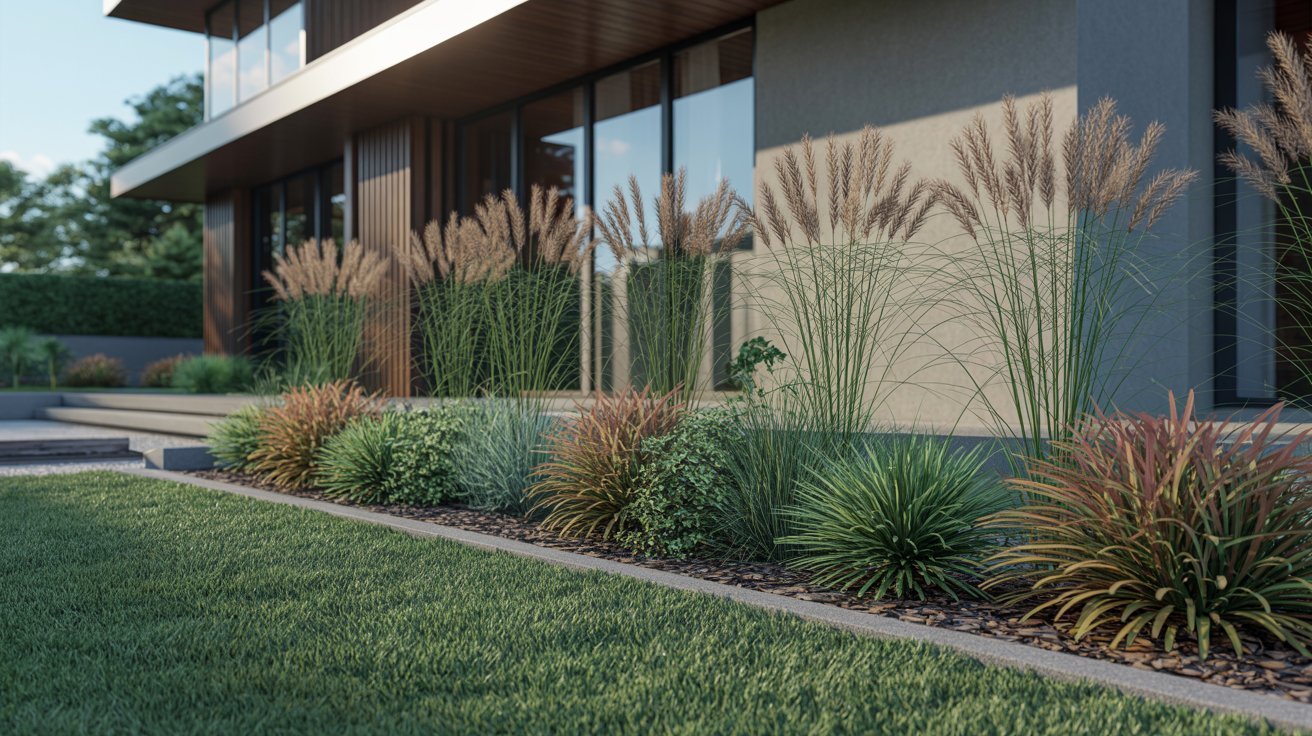
A native grass with rich red and orange color in the fall months. It stays upright through winter, adds wildlife value, and works well in naturalistic foundation planting designs.
40. Mexican Feather Grass for Fine Texture
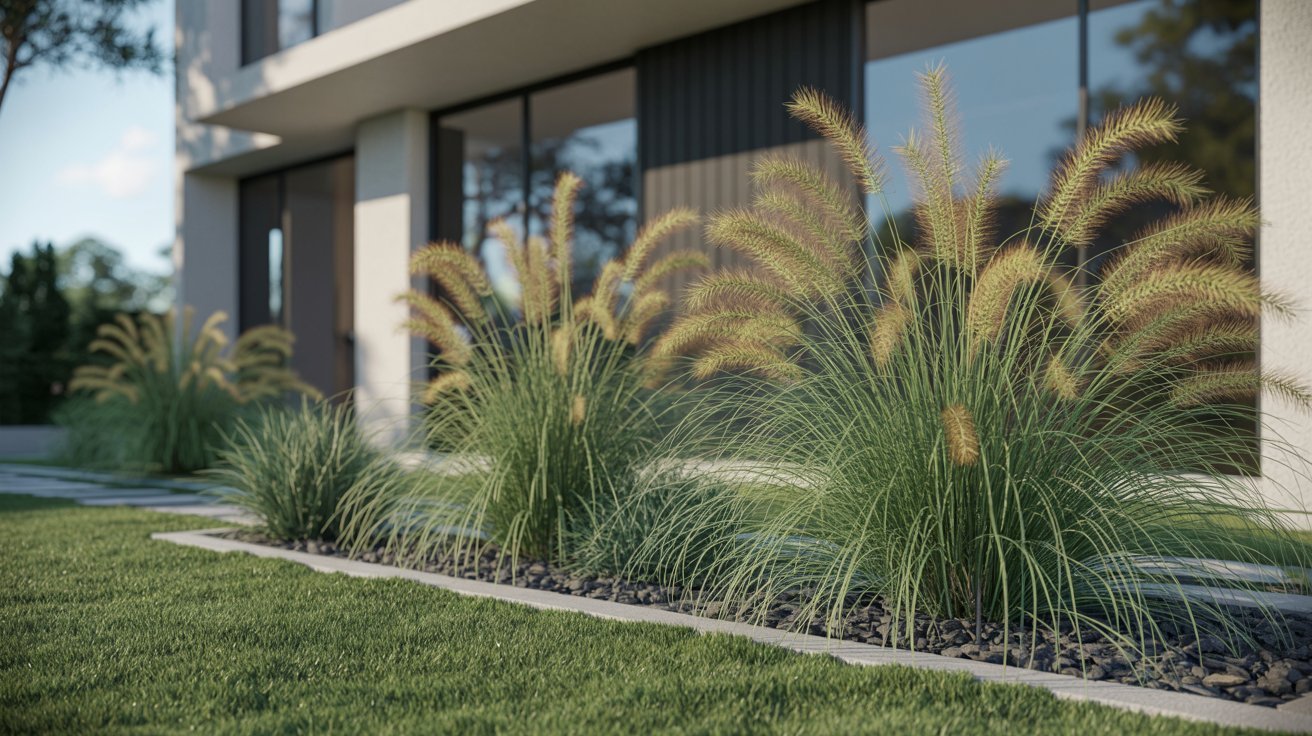
Ultra-fine blades that move gracefully in even the lightest breeze. It adds a soft, flowing contrast next to bold-leafed shrubs and works well in sunny, dry foundation spots.
41. Dwarf Japanese Maple as a Focal Point
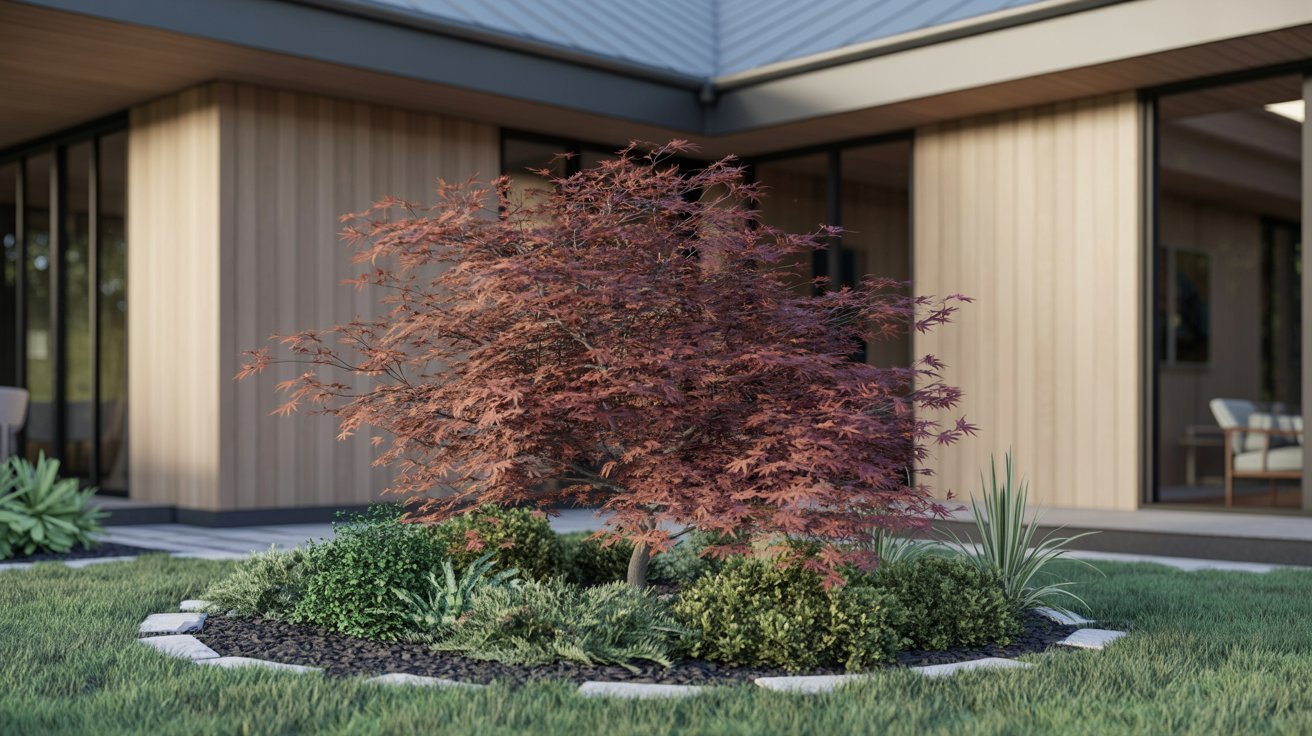
Rich foliage and layered branching draw the eye in any foundation bed. It works best as a single specimen plant at a corner or near an entryway where it can be seen clearly.
42. Serviceberry Trees for Seasonal Interest
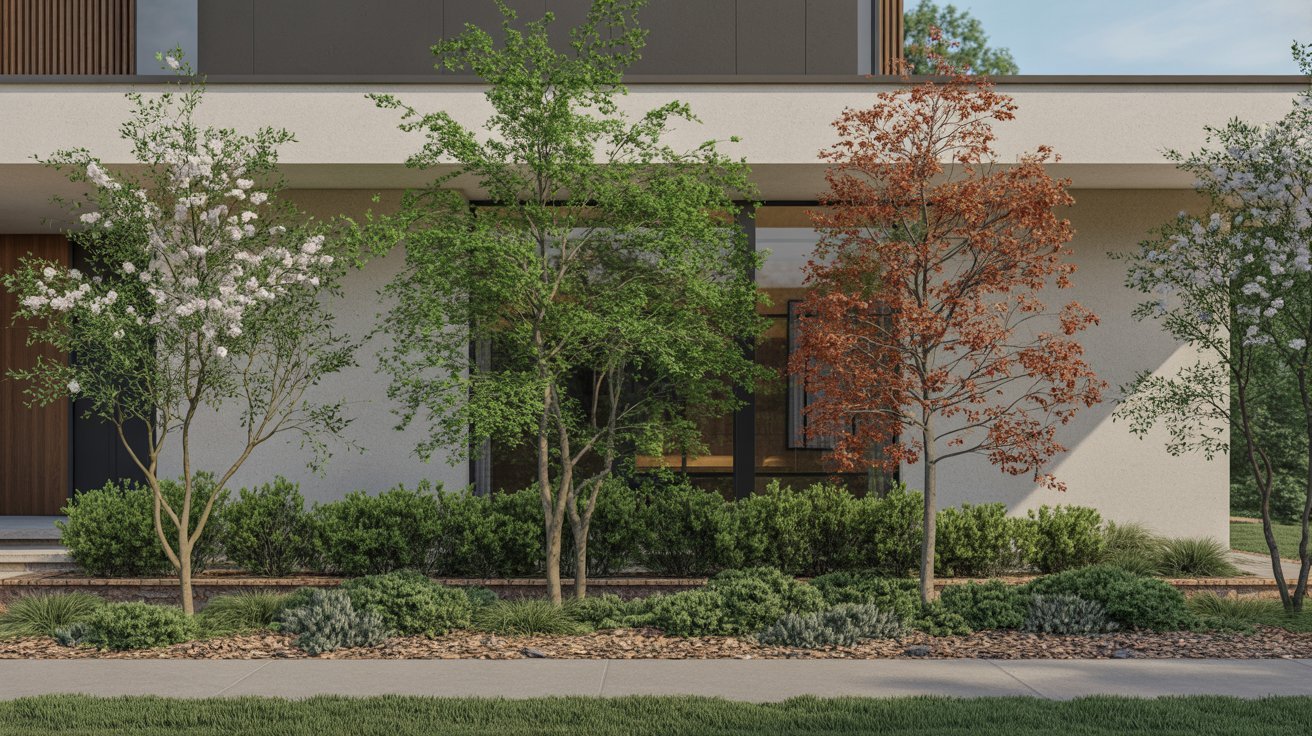
White spring flowers, edible summer berries, and brilliant fall color in one tree. It stays compact enough for foundation planting and attracts birds throughout the growing season.
43. Crape Myrtle for Flowering Structure
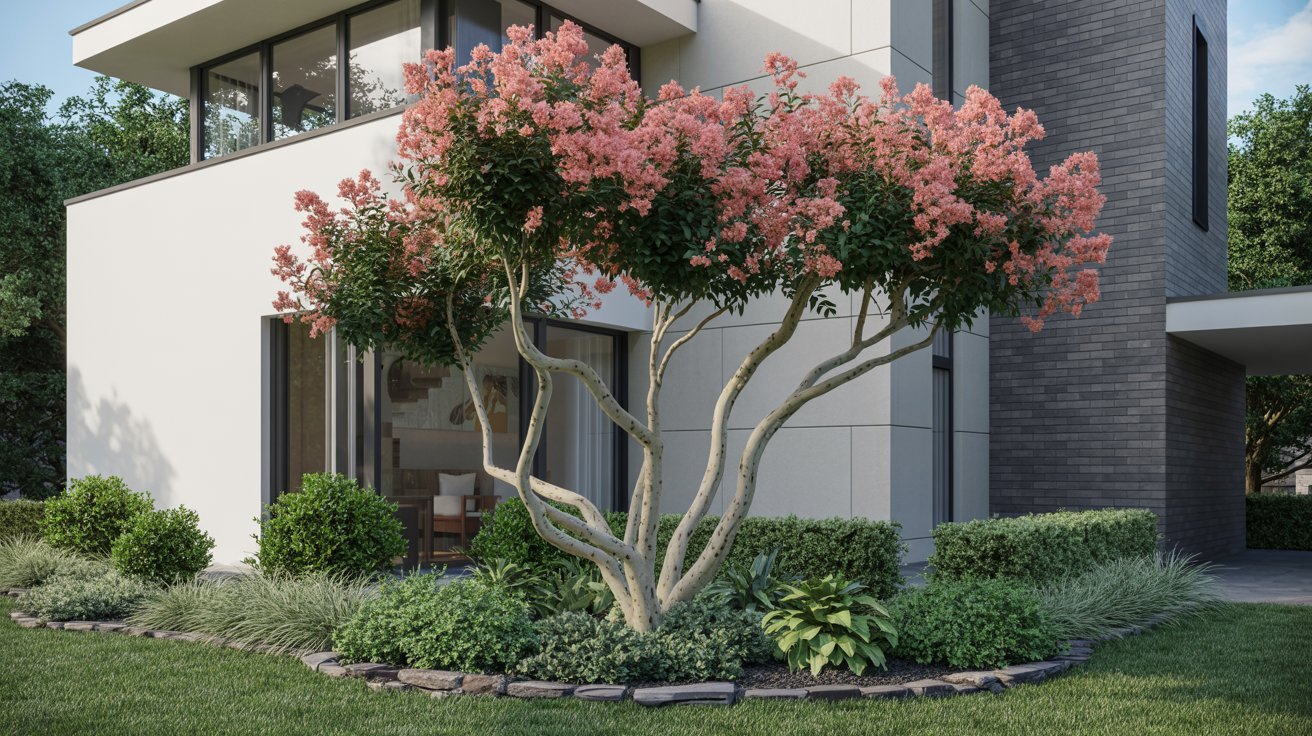
Ideal for southern climates with long, hot summers and plenty of sun. It blooms in shades of pink, red, and white and adds attractive peeling bark interest through the winter months.
44. Dogwood Trees for Shade and Blooms
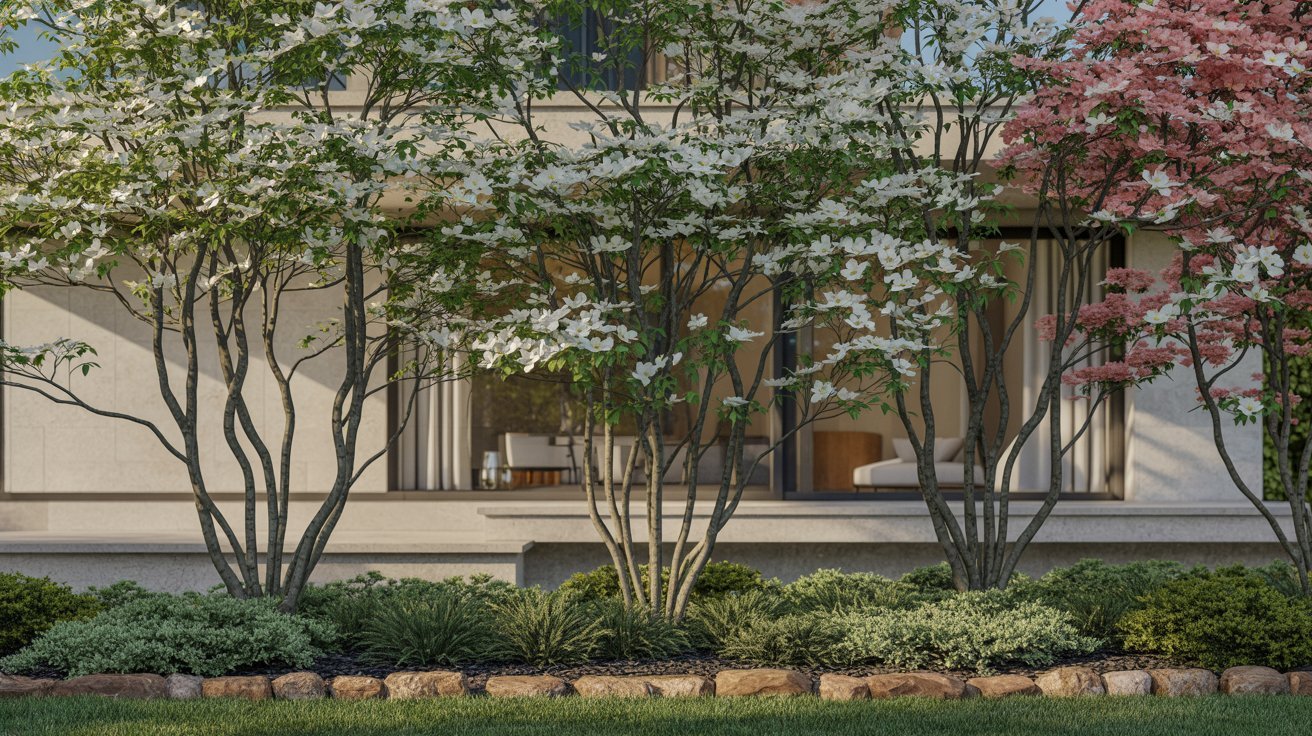
Spring blooms and dappled summer shade make this a well-rounded choice. Native dogwood varieties also attract pollinators and provide berries for birds in the fall season.
45. Olive Trees for Mediterranean Style Homes
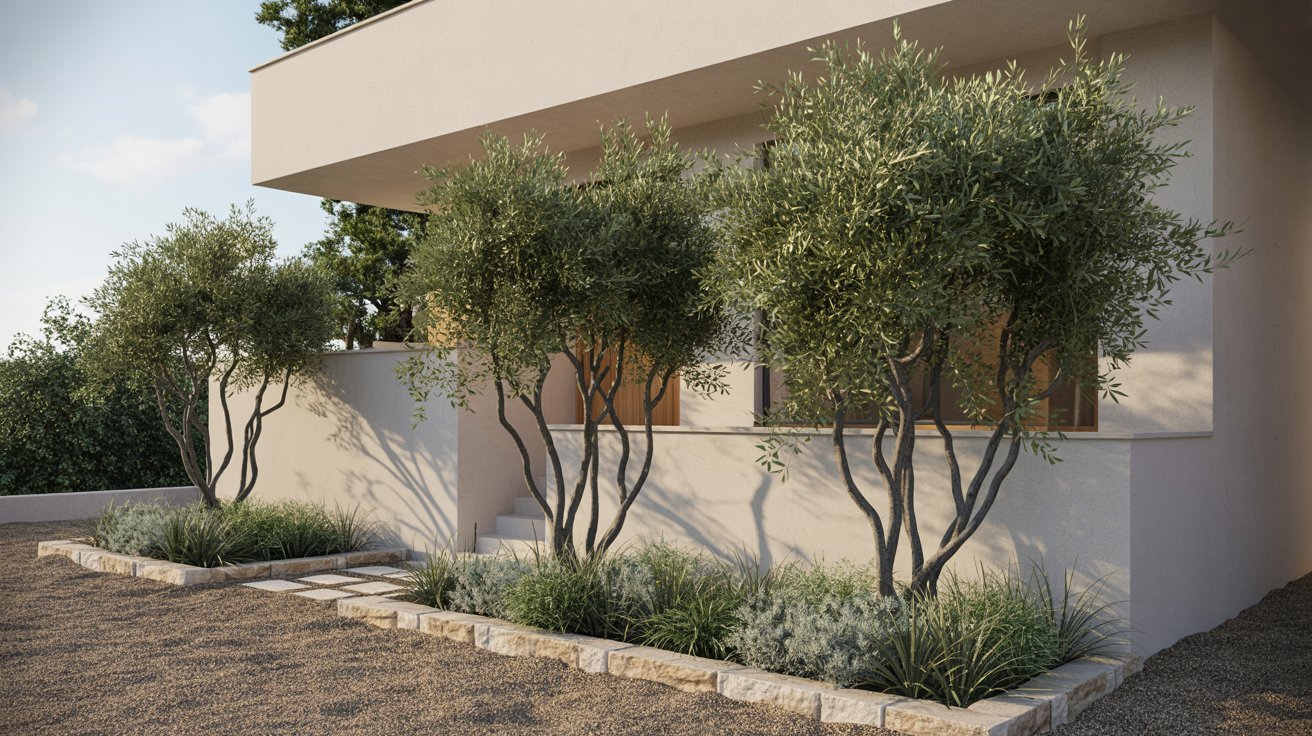
Works well in warm, dry climates with a relaxed, sun-soaked look. The silvery green foliage adds year-round interest and pairs well with lavender and low ornamental grasses.
46. Small Ornamental Cherry Trees for Spring Color
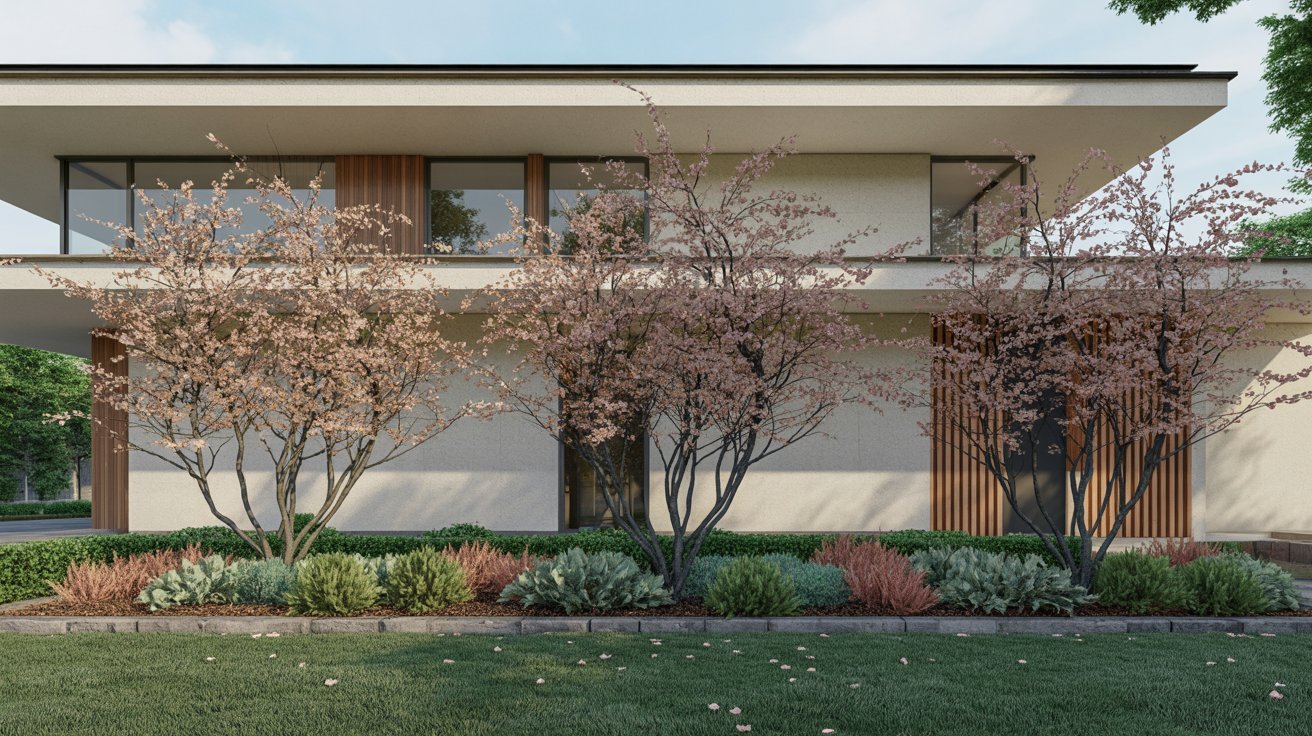
A burst of soft pink blooms that signals the start of spring. They stay compact enough for foundation planting and add shade and structure through the rest of the growing season.
47. Columnar Evergreens for Narrow Spaces
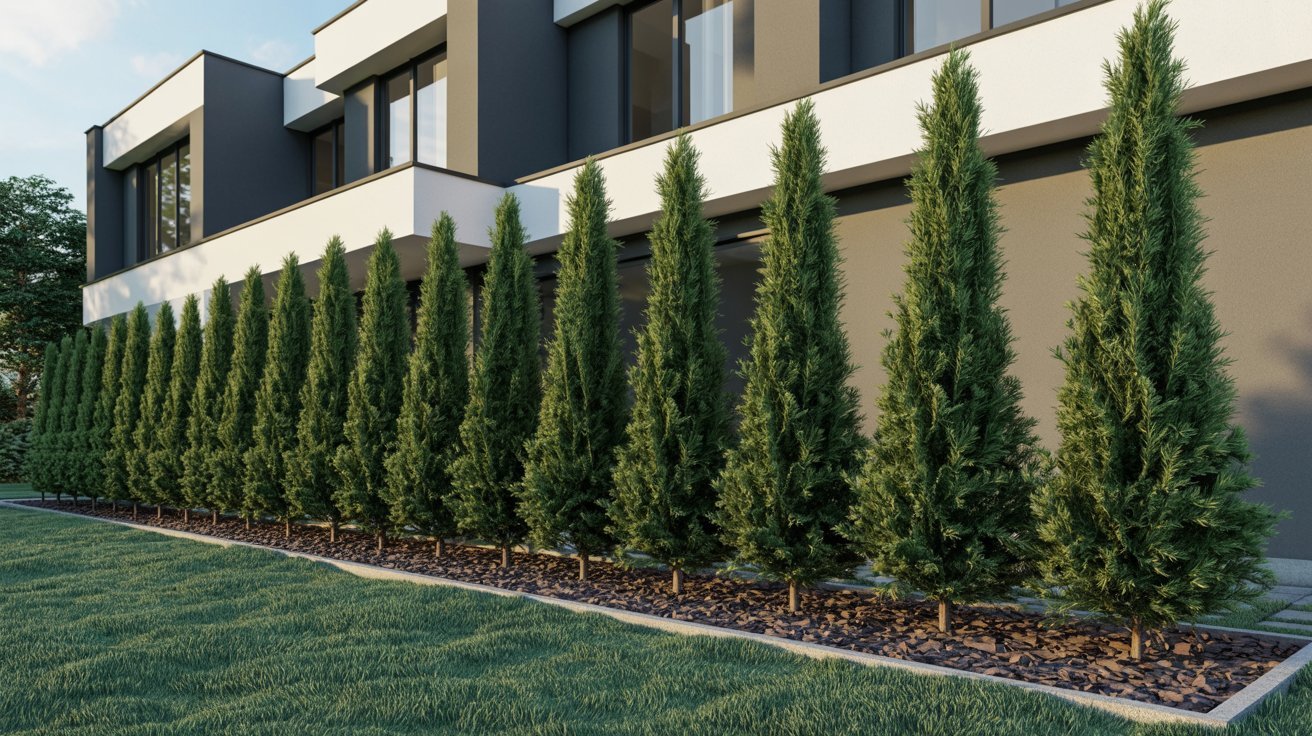
Smart for tight spots alongside yards or between windows. They grow tall without spreading wide and provide year-round privacy and structure with very minimal upkeep.
48. Topiary Shrubs for Formal Design Accents
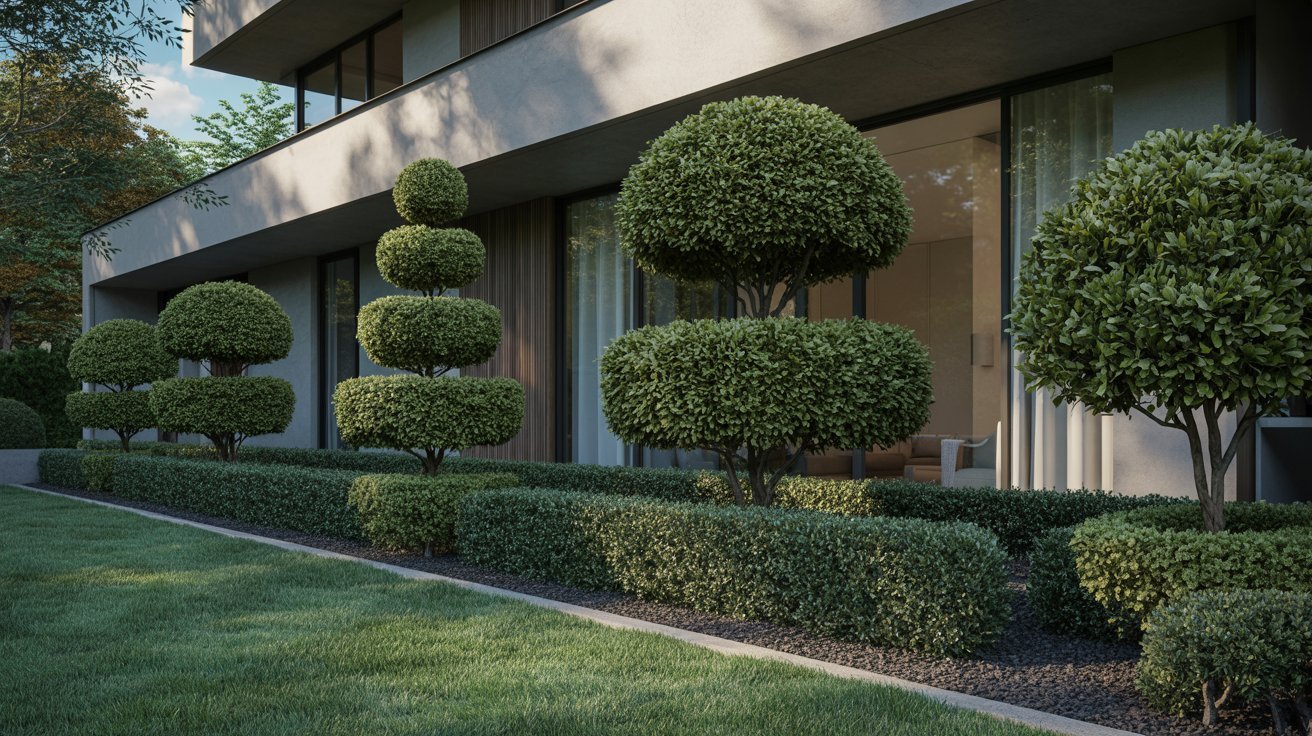
Adds a polished, formal look that suits traditional and symmetrical home styles. Clipped boxwood or yew topiaries work well as anchor plants on either side of a main entryway.
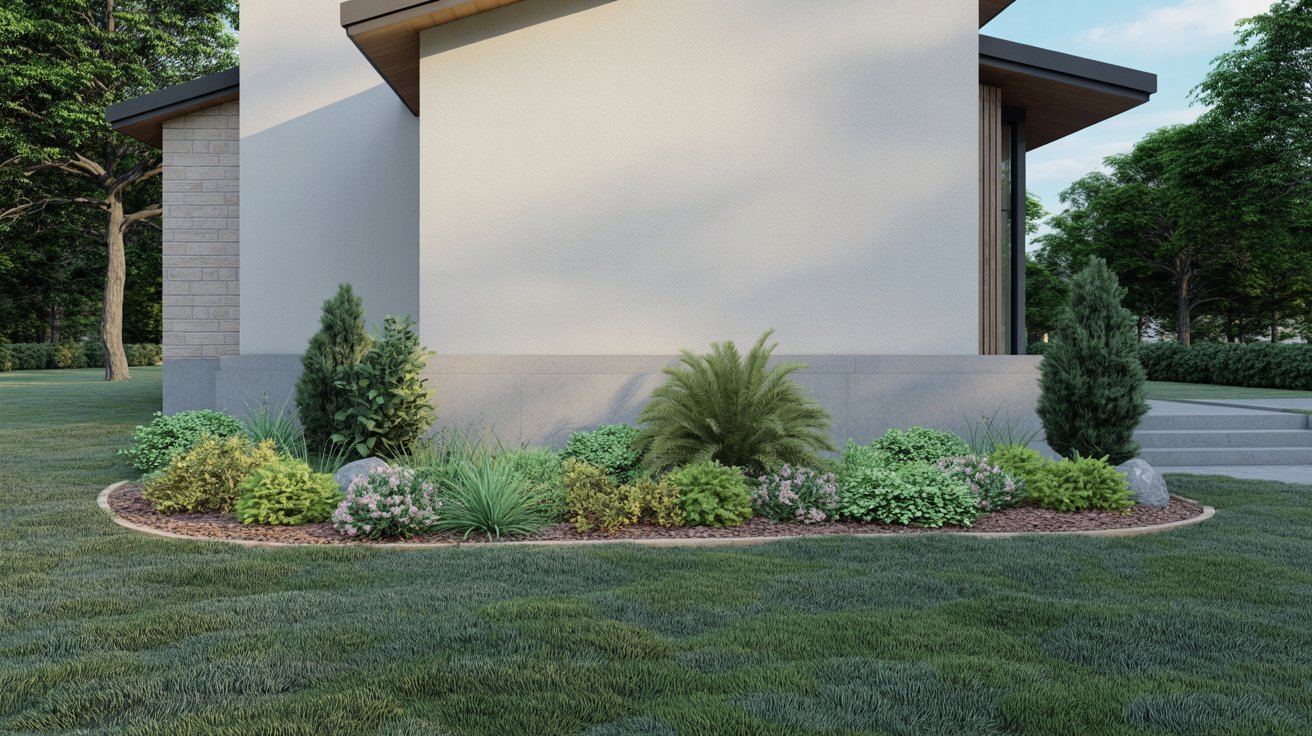
49. Layered Planting Design (Front to Back)
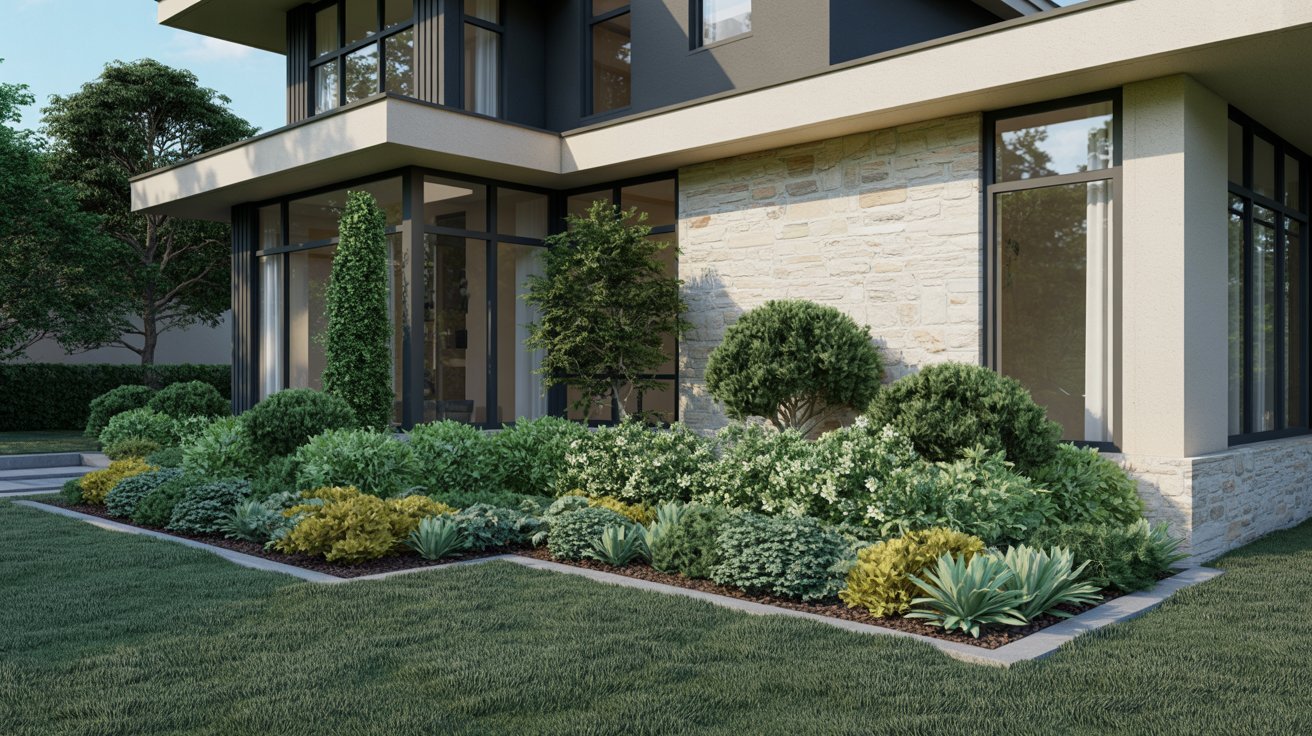
Low plants up front, medium shrubs in the middle, taller plants at the back. This creates visual depth and makes the foundation bed look full and intentional from every angle.
50. Symmetrical Planting Layout for Balance
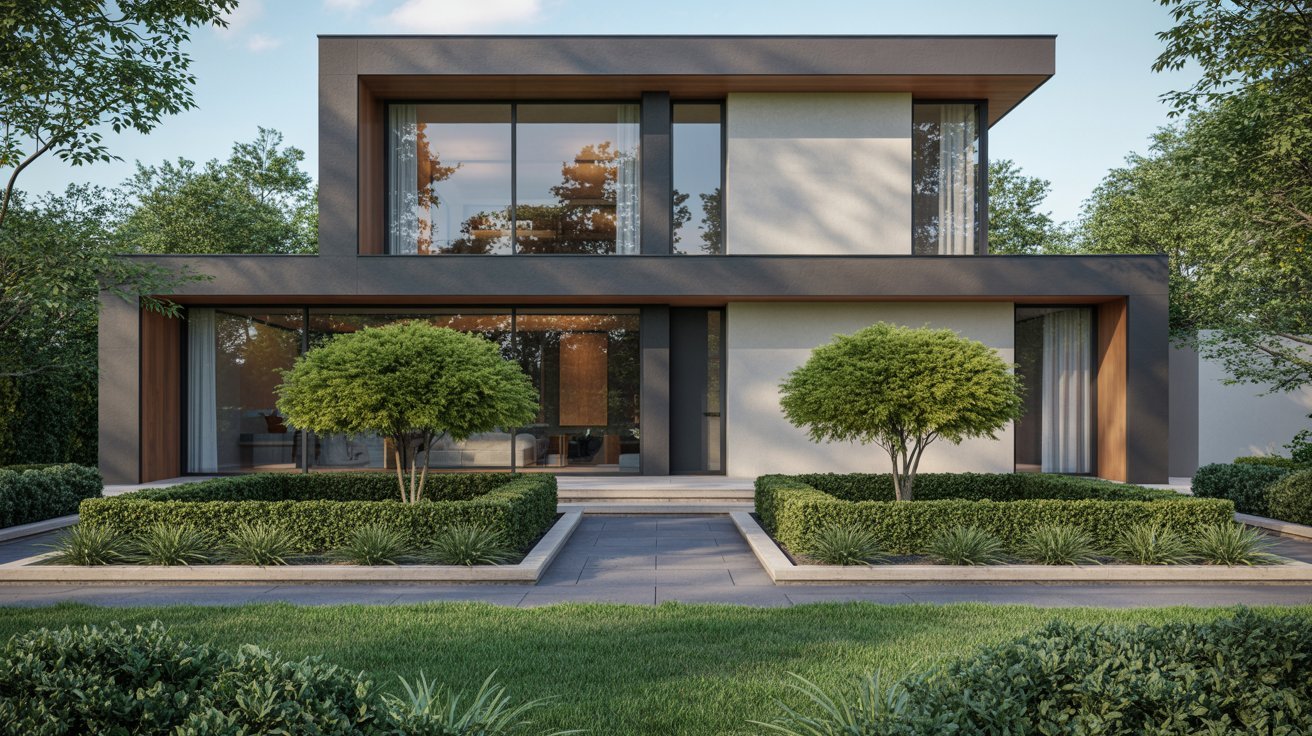
Matching plants on each side of an entryway or window for a clean, balanced effect. This layout works especially well for traditional and colonial-style home exteriors.
51. Asymmetrical Natural-Style Planting Design
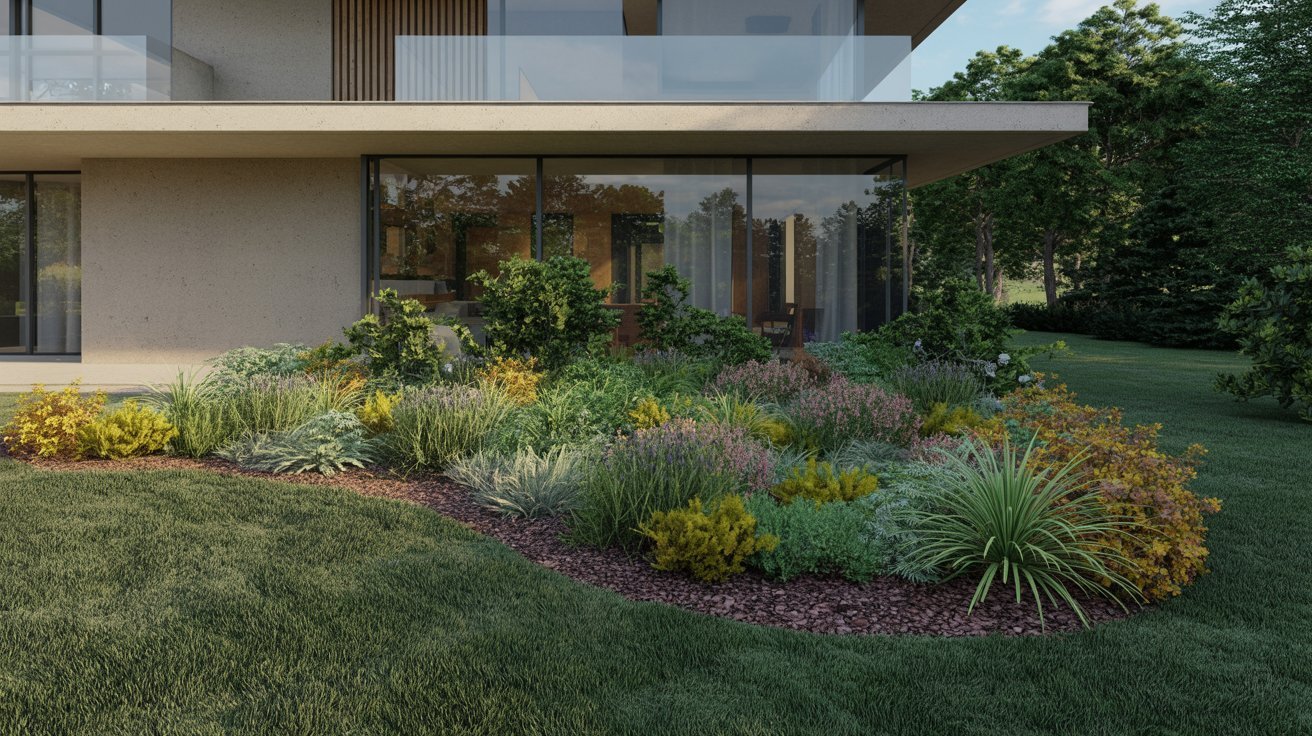
Relaxed and well-suited to cottage or farmhouse-style homes. Plants are placed in varying heights and groupings to mimic how things grow naturally in an informal garden setting.
52. Corner Accent Planting with Taller Shrubs
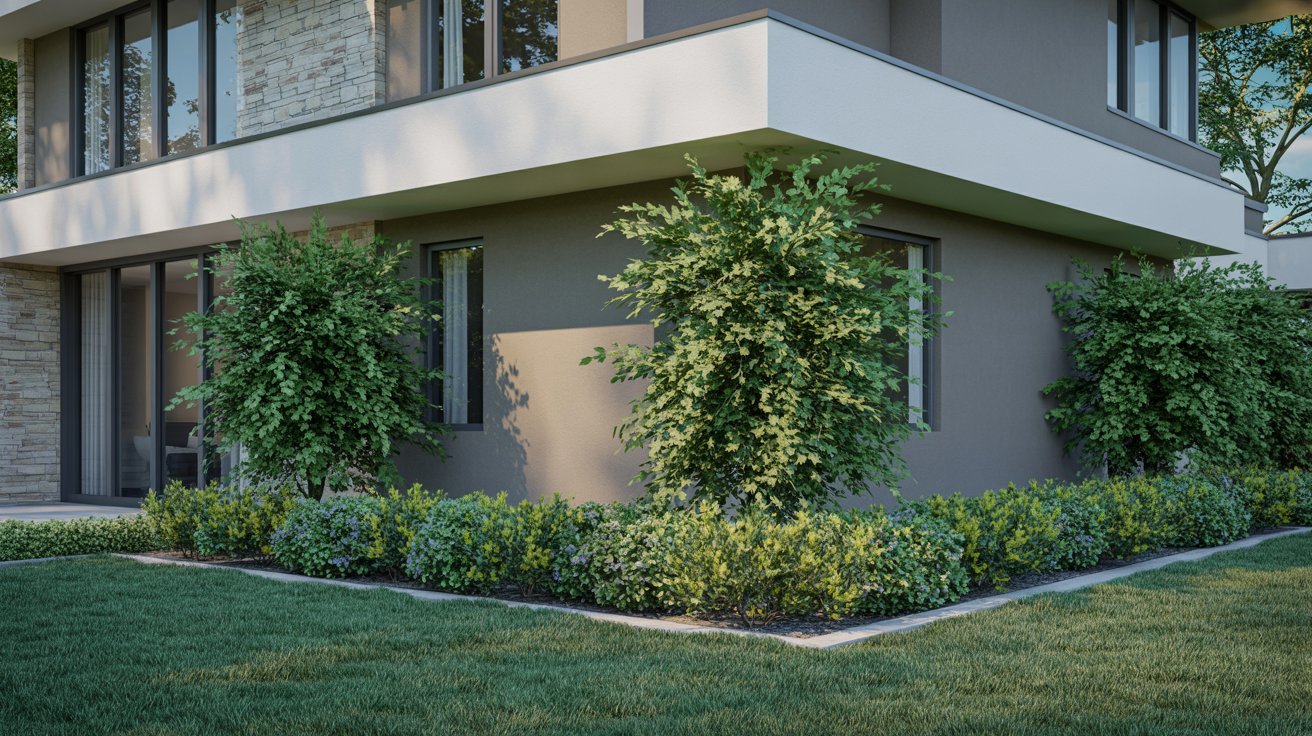
Adds structure and draws the eye at the edges of your foundation. A taller shrub or small tree at each corner anchors the bed and gives the whole design a finished, grounded look.
53. Window-Framing Plant Arrangements
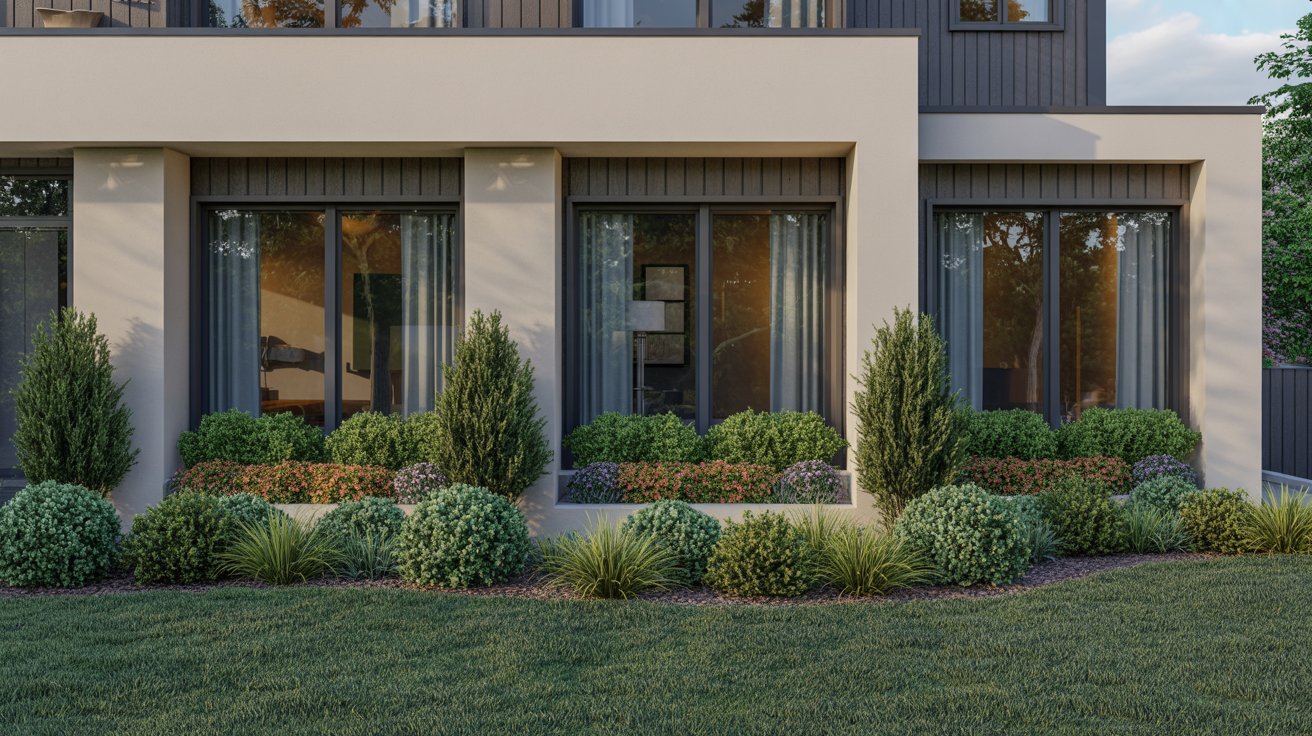
Highlights architectural features and makes windows feel more intentional. Keep plants low enough to stay below the sill so they frame without blocking light or views from inside.
54. Entryway Framing with Paired Plants
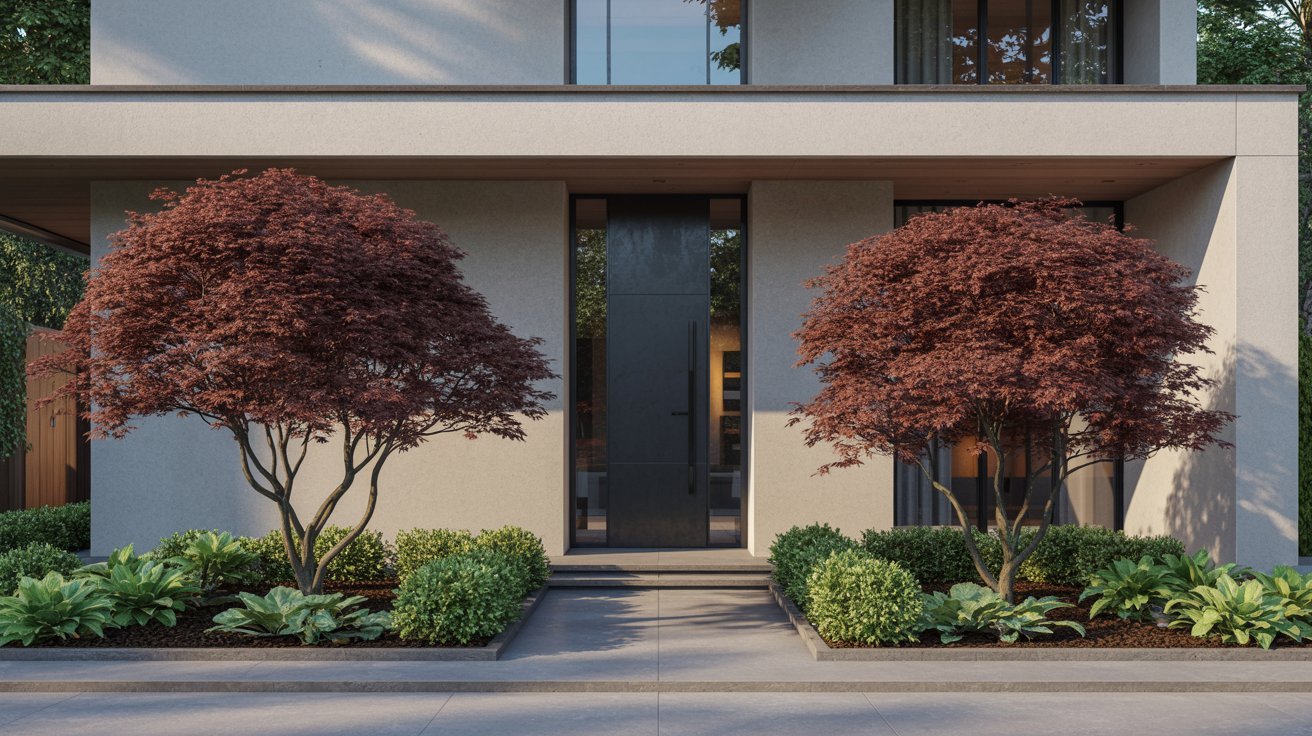
Creates a welcoming entrance with matching plants placed on either side. Use plants with similar height and form to create a sense of symmetry and guide visitors toward the door.
55. Mixed-Texture Foundation Beds with Repeated Plants
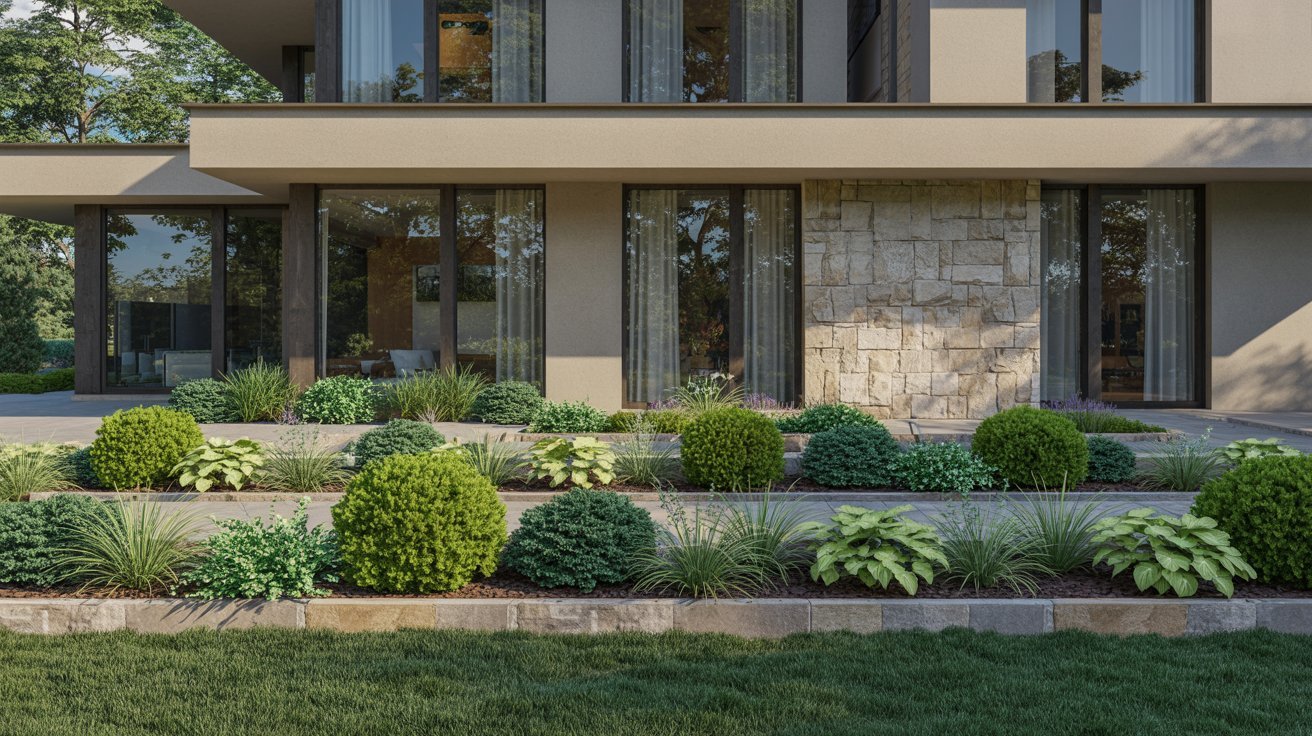
Builds rhythm and cohesion across a long stretch of foundation. Repeating the same plant every few feet ties the whole bed together and prevents it from looking cluttered or random.
Pro Tips for Perfect Foundation Landscaping
Small habits make a big difference over time.
- Start simple and add more plants gradually rather than overwhelming the bed all at once
- Mix evergreen plants with flowering varieties to keep interest going all year
- Keep proper spacing between plants to allow airflow and prevent disease
- Focus on balance, scale, and proportion when placing taller plants near shorter ones
- Think about how plants will look in five years, not just right now
Conclusion
I hope this list gave you a clear starting point for your own foundation planting project.
Some of my favorite foundation beds started with just three or four plants and grew into something really special over time.
Pick what suits your style, your climate, and your schedule. If you try any of these landscaping ideas around the house foundation, I’d love to hear how it went.
Drop a comment below, share this post with a friend working on their yard, or check out more of our landscaping guides for fresh ideas.
Frequently Asked Questions
What plants are best for landscaping around a house foundation?
Low-maintenance shrubs like boxwood, dwarf arborvitae, and juniper work well. Perennials like hostas, daylilies, and black-eyed Susans are also reliable choices for most foundation beds.
How far should plants be from the foundation?
Most shrubs should be planted at least two to three feet away from the foundation wall. This allows for air circulation, root growth, and prevents moisture buildup against your home.
What ground cover works best near a foundation?
Creeping thyme, sedum, and dwarf mondo grass are excellent low-growing options. They stay compact, spread slowly, and need very little care once established in well-drained soil.
Can landscaping damage a house foundation?
Yes, if done incorrectly. Plants placed too close can trap moisture and invite pests. Always choose compact species and keep proper spacing from your home’s structure.
How do I improve drainage in foundation landscaping beds?
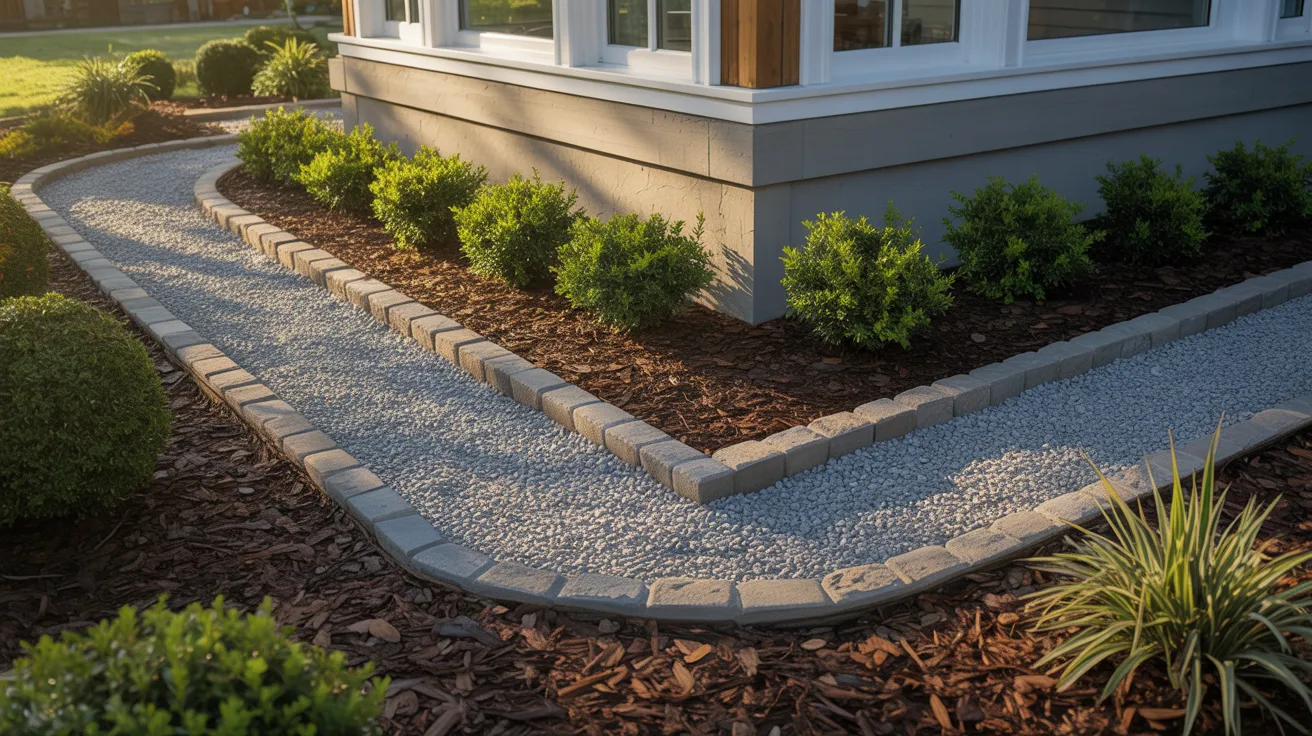
Mix compost and coarse sand into the soil before planting. Make sure the ground slopes away from your home. Raised beds and gravel pathways also help direct water away effectively.