
I used to think a bedroom needed loud colors and lots of decor to feel cozy. Then I tried a dark minimalist look, and it changed how my whole room felt.
If you want a bedroom that feels calm, warm, and easy on the eyes, you’re in the right place.
In this post, I’m sharing 21 dark minimalist bedroom ideas that work in real homes, not just in photos.
I’ll walk you through wall colors, furniture picks, lighting tricks, and small styling touches that make a big difference.
I’ve tested many of these ideas in my own space, so I know what holds up.
By the end, you’ll have a clear plan for a bedroom that feels like a quiet retreat every night.
What Defines a Dark Minimalist Bedroom

A dark minimalist bedroom mixes deep colors with clean, simple design.
Think black, charcoal, or deep green walls. Pair that with a few good pieces of furniture and nothing extra.
I like this style because it feels calm, not busy. You get warmth from a dark palette. You get peace from having less stuff around.
That combo makes falling asleep easier.
21 Dark Minimalist Bedroom Ideas
Here are 21 Dark Minimalist Bedroom Ideas that you’ll love.
1. Go All-In With Matte Black Walls

I painted one wall matte black last year and it changed the whole room. Matte finish avoids the shine that gloss paint gives off. It feels bold but calm at the same time.
You don’t need all four walls black. Start with one and see how it feels.
2. Choose a Charcoal Gray Color Palette

If full black feels like too much, charcoal is a softer choice. It still gives you that moody look. But it’s easier to live with day to day.
I’d pair charcoal walls with lighter gray bedding. This keeps the room from feeling too heavy.
3. Create a Moody Accent Wall

You don’t have to paint the whole room dark. One accent wall behind your bed does the job. It draws the eye without taking over the space.
I used a deep navy for mine. It reads as dark without going full black.
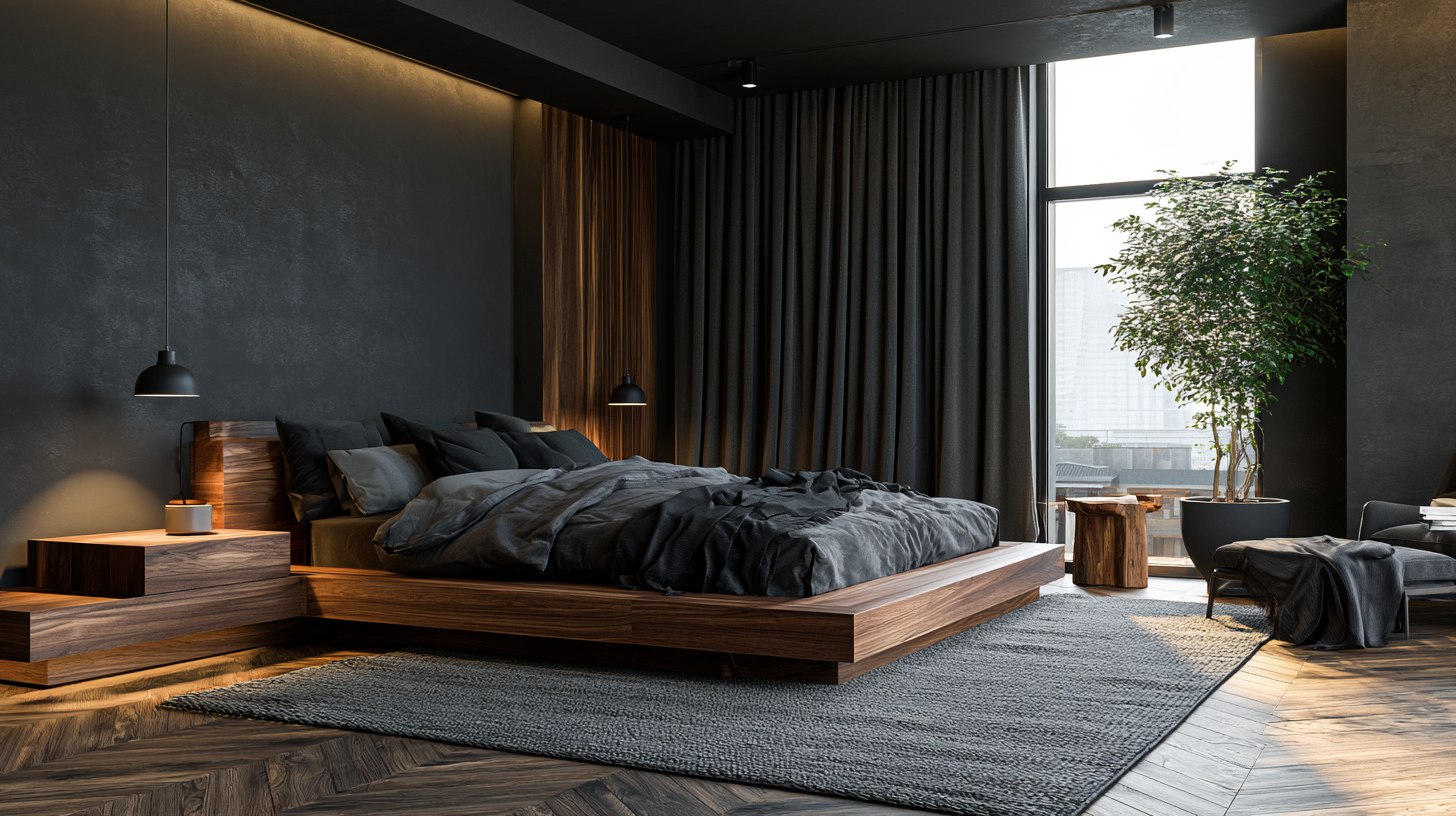
4. Add Warm Walnut Wood Furniture
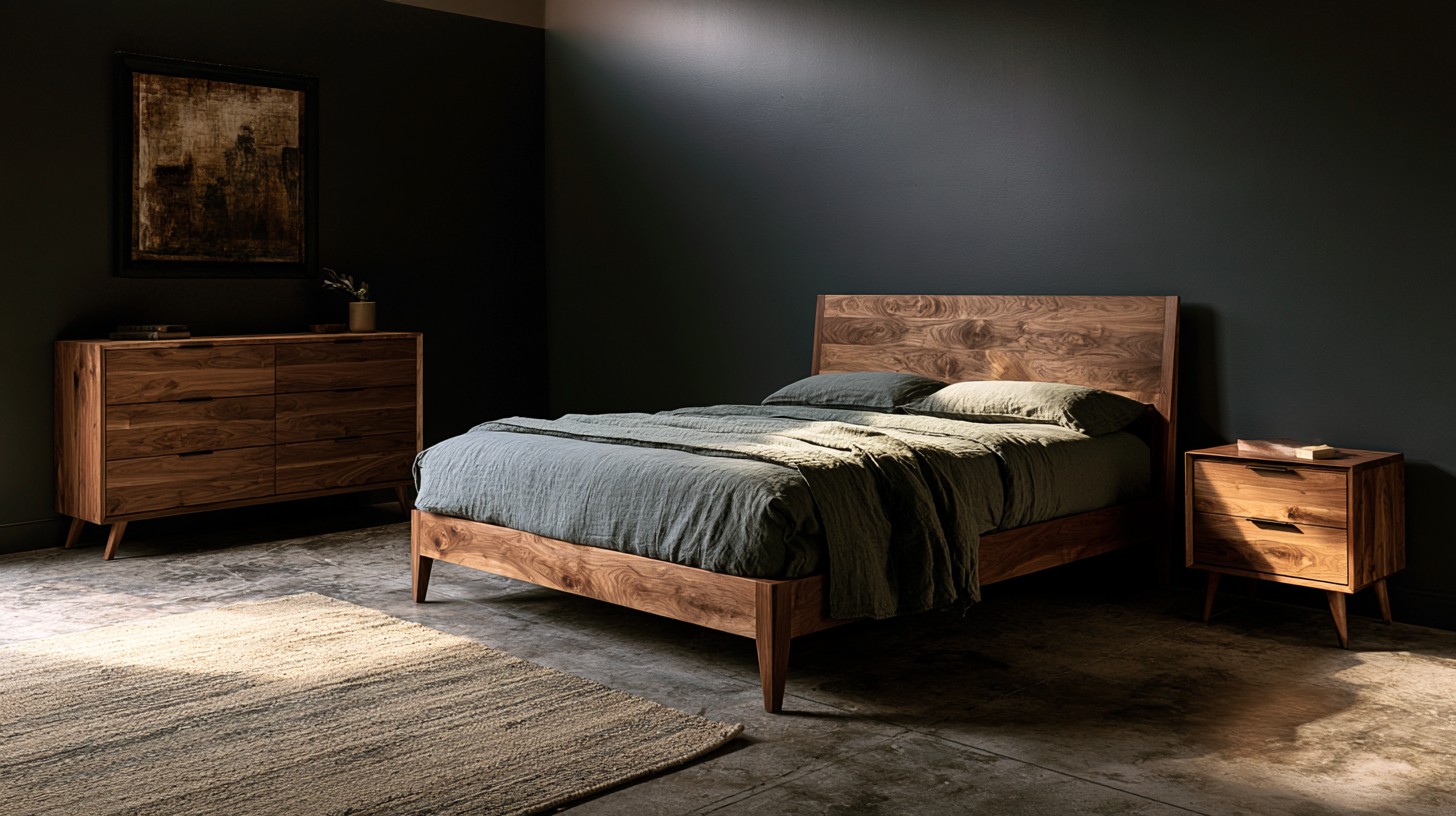
Dark walls need warmth somewhere. Walnut wood does that job well. The brown tones balance out the black or gray around it.
A walnut bed frame or dresser adds texture too. It stops the room from feeling flat.
5. Try Dark Green for a Nature-Inspired Bedroom

Dark green is a nice change from black or gray. It still feels moody but brings in a bit of nature too. Forest green or hunter green both work well on walls.
I find green rooms feel more relaxed than pure black ones. Worth trying if black feels too stark for you.
6. Embrace Japandi Minimalism With Dark Tones

Japandi mixes Japanese and Scandinavian design. It’s simple shapes, natural materials, and a calm color scheme. Adding dark tones to this style keeps it interesting.
Low platform beds and simple wood shelves fit this look well. Keep the room open and uncluttered.
7. Keep Bedding Simple in Neutral Colors

Your bedding shouldn’t fight with your walls. Stick to white, cream, or gray sheets. This keeps the contrast clean and simple.
I switched to plain white bedding after painting my walls dark. It made the whole room feel more balanced.
8. Install Floor-to-Ceiling Curtains

Tall curtains make a room feel bigger and calmer. Pick a dark or neutral color to match your walls. Hang them close to the ceiling, not just above the window frame.
This trick alone can make a small room feel more open.
9. Incorporate Black Wood Paneling

Wood paneling in black adds texture without adding clutter. It works well behind a bed or along one wall. The grain of the wood still shows through the dark stain.
I like how it catches light differently than flat paint does.
10. Use Minimal Floating Nightstands

Floating nightstands save floor space and keep the room looking light. Pick one in a dark wood or matte black finish. Skip anything with extra drawers or shelves you don’t need.
Less furniture touching the floor makes the whole room feel bigger.
11. Add Soft Ambient Lighting

Dark rooms need good lighting or they’ll feel cold. Skip harsh overhead lights. Use warm bulbs in lamps or wall sconces instead.
I added a small lamp on each nightstand. It softens the whole room at night.
12. Decorate With One Statement Artwork

You don’t need a wall full of frames. Pick one piece of art that means something to you. Let it stand out against your dark walls.
This keeps the room simple but still personal.
13. Mix Concrete and Dark Wood Elements

Concrete adds an industrial feel that pairs well with dark wood. Try a concrete side table or a textured concrete wall panel. The mix of rough and smooth textures adds depth.
I think this combo works best in modern or loft-style bedrooms.
14. Choose Low-Profile Furniture

Tall furniture can make a dark room feel closed in. Stick to low beds, low dressers, and low shelves. This keeps sightlines open across the room.
It also gives the ceiling more visual space to breathe.
15. Introduce Texture Instead of Extra Decor

Instead of adding more objects, add texture. A wool throw, a linen pillow, or a woven rug all bring interest without clutter. Texture does the work that extra decor usually does.
This is my favorite way to keep a room simple but not boring.
16. Keep Decor Limited to Functional Pieces

Every item in the room should have a job. A lamp lights the room. A chair gives you a place to sit. Skip anything that’s just sitting there for looks.
This rule alone will keep your room from feeling cluttered.
17. Blend Black and Beige for Soft Contrast

Black and beige together feel warm, not cold. The beige softens the black so the room doesn’t feel too dark. Try beige bedding against black walls or furniture.
I think this combo works well for anyone new to dark rooms.
18. Add Large Mirrors to Reflect Natural Light

Dark rooms can lose light fast. A large mirror bounces natural light around the space. Place one across from a window if you can.
This small trick makes a real difference in how bright the room feels.
19. Design a Hotel-Inspired Dark Minimalist Bedroom

Think about hotel rooms you’ve loved. They’re usually simple, dark, and calm. Copy that feeling with a clean bed setup, soft lighting, and very little clutter.
I try to keep my room guest-ready. It forces me to keep things simple.
20. Use Hidden Storage for a Clean Look

Clutter kills a minimalist look fast. Use under-bed storage or a closet system to keep things out of sight. Everything has a place, so nothing sits out.
This step alone can make a small room feel much bigger.
21. Complete the Look With Monochromatic Styling

Stick to one color family throughout the room. Different shades of the same color still give you variety. It just keeps things looking put together.
I use black, gray, and white together in my room. It never feels boring to me.
Common Mistakes to Avoid
Small missteps that ruin the whole look.
- Using too many dark colors without any light contrast
- Skipping proper lighting, which makes the room feel gloomy
- Adding too much furniture and losing the open feel
- Choosing cheap materials that don’t hold up over time
- Forgetting texture, which can make the room feel flat
Conclusion
A dark minimalist bedroom isn’t hard to create. Start small, maybe one wall or one piece of furniture, and build from there.
I started with a single black wall, and now my whole room reflects that calm, simple style. You don’t need to change everything at once.
Try one idea from this list this week. See how it feels in your space.
If this helped you, leave a comment and let me know which idea you’re trying first.
Frequently Asked Questions
Is a dark minimalist bedroom hard to keep clean?
Not really. Dark surfaces show dust, but simple rooms have less to clean overall. A quick wipe down keeps things looking sharp.
Will dark walls make my room feel smaller?
Not if you use good lighting and mirrors. These tricks keep the room feeling open even with dark walls.
What colors work best with black walls?
Warm woods, beige, and soft grays all pair well. They balance out the black without fighting it.
Do I need to paint all my walls dark?
No. One accent wall gives you the look without committing your whole room to dark colors.
Can this style work in a small bedroom?
Yes. Low furniture, mirrors, and good lighting make dark colors work even in small spaces.