
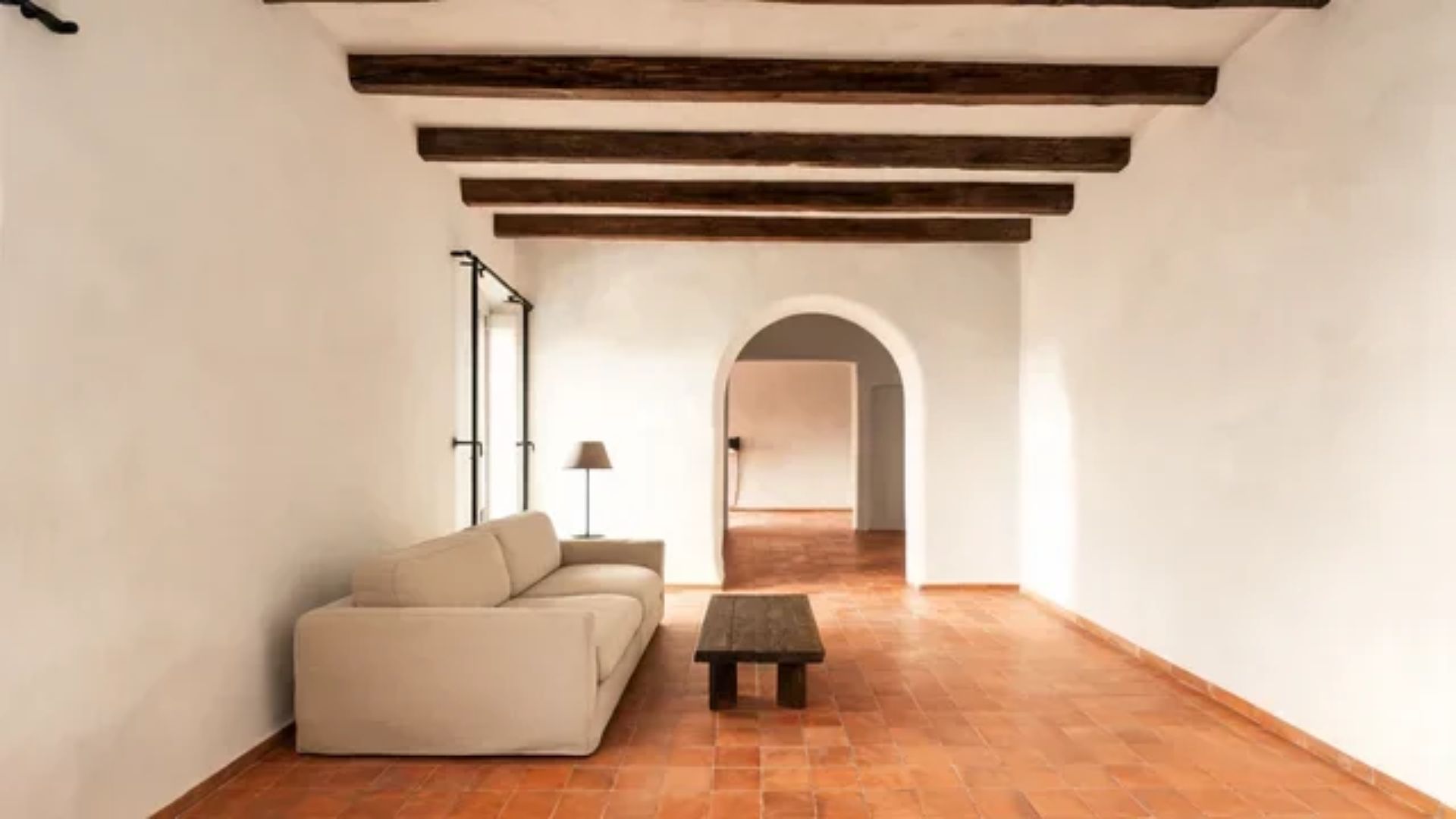
Okay, so the first time I walked into a modern Spanish home, I actually touched the wall before I even said hello to the owner.
It was cool, a little gritty under my hand, and the afternoon light was just sliding across it like it belonged there. That was the moment this style clicked for me.
Nothing in that room was loud. Honestly, nothing was even trying to be. And that’s exactly why it felt so rich. The calm came from restraint, not from piling more in.
So what actually builds that feeling? The colors, the curves, the wood.
And how do you use them without the room turning into a theme set instead of a home? Let’s start with what this style actually is.
What Is Modern Spanish Interior Design?
Modern Spanish interior design pairs traditional Spanish materials with minimalist restraint, and shares a lot of DNA with Tuscan Mediterranean interior design if you want to compare the two warm, earthy styles.
The result feels calm and sun-washed, with rooms that flow into each other.
Spanish Revival and hacienda styles lean on carved details, bold color, decorative ironwork.Modern Spanish keeps the bones and drops the decoration.
Here’s the thing, though copy only the terracotta and the iron, and the room starts to feel like a restaurant set instead of a home.
What Is the Color Palette of Modern Spanish Design?
The palette is an earthy, low-contrast base of warm neutrals, with just a few muted accents doing the talking. Here’s how each color group earns its place in the room:
| Color Role | Colors | How to Use It |
|---|---|---|
| Base | Warm white, cream, beige, pale tan, soft gray | Covers most of the room, including walls and large surfaces |
| Accents | Burnt orange, ochre, deep olive, terracotta | Use small amounts, such as a ceramic bowl, a throw pillow, or one chair |
| Sunny rooms | Warm white | Reads soft and bright in strong light |
| Shaded rooms | Cream, pale tan | Keeps the warmth when warm white turns flat and gray |
| What to avoid | Bold reds, cobalt blue, Talavera or zellige tile, a Spanish armchair, or one accent across a whole wall | Pulls the room back toward older, more decorative styles |
Test your base color in your own light before you commit to it. The same exact white can look completely different from one room to the next, and that’s not a detail you want to find out after the gallon’s already open.
Keep the contrast gentle between your base and your accents. The goal here is a calm, sun-washed room where color adds depth instead of competing for attention.
How Do Arches and Textured Walls Create the Look?
Curves, arches, and textured plaster walls are the architectural backbone of this whole style.
Modern Spanish keeps the forms and materials of traditional Spanish design, strips out the ornament and the heavy contrast, and that’s exactly why it reads as modern instead of historic.
Arches and Curved Architectural Lines

An arched doorway or a rounded alcove softens a room in a way a square opening just can’t.
The eye follows the curve instead of stopping dead at a hard corner. I’m obsessed with how much that one shift changes the feel of a hallway.
Traditional Spanish arches usually come dressed up with carved trim, painted tile, and heavy columns.
In the modern version, the arch stands alone with a plain plaster edge. That’s it. That’s the whole move.
A shallow alcove works the same way. It holds one ceramic piece and genuinely needs nothing else around it.
Arches also depend on wall thickness, which is a detail people miss. Thick walls give the curve real depth and shadow, while a thin drywall arch can end up looking flat, almost stuck on.
So if your walls are thin, widen the opening and soften the curve so it still reads as intentional instead of applied.
Textured Walls: Limewash, Plaster and Stucco

Texture does the work that ornament used to do. Instead of flat, sterile drywall, these finishes add depth and movement through light and shadow alone, with no carving required.
Limewash is the softest of the three, with a cloudy, brushed look that actually shifts through the day. How limewash is made explains why it behaves so differently from regular paint. Venetian plaster is smoother, a little polished, with small variations in tone.
Rough stucco is the most rustic of the bunch, and honestly, a subtle version works best here.
Think light grain, not heavy peaks. Limewash feels airy, Venetian plaster feels refined, and stucco feels grounded.
I’d pick one finish per room. Two textures side by side just end up competing for attention, and nobody wins that fight.
Light changes how all three of these look, too. A wall that seems totally calm at noon can throw strong shadow near a window or a lamp come evening.
Test a sample right on your own wall and check it morning and night before you commit. Keep the color inside that warm palette so the texture gets to carry the interest.
What Role Do Ceilings and Woodwork Play?

Dark beams against white-washed ceilings are the signature ceiling move in modern Spanish design.
The contrast pulls your eye up, and the pale surface keeps the room from feeling heavy. Vaulted ceilings show this off best, since the curve gives the beams room to cross overhead.
You don’t need an old house to pull this off, by the way. Original beams can stay exposed, and reclaimed or new wood beams install just fine in a newer build.
Choose a deep, matte finish with visible grain. Glossy stain makes the wood look new and polished, which kind of defeats the whole point.
The balance can tip fast here, though. When the beams, the doors, and the furniture are all dark wood, the room stops feeling calm and starts feeling heavy and rustic instead.
I’d keep the beams as the one dark element and let the rest of the woodwork stay lighter. That way the ceiling stays the star, and the room still feels like you can breathe in it.
Which Floors, Metals and Furniture Complete the Style?
Terracotta or patterned tile, black iron, and a rustic-modern furniture mix finish the look. Each piece should add an earthy, handmade feel without tipping the room into a theme.
Flooring

Floors ground the whole space. Terracotta and Saltillo tiles bring that traditional warmth, and honestly, their uneven color is a gift. It hides daily wear instead of showing every scuff.
Patterned encaustic or hydraulic tiles work great in a small area, like an entry or a hallway. For a more modern balance, herringbone wood or polished concrete keeps the floor quiet.
I’d use one main floor throughout and let a patterned tile mark off a single zone, not the whole house.
Wrought Iron and Metal Accents

Matte black or aged wrought iron is perfect for light fixtures, stair balusters, and window frames. It gives you this thin, dark line against the pale plaster that just works.
Choose simple, straight or gently curved shapes here. Ornate scrollwork pulls the whole room back toward 1920s Spanish Revival territory, which isn’t the vibe we’re going for.
Keep the finish matte. Shiny metal reads as new, and it breaks that aged feel instantly. A few iron pieces is genuinely enough.
Furniture and Decor Mix

The furniture mixes old and new. A carved wood coffee table or a leather accent chair adds age, while a low-profile linen sofa keeps the lines clean.
Abstract ceramics bring in a modern shape without extra color competing for attention.
You know what, the mix only fails at the extremes. A room full of rustic pieces starts to feel like a museum, and a room full of sleek pieces loses the Spanish character entirely.
I aim for one or two older pieces per room, then let everything else stay simple around them.
Room-Specific Guidance In Summary
Modern Spanish interior design works because of what you leave out. The plaster, the arches, the dark beams are already carrying the room, so everything else gets to stay quiet.
You don’t need every single element to get this look. Pick two or three that actually suit your space, and let them do the work.
A room with three well-chosen pieces feels more Spanish than one stuffed with ten.
Start small this week. Brush a limewash sample on one wall, then check it in the morning and again at night.
As always, thank you guys so much for following along, and I’ll see you next time.
Frequently Asked Questions
How is modern Spanish different from Spanish colonial style?
Colonial style is ornate dark wood, wrought iron, bold color, heavy tilework. Modern Spanish design strips that back to a neutral, muted palette with clean surfaces, using restraint and just one or two accents instead of pattern everywhere.
What is a Spanish style house called today?
It’s usually called Spanish Revival or Spanish Colonial Revival, sometimes Mediterranean. Newer versions with plainer plaster, simpler arches, and neutral colors are often labeled modern Spanish.
How do you make a home look Spanish style?
Start with one texture and one architectural feature. Add limewash or plaster, then an arched mirror or doorway, terracotta accents, and black iron details. Keep the rest simple.
What is the Spanish style of interior design?
It’s a warm, earthy style built on plaster walls, arches, dark wood beams, and terracotta tile. Modern Spanish keeps all of that but with a calmer palette and less ornament.