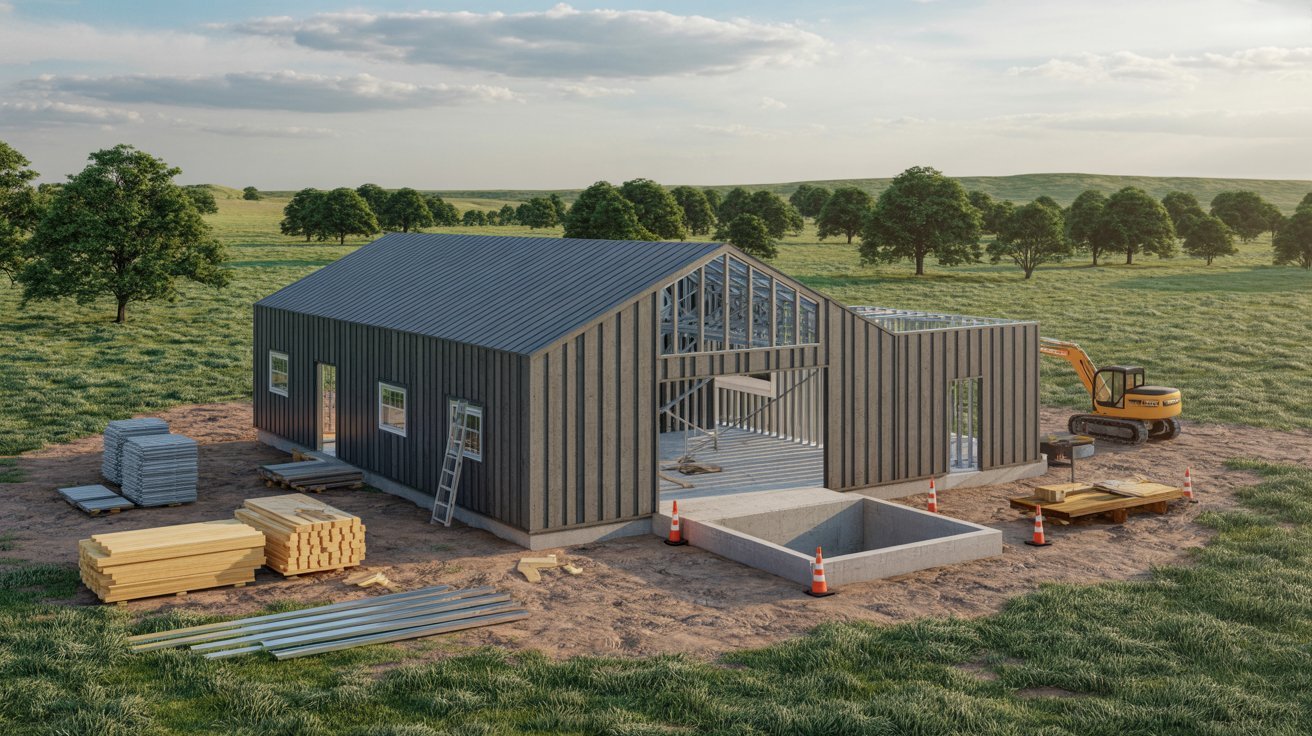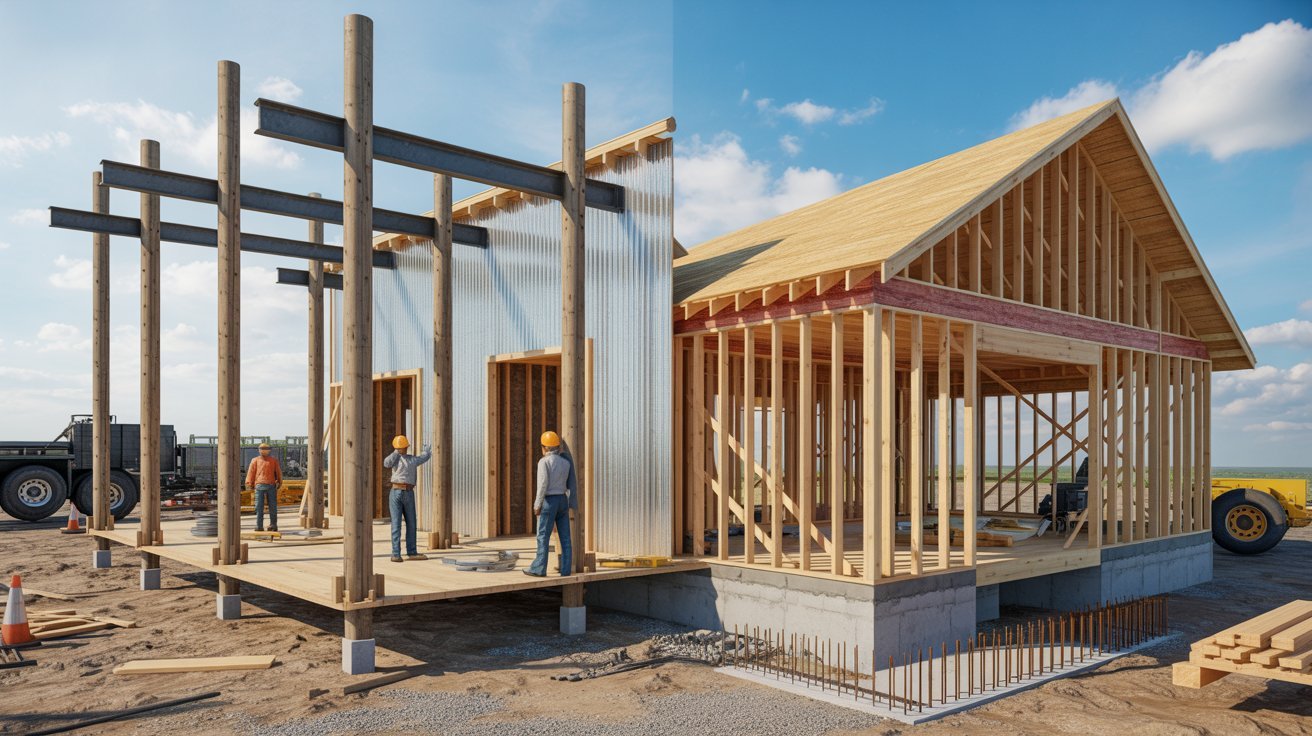

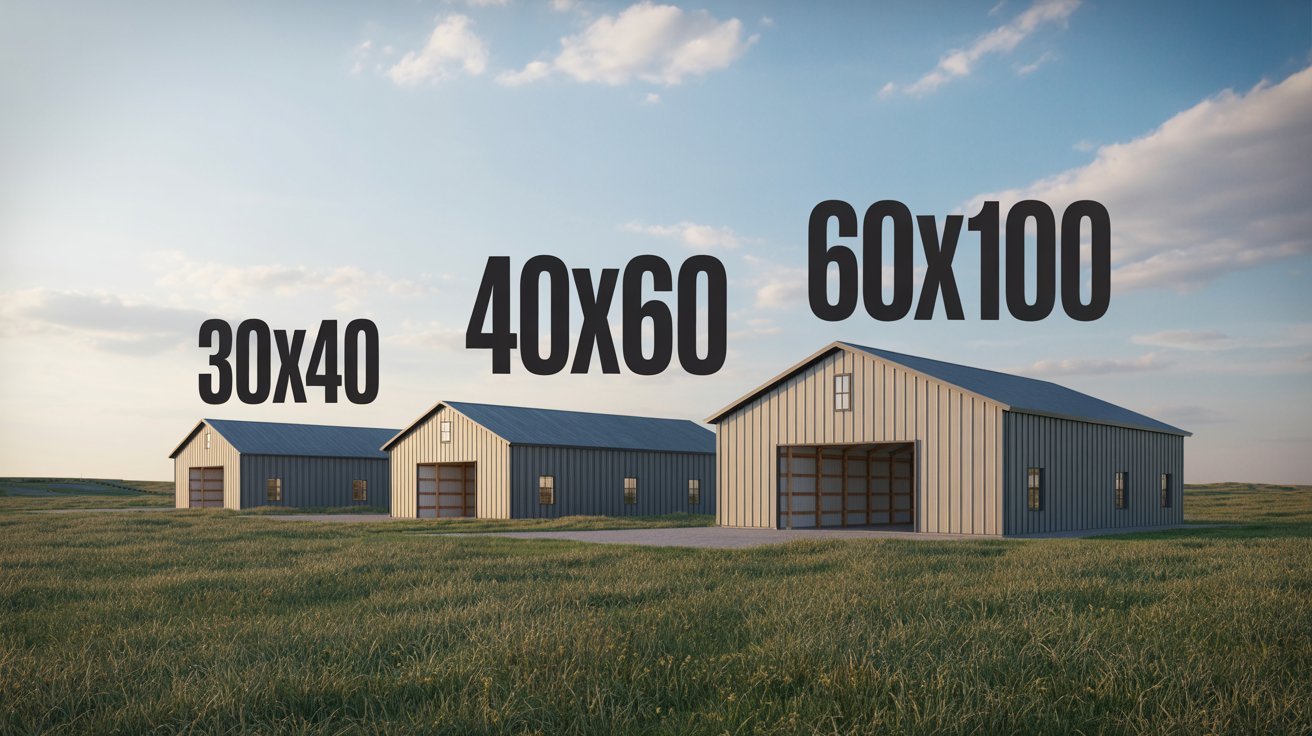
If you’re trying to figure out common pole barn sizes before starting your build, you’re already ahead of most people.
I’ve helped plan 15+ pole barn builds, and the number one regret I hear is “I wish I’d gone bigger.” Or sometimes smaller.
This guide covers everything you need to make a smart call. You’ll get a full pole barn size chart, real cost numbers, and a breakdown by use: garage, farm, workshop, and commercial.
I’ll also cover ceiling heights, door sizes, and the mistakes most people make before they spend a dime.
By the end, you’ll know exactly which size fits your property and your budget.
Why Common Pole Barn Sizes Matter More Than You Think

Size drives everything else. It affects your permit, your material list, your labor cost, and how useful the building actually is.
Most people lock in a size based on their current situation. They don’t think two or three years ahead. Then their needs grow, and they’re stuck with a barn that doesn’t work.
Getting this right upfront saves real money. The difference between a 30×40 and a 40×60 might be $10,000 in build cost.
But adding square footage after the fact often runs $20,000 or more.
Standard Pole Barn Sizes by Use Case
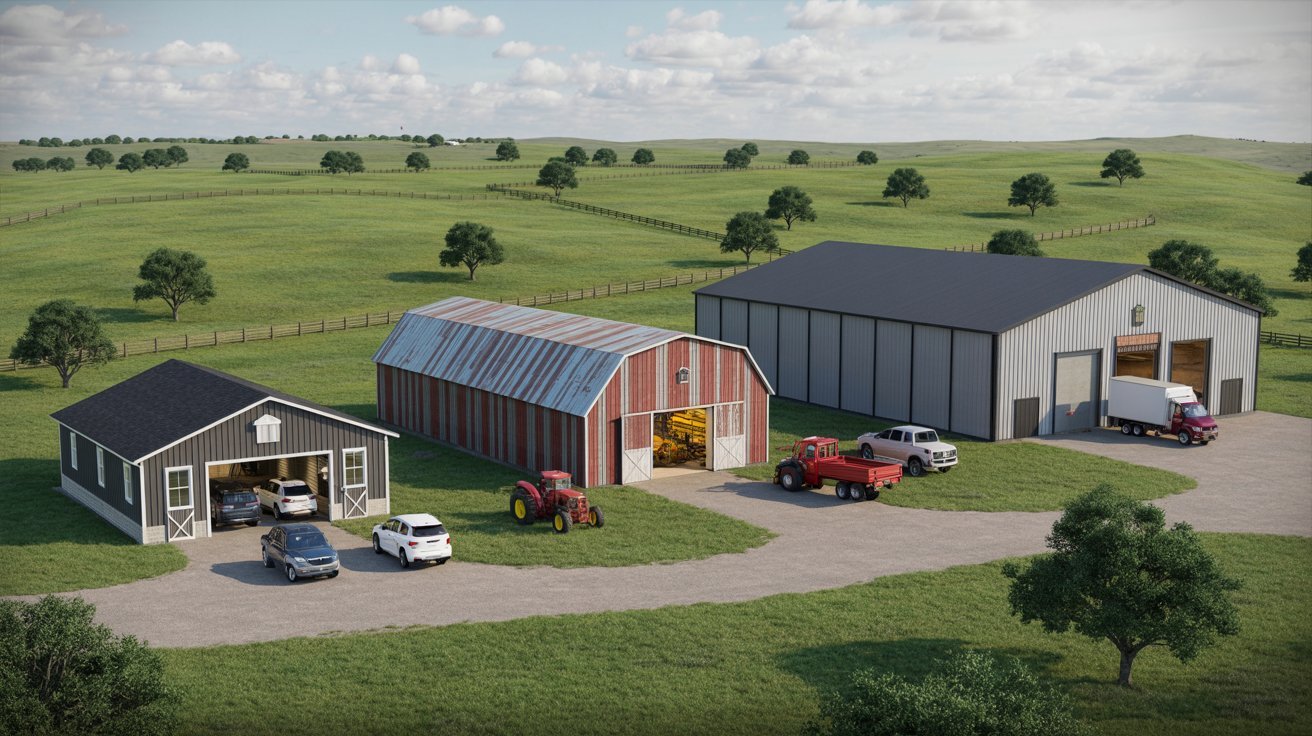
Post frame building sizes follow a consistent pattern. Widths typically go in 6-foot increments: 24, 30, 36, 40, 48, 60 feet. Lengths run in 10 or 12-foot steps.
Residential Pole Barn Sizes
For home use, the average pole barn size falls between 24×24 and 40×60. A 24×24 handles two cars. A 30×40 adds room for tools and a small work area. A 40×60 gives you vehicles, storage, and a real workspace.
Most homeowners end up in the 30×40 to 40×60 range. That covers most needs without pushing the budget too far.
Agricultural Pole Barn Sizes
Farms need more room and more height. A small setup might work with a 40×60, but working farms usually need 60×80 or larger. Once you factor in equipment, hay, feed, and animals, space fills up fast.
For hay and large equipment combined, a 60×100 is a common starting point. Many farmers I’ve worked with said they wished they’d added 20 more feet to the length.
Commercial Pole Barn Sizes
Pole barn building sizes for commercial use usually start at 60×100. Auto shops, contractors, and light manufacturers often go 80×100 or larger.
Wall height matters more here too. Most commercial builds need 16 to 20-foot walls.
Common Pole Barn Sizes Chart: A Visual Breakdown
Here are the most used pole barn dimensions and what each one is typically built for:
| Size | Best Use | Square Footage |
|---|---|---|
| 24×24 | Two-car garage | 576 sq ft |
| 30×40 | Garage plus storage | 1,200 sq ft |
| 40×60 | Residential or small farm | 2,400 sq ft |
| 60×80 | Farm equipment storage | 4,800 sq ft |
| 60×100 | Livestock or large farm | 6,000 sq ft |
| 80×100 | Commercial shop or warehouse | 8,000 sq ft |
Use this as a reference. Your zoning rules, lot size, and budget will shape the final number.
Best Pole Barn Size for Your Specific Needs

This is where most people need the most help. Here’s what I recommend based on actual use.
Best Size for a Garage
A 24×30 fits two vehicles with room to walk around them. If you want shelving, a workbench, or a third vehicle, go 30×40. That extra width makes a bigger difference than extra length.
Best Size for a Workshop
A 30×40 works for a basic shop. If you run power tools, a lathe, or larger equipment, a 40×60 gives you enough room to work without feeling cramped. Good lighting and ventilation matter as much as size here.
Best Size for a Farm
For most small farms, a 40×60 is the minimum. If you run row-crop equipment, go 60×80 or larger. The door width and ceiling height matter as much as floor space when you’re dealing with combines and grain carts.
Best Size for a Business
Commercial builds typically need at least 60×100 with 16-foot walls. If you’re running lifts, storing large inventory, or fitting multiple work bays, budget for 80×100. Going too small on a commercial build is one of the most expensive mistakes I see.
Pole Barn Size vs Cost: What You Should Expect
Bigger barns cost more in total but less per square foot.
A basic 30×40 might run $15,000 to $25,000. A 40×60 can land between $25,000 and $45,000. A 60×100 commercial build often runs $60,000 to $100,000 or more.
The cost per square foot usually drops as you scale up.
Small barns often run $20 to $35 per square foot. Larger builds can drop to $15 to $25. That’s why sizing up a bit during the initial build often makes financial sense.
Concrete floors, insulation, and electrical all add cost. A shell-only build is always cheaper, but most people add those features within a year or two anyway.
Custom vs Standard Pole Barn Sizes
Standard sizes cost less and build faster. Manufacturers design kits around common pole barn dimensions, so materials are cut and priced efficiently.
Custom sizes make sense when your lot won’t fit a standard footprint. A 36×55 might work where a 40×60 doesn’t. But custom builds cost more and take longer to source.
I’d go custom only when there’s a hard reason. Most lots can fit a standard size with some planning.
Ceiling Height and Door Size Considerations
Height gets overlooked far too often. Standard sidewall height runs 10 to 12 feet. That works for regular vehicles and basic storage.
RVs need at least 14 feet of clearance. Large tractors and combines often need 16 feet or more. Commercial operations typically call for 18 to 20-foot walls.
Door size should match your ceiling height and your equipment. A 10-foot door works for passenger vehicles. Go 12 to 14 feet for trucks and trailers.
Need full clearance for large farm machinery or semis? Plan for 16 feet minimum.
One rule I follow: size your door for the biggest thing you’ll ever need to bring in, not just the biggest thing you have right now.
Common Mistakes When Choosing Pole Barn Sizes
Undersizing tops the list. People build for today’s needs and outgrow the space in two years.
Ignoring height is the next one. Low walls cut usability in half, no matter how much floor space you have.
Skipping zoning research costs time and money. Some counties cap size without a commercial permit.
Mismatching door and ceiling height is a surprisingly common issue. You can have 16-foot walls and a 10-foot door if you don’t plan it out.
Letting cost drive the size is the last big one. Going smaller to save $4,000 upfront often leads to a $20,000 expansion two years later.
Conclusion
Choosing the right size from common pole barn sizes is one of the most important decisions in the whole build process.
After helping with 15+ builds, I can tell you that the people who plan ahead almost always end up satisfied. The ones who cut corners on size rarely do.
For a garage or workshop, a 30×40 or 40×60 covers most needs. For farm use, start at 40×60 and go bigger if you run real equipment. For commercial work, 60×100 is usually the floor, not the target.
Factor in pole barn dimensions, ceiling height, door size, and your local rules before you finalize anything. Small decisions at the planning stage make a big difference at the build stage.
What’s the one thing your barn needs to do that you haven’t fully planned for yet?
Frequently Asked Questions
What are the most common pole barn sizes for residential use?
The 30×40 and 40×60 are the most popular residential sizes. They cover garages, workshops, and storage without going overboard on cost.
How do I use a pole barn size chart to pick the right dimensions?
Start with your intended use, list what you’ll store, then match that to the closest standard size. Always add at least 10 to 20 percent for future needs.
What is the average pole barn size for a hobby farm?
Most hobby farms work well with a 40×60. If you’re storing hay or running mid-size equipment, a 60×80 gives more room without jumping into full commercial territory.
Are post frame building sizes the same as pole barn sizes?
Yes. Post frame building and pole barn are terms used for the same construction method. The standard dimensions and sizing logic apply to both.
What pole barn dimensions should I choose for an auto shop?
A 60×80 with 16-foot walls works for a small shop with two or three bays. If you plan to add a lift or more bays later, start at 60×100 to avoid a costly expansion.