
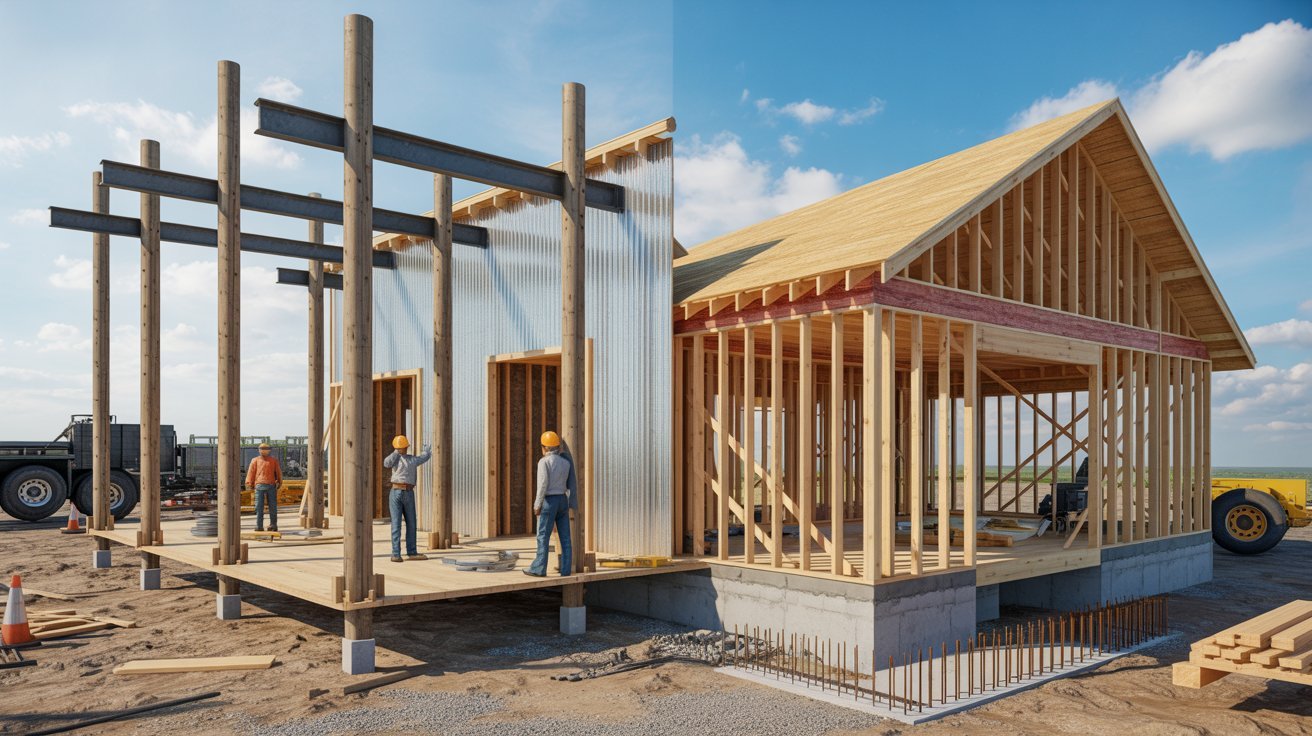
I get this question every week. People are about to spend serious money and they’re not sure which direction to go.
The pole barn vs stick built debate shows up in every farm forum, contractor group, and builder community I’ve come across.
This decision can cost you tens of thousands if you get it wrong. I’ve seen people regret choosing the wrong one.
In this article, I’ll walk you through cost, durability, energy efficiency, permits, and real owner stories.
I’ll give you a clear breakdown of pole barn vs stick built construction so you can make the right call. No guesswork. Just straight answers.
Let’s get started.
What Is a Pole Barn? (Post-Frame Construction Explained)
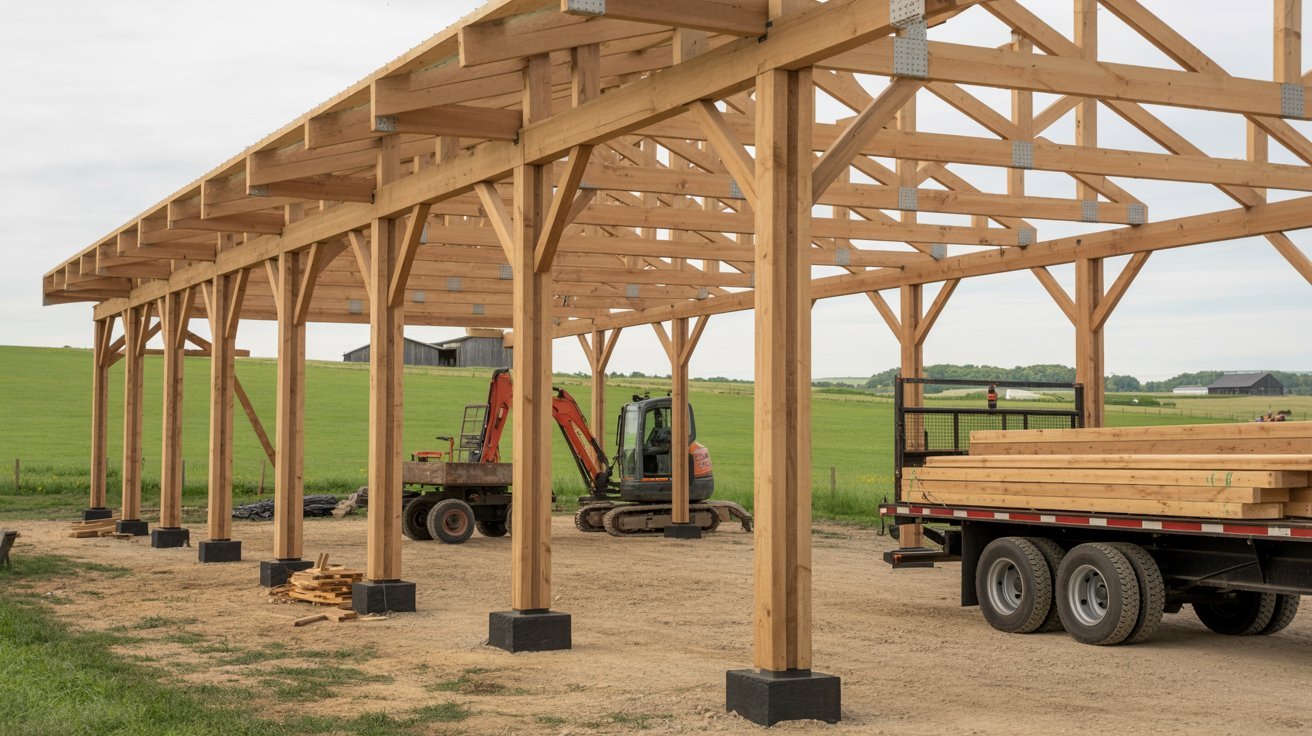
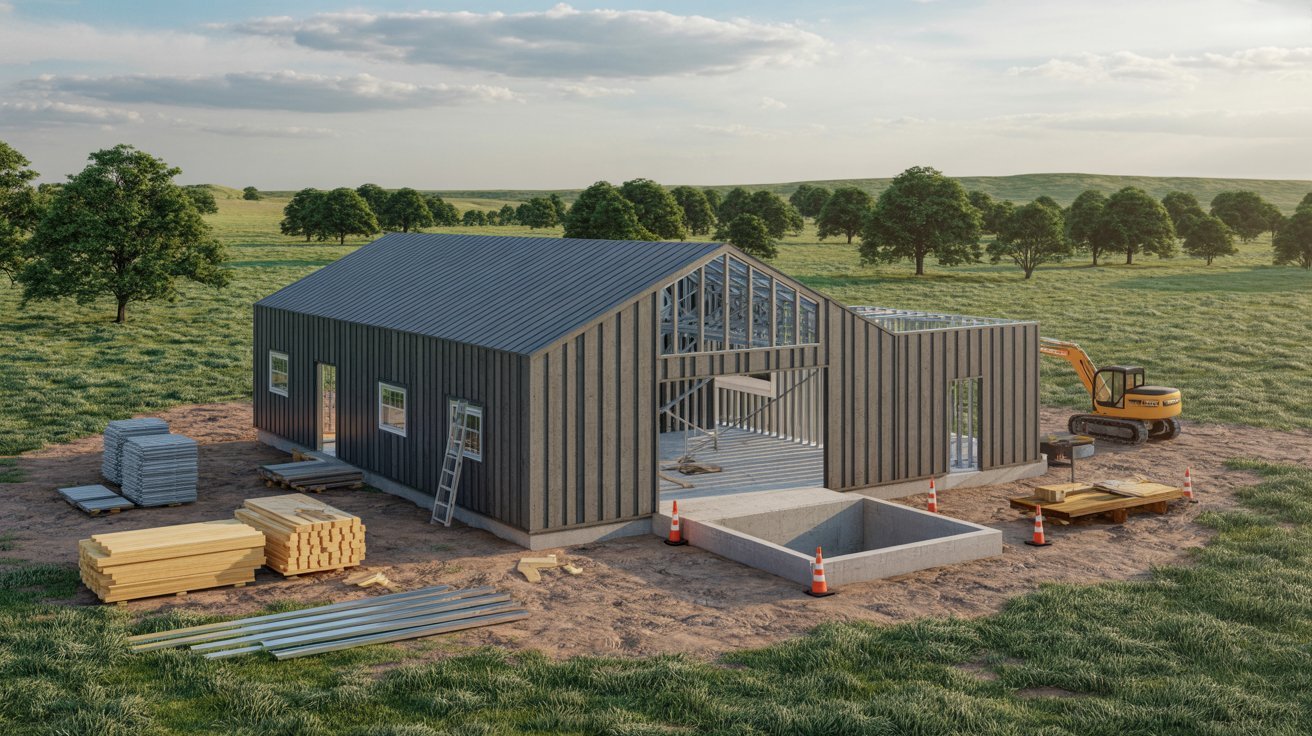
A pole barn, also called post-frame construction, uses large wooden posts buried in the ground or set on concrete footings.
These posts carry the weight of the roof and walls directly. There’s no need for a full concrete foundation.
This method started on farms. Today, people use it for garages, workshops, homes, and commercial spaces.
The open interior layout makes it easy to store large equipment or work with bulky materials.
Post frame vs stick built is really a question of use case. It goes up fast and costs less upfront than traditional construction.
What Is Stick Built Construction? (Traditional Framing)
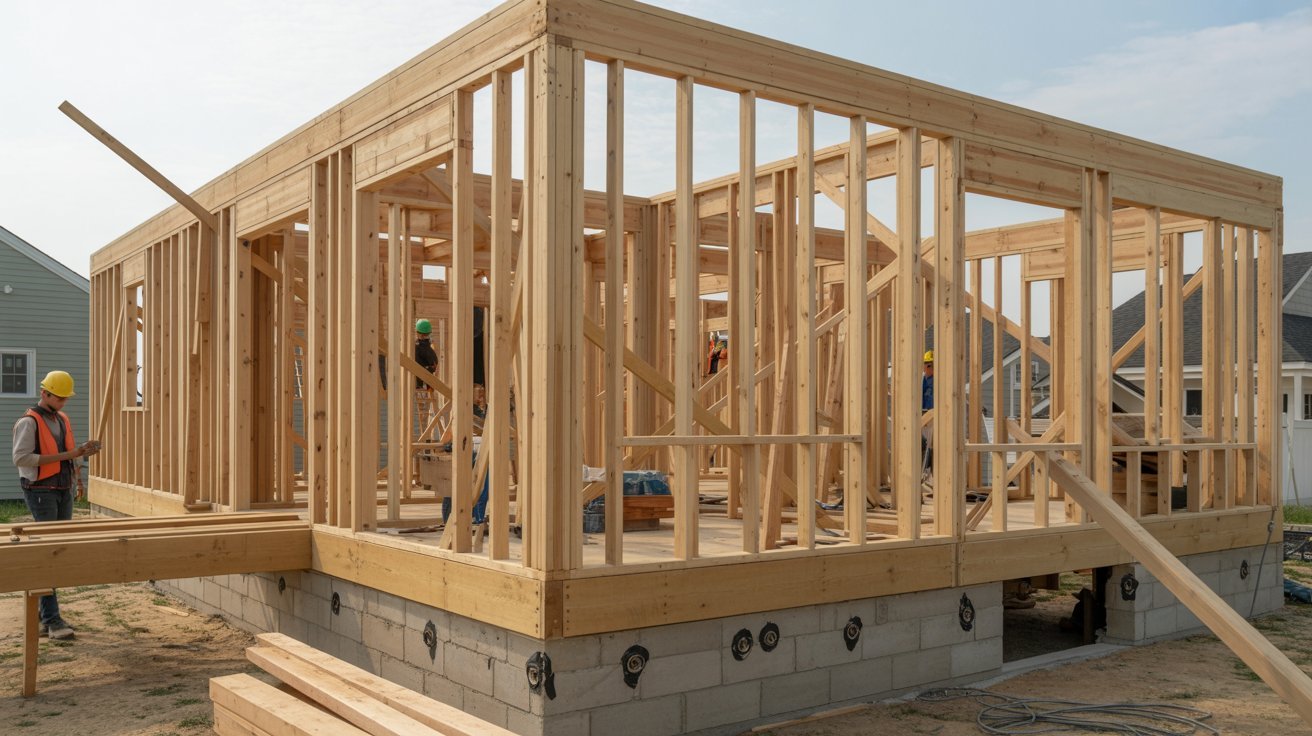
Stick built means the building is framed using standard dimensional lumber, typically 2x4s and 2x6s placed at regular intervals to form walls, floors, and roofs.
This is how most homes in the U.S. are built.
Stick built construction sits on a full foundation, usually a concrete slab or poured walls. It follows well-established building codes.
Contractors, inspectors, and lenders all know this method well. That familiarity makes financing and permits easier to handle.
Pole Barn vs Stick Built: Side-by-Side Comparison
Before you commit to either option, it helps to see them next to each other.
| Feature | Pole Barn | Stick Built |
|---|---|---|
| Construction speed | Fast, days to weeks | Slower, several months |
| Foundation needed | Posts in ground or footings | Full concrete foundation |
| Upfront cost | Lower, $15 to $40/sq ft | Higher, $100 to $200/sq ft |
| Interior layout | Wide open spans | Fixed load-bearing walls |
| Financing | Harder, limited lenders | Easy, standard mortgage |
| Permits | Varies by county | Generally smooth |
| Resale value | Lower in most markets | Higher in most markets |
| Insulation | Requires extra planning | Easier with standard framing |
| Best use | Shops, barns, storage | Homes, rentals, residential |
Both methods have real strengths. The right one depends on what you plan to build and how long you plan to use it.
Cost Comparison: Pole Barn vs Stick Built (With Real Numbers)
Cost is where pole barn vs traditional construction gets interesting.
A basic pole barn shell runs $15 to $40 per square foot. A finished barndominium vs stick built home comparison shows a much bigger gap.
Stick built construction typically costs $100 to $200 per square foot depending on your region, materials, and labor.
Here’s what that looks like on a real build:
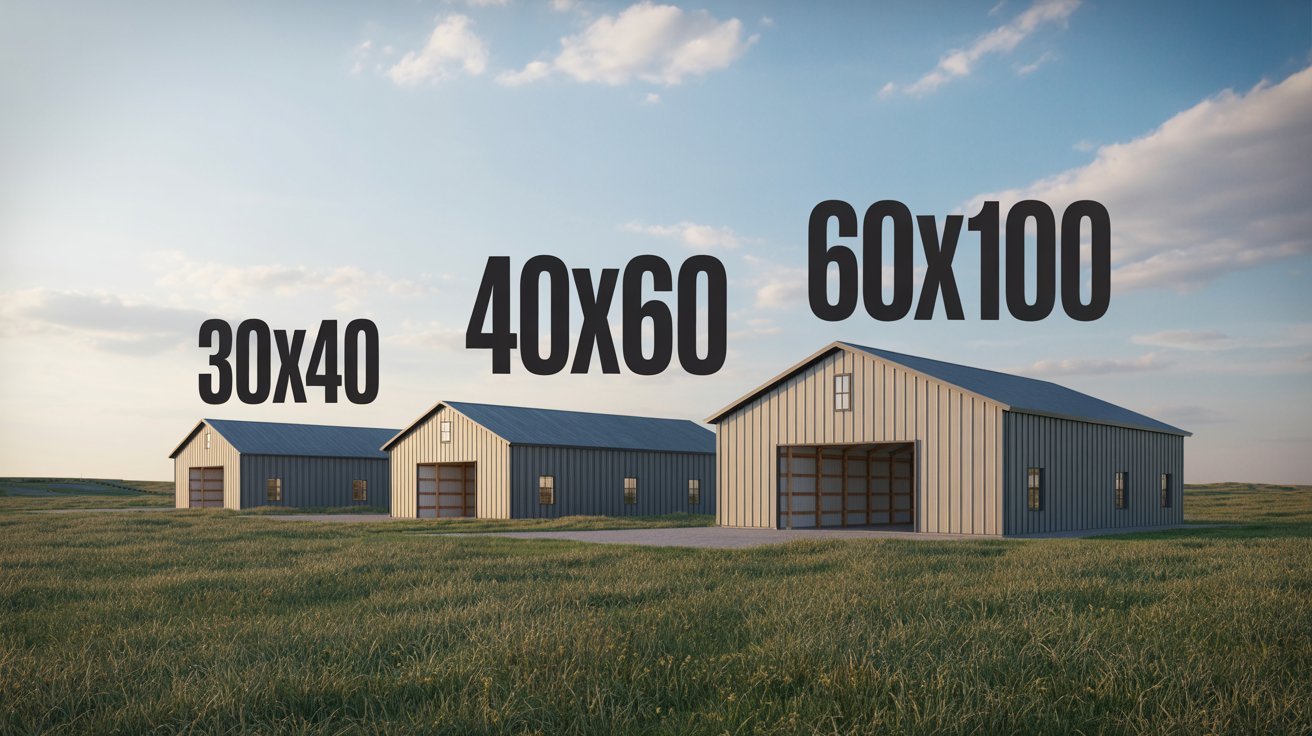
A 40×60 pole barn shell costs roughly $36,000 to $96,000 depending on finishes, roof pitch, and location.
The same footprint in stick built construction can run $240,000 or more once foundation, framing, insulation, and finishes are included.
But the total picture includes more than the shell.
Here’s a breakdown of what drives each cost:
- Materials: Pole barns use fewer materials overall. Stick built requires more lumber, sheathing, and hardware at every stage.
- Labor: Post-frame labor costs less because fewer workers are needed for a shorter build. Stick built involves more subcontractors and longer scheduling.
- Foundation: Pole barns skip the full foundation. That alone can save $10,000 to $30,000 on a mid-size build, according to NAHB cost data.
- Insulation: Pole barns need separate wall, ceiling, and floor insulation. That can add $8,000 to $20,000 depending on the size and your climate zone.
- Finishing: A basic pole barn workshop finishes cheap. A barndominium vs stick built home comparison levels out at the finish stage because plumbing, electric, and drywall cost roughly the same either way.
I’ve looked at contractor quotes on 30×40 builds in the Midwest and South. Pole barn shells came in around $28,000 to $48,000.
Stick built quotes for the same footprint started around $120,000 for a simple residential shell. The gap is real.
Durability and Lifespan: Which One Lasts Longer?
This is one area where people assume pole barns fall short. But it’s more complicated than that.
Here’s how the two compare side by side on durability:
| Factor | Pole Barn | Stick Built |
|---|---|---|
| Average lifespan | 40 to 60 years | 75 to 100+ years |
| Main weak point | Post rot from moisture | Termites, rot in wall cavities |
| Wind resistance | Strong with proper bracing | Strong with standard framing |
| Snow load capacity | High with correct roof pitch | High with engineered truss |
| Maintenance needs | Treat posts, check drainage | Inspect foundation, caulk, paint |
| Pest vulnerability | Moderate | Moderate to high |
Both buildings can fail early if they’re not maintained. Both can last decades if they’re built right.
The key takeaway here: a pole barn vs stick built lifespan comparison favors stick built for residential use, but a well-built post-frame structure with treated posts and good drainage will hold up for a very long time.
Energy Efficiency and Insulation Differences
This is where stick built has a real edge for living spaces. Stick framed walls are easy to insulate using batts, spray foam, or rigid boards.
The wall cavity depth allows for solid R-values without too much extra work.
Pole barns can be insulated well, but it takes more planning. The open framing means you need to add insulation to walls, ceilings, and floors separately.
It’s doable, but it adds to your overall cost.
If you plan to heat or cool the space year-round, stick built is the more practical starting point.
Customization and Design Flexibility
People often assume pole barns are limited to metal boxes. That’s not true anymore.
Here’s how customization compares between the two:
| Design Feature | Pole Barn | Stick Built |
|---|---|---|
| Interior open span | Excellent, no interior walls needed | Limited by load-bearing walls |
| Multi-story builds | Possible but less common | Very common, standard practice |
| Exterior finishes | Metal, wood, board and batten | Brick, siding, stucco, stone |
| Residential finishing | Possible, requires planning | Standard, well-documented process |
| Dormers and complex rooflines | Harder to add | Easy to incorporate |
| Commercial or industrial use | Great fit | Works but costs more |
Both methods can be customized to look and function well.
The pole barn vs stick built design question really comes down to what kind of space you’re planning and how finished it needs to look when done.
Building Codes, Permits, and Financing
Stick built construction follows residential building codes that inspectors know well.
Getting a permit is usually straightforward. Banks and mortgage companies have no hesitation financing stick built homes.
Pole barns are handled differently. Some counties restrict where you can build them. Lenders may classify them as agricultural structures, making financing harder.
If you want a barndominium vs stick built home comparison from a lender’s perspective, traditional framing almost always wins for standard mortgage approval.
Don’t skip this step. Zoning rules vary widely by county and state. Check before you spend anything.
Real Experiences: Pole Barn vs Stick Built (What Owners Say)
I’ve gone through dozens of owner stories on forums and spoken with people who built both types. Here’s what I keep hearing.
Pole barn owners love the speed and the savings. Most say the build came in under budget and finished faster than they expected.
The common complaint is that insulation ended up costing more than they planned. On a 30×40 shop build, one owner told me his insulation alone added $14,000 to the project.
Stick built owners say it felt more like a proper home from day one. They liked that banks and contractors were familiar with the process. The downside was a higher cost and a longer build timeline.
Neither group had regrets when they matched the building type to the right use.
Pros and Cons: Pole Barn vs Stick Built
Knowing both sides before you commit can save you from a very expensive mistake.
| Pole Barn | tick Built | |
|---|---|---|
| Pro 1 | Lower upfront cost | Stronger resale value |
| Pro 2 | Faster to build | Easier to finance |
| Pro 3 | Open interior layout | Better for long-term living |
| Pro 4 | Less foundation work | Familiar to lenders and inspectors |
| Pro 5 | Good for large structures | Easier to insulate |
| Con 1 | Post rot risk over time | Higher cost upfront |
| Con 2 | Harder to get a mortgage | Longer construction timeline |
| Con 3 | Extra insulation planning needed | Less open interior space |
| Con 4 | Zoning restrictions in some areas | Requires full foundation |
| Con 5 | Lower resale in most markets | More subcontractors involved |
Neither option is perfect. Your decision should be based on your actual project, not a general preference.
Which One Should You Choose?

It depends on what you’re building and what you plan to do with it.
If you need a shop, storage building, garage, or farm structure, a pole barn is the practical choice. It saves money and gets the job done fast.
If you’re building a home or a space you plan to sell, stick built makes more sense. It’s more familiar to lenders, buyers, and inspectors.
When comparing barndominium vs stick built as a full-time home, stick built still wins on long-term livability and loan options.
There’s no single right answer. The right choice fits your budget, your timeline, and your long-term goals.
When a Pole Barn Makes More Sense
Go with a pole barn when you need a large open space on a budget.
It works well for farms, workshops, equipment storage, small businesses, and hobby spaces.
If you’re in a rural area with flexible zoning, post frame vs stick built is an easy call. The cost savings are real and the build timeline is hard to beat.
When Stick Built Is the Better Choice
Stick built is the better fit for residential homes, rental properties, and any building you plan to finance or sell.
It also works better in urban or suburban areas where building codes are strict and lenders are conservative.
If you’re comparing pole barn vs stick built for a primary residence, stick built gives you fewer headaches from start to finish.
Conclusion
Both options work well when matched to the right project.
Pole barns give you speed, open space, and lower costs. Stick built gives you longevity, financing options, and real resale value.
I’ve seen people do well with both, and I’ve seen people regret rushing the decision.
The key is being honest about what you actually need.
Are you storing equipment or raising a family? Selling in five years or holding for decades? Your answers will point you in the right direction.
So, which one fits your project better: a pole barn or stick built?
Frequently Asked Questions
Can you live in a pole barn?
Yes, many people do. Barndominiums are pole barn-style homes growing in popularity across rural areas. Check local zoning laws and meet residential building codes before starting.
Is pole barn vs stick built cost really that different?
Yes, by a wide margin. Pole barns run $15 to $40 per square foot while stick built homes average $100 to $200. A 40×60 pole barn shell can cost $36,000 to $96,000 compared to $240,000 or more for stick built.
Do pole barns hold their resale value?
Generally not as well as stick built homes. Resale value depends on finishing quality, intended use, and your local real estate market conditions.
How long does a pole barn last compared to stick built?
A well-maintained pole barn lasts 40 to 60 years. Stick built structures often reach 75 to 100 years or more with regular upkeep and proper maintenance.
Can you get a mortgage on a pole barn home?
It’s possible but harder than financing a traditional home. Some lenders offer construction loans for barndominiums. Work with lenders familiar with post-frame construction and confirm your local regulations first.